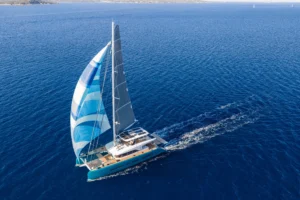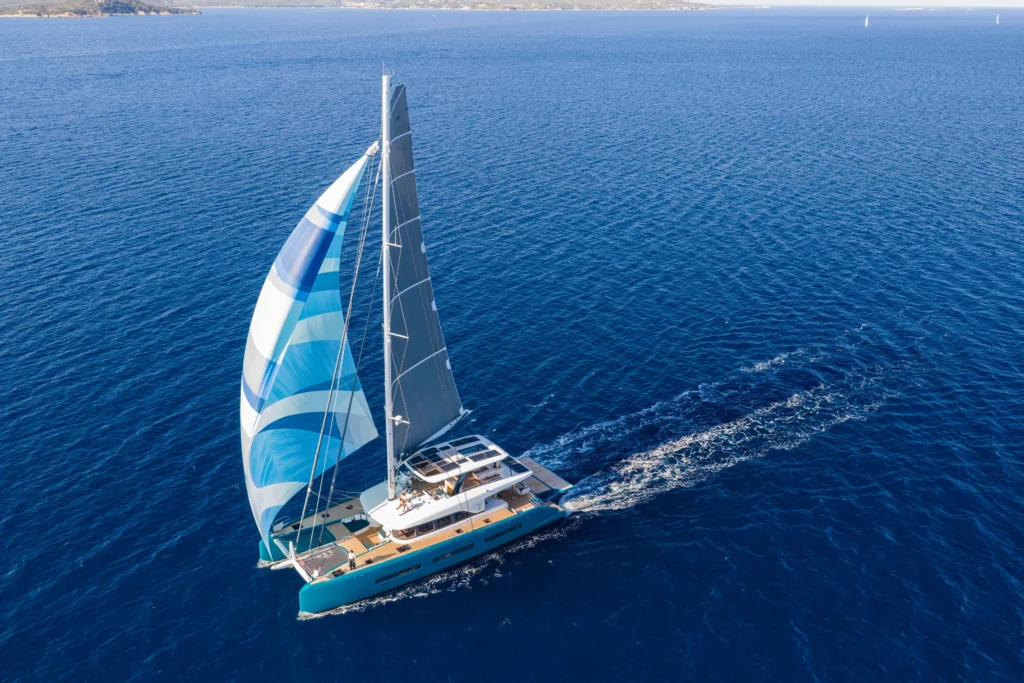
The Naora route covers four oceans and the full latitudinal range from the Mediterranean to the tropics. The underwater wildlife across this range is as diverse as any safari destination on land and considerably less visited at the specific sites that a small sailing boat with a self-sufficient diving compressor can reach.
This article is a region-by-region guide to what the underwater encounters on the route actually are: which animals, in which places, in which season, and what the encounter with each of them is like from the water rather than from the documentary.
The Mediterranean: Moray, Octopus, and the Posidonia Meadows
The Mediterranean is not the most biodiverse diving destination on the Naora route, but it is not the least interesting. The posidonia meadows, the endemic seagrass that covers large areas of the Mediterranean seafloor at depths of five to forty metres, are one of the most important ecosystems in the sea: the nursery ground for Mediterranean fish species, the oxygen producer that maintains water quality across the basin, and a habitat of specific beauty that the clear Mediterranean water makes easily visible to snorkellers above it. The meadows in the Gokova Gulf and the outer islands of the Dodecanese are among the healthiest remaining in the eastern Mediterranean.
The moray eel is the defining Mediterranean dive encounter: resident in the rocky reef areas throughout the region, visible in almost every dive that includes rocky substrate, and capable of an extraordinary closeness with divers who approach slowly and without disturbing the environment it inhabits.
The octopus, described elsewhere in the context of the dinner table, is equally present underwater: hunting in the shallows in the morning and retreating into rocky crevices during the day in a way that makes early morning diving the most productive time for octopus encounters.
The Pacific: The Full Spectrum
The Pacific chapter of the Naora route contains the most biodiverse diving on earth. The French Polynesian atolls, particularly the outer Tuamotu, produce grey reef shark encounters on almost every dive: the animals are present in numbers at the current edges and patrol the reef walls with a consistency that allows prolonged observation rather than the occasional passing glimpse. The passes of Fakarava and Rangiroa, where the tidal flow concentrates fish in the channel, produce shark aggregations of fifty or more animals on the flood tide at specific seasons.
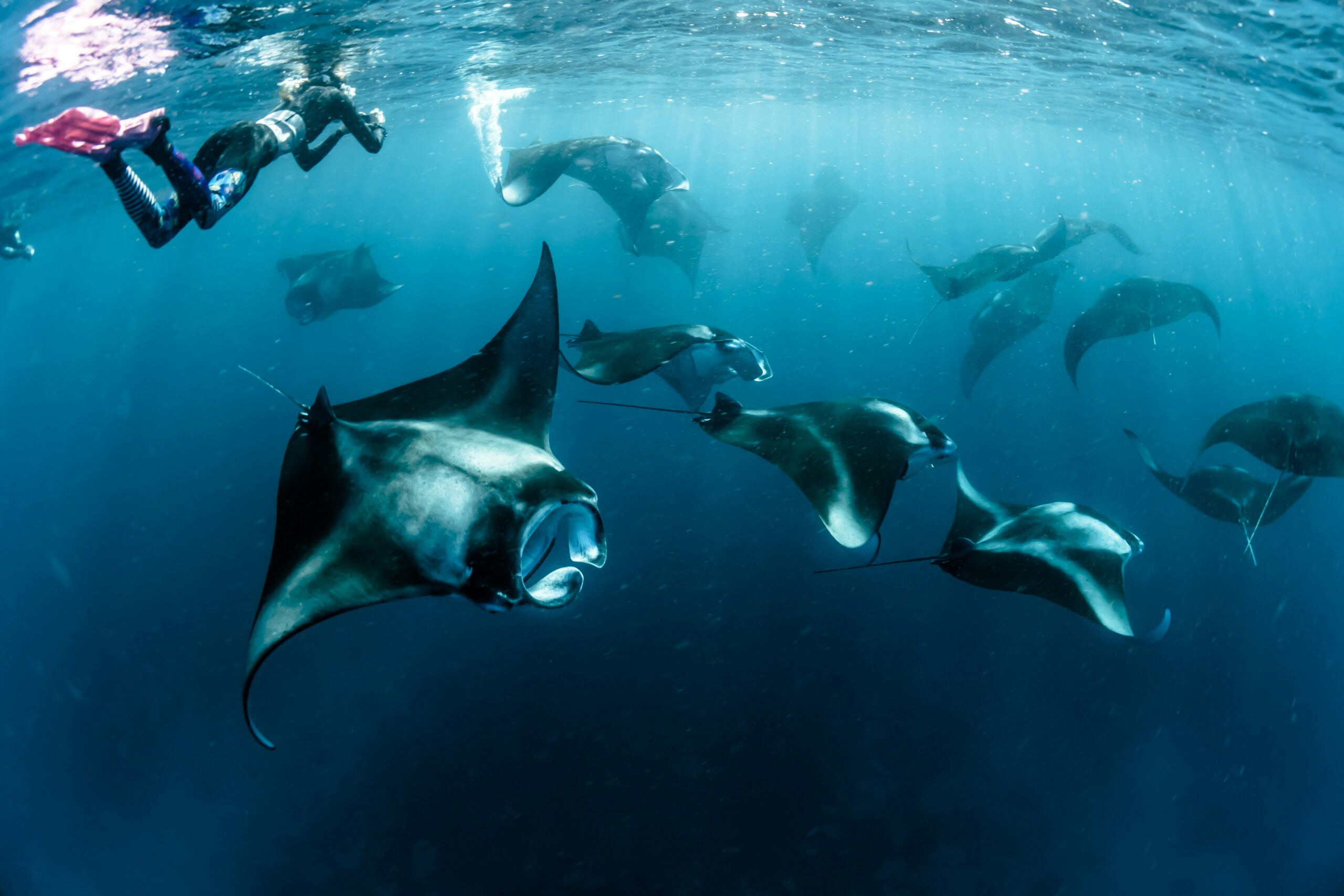
The manta ray encounters in the Maldivian atolls and in the waters around the Coral Triangle are among the most consistent in the world: manta rays return to specific cleaning stations, coral bommies where cleaner wrasse remove parasites from the manta’s skin, on a daily basis, and the timing of dives around these stations produces encounters of extraordinary intimacy with animals that can reach seven metres in wingspan and that, once the diver’s presence has been accepted, will circle at arm’s length for as long as the breath supply or the bottom time allows.
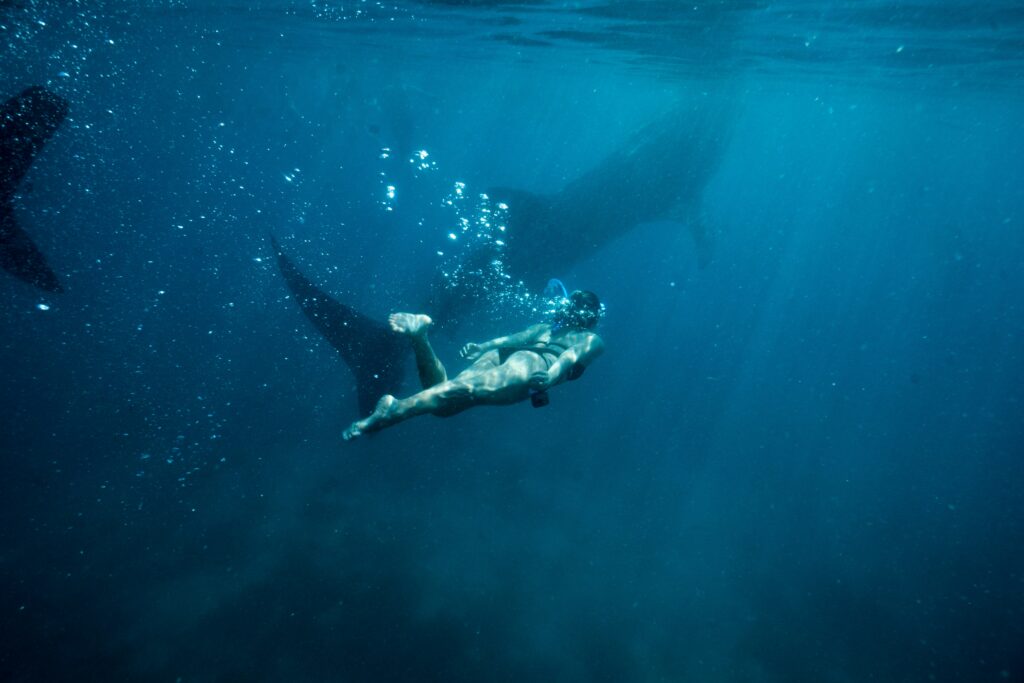
The whale shark, the largest fish in the ocean, is present in the waters around the Seychelles, the Maldives, and the eastern Pacific near the Galapagos in seasonal concentrations that the Naora route timing is designed to intersect. The whale shark encounter is accessible to both divers and snorkellers: the animals feed at the surface and in the upper water column, and the snorkeller who enters the water correctly, approaching from ahead and slightly to the side rather than from behind, can swim alongside a ten-metre whale shark for the duration of the encounter without scuba equipment.
The Red Sea: The Pelagics
The Red Sea offshore sites, Brothers Islands, Daedalus, and Elphinstone, which the Naora route visits on the southward passage through Egypt, are among the finest pelagic diving destinations in the world. Oceanic whitetip sharks, thresher sharks, and hammerhead sharks are regular presences at these sites, which sit in open water away from any coast and which accumulate the large pelagic species in a way that the coastal Red Sea sites do not.
The oceanic whitetip at Brothers Islands is one of the most reliably encountered large shark species anywhere: curious, present at the reef edge, and approachable by divers who move calmly and without the erratic movements that trigger a stress response in any large predator.