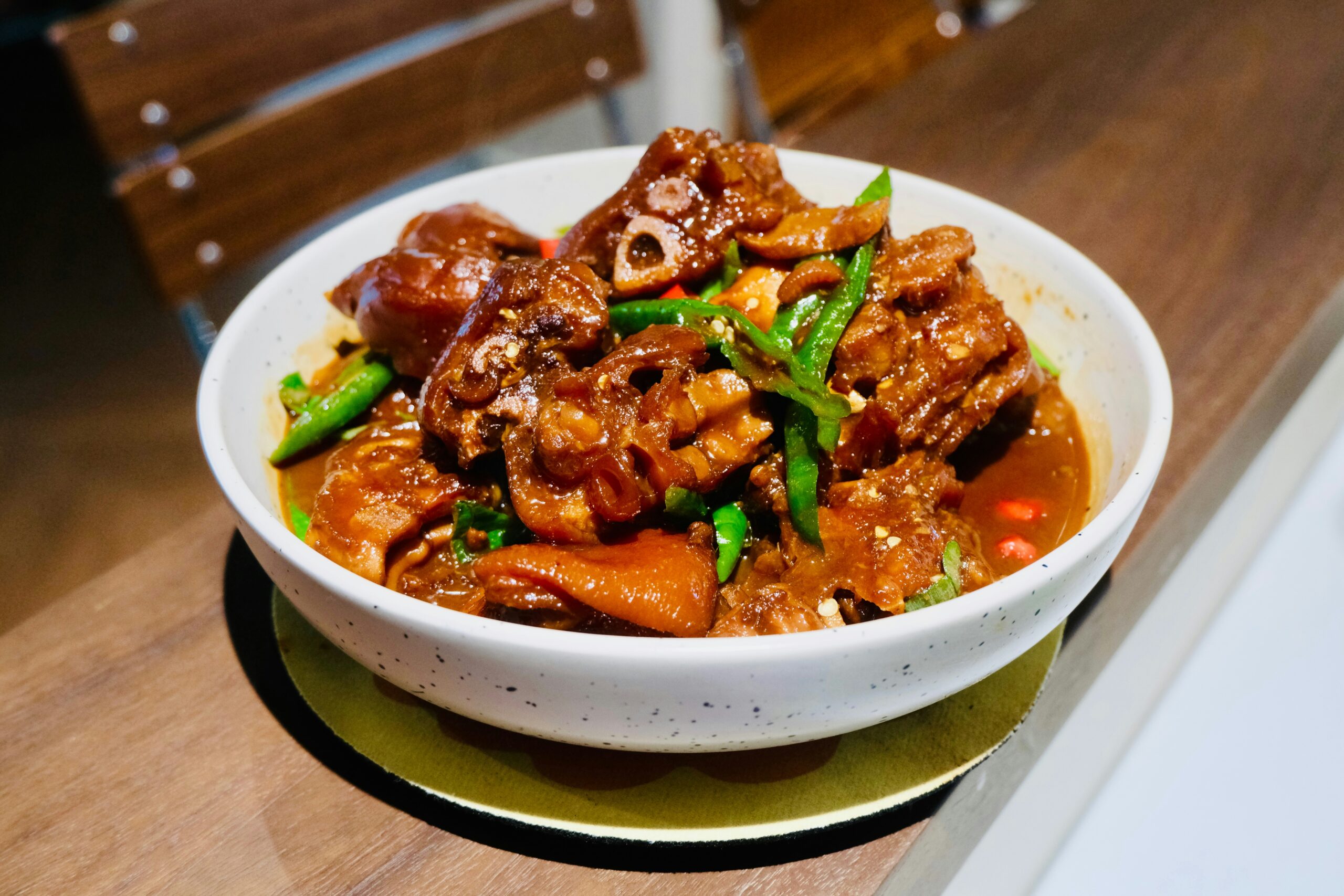
The lid lifts, releasing the warm smell of lamb, onion and cinnamon; then the citrus comes through. At anchor in Aqaba, lamb tagine with preserved lemon is a supper that allows a long day in Petra to end gently. The meat yields to a spoon. The sauce has enough body to settle into couscous, and enough brightness to make another mouthful welcome.
There is judgement behind choosing something so forgiving. A return from Petra involves tired legs, a road journey and the final transfer back aboard, none of which should be hurried because dinner has reached a fragile moment in the galley. We want the cooking to accommodate the day without becoming careless about time or temperature. The useful quality of a braise is that much of its work can happen before anyone sits down.
The Day From Aqaba To Petra
From Aqaba, allow roughly two to two and a half hours by road each way, before stops or delays. That makes transport a substantial part of the day, rather than an interval to ignore when deciding how much walking to attempt. An early departure helps, but it does not guarantee an empty site. We would rather leave room for a proper visit than promise solitude at a place that matters to so many people.
Petra also belongs to a different physical setting from the coast. It is inland and higher, and in the cooler months the morning can call for a layer that feels unnecessary back in Aqaba. Within the Siq, the sky narrows to a pale opening between the rock walls. Shade and sun alternate. The eyes adjust before the body quite does, and the uneven ground keeps asking for attention even when the carved stone has taken it elsewhere.
The ascent to the Monastery involves roughly 800 steps, an indication of effort rather than a count to pursue. Those steps come after the approach through the site, and the descent still has to be made. For a family or a party with different walking appetites, deciding what to leave out can make the day better. Seeing the Treasury does not create an obligation to reach every other monument before returning to the boat.
The Nabataeans built their prosperity through caravan trade, but Petra becomes more interesting when we look beyond the façades to its water engineering. Channels, cisterns and diversion works helped sustain the city while managing sudden runoff. Water here was both a resource and a danger. That remains relevant to a visit: a dry morning in Aqaba cannot establish conditions in Petra’s catchment. Local access restrictions and weather advice take precedence over a planned walk through the gorge.
A North African Dish In A Jordanian Port
The supper deserves the same care with its identity as the place does. A tagine with preserved lemon, dried apricots and ras el hanout belongs to North African cooking. Couscous and harissa continue that conversation. Cooking it in Aqaba does not turn it into an ancient Jordanian dish, nor do Petra’s trading connections establish a direct history for what is on our plates. We can enjoy the meeting without making the origins identical.
Jordan has its own deeply established ways with lamb. Mansaf, with rice and the distinctive acidity of jameed, a dried fermented yoghurt, offers a different balance from citrus and sweet fruit. Knowing that distinction makes us more attentive guests. A meal aboard can draw on the provisions available in a port while leaving room to discover the local cooking ashore on its own terms.
Buying lamb in Aqaba begins with ordinary questions about the cut, its origin and how it has been kept. A local purchase supports a local business; it does not, by itself, tell us where the animal was raised. The practical concern after buying is the cold chain. Meat needs an insulated journey back to the yacht and refrigeration at 5°C or below, not a warm wait while the rest of the shopping expands. Bread, spices and dried fruit can tolerate a more leisurely errand. Raw lamb cannot.
Cooking Lamb Tagine With Preserved Lemon Aboard
Shoulder is a sensible cut because its connective tissue rewards patient, moist cooking. Given time, collagen softens into gelatin and helps give the sauce its body. For a supper with couscous and bread, roughly 200 to 250 grams of boneless raw shoulder per adult is a useful planning range, adjusted for appetite and the rest of the meal. That is a provisioning estimate, not a prescription for every plate. Bone-in meat requires a different allowance.
The vessel matters less than control of the heat. A traditional earthenware tagine needs support and a heat source suited to it, and it can be vulnerable to thermal shock. For a working galley, we would favour a secure, heavy pan with a well-fitting lid unless the clay vessel and its installation were appropriate. Even at anchor, a pot has to remain safe if the yacht moves. A conical lid is not a substitute for a sound arrangement on the stove.
Dry pieces of lamb brown more effectively than wet ones, and leaving space between them prevents the pan from filling with released moisture. Browning in batches takes longer at the beginning but gives the finished sauce more depth. The onions then soften in the same pan, lifting the savoury residue as liquid is added. Ground spices need enough warmth to release their aroma, but not prolonged contact with a dry, fierce surface that will make them bitter.
The liquid need not drown the meat. With a close-fitting lid, a gentle braise retains much of its moisture. Depending on the size of the pieces and the steadiness of the heat, shoulder may need roughly three to four hours. The number helps organise the galley; tenderness decides when it is ready. A fork should enter without meeting a tight, rubbery centre. A hard boil does not usefully hurry this process, and keeping the lid in place limits both evaporation and wasted heat.
Finishing Lamb Tagine With Preserved Lemon
Preserved lemon behaves differently from fresh lemon. Salt curing softens the rind and changes its flavour, giving the dish citrus depth as well as salinity. The rind is often the most useful part. We would separate it from the soft flesh, remove the seeds and taste a small piece before deciding how much to add. A brief rinse can help if it is very salty. The contents of two jars can differ enough that a fixed spoonful is less reliable than tasting.
Finely chopped rind disperses through the sauce; narrow strips remain distinct in a mouthful. Both have their place, but adding them gradually gives more control than emptying in lemon and brine together. Fresh lemon juice, if the finished dish needs it, supplies a different kind of brightness. Preserved lemon is not simply fresh lemon made convenient for storage, and treating the two as interchangeable can leave a sauce salty without making it lively.
Ras el hanout also varies from blend to blend. It may already contain cinnamon, so adding more without considering what is there can make the whole pot taste of one spice. The apricots need similar restraint. They should give occasional sweetness rather than turn the lamb into a sweet dish. Added towards the end, once the meat is nearly tender, they have a better chance of retaining their shape. Very soft dried fruit needs less cooking than firm, leathery fruit.
Final seasoning comes after any reduction of the sauce, because evaporation concentrates salt. If the balance has gone too far, more apricot does not remove the excess, and more lemon may merely disguise it. Unsalted liquid or other unsalted ingredients can lower the concentration, although they also change the volume and balance of the dish. It is easier to leave room for adjustment. At the end, we are looking for lamb first, then the warm spices, with the lemon keeping the mouthful from becoming heavy.
Keeping Supper Ready Without Leaving It To Chance
Cooking while some of us are at Petra only works if responsibility for the yacht and the galley remains clear. A slow flame is still a flame. A braise gives flexibility over serving time, not permission to leave a stove unattended. The work needs to fit the people remaining aboard and their other duties, rather than depending on someone finding a spare moment whenever the pot requires attention.
If the finished lamb is being held hot, a practical food-safety benchmark is 63°C or above. Warm to the touch is not a useful test. The lid helps prevent the sauce drying out, but prolonged holding still changes texture, so there is a culinary limit as well as a safety requirement. A long day ashore may be better served by cooking ahead and chilling properly than by keeping dinner on the heat throughout.
That means dividing the cooked food into shallow containers, cooling it promptly and refrigerating it, rather than leaving a deep pot to lose heat slowly in a warm galley. Reheating should bring the centre of the food to 75°C for at least 30 seconds, checked with a clean probe, not inferred from bubbles around the edge. Stirring helps distribute the heat. The trade-off is earlier work and refrigerator space, but the return journey can then take the time it needs without leaving supper in an uncertain state between hot and cold.
The Anchorage Is Part Of The Meal
Aqaba is a working port at the head of the gulf, and the lights ashore belong to a living coast rather than a backdrop arranged for dinner. Northerly winds are common in the Gulf of Aqaba, where the surrounding terrain can channel the flow. Short, uncomfortable chop can develop even when the sky looks benign. A southerly change alters which positions offer protection. The photograph of a still evening says little about the next one.
Sven, Naora’s founder and captain, plans every weather window and sails every leg himself. For a day ashore, that responsibility includes the hours when people will be returning, not simply the conditions at departure. The anchoring position has to be permitted and suitable, with the bottom, depth, swinging room and nearby traffic considered. The anchor belongs on appropriate bare ground, never on coral. A pleasing view from the afterdeck comes after those decisions.
The transfer deserves its own judgement. Comfortable conditions aboard do not automatically mean an easy step into a tender, especially after a long walk. Bags should leave hands free, assistance should be unhurried, and dinner should not create pressure to move before everyone is ready. If the wind makes the afterdeck uncomfortable, the meal can move inside. Keeping the evening pleasant sometimes means abandoning the picture we had of it.
This is where the choice of food becomes part of good seamanship. A dish that can wait safely removes one unnecessary deadline. It leaves the captain free to attend to the water and the people aboard, rather than allowing a shore excursion, a tender transfer and a delicate final stage of cooking to compete for the same few minutes.
Back At The Table In Aqaba
The couscous is best finished when the return is certain. It should remain loose enough to receive the sauce, rather than arrive compressed into a damp mound. Flatbread from a local bakery gives another way to eat the same dish, especially towards the end when the sauce is what remains. Harissa belongs on the side so that the heat can follow each person’s appetite. Extra preserved lemon should be offered sparingly, with its saltiness understood.
After the enclosed light of the Siq and the effort of the steps, the afterdeck gives the body another scale: water close below, the illuminated shore farther away, a chair that asks nothing of tired legs. Steam rises briefly from the couscous before the evening air takes it. The lemon rind is soft but still distinct against the yielding lamb. These are small sensations, but after a day spent looking upwards at stone, they bring attention back within reach.
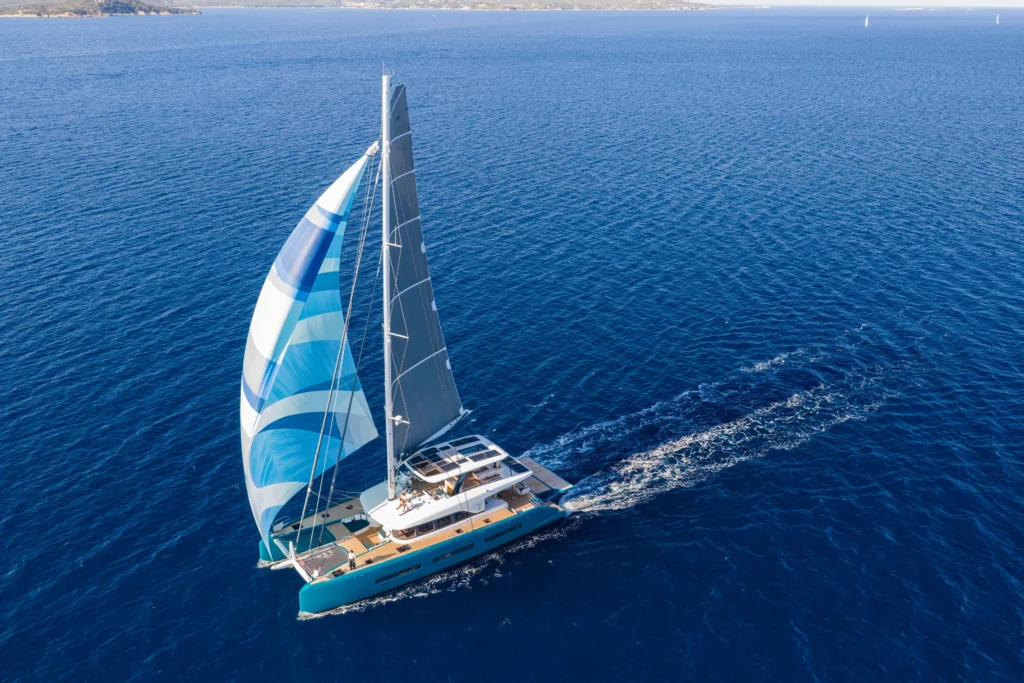
Such evenings belong within the larger rhythm of the Naora Global Expedition. Discovery, our Lagoon Eighty2, follows a continuous world route while members choose when and where to join and how long to stay aboard. The voyage continues beyond any one person’s time with us. For the galley, that means paying attention to the people at this table, their appetites and the day they have actually had, rather than repeating a menu simply because it worked somewhere else.
There is room to talk about Petra, and room to let it remain unspoken for a while. The city does not need to be explained again over every course. Its scale, its water channels and the changing light in the gorge can settle at their own pace. Here there is the low movement of the yacht, sauce gathered in the bottom of a bowl, and bread still within reach.