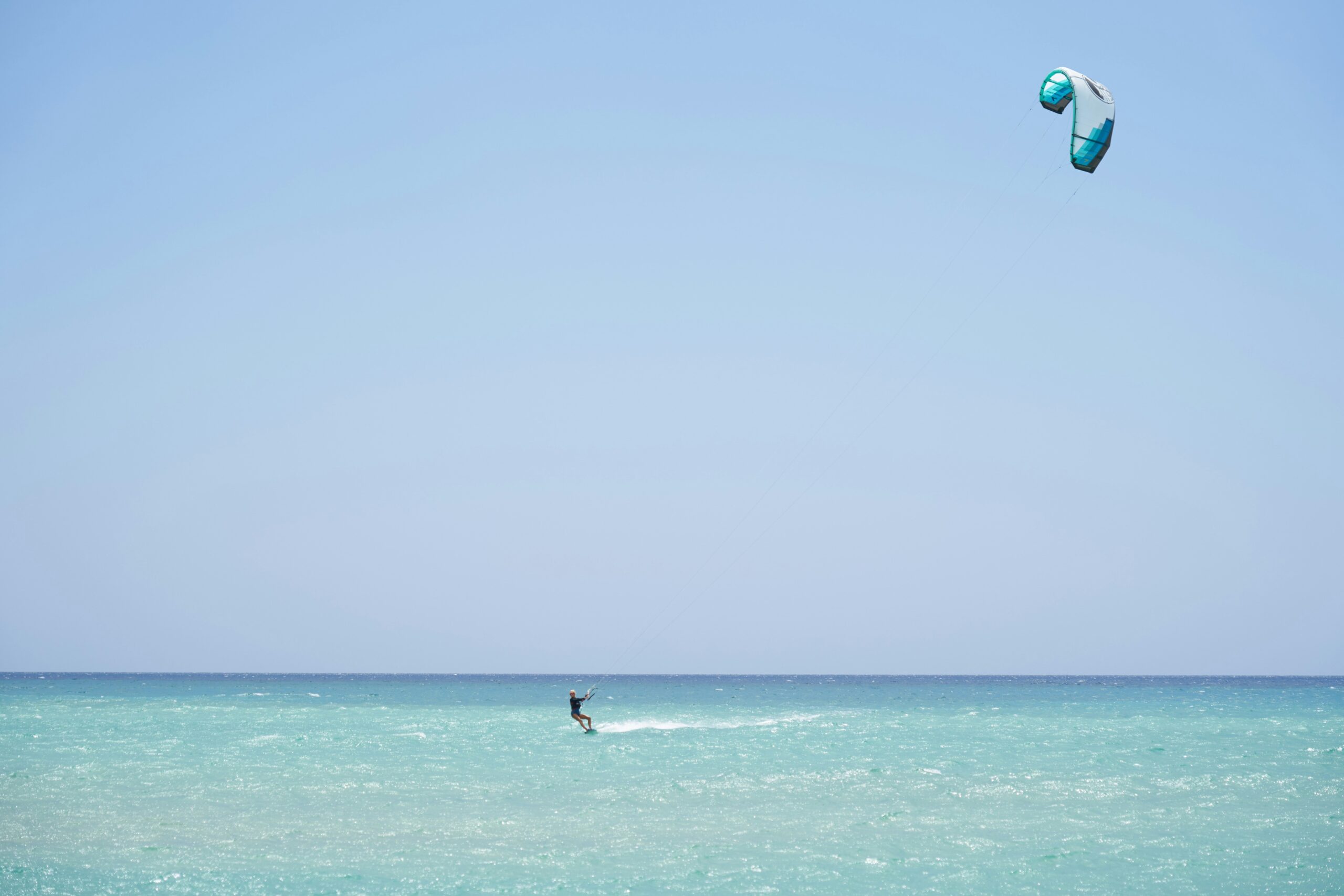
The Tuamotu lagoon is one of the finest flat-water kiteboarding venues in the world and it is empty. Not empty in the sense of the off-peak weekday at the local spot: empty in the sense of the atoll that does not have a kite school and has never had a kite school and where the kiteboarder who is not aboard a self-sufficient offshore boat cannot reach the lagoon because the atoll has no airport and the ferry from Papeete runs once a fortnight.
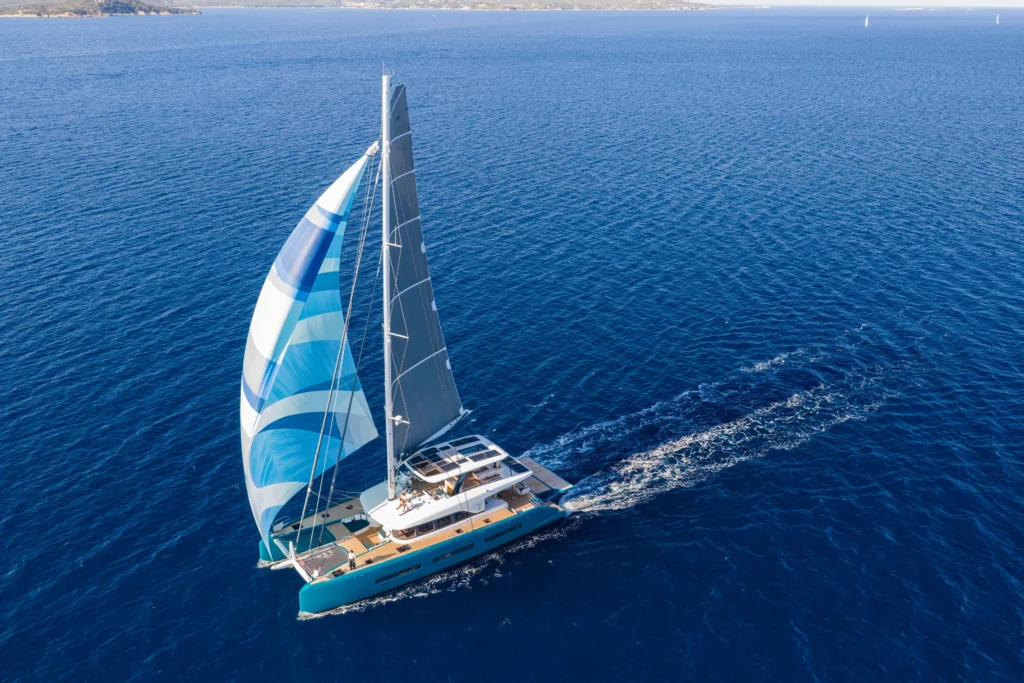
The Naora boat at anchor in the Tuamotu is the access. The lagoon inside the atoll ring is the flat water. The trade wind that the Pacific produces at fifteen to twenty knots from the northeast across the low profile of the atoll is the wind. The combination is the combination that the kiteboarder who shares their local flat-water spot with a hundred other riders has been imagining in the form of the empty lagoon that the imagination provides when the actual spot is crowded: this is the actual spot that the imagination was describing.
The kite launch from the Tuamotu lagoon uses the same dinghy technique as the Caribbean trade wind session: the kite carried by the dinghy operator upwind while the kiteboarder positions in the water downwind, the signal, the launch. The lagoon is the session zone: the flat water inside the atoll ring that the trade wind fills from the windward side of the atoll and that the coral reef’s barrier prevents the ocean swell from reaching.
The kiteboarder in the Tuamotu lagoon is on flat water in the open trade wind inside the protection that the atoll ring provides. The dinghy is in the lagoon throughout the session. The VHF connects the session to the Eighty2 at anchor.
The Lagoon Conditions
The Tuamotu lagoon’s specific kiteboarding quality is the quality of the flat water that the atoll produces at the depth that the lagoon’s carbonate sand floor maintains across the session zone: shallow enough that the water-start that goes wrong ends in standing depth rather than the deep-water recovery, deep enough that the fin and the board are not the reef navigation problem that the very shallow flat-water spots produce.
The wind at fifteen knots in the lagoon is the trade wind that the Pacific is sending across the atoll’s surface and that the atoll’s low profile does not significantly disturb: consistent in direction, consistent in strength, the specific quality of the offshore trade wind session that the coastal kite spot approximates and the open lagoon provides in the form that the approximation is attempting.