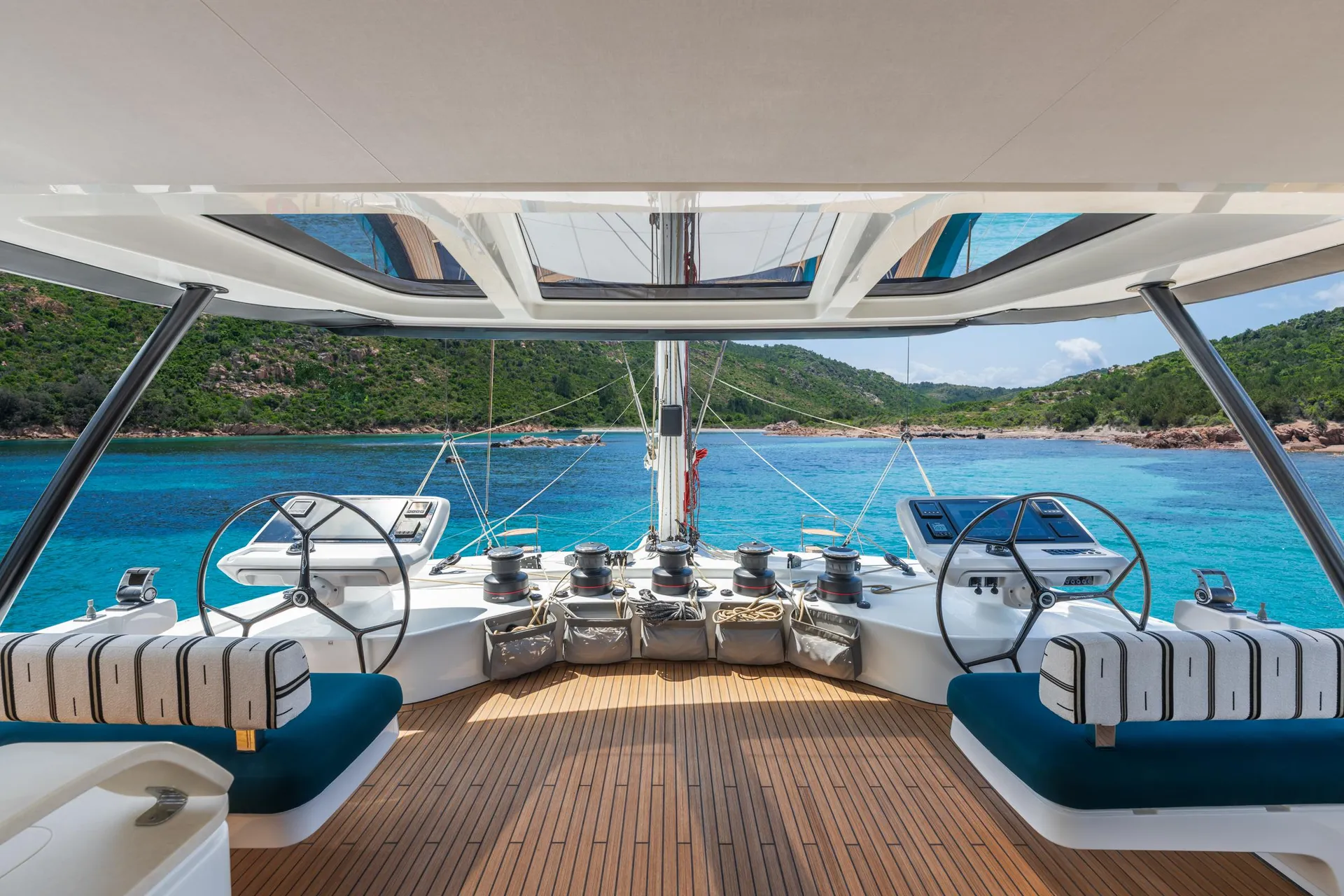
Today we sat down withLagoon. Not to place an order for a standard vessel, which the Eighty2 is emphatically not. To begin the specific process of turning the finest large catamaran available into the specific vessel that a five-year circumnavigation to the world’s most remote sailing destinations requires.
The conversation was the conversation between professionals: Lagoon’s production and technical team bringing the build knowledge and the engineering capability that twenty years of offshore catamaran development produces, and our team bringing the offshore operational knowledge of what five years in the outer Tuamotu and the Banda Sea and the Red Sea offshore sites and every point between actually demands from a vessel that has no shore support infrastructure to fall back on.
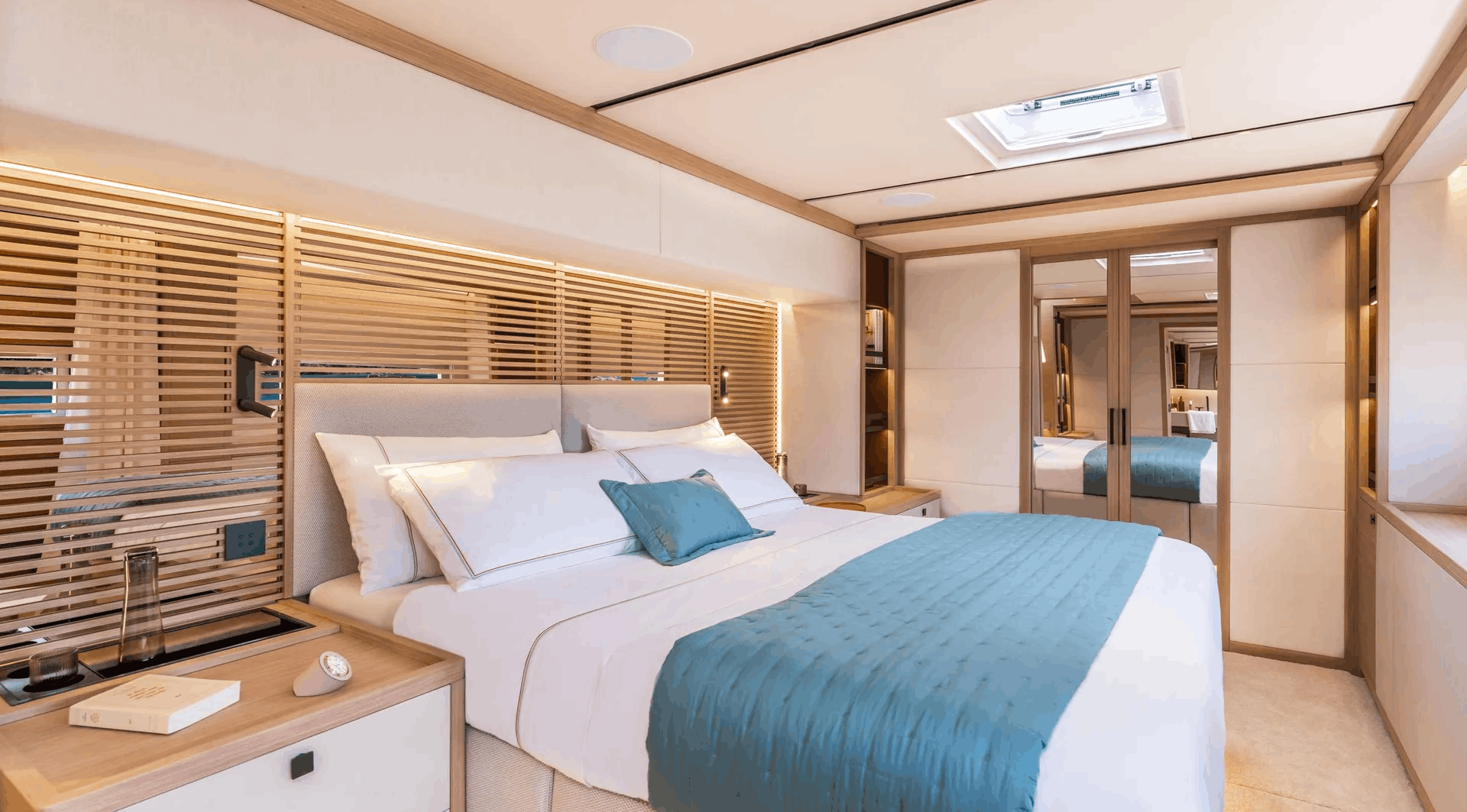
The meeting was the beginning of something that will take months to complete and years to test. The Eighty2 that departs Bodrum in May 2027 will be a different vessel from the standard production boat: not in its hull, which is extraordinary as it stands, but in every system aboard it that determines whether the vessel can operate independently in the places the route requires it to operate. This is the first account of that process, written on the day it began.
The Philosophy: Full Autonomy
The design philosophy that the meeting established is the philosophy of full autonomy: the vessel that can operate indefinitely in the absence of the shore infrastructure that most sailing vessels depend on for their continued function. Not the autonomy of the boat that can stay at anchor for a week before it needs to go into a marina: the autonomy of the boat that can be in the outer Tuamotu for a month, in the Banda Sea for three weeks, on the Red Sea offshore sites for ten days, and that at the end of each of those periods is in the same operational condition as at the beginning. All systems functional. All tanks full or refillable from what the ocean provides. All consumables replenished from what the vessel carries or produces.
This is a different design brief from the production vessel that is designed for the Mediterranean charter season. It is a different design brief from the ocean passage maker that is designed to cover distance between supply ports efficiently. It is the design brief of the vessel that is designed to be the supply port: self-sufficient in water, in power, in diving capability, in climate control, in the systems redundancy that ensures that no single failure can end the voyage or compromise the safety of the people aboard.
Power: The Foundation of Everything
Power is the foundation of every other system on the vessel. The watermaker needs power. The dive compressor needs power. The air conditioning needs power. The navigation systems, the communication systems, the refrigeration, the cooking induction, the desalination that produces the fresh water: all of it traces back to the same foundation, and the foundation must be abundant, reliable, and redundant. A vessel that loses its power supply in the outer Tuamotu has not lost a convenience. It has lost the ability to function.
The Naora power architecture is built around a large lithium battery bank as the primary storage and distribution system, fed by multiple independent generation sources. The solar panel array is sized for the tropical and subtropical conditions that the majority of the route covers: the Pacific trade wind belt, the Indian Ocean, the Red Sea, the Indonesian archipelago, all of which provide the consistent daily solar irradiance that makes solar the primary generation source for a vessel spending most of its time between the Tropics of Cancer and Capricorn.
The wind generator provides generation in the conditions where solar is absent: the night passages, the cloudy day, the high latitude sections of the route where the sun angle reduces the panel output. The hydro generator, mounted on the stern, produces power from the vessel’s own passage through the water on the long offshore legs where the boat is moving continuously: the Atlantic crossing, the Pacific trade wind passage, the Indian Ocean leg, all of which provide the sustained boat speed that the hydro generator converts into the kilowatt hours that the battery bank accumulates across the passage.
The silent generator set is the backstop: the diesel-powered generation that provides the heavy electrical load when the renewable sources are insufficient for the specific demand. Air conditioning at anchor in the tropics with no wind and cloud cover. The dive compressor running at 300 bar with a full diving programme. The watermaker running at full capacity after a long passage.
These are the demand peaks that the renewable sources alone cannot consistently meet, and the silent generator set provides them without the acoustic signature that the conventional generator produces: the specific whisper-quiet operation that allows the vessel to run its heavy electrical loads at anchor in a remote bay at two in the morning without disturbing the specific silence that made the anchorage worth being in.
Why Lithium and Why No Gas
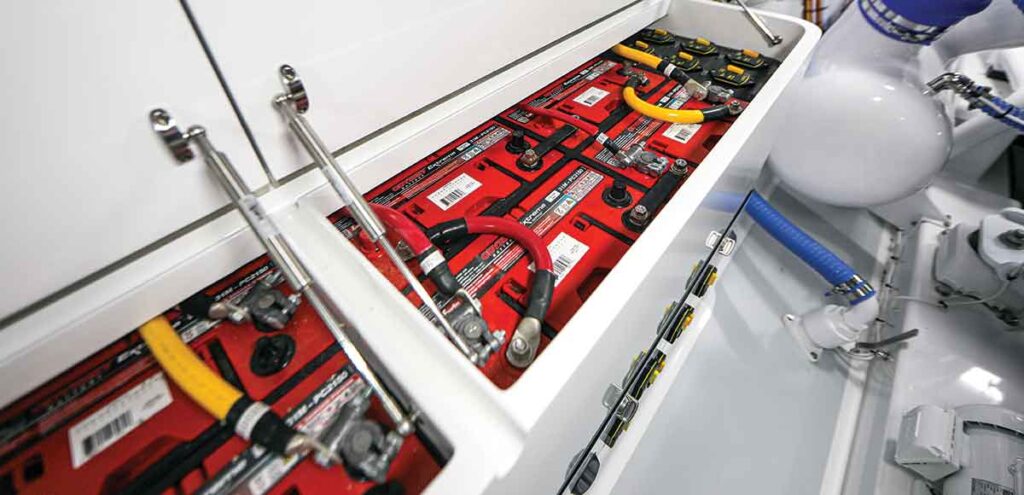
The lithium battery bank is the single most significant systems decision in the Naora configuration, and its implications extend well beyond the power storage question. Lithium iron phosphate batteries provide a specific combination of energy density, cycle life, and charge acceptance rate that the lead-acid and AGM batteries of the previous generation cannot match: more usable capacity in less weight and volume, the ability to be discharged to a lower state of charge without damage, and the ability to accept the full output of the solar array and the wind generator and the hydro generator simultaneously without the charge acceptance limitations that the older chemistry imposes.
The lithium bank also enables the most important single operational decision of the Naora configuration: the elimination of LPG gas from the vessel. The conventional sailing vessel uses LPG for cooking, and the conventional offshore passage maker carries the LPG cylinders that the galley requires for the duration of the passage.
On a five-year circumnavigation, LPG creates a specific and cumulative operational problem that the passage maker who has not done it over a long duration underestimates: the gas cylinders that run out in the Indonesian archipelago are not the same cylinders available in Belgium. The connection fitting on the European cylinder is not the same fitting on the Indonesian cylinder. The gas that is available in the outer Tuamotu is available when a supply boat reaches the atoll, which is not on a schedule that coordinates with the galley’s requirements. The gas that is available in the Red Sea offshore anchorages is the gas that the fishermen’s vessels carry, in cylinders and with fittings that the Naora galley cannot connect to.
Beyond the logistical complexity, LPG is an offshore safety consideration that the vessel designed for full autonomy in remote areas needs to eliminate rather than manage: the gas that is heavier than air, that accumulates in the bilge if a fitting leaks, that creates the specific explosion risk that the offshore sailing safety training addresses with the pre-start bilge blower and the gas detector and the specific procedures that the responsible offshore vessel follows every time the galley is used.
The lithium battery bank, combined with the renewable generation sources and the silent generator, provides the electrical capacity to power induction cooking for every meal on the five-year voyage. Induction cooking produces no combustion products in the cabin air. It requires no gas cylinders, no connection fittings, no country-specific adapters. It works from the same power supply that every other system on the vessel works from. The gas problem is eliminated entirely, replaced by a cooking system that is safer, cleaner, and more reliable in the specific context of a self-sufficient vessel in the world’s most remote sailing destinations.
Water: The Most Critical Consumable
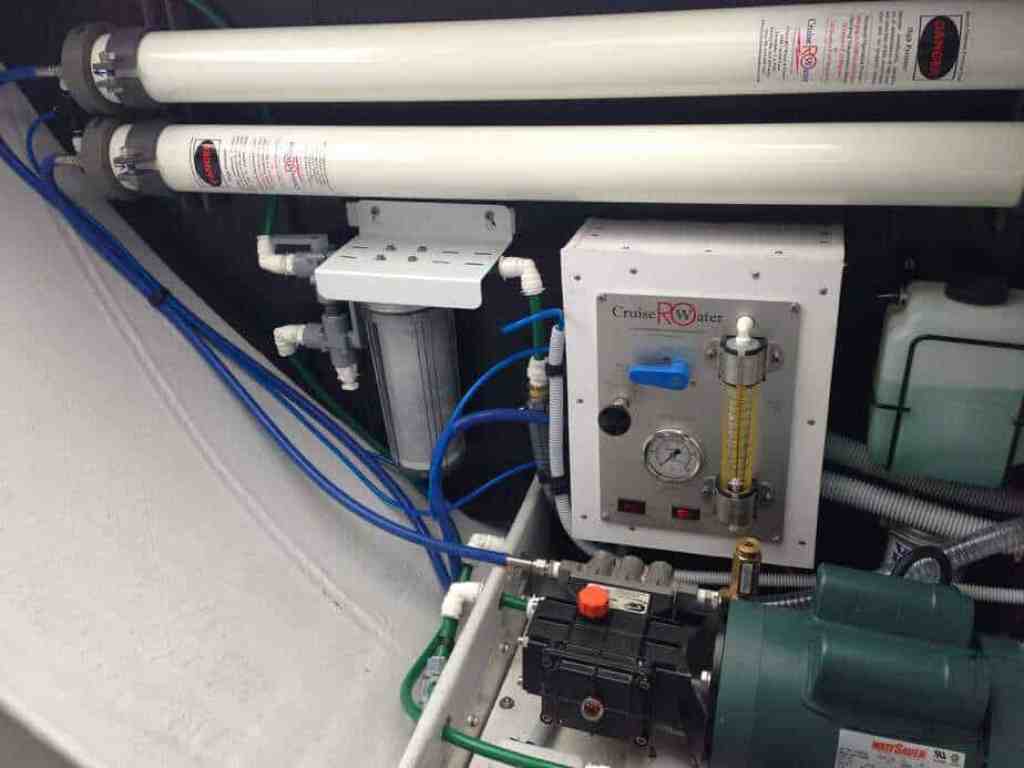
Fresh water is the most critical consumable on any offshore vessel, and the vessel designed for full autonomy in remote areas must produce it rather than depend on its availability ashore. The Naora watermaker configuration follows the redundancy principle that every critical system on the vessel is designed around: two independent systems, each capable of meeting the vessel’s fresh water requirements independently, each drawing from a different power source so that the failure of one power source does not disable both watermakers simultaneously.
The primary watermaker runs on AC power from the inverter system: high capacity, high output, sized for the full fresh water demand of twelve people aboard including cooking, washing, and the diving equipment rinse that the daily diving programme requires.
The secondary watermaker runs on DC power directly from the battery bank: lower output but fully independent of the AC system, available in the conditions where the inverter is offline or the AC generation is insufficient. If the primary system fails in the Banda Sea, the secondary system keeps the vessel in fresh water while the primary is diagnosed and repaired. If the secondary system fails while the primary is offline, the fresh water tanks that both systems fill provide the buffer that the repair timeline requires. The vessel does not run out of fresh water. The system is designed to make this impossible rather than unlikely.
Navigation: Two Autopilots, No Single Point of Failure
The autopilot is the crew member that works every watch of every passage for five years without rest, without complaint, and without the cognitive fatigue that the human watch crew accumulates across a long ocean crossing. It is also, in the conventional offshore vessel configuration, a single point of failure whose consequences on a long passage are severe: the autopilot that fails in the middle of the Pacific crossing requires the human crew to hand-steer for the remainder of the passage, which is the kind of sustained physical and cognitive demand that reduces the quality of every other decision the crew makes and that accumulates as a safety risk across the days that the passage still requires.
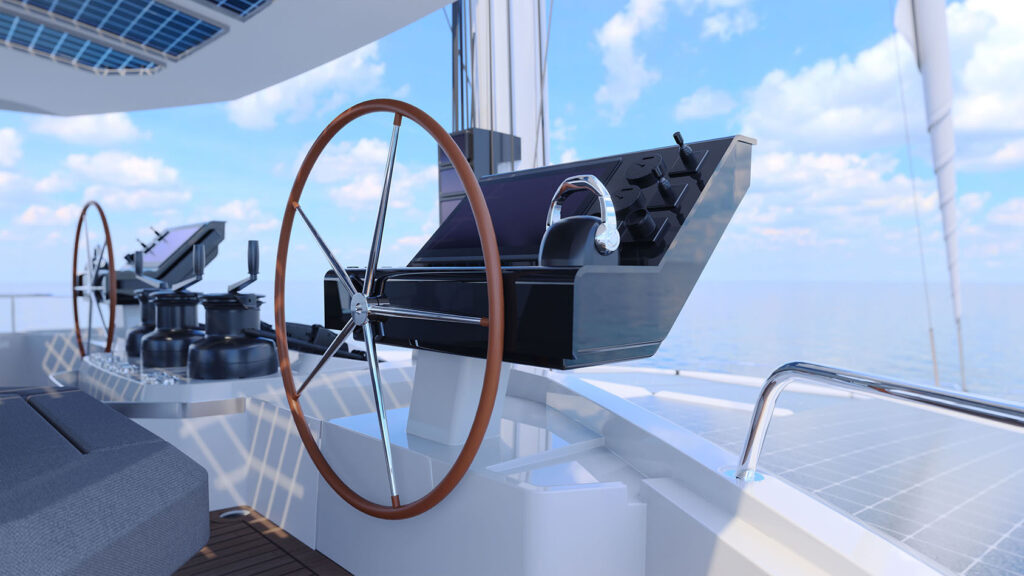
The Naora configuration installs two entirely independent autopilot systems: different brands, different drive mechanisms, different electronic architectures, drawing from different parts of the power distribution system. The failure of one autopilot, which will happen at some point across five years of continuous offshore use because every mechanical and electronic system eventually fails, activates the second autopilot rather than activating the hand steering.
The passage continues. The crew sleep schedule is not disrupted. The repair of the failed system happens during the day watch when the conditions allow it, with the backup system holding the course. Two autopilots is not a luxury. On a five-year circumnavigation, it is the minimum redundancy that the route demands.
The Dive Compressor
The 300-bar dive compressor is the system that makes the Naora voyage what it is for the diving programme: the ability to fill dive tanks at the Red Sea offshore sites where no dive centre exists, at the outer Tuamotu atolls where the nearest dive shop is a week’s sailing away, at the Banda Sea sites where the coral density and the marine life diversity make the diving extraordinary and where the dive centre infrastructure is absent.
The compressor is rated to 300 bar with both DIN and international connections: the same cylinder can be filled regardless of which valve configuration the diver’s specific equipment uses, which matters on a voyage that carries crew and members from multiple countries whose equipment reflects the national standards of their home diving communities.
The compressor runs from the vessel’s electrical system, which means it runs when the generator or the solar array or the renewable sources have the capacity to power it. The diving programme is planned around the compressor’s electrical demand and the vessel’s power budget: the tanks are filled at anchor rather than on passage, the generator provides the capacity when the solar alone is insufficient, and the specific timing of the filling session is the timing that the power budget allows rather than the timing that the diving programme demands.
Climate: Cool Cabins at the Equator on Solar Power
The cabins of the Naora Eighty2 will be cool at the equator. This is not a small claim in the context of a vessel designed for full autonomy: the air conditioning that keeps a large catamaran’s cabins comfortable in the tropics is among the highest electrical loads on the vessel, and the conventional offshore vessel either accepts the heat or runs the diesel generator continuously to power the air conditioning, which is the operational and environmental cost that the full autonomy philosophy is designed to eliminate.
The Naora configuration sizes the solar array and the battery bank specifically for the air conditioning load in the tropical conditions that represent the majority of the route: the Pacific trade wind belt, the Indonesian archipelago, the Indian Ocean, the Red Sea. In these conditions, the solar irradiance is high and consistent, the battery bank is large enough to store the daytime solar generation for the overnight air conditioning demand, and the result is the specific quality of the cool cabin at anchor in the tropics that the lithium battery bank and the solar array, sized correctly for the load, can deliver without the generator.
The generator handles the demand peaks and the extended cloudy periods. The solar handles the daily baseline. The result is the cabin that is comfortable in the Tuamotu in February and in the Red Sea in July, without the continuous diesel generator operation that would otherwise be required to maintain it.
What the Meeting Produced
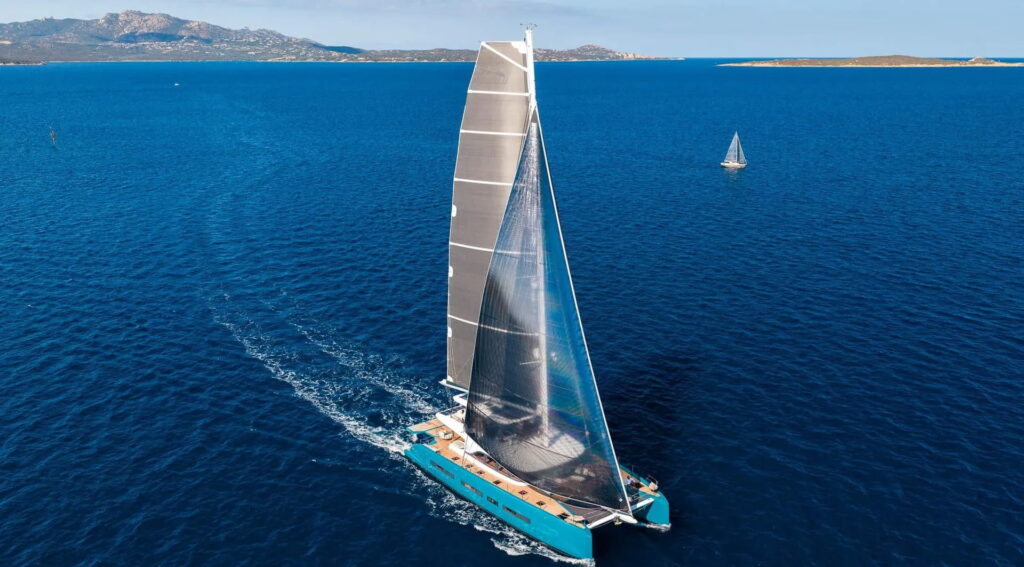
The meeting today produced the beginning of the technical specification that the Eighty2 requires to be the vessel the Naora voyage needs it to be. Not the final specification: months of detailed engineering work lie between today’s meeting and the build decisions that the specification produces. But the philosophy is established, the priorities are aligned, and the professionals on both sides of the table understand what the vessel needs to be capable of and what it will take to make it capable of those things.
Lagoon builds extraordinary catamarans. The Naora configuration of the Eighty2 is the specific expression of what an extraordinary catamaran needs to become in order to be the self-sufficient, fully autonomous, technically redundant vessel that five years at the world’s most remote sailing destinations requires. The meeting was the first day of that becoming. May 2027 is when the result of it sets sail from Bodrum. Everything between now and then is the work of making sure that when the lines come off the dock, the vessel is exactly what the voyage requires it to be.