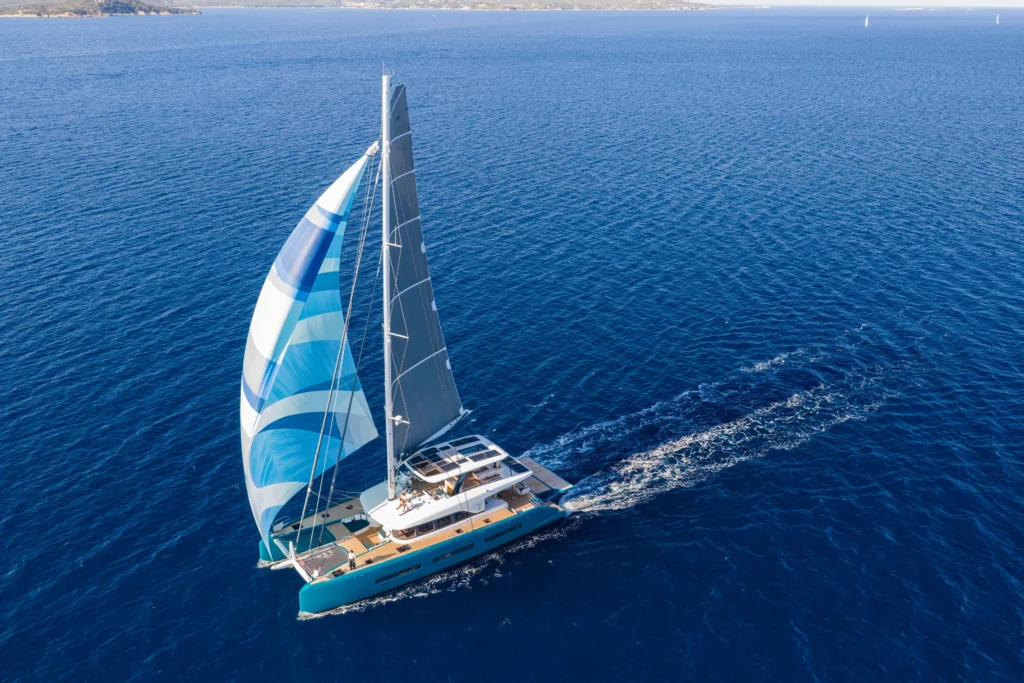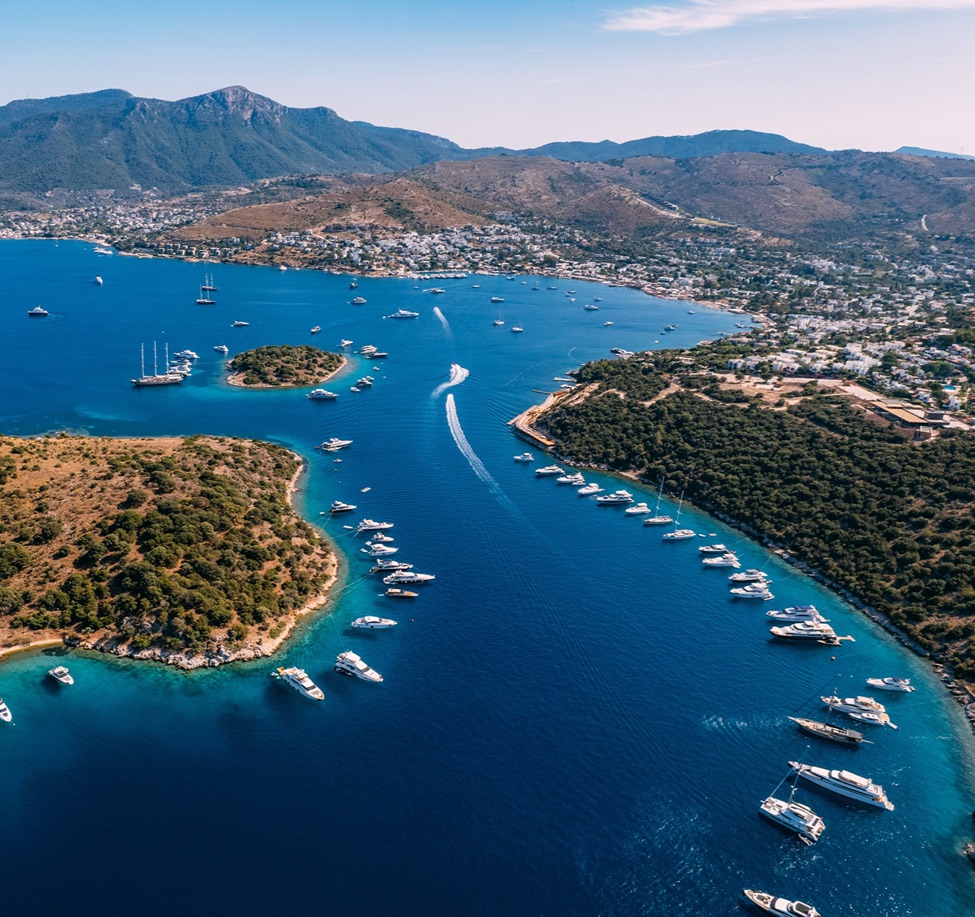
The Naora circumnavigation runs from May 2027 to January 2032. It covers approximately 45,000 nautical miles across four oceans, visits more than 180 destinations, and is organised into individual legs of approximately one week each. You can join for one leg or for many. You can join in Bodrum and leave in the Caribbean, or join in Fiji and leave in Indonesia. The route is continuous. Your participation in it is entirely flexible within a structure that is worth understanding before you decide where in the journey you want to be.
This article explains that structure: what the different types of legs are, what each one feels like from aboard, and how the refit windows work. Including the part that is genuinely unusual: if you join during a refit week and help with the work, those days do not count toward your total.
The Four Types of Week
Every leg on the Naora route is classified by its pace: Relaxed, Moderate, Passage, or Refit. These are not marketing categories. They describe real differences in the character and physical demands of the week, and they are honest designations that matter when you are deciding which part of the journey fits what you are looking for.
Relaxed
The majority of the Mediterranean legs are Relaxed. The boat moves between anchorages and small ports at a pace that allows full days at anchor, morning dives, afternoon swims, market visits ashore, and evenings at a table that has nowhere to be tomorrow. Passages between stops are short: rarely more than four to six hours. The daily distance is determined by what is worth stopping for rather than by a schedule that needs covering.
Relaxed weeks are the weeks that most members remember most specifically, because they have enough time in each place for the place to become something more than a GPS coordinate. The Gokova Gulf in May, the Dodecanese in June, the Aeolian Islands in September, Sardinia’s La Maddalena archipelago in October: these are Relaxed weeks. Days of extraordinary beauty at a pace that allows the beauty to be received rather than documented and moved on from.
Moderate
Moderate weeks cover more distance than Relaxed weeks, typically because the route is transitioning between regions or because the destinations between two points are worth moving through rather than stopping at. The passages are longer, the days have more structure, and the rhythm leans more toward sailing than anchoring. Moderate is not demanding: it is the pace of a boat that is going somewhere and enjoying the going.
Examples: the Corinth Canal transit and the move to Lefkada in June, the passage from Corsica to the Côte d’Azur in October, the approach to Barcelona via the Balearics in November. Moderate weeks have excellent stops but the stops are selected from a moving boat rather than from a settled anchorage. The experience is different and for many members is the preferred week type: enough motion to feel like sailing, enough time at each stop to feel like arriving.
Passage
Passage weeks are the offshore crossings: the legs where the boat leaves one region and reaches another with open water in between. The Atlantic crossing from the Canaries to the Caribbean in December 2027 is a Passage week. The Galapagos to Marquesas crossing in July 2028, at 2,800 miles the longest single leg of the circumnavigation, is a Passage week. The leg from Phuket to Sri Lanka via the Nicobar Islands in July 2030 is a Passage week.
Passage weeks are what the Naora voyage is built around at its most essential level. They are the weeks that do the specific things to a person that the voyage is designed to produce: the disconnection from the reactive layer of daily life, the quality of thinking that open water and a watch rotation and days without a schedule create, the specific community that forms when ten to twelve people share a boat far from land for more than 48 hours.
They are also, for most people who have not experienced offshore sailing, the most unknown element of the journey. The most common thing members say after their first Passage week is some version of: I did not know it was going to be like this. They almost always mean it positively.
The Refit Windows
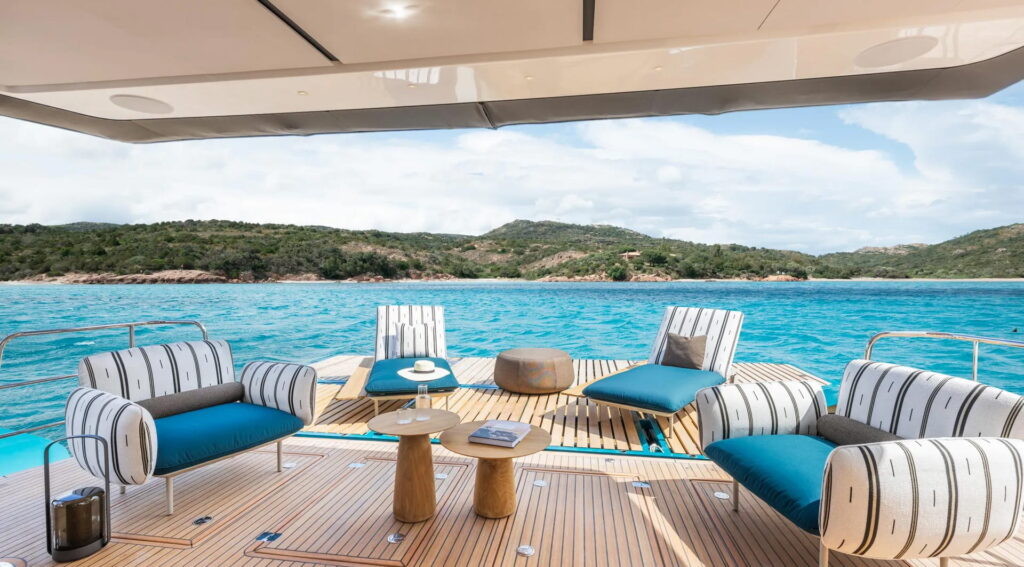
Twelve refit windows are scheduled across the five-year circumnavigation. They are not optional: a 24-metre sailing catamaran operating continuously across four oceans and 45,000 miles requires regular, serious maintenance, and the refit windows are where that maintenance happens. They are also where the crew takes the holidays that sustained professional offshore operation requires, and where crew rotations occur if they are needed.
Sven remains aboard throughout. The boat does not operate without its captain. What changes in a refit week is everything around the sailing: the pace of activity, the people aboard, and the specific work that the refit window produces.
Here is where the refit windows fall on the route:
| Refit | When | Location | Character |
|---|---|---|---|
| Refit 1 | January 2028 | Barbados or Guadeloupe | Atlantic landfall week: crew holiday, boat systems check after the crossing |
| Refit 2 | June 2028 | Panama | Pre-Pacific preparation: full systems service before the longest passages of the route |
| Refit 3 | October 2028 | Tahiti, French Polynesia | Crew holiday in the Pacific: Papeete, the Society Islands, deep Pacific rest |
| Layover I–IV | Dec 2028 – Apr 2029 | Whangarei, New Zealand | Cyclone season layover: four weeks in New Zealand, major refit window, crew vacation |
| Refit 4 | May 2029 | Fiji | Crew holiday and maintenance before the Melanesian and Indonesian chapters |
| Refit 5 | July 2030 | Phuket, Thailand | Mid-voyage major service: the halfway point of the circumnavigation |
| Refit 6 | February 2031 | Cape Town, South Africa | Crew vacation: the Cape, the Winelands, the specific rest that the Indian Ocean passage deserves |
| Refit 7 | June 2031 | Gibraltar | Crew decompression and final systems check before the Mediterranean return |
| Refit 8 | November 2031 | Sharm el Sheikh, Egypt | Crew holiday and Sinai excursion: the Red Sea diving chapter’s shore extension |
The Whangarei Layover: Four Weeks in New Zealand
The New Zealand layover between December 2028 and April 2029 deserves specific mention because it is the longest single pause in the circumnavigation and because it is determined by a factor that cannot be negotiated: the South Pacific cyclone season. Between December and April, the waters south of approximately 15 degrees south are cyclone-free by virtue of New Zealand’s latitude, and the boat stays south of that line in Whangarei while the cyclone season passes to the north.
Four weeks in New Zealand is not a hardship. It is one of the finest places on earth to be on a boat, with access to the Bay of Islands, the Hauraki Gulf, and the specific quality of New Zealand marine culture that produces the finest yacht racing and offshore sailing community in the southern hemisphere. The refit work happens in Whangarei’s boatyard facilities, which are among the best available anywhere on the route. The crew holidays happen in New Zealand, which is a complete justification for the weeks in itself
Joining a Refit Week: How It Works
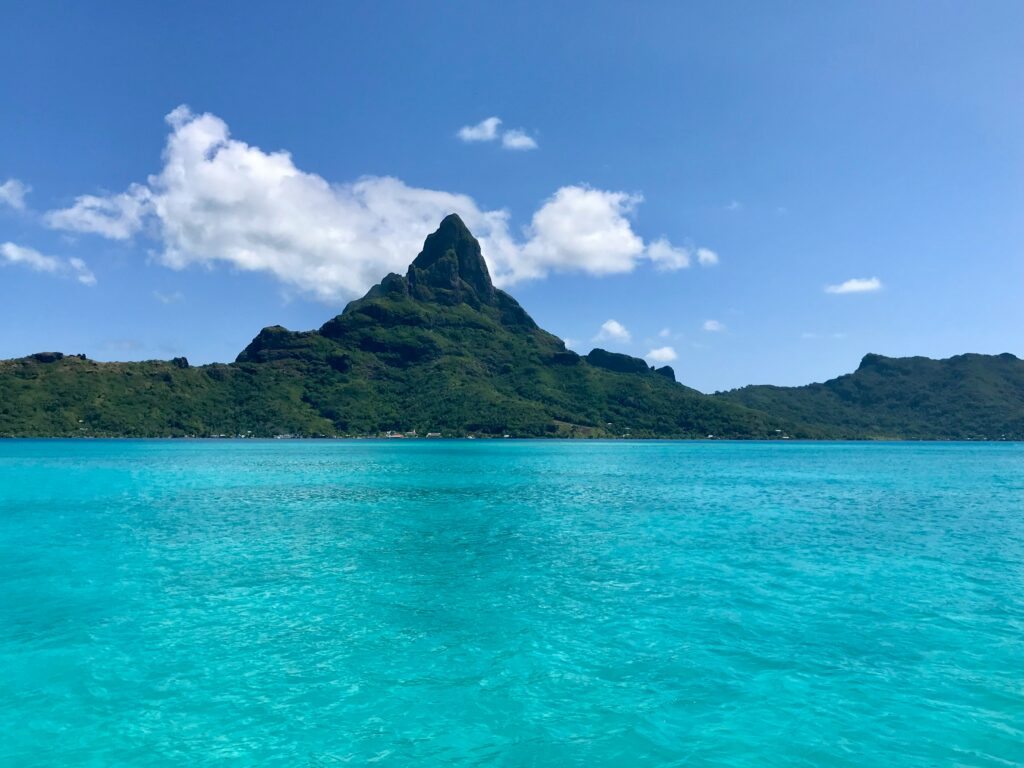
Members who join during a refit week and participate in the maintenance work are not charged for those days. This is a straightforward policy with a straightforward logic: if you are giving your time and your practical capability to the boat, the boat gives your days back. The work during a refit week is real work: antifouling, deck hardware inspection, varnish, bilge maintenance, rigging checks, the specific practical tasks that keep a vessel of this size operational across a five-year circumnavigation.
It is also, for members with a background in boats, genuinely satisfying work. Understanding a vessel at the level of its maintenance is a different kind of knowledge to understanding it from the helm or the afterdeck, and the members who have worked on the Eighty2 during refit weeks describe the experience as among the most directly connective of any time spent aboard.
The refit week arrangement is also where crew rotations happen. If a crew member is taking holiday during the week, a different crew member covers the period. Family of the crew sometimes joins during refit weeks: the children or partners of the people who spend the rest of the year making the voyage possible, aboard for a week in New Zealand or Tahiti or Phuket while the boat is in the boatyard and the pace is entirely different to the sailing weeks.
Members who want to join during a refit week should communicate this clearly in advance so that the work programme and the space aboard can be planned accordingly. The maximum capacity during refit weeks is lower than during sailing legs because the boat’s systems may be partially offline and the sleeping and social spaces are managed differently. We accommodate this in the booking and we welcome the help
Where Sven Is Throughout
Sven is aboard from the first departure in Bodrum in May 2027 through the end of the Caribbean chapter in early 2028, and thereafter for the full remainder of the circumnavigation. His presence is not dependent on the pace classification of the week or the location of the refit. The captain does not take a season off. What the refit weeks give him is a different quality of time: time to focus on the boat rather than on the passage, time to work with the crew on the things that the sailing season generates and does not allow time to address, and the specific satisfaction of a vessel that is being properly maintained rather than continuously operated.
The crew rotation during refit weeks means that the specific crew members who manage the chef’s function or the steward’s function or the mate’s function may be different to the people in those roles during the sailing weeks, as holidays are taken and family time is managed. What does not change is the captain and the standard of care applied to the vessel and the people aboard it.
Choosing Your Window
The first question most prospective members ask about the legs is: which one is right for me? The honest answer is that it depends on what you are looking for and when in your life the voyage will take place, and that the conversation we have with you before any booking is made is specifically designed to help you answer that question rather than to steer you toward any particular window.
Some general orientations: if you want the experience of offshore sailing at its most transformative, choose a Passage week. The Atlantic crossing in December 2027, the Galapagos to Marquesas in July 2028, the Phuket to Sri Lanka passage in July 2030: these are the weeks that produce the specific quality of offshore experience that the Naora voyage is designed around. If you want extraordinary destinations at a pace that allows you to understand them, choose a Relaxed week in the Mediterranean or in the Pacific islands. If you want to understand the boat at its most fundamental level and give something back to the voyage that produces the experience, consider a refit week: the days are free, the work is real, and the knowledge of the vessel that the week produces is unlike any other kind of knowing.
The route runs for five years. There is time. The question is not whether a window exists for what you are looking for. It is which window is the right one, and that question is worth a conversation.