Naora did not begin with a business plan. It began with a series of conversations between two people who had already figured out that they saw the world the same way, and who eventually arrived at the question that good friendships sometimes produce: what would it look like if we actually did this together?
The two of us brought different experiences to that conversation. But the thing that connected us, before Naora existed as a name or a concept, was a shared conviction about what a life lived well actually looks like. The sea is part of that. Community is part of that. Moving slowly and paying attention is part of that. These are not values you declare. They are values you recognise in another person when you encounter them, usually in a context where there is enough time and enough honesty for them to surface.
This is how it happened.
Sven And Antony: A Project, A Recognition, A Friendship That Never Ended
I met Antony at a large multinational where we were both involved in the same project. The professional context was not particularly unusual: two people brought together by work, overlapping briefly, the kind of encounter that produces a business card and a LinkedIn connection and then quietly disappears. Except it did not disappear, because within the first few conversations it was obvious that we were not having a professional encounter. We were having a human one.
Antony has a background shaped by communication, culture, and language. He has lived and worked across continents, navigated different markets and different ways of seeing the world, and built the specific kind of intelligence that comes from genuine cross-cultural experience rather than from reading about it. He understands how people connect and how trust is built across the kind of distances, geographical and human, that most people find difficult to bridge. In a professional setting, this makes him formidable. In a personal one, it makes him the kind of person you want at the table for the conversations that actually matter.
What we discovered quickly was that we shared not just professional competence but something more specific: the same background, the same values, the same restlessness toward the horizon that people who have spent real time offshore tend to develop. The sea was already part of both our lives. We had both made passages that cost something and taught something. And the contact, once made, was never broken.
In the years that followed, Antony and I sailed together. Not day trips or weekend charters but real passages: multiple days offshore, the kind that test how people actually function when the conditions are not comfortable and the distance to land is enough to make comfort an irrelevant concept. These passages did what offshore passages always do to a friendship: they deepened it in a way that no amount of shore-based socialising can replicate.
By the time Naora began to take shape as an idea, Antony was its natural co-founder, and the question of who would serve as first Commodore had essentially answered itself. His ability to connect people, to hold a community together, to understand what different people need and to bridge the distances between them: there was no more natural choice. He knows it, and he wears the role in the way that the right person always wears a role: as though it was already his.
Antony: Knowing What Community Actually Means
The professional setting gave us an introduction. What followed gave me a much better understanding of Antony: not simply how easily he could begin a conversation, but how much attention he paid once it had begun. There is a difference between being good company and making room for other people. He does both.
What I understood about him, early in our acquaintance, was that he already knew something that is easy to overlook when people talk about community: bringing people together is only the beginning. What matters is whether they feel they belong once they are there, and whether that feeling lasts beyond the first welcome.
His experience across cultures matters here in a very practical way. Different people arrive with different expectations, different habits, and different ideas about how much of themselves they want to share. A good gathering makes room for those differences without turning them into a subject. Some people find their place through conversation; others need time, or something to do alongside someone else. Antony understands that inclusion is not a matter of asking everyone to behave in the same way. It is a matter of paying enough attention to notice what allows each person to settle.
At sea, that attention becomes especially important. You share a finite space, and the rhythm of the passage does not always match the rhythm you would have chosen for yourself. There are tired mornings, quiet afternoons, and moments when the best company is someone who does not require you to speak. Sailing together gave us time to understand these things about each other. It also gave us a clear sense of what we wanted to protect when we began thinking about welcoming others aboard: companionship without pressure, and enough freedom for people to enjoy the voyage in their own way.
Within Naora, Antony brings that understanding to the Circle: the way gatherings work, the way members are welcomed, and the connections that continue between passages. We think about these things together, with the shore team helping to carry them through in practice. A welcome is not just the first conversation aboard. It includes knowing what to expect before you arrive, feeling comfortable asking a question, and finding that there is a place for you at the table without having to work for it. None of this needs to be elaborate. It does need to be sincere.
When you spend time with Antony, you understand quickly why this part of Naora belongs so naturally with him. He is interested in people, not merely in getting people together. That distinction has shaped what we are building from the beginning.
Sven And Antony: A Friendship Lived On The Water
Work introduced us, but sailing changed the friendship. A colleague becomes a friend gradually, sometimes without either person noticing exactly when it happened. By the time you have shared a passage, the original reason you met can feel almost incidental.
There is enough space at sea for a real impression to form. You see how someone responds when a plan changes, whether they can laugh when they are tired, and whether silence between you is comfortable. With Antony, the ease we had found in our first conversations carried over onto the water. We did not need to manufacture an occasion to spend time together. The sailing gave us something we both wanted to do, and the friendship grew in the ordinary business of doing it.
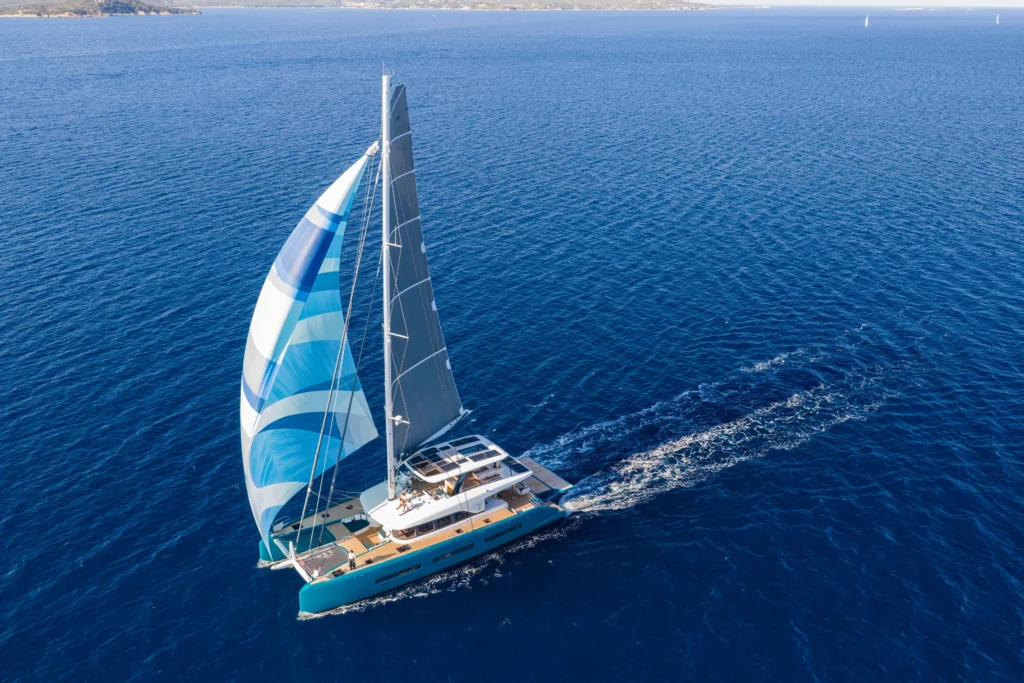
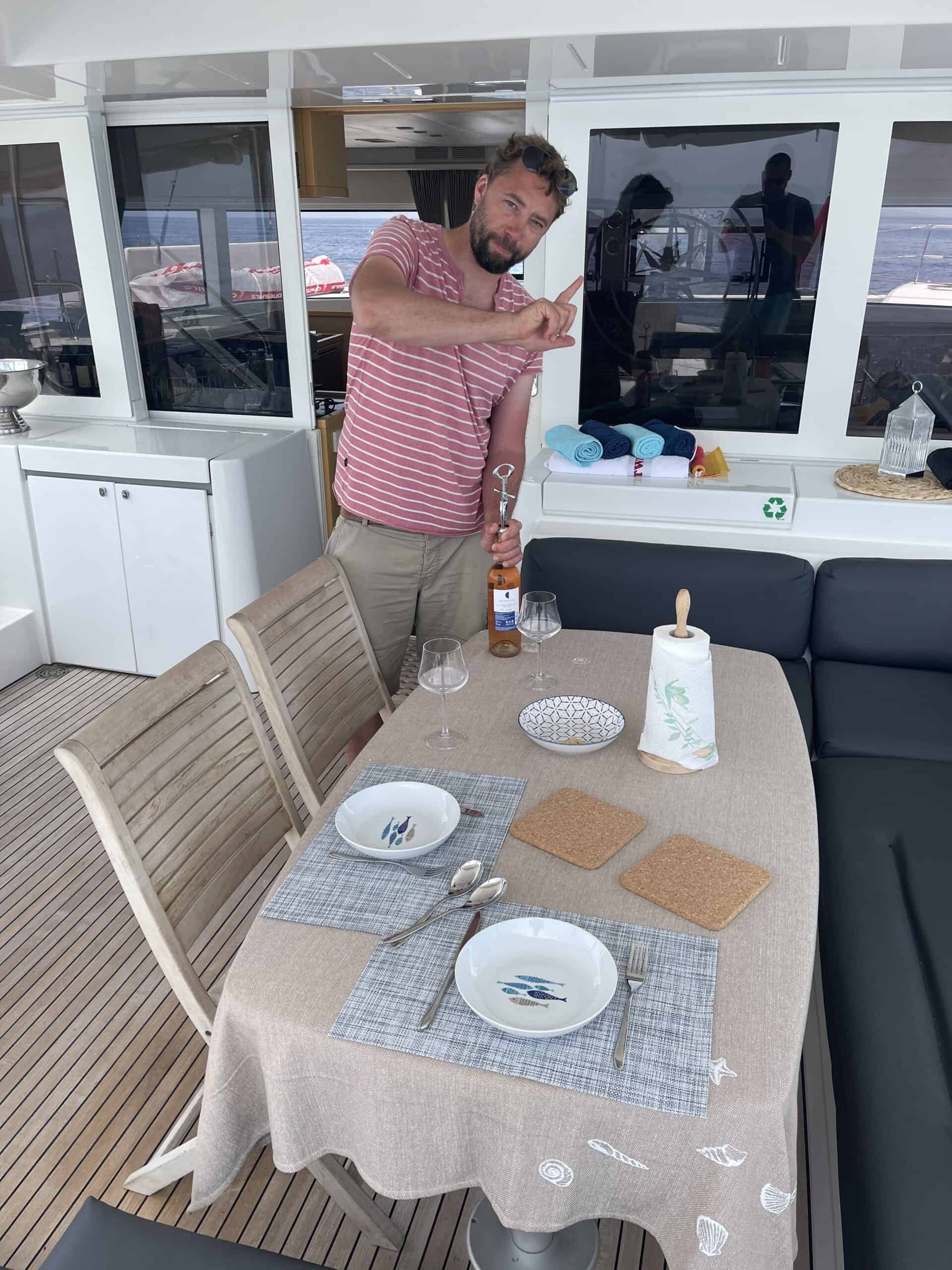
We sailed the Mediterranean together and we lived it fully. That is the honest description. The good anchorages, the long evenings, the food and the wine and the conversations that only happen when you are far enough from everything else that the usual filters come down. The Mediterranean is generous with this kind of experience if you give it enough time and arrive with the right company. We gave it time and the company was right.
The friendship deepened in the years that followed in the way that friendships sometimes do when you have shared something real: not dramatically, not through crisis or confrontation, but through the quiet accumulation of time spent together in different contexts that kept confirming the original impression. We knew we could enjoy the good evenings together. Just as importantly, we knew the friendship held when there was work to be done.
By the time Naora began to take shape, doing something together within the world of sailing was simply the natural extension of a friendship that had already been built on the water. We were not looking for a reason to become partners. We had found something we wanted to share, and we trusted each other to build it properly. The pleasure of being aboard mattered as much as the ambition to go somewhere. Neither of us wanted to lose sight of that.
What The Two Of Us Share
Naora is not the result of a strategy session or a market analysis. It is the result of two people who found each other, recognised something in each other, and eventually understood that the thing they wanted to build together was already clear in outline: a sailing community built on genuine offshore experience, real human connection, and the specific quality of life that the sea makes available to people who are willing to go out far enough to find it.
We bring different things. I am Sven, Naora’s founder and captain. I bring the sailing, the navigation, and the years offshore. I plan every weather window and sail every leg myself. Antony, our co-founder, brings the human intelligence and the ability to hold a community together. Between us, there is also the shared pleasure of a good anchorage, an unhurried meal, and the kind of companionship that makes an evening aboard worth remembering.
Neither of us would have built Naora alone. Together, it made sense from the first conversation in which the idea took a real shape. And the people who join us will understand, fairly quickly, that they are not simply joining an organisation. They are entering a community begun by two friends who have known each other long enough that the friendship has become a way of doing things, and who want to share what that way of doing things produces with the right people at the right moment.