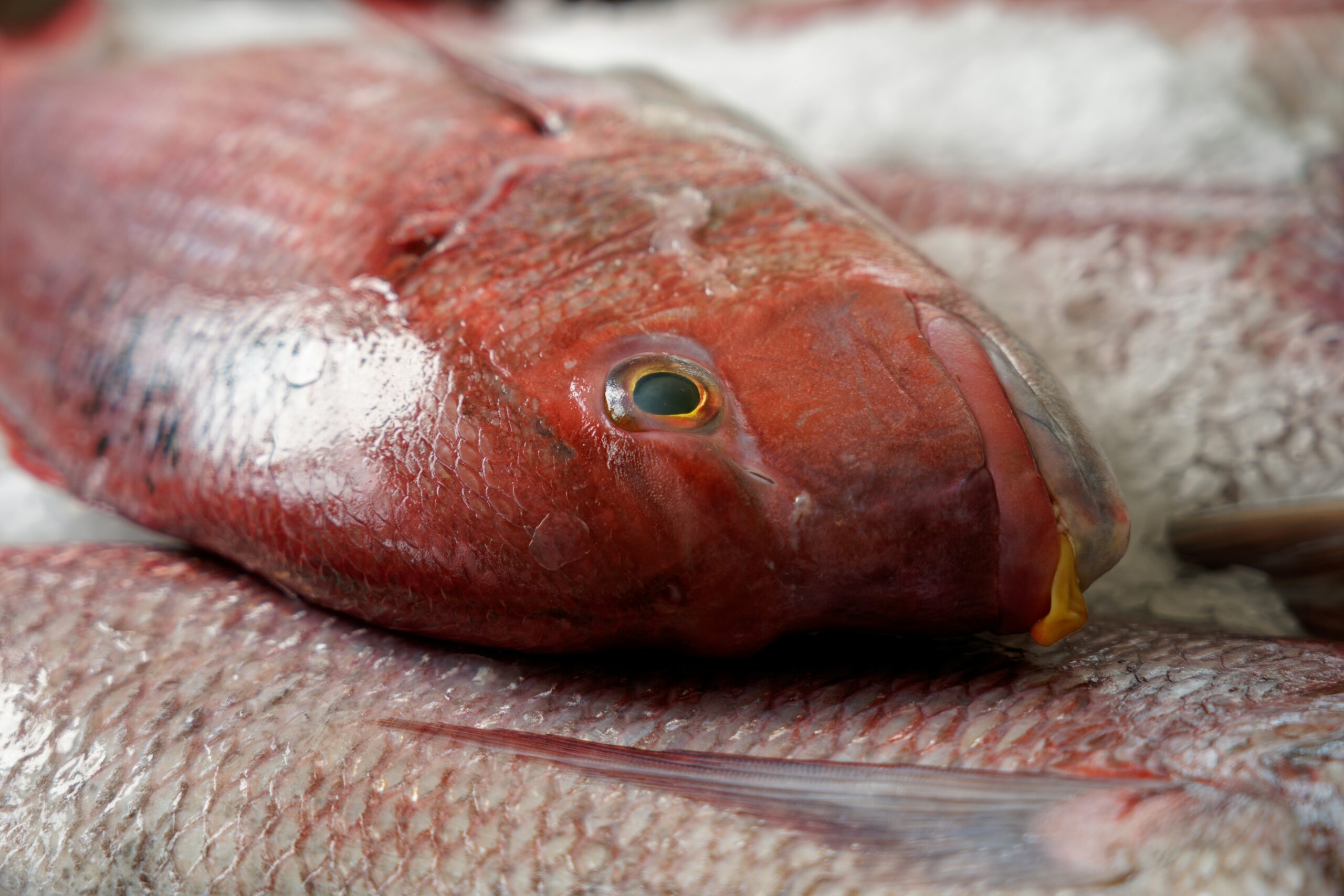
The first instinct, when fish skin catches on a grill, is to lift it. We give it a little longer. A clean, properly heated grate and a dry, lightly oiled fish help the skin set before turning, so that supper reaches the table whole rather than in pieces. In Saint Lucia, grilled red snapper with Creole sauce rewards this sort of patience, though most of the care belongs to the hours before cooking.
For the Caribbean chapter of Naora, the meal we have in mind is straightforward: a whole fish bought in Castries, a sauce of tomato, onion, garlic and thyme, rice and peas, and ripe plantain. Marigot Bay gives it a setting. The decisions behind it give us something more useful than a beautiful plate: a way of paying attention to the place where we have stopped.
The Shelter Around The Supper
Marigot Bay is enclosed by steep green hills, with mangroves along parts of its shore. That enclosure matters when the wind is outside and supper is on the table, but it needs to be understood accurately. This is a working harbour with marina facilities, moorings and tender traffic, not an empty inlet beyond the reach of shore life. Its shelter is valuable. It is not absolute.
The easterly tradewinds help explain the appeal of Saint Lucia’s western coast, yet a forecast still has to be read for direction, gusts and approaching squalls, not simply average wind speed. Hills can interrupt and redirect the air. The Atlantic hurricane season runs from June through November, and no attractive description of a harbour makes it hurricane-safe. A sheltered dinner berth and a sound storm plan are different things.
For Discovery, the choice between an authorised anchoring position, a suitable mooring and a berth would follow current conditions and local arrangements. Width, windage, depth and swinging room all matter. So does what lies on the bottom. We would not lay an anchor through seagrass or among existing mooring gear because a patch of water looked inviting from the entrance.
These decisions should be settled before anyone begins carrying hot dishes outside. The cook needs to know whether the yacht will remain still enough to work safely, and the people eating should not have to wonder whether dinner will be interrupted by a hurried move. An easy evening starts with a berth that has been properly considered.
Buying Fish In Castries
The useful conversation at the Castries fish market starts before the fish is weighed. What species is it, where was it caught, and how has it been kept since landing? Red snapper is a market name that can cover more than one species. A red skin tells us less than we might wish about the animal, its habitat or the pressure on the fishery.
Clear eyes, moist gills, firm flesh and a clean smell are useful signs of condition, but none establishes when a fish was caught or proves that it is safe. The word local is not a substitute for those questions either. Buying close to the landing place can shorten the chain between fisher and cook; it does not automatically make every purchase responsible.
There is also a Caribbean distinction worth keeping clear. Ciguatera is a toxin risk associated with certain reef fish and their food chains. It cannot reliably be detected by appearance, smell or taste, and neither grilling nor freezing removes the toxin. Species, catch area and current local knowledge matter. A smaller fish is not a guarantee. If the provenance is unclear, we choose something else.
For a whole-fish meal, a snapper of roughly 1 to 1.5 kg can be a manageable cooking size, provided it fits the grill. That is a kitchen preference, not a safety threshold or a promise of what the market will hold. Several manageable fish can be easier to cook evenly than one very large specimen whose shoulders remain underdone while its tail dries out.
The return to the yacht belongs to the buying decision. An insulated container and sufficient ice come before the leisurely errands. We aim to keep fresh fish at 4°C or below, protected from dirty meltwater, until preparation. In tropical heat, the cold chain is part of the recipe.
A Creole Sauce With Room For The Cook
Calling the sauce Creole should leave room for the person making it. Saint Lucian food carries African, Indigenous and European inheritances, along with influences from the island’s Indian community. Those histories include slavery, colonial rule and indentured labour. They cannot be reduced to a pleasant story of French technique meeting tropical ingredients, nor can one tomato sauce stand for the whole kitchen of an island.
Creole belongs here to a living culture, also expressed in Kwéyòl, the island’s French-lexicon Creole language. At the stove, recipes vary between households. Thyme may be prominent, pepper restrained or assertive, seasoning fresh and green or softened through longer cooking. Allspice can bring warmth, but it need not be present for the sauce to belong.
For a fish of this size, about 500 g of ripe tomatoes makes a useful starting point for a generous sauce. The quantity gives enough to accompany the rice as well as the fish. What matters next is their condition: juicy tomatoes need more reduction, while firmer ones may need a little water to soften without catching.
We soften chopped onion in oil before adding garlic, giving the onion time to lose its raw edge without asking the garlic to survive the same long exposure to heat. Then come the tomatoes and thyme. The pan should simmer rather than spit angrily. The aim is a sauce that will sit on a spoon and still flow, with enough texture to recognise what went into it.
Scotch bonnet brings fragrance as well as heat. Keeping a pepper whole can make the release gentler, but it is not a precise heat control, especially if the skin splits. For a shared table, cooking with a restrained amount and offering extra pepper separately is kinder than guessing everyone’s tolerance. Removing seeds alone does not remove all the heat; much of it is associated with the pale tissue inside.
Lime belongs near the end, after tasting. Tomatoes already bring acidity. Salt, a little reduction or simply more time may be what the sauce needs instead. The fish should remain perceptible beneath it.
Preparing Grilled Red Snapper
A whole fish needs to be scaled thoroughly and gutted cleanly, with the gills removed. Small scales left near the fins are easy to miss and unpleasant to discover at the table. The belly cavity deserves attention too. Any cleaning uses potable water, and the fish is dried afterwards rather than left wet on the board.
Dryness is an unglamorous part of good grilling. Surface water must evaporate before the skin can brown, and a wet fish is more likely to steam and stick. We keep the preparation area separate from ready-to-eat food, wash the board and utensils after handling raw fish, and bring out a clean platter for the cooked one.
A few shallow scores across the thicker flesh help seasoning reach beyond the skin and allow heat into the shoulders. Deep cuts everywhere are unnecessary. They weaken the fish and expose more flesh to drying.
Lime, garlic and thyme make sense here, but an hour in strong lime juice is not automatically an improvement. Acid changes proteins at the surface without cooking the centre safely. For a restrained citrus marinade, 10 to 15 minutes under refrigeration is a useful working choice, followed by draining and drying the skin again. Alternatively, we use lime zest before cooking and reserve the juice for serving.
The point is to keep the snapper tasting of itself. A little oil on the skin helps it meet the grate; loose pieces of garlic are brushed away because they can burn before the fish is ready. Nothing about this preparation needs to be elaborate. It needs to be finished properly.
Cooking Grilled Red Snapper At Anchor
A recipe written ashore can assume a steady floor and still air. A yacht cannot. The cooking method has to suit the marine equipment in use, its required clearances and the wind at the berth. We would not improvise a charcoal fire on deck for the sake of an attractive account of dinner. If conditions make the exposed grill the wrong place to cook, the galley becomes the right one.
Where the equipment allows it, a hotter area for browning and a gentler area for finishing give more control than uniform fierce heat. The thick flesh behind the head needs longer than the tail. A lid can help the heat surround the fish, but the maker’s operating instructions take precedence over any general technique.
At the grill, the work becomes very physical. Heat reaches the wrists before it reaches the face. Moisture beads in the scored flesh, a little oil hisses as it falls, and the thin edges of the fins darken first. These are useful observations, not a clock. We watch the thick part of the fish rather than letting the fastest-cooking part dictate the meal.
A broad fish slice, or a suitable grilling basket, supports the body when turning. If the skin resists, more force is rarely the answer. It may need more time, a gentler attempt at another point, or an adjustment of the heat.
For a straightforward food-safety endpoint, the thickest flesh should reach 63°C, checked with a clean probe away from bone. That measurement answers something the colour of the skin cannot. Grilling time varies with thickness, starting temperature and equipment; a confident number of minutes would be less useful than checking the centre.
The sauce stays in its own pan. Spoon it beside or lightly over the flesh when serving, rather than soaking all the browned skin before anyone has tasted it.
Rice, Plantain And The Shared Platter
Rice and peas give the sauce somewhere to go. The peas may be pigeon peas or beans, depending on the preparation, and their cooking needs should determine the order of work. Properly cooked pulses can wait while the rice finishes. Rice cannot be rescued indefinitely from a pan that was ready too early.
Ripe plantain brings a sweetness that suits both the pepper and the slight bitterness of browned fish skin. Yellow skin with dark patches usually points towards a sweeter, softer plantain than an entirely green one. The distinction matters because the fruit changes its role as it ripens. Saint Lucia’s green fig and saltfish, for example, uses unripe bananas, not the sweet fried plantain imagined on this plate.
Plantain should reach the pan with a dry surface, in batches that leave room for the heat to recover. Crowding lowers the temperature and encourages a soft, oily result. We would rather cook a smaller quantity well than heap a platter with pieces that have lost their edges while waiting.
Serving the fish whole preserves moisture and makes the meal naturally shared, but it also leaves work to do. The upper fillet can be lifted away in sections, the backbone carefully raised, and the lower flesh checked for remaining bones. Smaller bones can still be present. For children, or anyone who prefers not to manage a whole fish, a portion deserves a second careful check before it is passed across.
There is a particular pleasure in that first opening of the skin. Steam rises from flesh that has been protected from the direct heat, the thyme returns in the warmth, and the sauce loosens as it meets the fish juices. Rice catches what the fork leaves behind. The meal becomes quieter for a moment, without anyone needing to arrange the quiet.
An Evening Within A Longer Voyage
Discovery, our 2025 Lagoon Eighty2, is the yacht sailing the Naora Global Expedition, a private sailing expedition around the world. Saint Lucia belongs within that larger movement, not outside it as a self-contained holiday scene. The yacht carries provisions, accumulated knowledge and responsibilities from one place to the next. It should not carry the assumption that every shore exists to reproduce the same dinner.
The next departure remains a matter of conditions, even while the sauce is being finished. A good evening at anchor does not require everyone to forget the sea. It requires the work around the evening to be done with enough care that most people can turn their attention elsewhere.
Within Naora’s private circle, people choose when they join, where along the worldwide route they step aboard and how long they stay. One person may have time for a week, another for a much longer stretch. Discovery keeps sailing. At dinner, those different amounts of available time need not divide the table.
We cannot understand Saint Lucia by cooking one sauce. We can begin by buying attentively, asking rather than assuming, and allowing the answer to change what we serve. There will be another market and another meal before familiarity means much.
For this evening, there is no need to put anything larger than supper on the table.