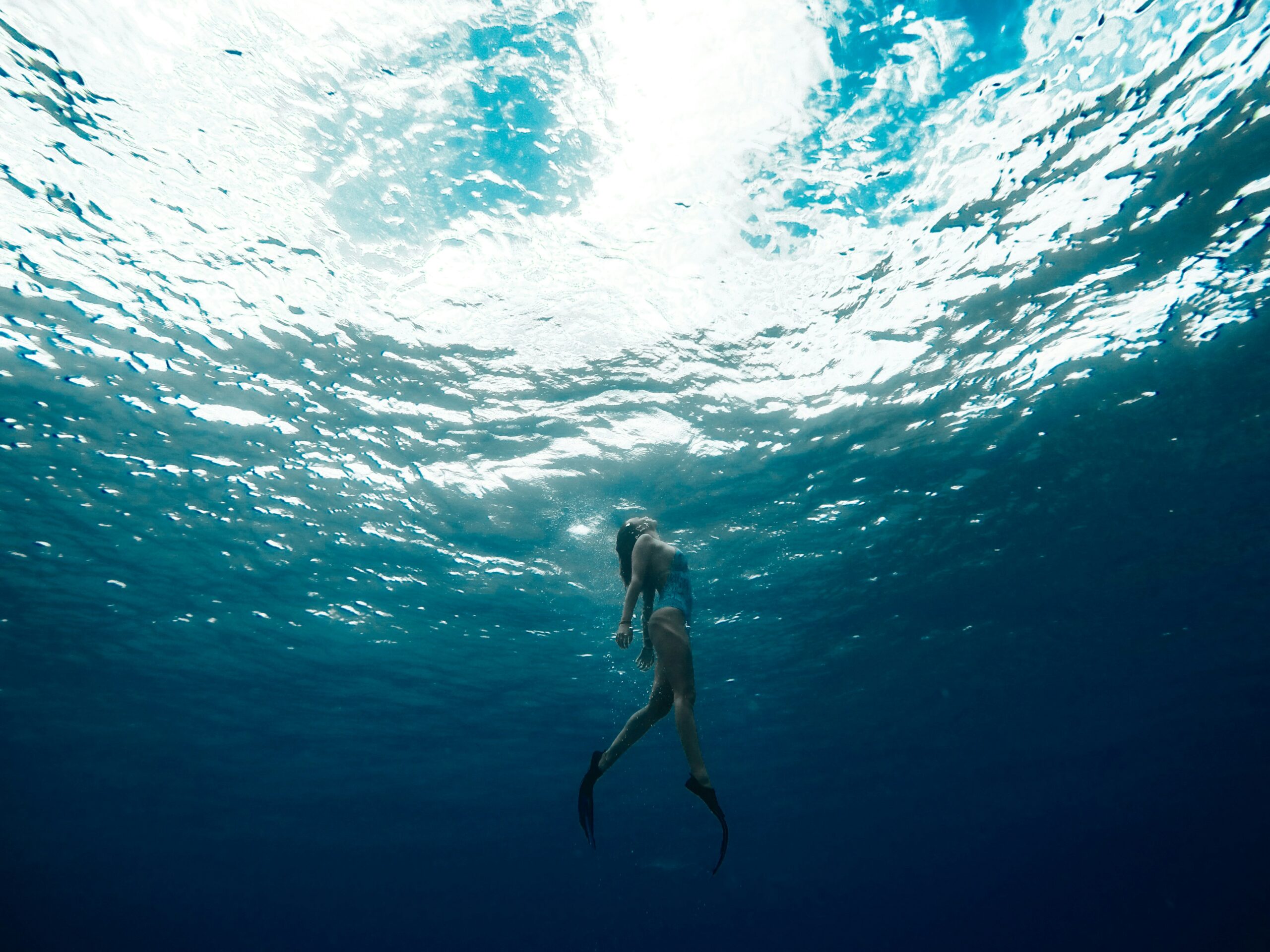
Freediving is the practice of diving underwater on a single breath, without the compressed air that scuba equipment provides. It is not a sport in the competitive sense for most of the people who practise it, though competitive freediving exists and produces extraordinary performances. For most freedivers, it is a practice: a specific relationship with the water and with the body in the water that produces a quality of experience that scuba diving, for all its advantages, does not replicate.
The difference between freediving and scuba is the difference between visiting the underwater world as a guest carrying everything you need and visiting it as yourself. The scuba diver is an air-breathing land animal transported into a non-native medium by technology. The freediver is a breath-holding mammal entering a medium that human physiology is, in specific ways, surprisingly well adapted to.
The mammalian dive reflex, the slowing of the heart rate and the redistribution of blood to the core organs that diving triggers in humans as in marine mammals, is not a feature that scuba activates. It is a feature that freediving accesses, and the specific physiological state it produces is part of why freediving feels the way it does: more present, more connected, more at home in the water than the scuba diver’s experience allows.
Why the Naora Route
The Naora route passes through the finest freediving locations in the world. Not by accident: the route follows the logic of the ocean’s seasonality and the specific geography of the coral reef systems, and the places that are finest for offshore sailing tend also to be the places that are finest for freediving. The clarity required for freediving is highest in the offshore atoll systems: the Tuamotu, the outer Maldives, the Seychelles outer islands. The marine life that makes freediving encounters remarkable is most concentrated at the current-rich sites that the offshore boat reaches and the dive centre boat does not.
The Tuamotu outer walls are among the finest freediving sites on earth. The water clarity at these sites, regularly exceeding forty metres of horizontal visibility, allows the freediver to see the full extent of the reef structure from the surface before descending. The grey reef sharks that work the current edges are approached differently on a single breath than from behind a stream of scuba bubbles: the absence of the bubble stream changes the dynamic of the encounter in a specific way that experienced freedivers describe as the difference between observing the animals and being present among them.
The Silence
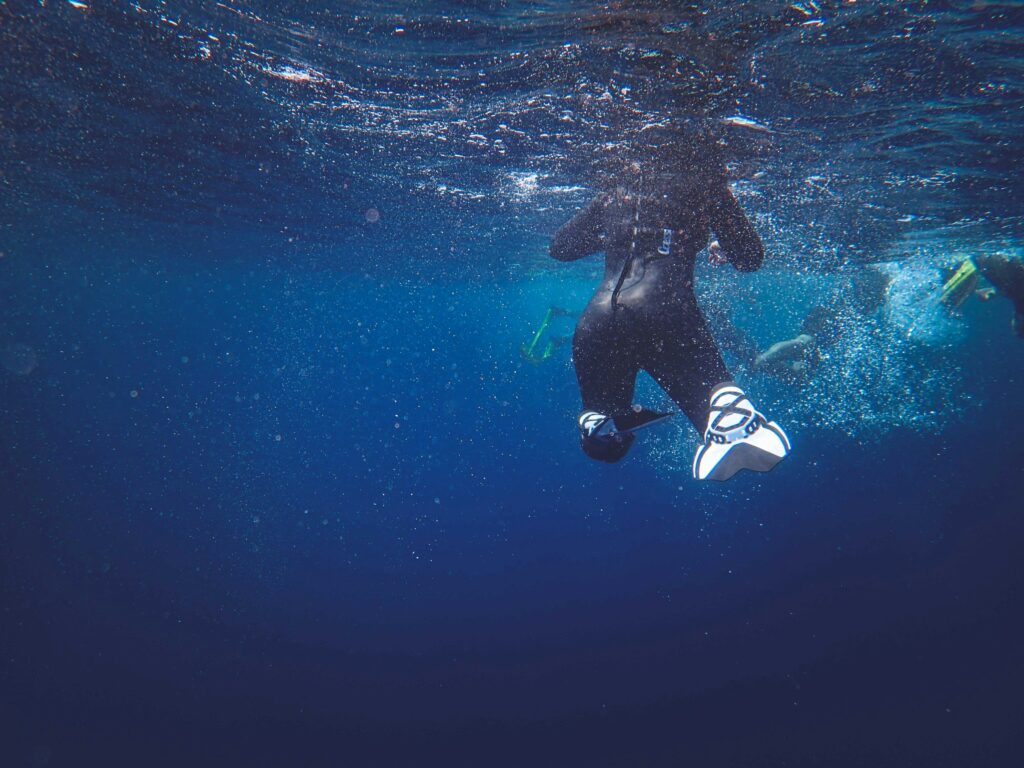
The sound environment of a freedive is categorically different from the sound environment of a scuba dive. The scuba diver hears the regulator on every breath: a mechanical sound that is constant and that masks the sounds of the underwater environment. The bubbles produce a continuous rush of noise as they rise. The buoyancy compensator inflates and deflates with audible hisses. The scuba diver in an active reef environment can hear fish but not the specific sounds of the reef at its quietest.
The freediver on the descent hears the reef. The clicking and crackling of the snapping shrimp that inhabit every healthy coral structure and that are responsible for a significant fraction of the ocean’s acoustic output. The low-frequency sounds of large fish moving through the water column, detectable as much by the lateral line sense organs that human beings have residual sensitivity to as by the ear itself.
The specific quality of silence that is not silence at all but the absence of human-generated noise in a medium that is acoustically rich in ways that the surface does not reveal. This specific quality of underwater silence is among the things that experienced freedivers describe as the reason they do not return to scuba: once the reef has been heard as it is, the regulator sound is an intrusion that the ear cannot un-learn to notice.