A five-year circumnavigation looks, on a map, like a line. The line goes from Bodrum through the Mediterranean, across the Atlantic, through the Caribbean, across the Pacific, through Southeast Asia, across the Indian Ocean, up through the Red Sea, and back to the Mediterranean. It is a comprehensible shape. What the map does not show is the number of times that line could have been drawn differently, and the specific decisions that made it the line it is rather than the many lines it could have been.
This article is about five of those decisions. The moments when the route changed, or was confirmed, in ways that determined everything that follows. Not the small daily decisions of sailing, which anchorage to use, which weather window to take, which passage to make. The structural decisions. The ones that shaped the character of the entire five years.
1. Starting in Bodrum
The Mediterranean could have been started anywhere. The logical choices, in terms of infrastructure and accessibility from Belgium, would have been a French or Spanish port, or perhaps the Italian coast. These are well-served by flights, well-stocked with chandleries and provisioning options, and entirely familiar to the European sailing community that Naora draws its members from.
We chose Bodrum for reasons that are both practical and philosophical. Practically: starting at the eastern end of the Mediterranean and sailing west with the season is the only way to be in the right place at the right time for the full length of the sea. Turkey in April and May before the Meltemi, Greece in June, Croatia in July, Italy and Sardinia in August, France and Spain in September: this sequence only works if you start in the east in the spring. Starting anywhere further west compresses the eastern section into conditions or timing that compromise it.
Philosophically: Bodrum is the right beginning because it is the edge of something. The junction of the Aegean and the Mediterranean, the point where Europe and Asia have been meeting across the water for three thousand years. A route that begins at an edge, at a crossing point, at a place that has always been the start of something, begins in the right spirit. The Mediterranean deserves to be entered from the east. Everything else flows from that direction.
2. Not Going to New Zealand
Most Pacific circumnavigations go south to New Zealand after Fiji. It is the logical staging post, the major provisioning and refit hub, the place with the infrastructure that serious offshore voyagers have come to depend on. New Zealand is an extraordinary country and an extraordinary sailing destination. The reason we do not go there is not because it is not worth going to. It is because going there would mean not going somewhere else.
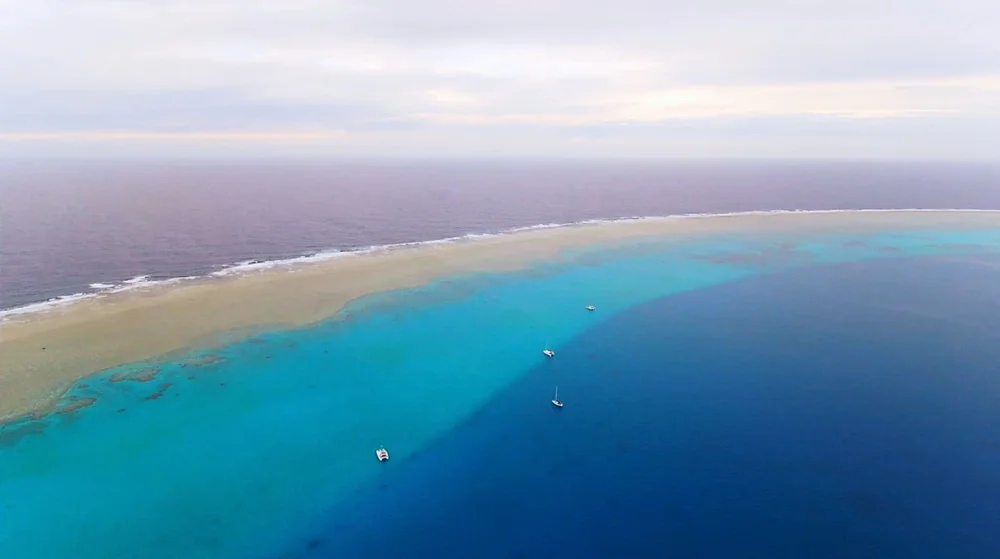
The decision to go from Fiji to Minerva Reef and then to the Solomon Islands rather than south to New Zealand was the decision that opened the northwestern Pacific to the Naora route. Minerva Reef, one of the most remote and extraordinary offshore anchorages in the world, exists in the gap between the standard Fiji-New Zealand passage and the alternative route toward the Solomons. It is almost never visited because it is almost never on the way to anywhere. On the Naora route, it is exactly on the way.
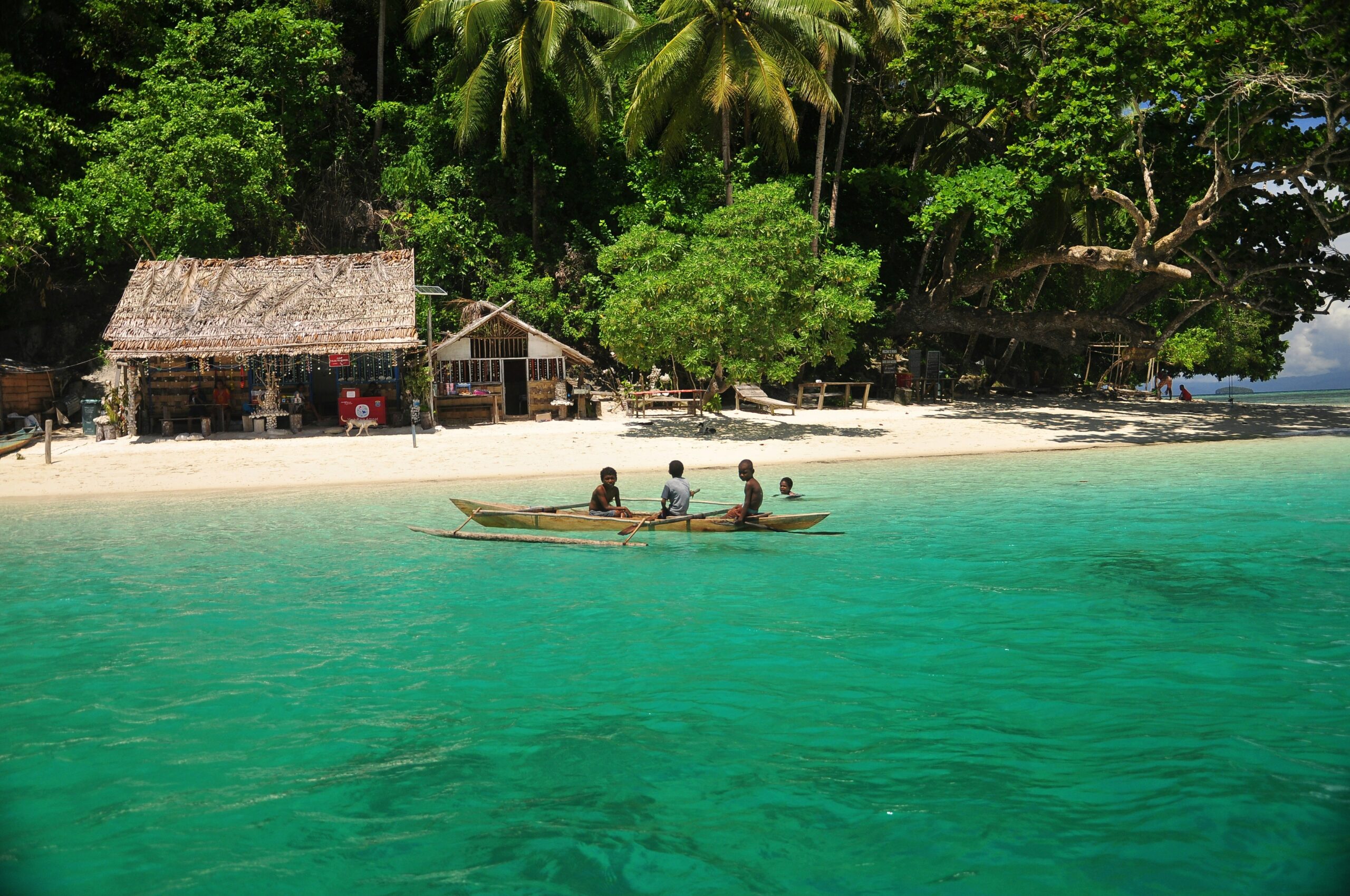
The Solomon Islands, Marovo Lagoon, Honiara, the outer island communities of Malaita and Choiseul: these are places of extraordinary beauty and cultural depth that the standard circumnavigation route bypasses entirely. The decision not to go to New Zealand was the decision to go to them instead, and it is one of the decisions that makes the Naora route different in kind from a standard bluewater circumnavigation rather than simply different in detail.
3. Entering Indonesia from the Banda Sea
Most yachts that sail Indonesian waters enter from the northwest, from Singapore or Malaysia, and work eastward along the more accessible northern coasts. This is understandable: the infrastructure is better, the charts are more reliable, and the visa and customs process is more established. It is also the wrong direction for the Naora route, which approaches Indonesia from the east after the Solomon Islands.
Entering Indonesia from the Banda Sea means entering through the Banda Islands: the Spice Islands, the historical centre of the nutmeg trade, the most remote and least visited part of Indonesia’s eastern archipelago. The decision to enter this way was a decision to see the part of Indonesia that most people, including most sailors, never see. Banda Neira and its colonial Dutch history, the pristine reefs of the outer Banda Sea, the specific remoteness of a region that the tourist industry has not yet reached: all of this is available only if you come from the right direction.
It is also a more demanding entry than the northwest approach. The Banda Sea requires careful weather routing and a genuine offshore capability. It is not a passage for the unprepared. The decision to make it was therefore also a decision about what kind of voyage Naora is: one that goes to the difficult places because the difficult places are where the extraordinary things are, rather than one that optimises for convenience and infrastructure at the cost of what lies beyond them.
4. The Red Sea: North to South
The Red Sea decision is the one that surprises people most when we explain it. Most circumnavigations that use the Suez Canal sail the Red Sea from south to north: entering at Bab-el-Mandeb after the Indian Ocean, fighting the prevailing northerly wind for the full length of the sea, and exiting into the Mediterranean at Port Said. It is arduous, well-documented, and the standard direction for the world circuit.
We go the other way. South, with the wind.
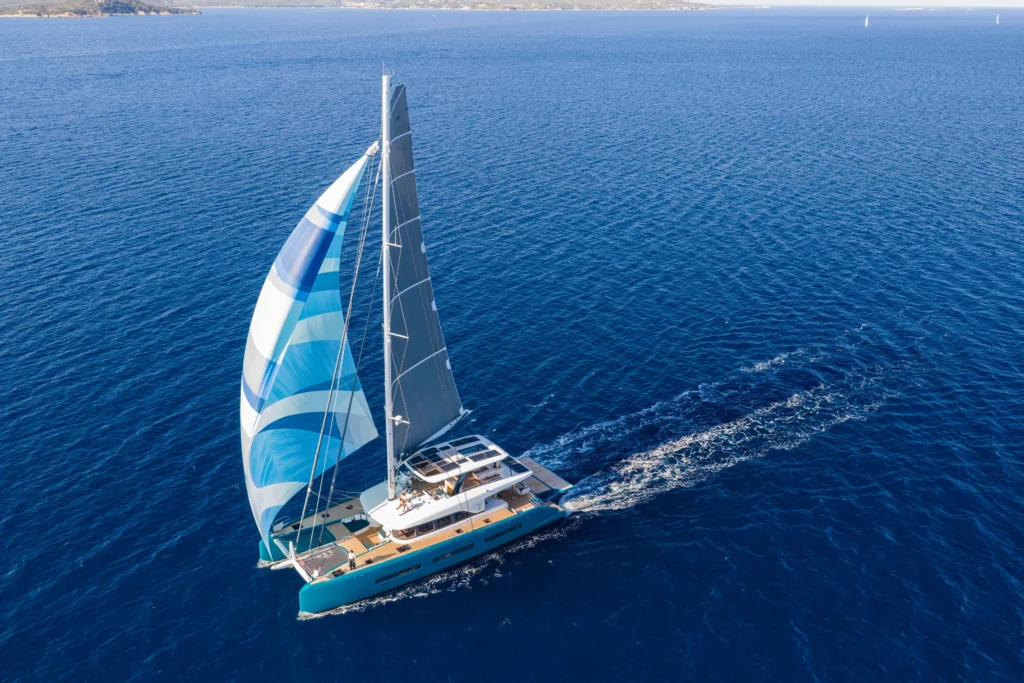
The northerly that makes the standard passage so demanding becomes, going south, a following wind. The same conditions that produce weeks of uncomfortable upwind sailing for boats heading north produce weeks of comfortable downwind sailing for the Eighty2 heading south. The decision to sail the Red Sea from north to south means that the final passage before the Mediterranean is comfortable and fast rather than difficult and slow, and it means arriving at Marsa Alam on the Egyptian Red Sea coast rather than at Bab-el-Mandeb, which is a fundamentally different destination.
Marsa Alam is the gateway to the Brothers Islands, Daedalus Reef, and Elphinstone Reef: three of the finest dive sites in the world, accessible primarily from liveaboard vessels. The decision to sail south through the Red Sea was therefore also a diving decision, made by a crew that carries a 300-bar compressor and a CMAS instructor and takes its offshore diving as seriously as its offshore sailing.
5. Five Years, Not Four
The timeline decision is the most fundamental of the five. The Naora route as it exists could be sailed in four years by a vessel willing to move more quickly, spend less time in each destination, and optimise the schedule for efficiency rather than for depth. We chose five years deliberately, and the extra year is not a buffer or a margin of safety. It is the point.
A four-year circumnavigation produces a route that is always slightly too fast to fully inhabit the places it passes through. The anchorage that deserves four days gets two. The community relationship that would develop if we stayed another week dissolves because the schedule requires departure. The diving site that needs three days to do properly gets one afternoon. The adjustment from passage mode to place mode, which takes two days, consumes a significant fraction of every stop.
The fifth year is what makes the staying possible. It is the year that turns the Galapagos into a genuine encounter rather than a highlight reel. That turns Marovo Lagoon in the Solomon Islands into a community relationship rather than an anchorage visit. That turns the Indian Ocean into a chapter rather than a passage. The decision to take five years was the decision to do it properly, which is to say: slowly enough that the places actually have time to become what they are rather than remaining what they look like on a chart.