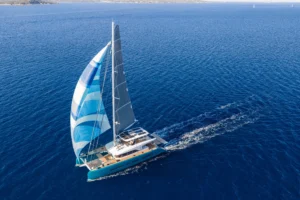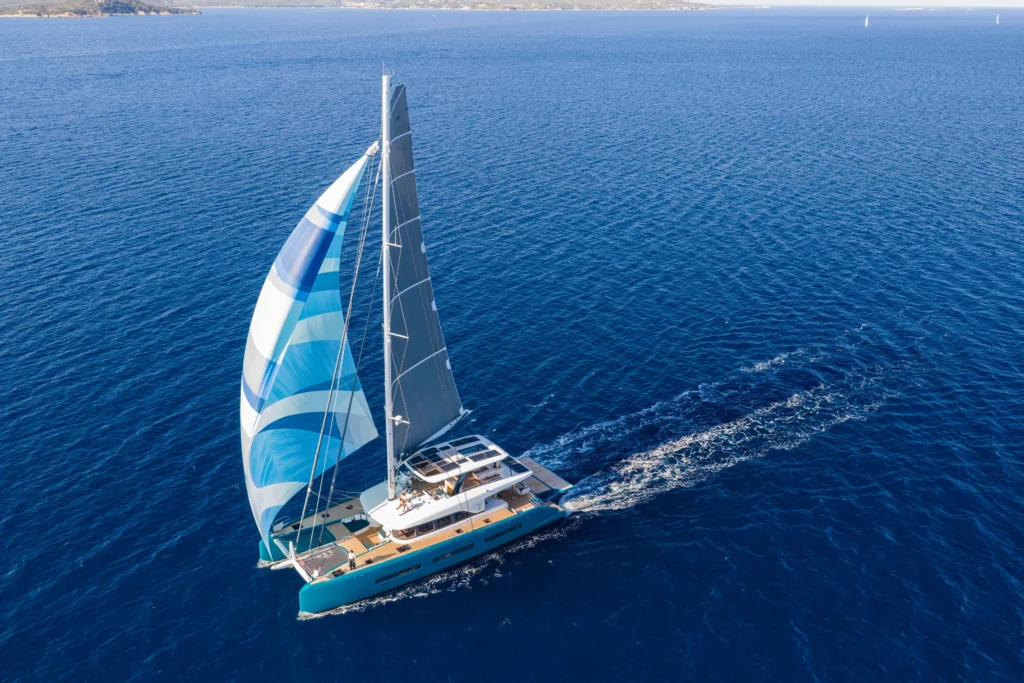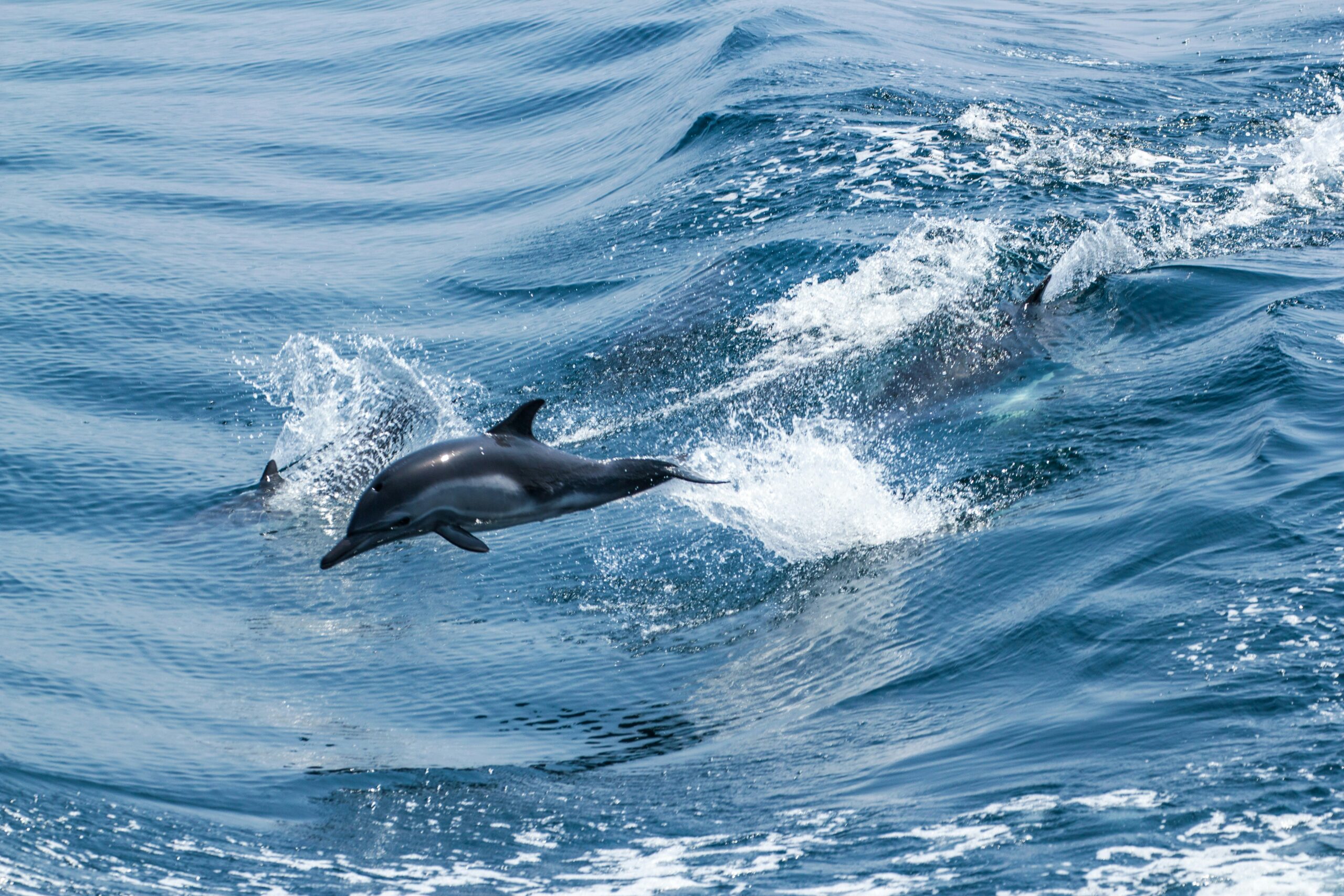
The dolphins arrive at the bow. Not at the anchorage, not at the dive site, but at the bow of the moving boat on passage: the specific arrival that every sailor who has done enough offshore miles knows and that retains the quality of the gift regardless of the number of times it has arrived before. The dolphins are not accompanying the boat. They are using it.
The bow wave of a moving vessel at hull speed creates a pressure field ahead of the hull that extends approximately one hull length forward of the bow. Within this pressure field, the water is in motion in a specific pattern that the dolphin can exploit to move at the vessel’s speed with a fraction of the muscular effort that swimming at that speed in open water requires.
The dolphin riding the bow wave is engaged in a specific energy-harvesting behaviour that the physics of the pressure field makes available: the ocean equivalent of the cyclist drafting in the peloton, the hawk soaring in the thermal, the surfer riding the wave face rather than paddling across the flat water. The dolphin is not playing. It is being efficient. The play is the surplus that the efficiency provides.
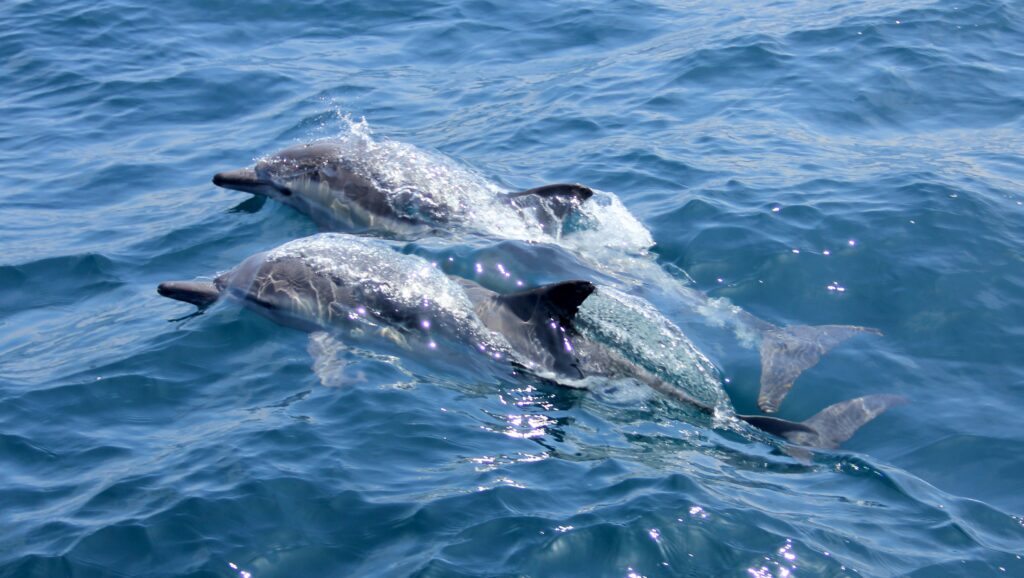
The Spinner, the Common, the Bottlenose
The Naora route encounters three species with regularity. The spinner dolphin in the Pacific: the species named for the spinning leaps out of the water that its aerial behaviour produces, the leaps that marine biologists believe serve multiple social communication functions within the school rather than being the display for the observer’s benefit that the observer’s experience of them suggests.
The common dolphin in the Mediterranean and the Atlantic: the hourglass pattern on the flank, the large schools of up to several thousand individuals that the Atlantic feeding aggregations produce in the productive waters off the Iberian coast. The bottlenose dolphin offshore: the most studied and the most familiar species, the one that the research literature knows most completely and that the wild ocean produces in the specific quality of the undistracted animal that the research tank and the dolphinarium cannot replicate.
We do not enter the water with the bow wave dolphins. The bow wave encounter is the encounter that the dolphin controls entirely: it arrives, it uses the wave, it departs when the wave no longer serves it or when the school’s movement takes it elsewhere.
The human in the water at the bow does not add to this encounter. It changes it, in the specific way that the addition of a large, noisy, bubble-producing animal to the pressure field changes the hydrodynamics and the social dynamic of the dolphin school that was using it without the addition. We watch from the bow. The watching is enough.