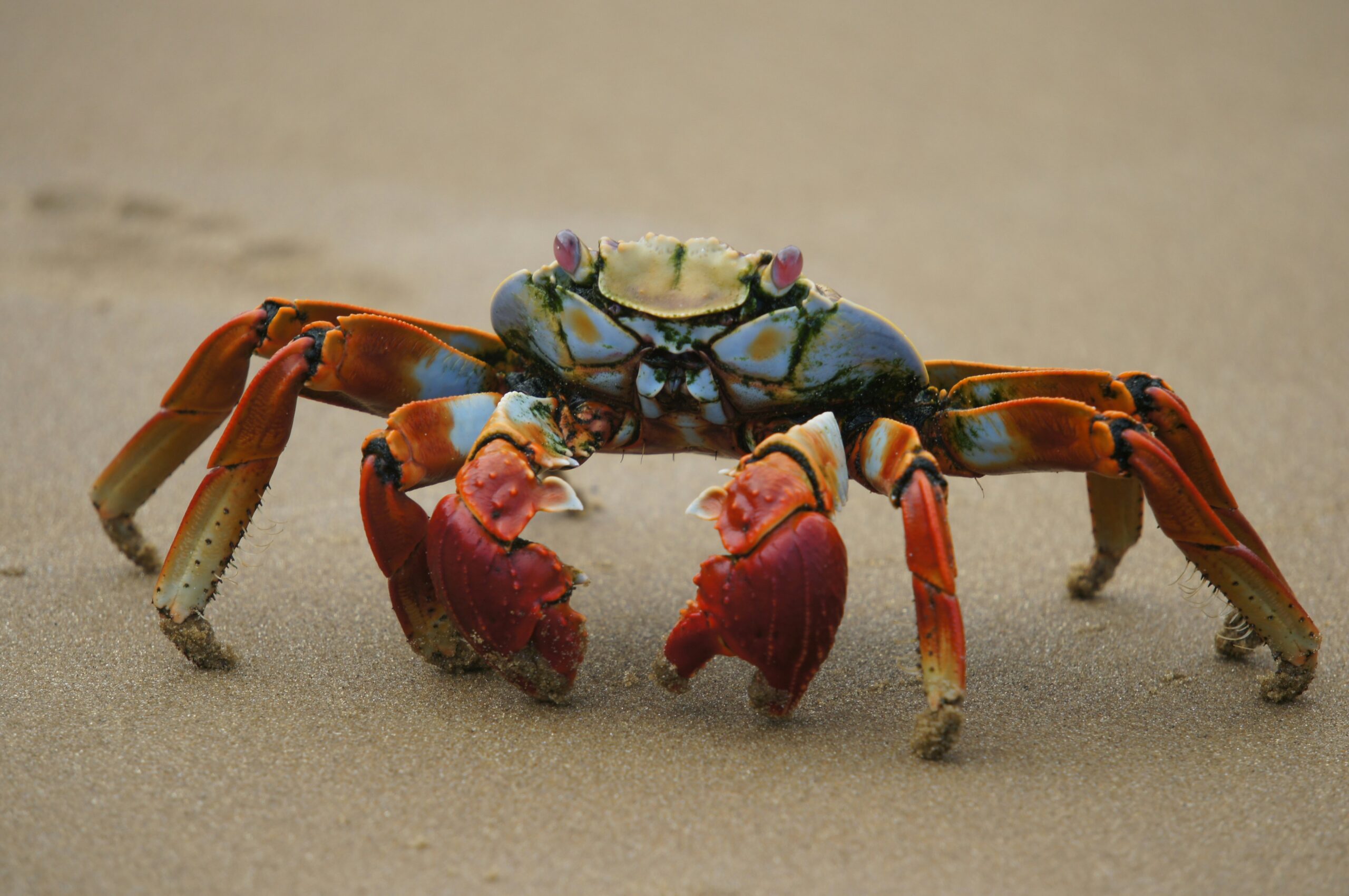
Two coconut crabs came aboard Discovery, and there were twelve of us to share them. What stays with me about eating coconut crab in the Tuamotu is that the quantity had been settled before the cooking began. The resident who brought them had no more to sell. Beyond the deck, the lagoon was turquoise, with the low rim of the atoll in the middle distance. The food had come from somewhere along that narrow boundary between water and sky.
He had gathered crabs at the uninhabited northern end of the atoll since childhood, first accompanying his grandfather. His explanation belonged to that experience: knowing where to look, knowing what to leave, understanding that a place must continue to provide after you have walked away from it. We were receiving the result of that knowledge, without having done the years that produced it.
There is a temptation to make this sort of meal sound effortless. Something remarkable arrives from the shore, the galley applies heat, everyone eats well. But the apparent simplicity conceals almost everything that matters, from the animal’s slow growth to the decisions a visitor has no business making alone.
Understanding Coconut Crab In The Tuamotu
The coconut crab, Birgus latro, is the largest living terrestrial arthropod. A very large individual can weigh around four kilograms, with a leg span approaching a metre. Those are exceptional dimensions, not a description of every animal someone might bring aboard. Much of that impressive spread is leg and claw, and the weight of a whole crab should never be mistaken for the amount of meat it will put on a table.
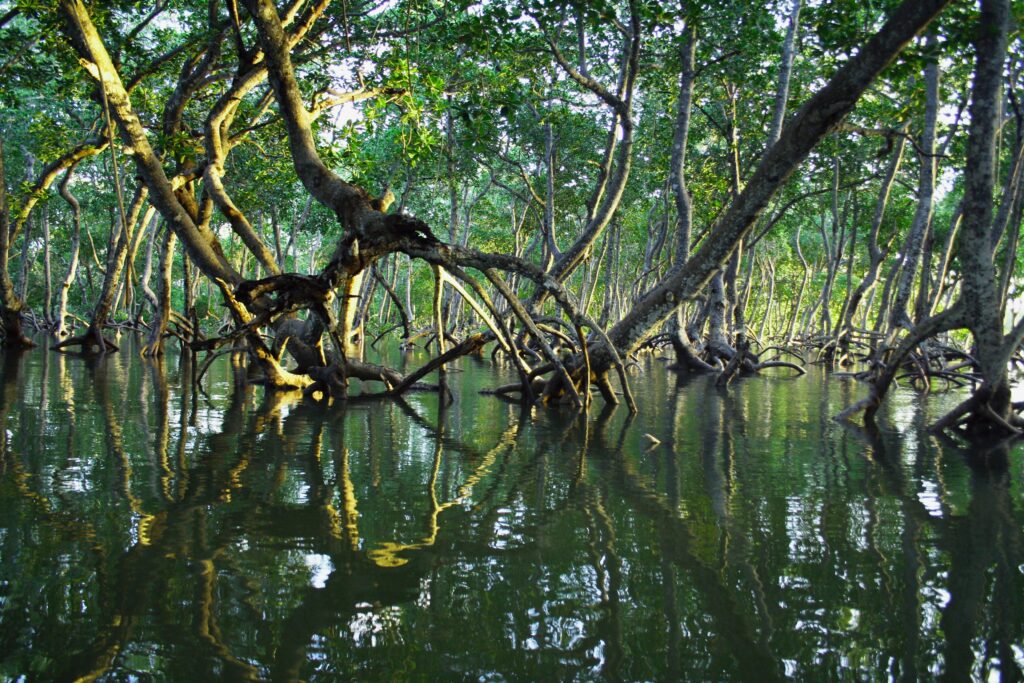
It belongs to the hermit crab family, although the adult does not carry the borrowed shell we associate with its smaller relatives. Young coconut crabs use shells for protection; as they grow, their own abdomen becomes hardened. The resulting animal is equipped for a life among roots, coral rubble and fallen vegetation, with powerful claws that deserve considerably more respect than an inquisitive hand.
The name describes a capability rather than an exclusive diet. Coconut crabs can open coconuts, but they also eat fallen fruit, seeds, carrion and other animal matter. They are opportunistic feeders, not animals whose flesh has been produced by a lifetime of eating coconut alone. Their presence is part of the life of the ground beneath the palms, where fallen material is broken apart, eaten and returned to circulation.
They tend to be active after dark, retreating into sheltered places where they can retain moisture. An apparently empty patch of shore in the afternoon therefore tells a visitor very little. Nor does finding several animals together establish that the wider population is abundant. Food, shelter and the conditions of that particular night can concentrate them.
There is another distinction worth remembering on a boat: an adult coconut crab is a land animal and can drown if submerged. Its early life nevertheless depends on the sea. Females carry developing eggs beneath the abdomen and release larvae into seawater; the young eventually make the transition ashore. Breeding age takes roughly five years, and large adults represent much longer periods of growth. Removing one is not equivalent to harvesting something that will be replaced next season.
The Knowledge Behind Two Crabs
The detail about the grandfather matters because it describes how practical knowledge travels. A child walking with someone experienced learns more than a location. He learns the difference between finding an animal and deciding to take it, between a productive patch of habitat and one that needs to be left alone. Much of that judgement is difficult to compress into an explanation given beside a yacht.
But I would be careful about the claim we make on his behalf. Two crabs were what he brought and was prepared to sell. That does not turn the number two into a scientifically established sustainable harvest, nor does one conversation give us the population history of an atoll. Respect for local knowledge should make us more attentive, not less exact about what we actually know.
The same care applies to the word uninhabited. An end of an atoll without houses is not necessarily without owners, customary use or restrictions. Someone may tend the palms, collect copra, visit seasonally or hold responsibilities there that are invisible from an anchorage. A tender landing gives us access to a beach. It does not give us permission to gather what lives behind it.
In French Polynesia, a rāhui can place an area or resource under a restriction on harvest. Its scope and duration belong to the particular arrangement, not to a visitor’s general understanding of the word. Current harvest and sale rules, local restrictions and permission to enter land all need to be understood separately. An offer to sell does not automatically settle every one of those questions.
For a visiting galley, the practical response is to have another meal available. If dinner depends on obtaining a particular wild animal, every conversation ashore carries an unspoken pressure. A boat that can feed itself properly is better placed to accept a refusal without bargaining, disappointment or an attempt to find somebody less reluctant.
Eating Coconut Crab In The Tuamotu
Permission and sustainability are only part of the decision. Coconut crab also deserves a specific food safety caution that its appealing name tends to obscure. Poisoning has occurred after people have eaten these crabs, with some cases linked to toxic plants in the animals’ diet. Cooking is not a reliable way to destroy those toxins. An animal can look healthy and still be unsuitable to eat.
This is not a problem a chef can solve by extending the cooking time or adding a strong sauce. Knowledge of where the crab came from matters, but an assurance of edibility is not an absolute guarantee. If its origin or safety is uncertain, it should not reach the table. The right alternative is another ingredient, not a more elaborate preparation.
There is ordinary kitchen discipline to observe as well. Coconut crab is a crustacean, with the allergy implications that entails. Its claws make casual handling unwise, particularly around children. Secure containment and competent handling come before any interest in showing the animal to the people aboard; humane dispatch requires someone who knows what they are doing, rather than improvisation around an unfamiliar species.
After cooking, the tropical setting becomes relevant in a different way. A shaded deck can still be warm enough for perishable food to deteriorate quickly. Meat intended for later should be cooled promptly and refrigerated at 5°C or below. A large crab left whole retains heat, so removing the meat cleanly and dividing it into shallow containers helps it cool more effectively than putting a warm, intact animal into an already busy refrigerator.
These are quiet decisions. Nobody needs a lecture beside their plate. They do need the galley to distinguish between a beautiful setting and a safe ingredient, because the former offers no protection against getting the latter wrong.
Steam And Fresh Coconut Cream
The preparation aboard Discovery was simple: steamed crab, with cream from fresh coconuts. Seawater supplied the steam that day. The part I would carry forward is the moist heat, rather than the assumption that water taken from an attractive lagoon is suitable for a cooking pot. For Discovery, potable water is the sensible choice. Salt can be controlled separately, and clear water beside an anchored boat is not proof of cleanliness.
Steaming keeps the meat out of the cooking water, limiting the flavour that would otherwise be lost into a large pot. It also makes restraint important. The largest joints take longer to cook than the slender portions, and the shell is not a useful guide to what is happening at the centre. The thickest flesh needs to be cooked through, becoming opaque rather than translucent. Continuing to heat everything while the rest of dinner catches up only costs moisture.
I would not give a single cooking time for the crabs we ate. Their weights were not recorded, and a large animal’s dimensions, starting temperature and position in the pot all affect the result. A useful recipe should acknowledge those differences rather than offer a precise number that makes the cook stop paying attention. The preparation of the accompanying food should be finished before the crab is ready, so that the meat does not wait for the table.
Fresh coconut cream has its own technique. The firm white flesh of a mature coconut is finely grated and pressed through a clean cloth. The first pressing gives a fuller cream; adding a little potable water for a further pressing produces a thinner liquid. Maturity matters here. The soft flesh of a young drinking coconut is a different ingredient and does not yield the same richness.
The cream supplies a clear coconut flavour of its own. The crab’s sweetness does not need a story about an exclusively coconut diet to explain why it is good. Keeping the cream alongside rather than burying the meat beneath it allows both to remain distinct. Salt is best judged after tasting the crab and its juices, not added automatically because seafood is on the menu.
A meal eaten from a shell has a physical pace. Fingers meet resistance; attention narrows to a joint, a piece of meat, the small amount still worth finding. Then the eyes lift again. There is the bright lagoon, much larger than the business of the plate. Twelve people ate those two crabs slowly. The work of eating was part of the pleasure, and there was no reason to hurry it away.
The Water Around The Table
The calm appearance of that lagoon is part of the memory, but it should not become our explanation of how an atoll works. A lagoon exchanges water with the ocean, and the movement through its passes depends on more than the tide alone. Waves breaking over the reef can bring water inside; wind can redistribute it; the resulting difference in water level helps drive flow back out.
This is why the predicted time of high or low water does not automatically identify slack current in a pass. A tide table is one input, not an instruction to enter. Recent swell, the wind, observations at the entrance and the behaviour of the water all belong in the decision. Standing waves or strongly disturbed water require attention even when a prediction suggests the passage should be becoming easier.
Inside the lagoon, the useful light is the light that lets us read the bottom. Glare and cloud shadow can conceal coral heads or make colour changes difficult to interpret. Depth information matters, but it does not replace looking ahead. For anchoring, a clear patch of sand needs to be large enough for the anchor and the boat’s movement, including the sweep of the chain, without dragging gear across coral.
A low strip of palms is also less of a windbreak than it appears from a distance. A steady tradewind can raise short, uncomfortable chop across a long lagoon fetch. The comfortable side of an anchorage can change with the wind, so the forecast matters even when the intended activity is simply lunch and an afternoon aboard.
Sven, Naora’s founder and captain, plans every weather window and sails every leg himself. The connection between that responsibility and the table is direct. Choosing where the boat can lie well, checking how conditions may develop and keeping a workable departure option are what allow everyone else to give their attention to the food. The ease is real. So is the work beneath it.
What We Carry Into Naora
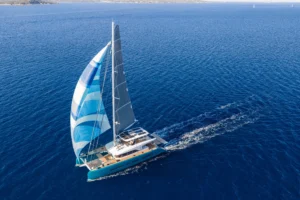
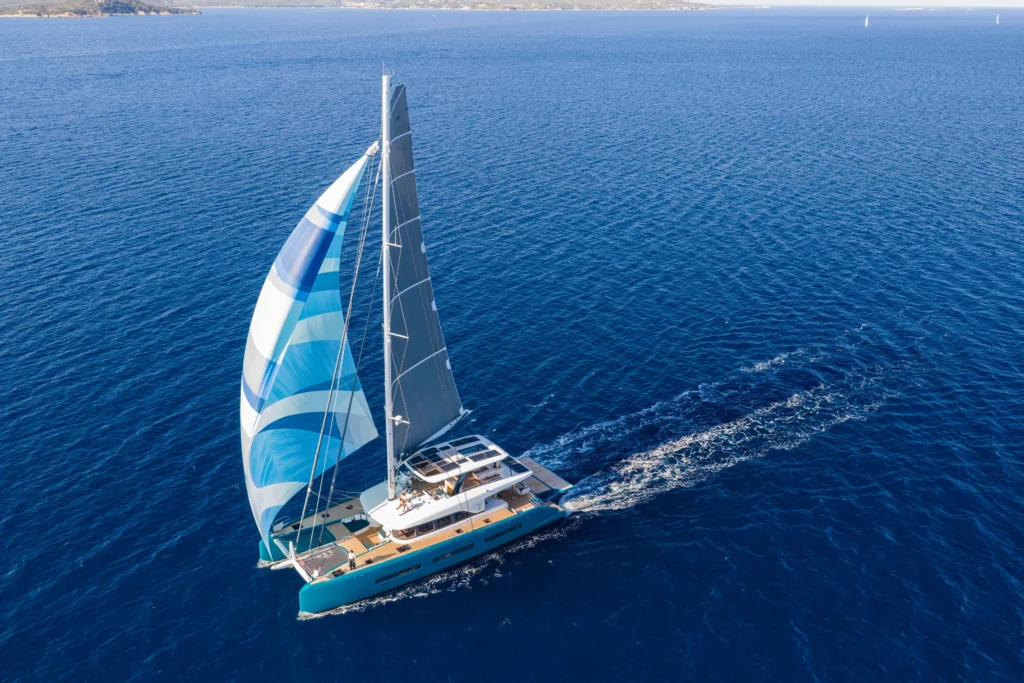
The meal aboard Discovery belongs to the experience we bring with us. Naora’s yacht is Discovery, a Lagoon Eighty2 sailing catamaran, and the Naora Global Expedition will carry that experience into a continuous voyage around the world, including the atolls of French Polynesia. Continuity changes how we think about a meal. An ingredient can remain a possibility rather than becoming something a particular stop must deliver.
Members choose when they join, where along the worldwide route they step aboard and how long they stay. Some have a week; others can remain for a much longer passage. The yacht keeps sailing when they leave. That freedom works best when it is accompanied by a willingness to let the shore retain its own decisions. Choosing a place on the route does not mean choosing in advance what its people must provide.
There is room here for a more useful understanding of local sourcing. Buying nearby can keep a meal connected to the place and the people who know it, but proximity alone does not make an ingredient responsible. A slowly growing wild animal may deserve to remain where it is. A well-provisioned yacht can recognise that without turning an ordinary dinner into a disappointment.
What I value in the memory is the proportion between what arrived and what remained beyond our reach. We were offered something particular by someone whose relationship with the atoll extended far beyond our stay. We could listen, pay attention to the preparation and share what was there. We did not need to turn his knowledge into our own claim of expertise.
We ate slowly, with the atoll rim in view. There was nothing else we needed from it that afternoon.