Children can join Naora by booking the private yacht option. This is not a policy that requires extensive qualification: the boat is safe, the crew is experienced with families aboard, and the Naora route passes through some of the finest places in the world for a child to experience. What the question actually requires is a clear-eyed assessment of what works at which age, what the boat can and cannot provide, and what you need to prepare for as a parent bringing a child offshore for the first time.
Céline, Sven’s daughter, grew up around boats and has been on offshore passages since she was very young. The specific knowledge she has of the world, the comfort with new situations, the ease with adults, the specific quality of attention that a childhood partially spent at sea produces: these are the things we observe in children who have spent real time offshore and that are genuinely not available from any other source. The sea is an excellent teacher. It is also a demanding environment that requires honest preparation.
What Works: Age and Temperament
Children who thrive aboard offshore sailing boats tend to share certain qualities regardless of age: genuine curiosity about the world around them, comfort with unstructured time, the capacity to entertain themselves when there is no programmed activity, and a temperament that finds novelty interesting rather than threatening. These qualities are more important than age, but age provides some practical parameters that are worth being honest about.
Children below about four years old require full-time adult supervision on a moving boat. The deck is not a safe environment for a child who cannot reliably respond to instructions and cannot manage the motion independently. This is not impossible to manage, but it requires one adult committed to the child’s safety at all times when the child is on deck, which limits the adult’s participation in the rest of the voyage. Parents who have done this describe it as rewarding in the memory and demanding in the moment.
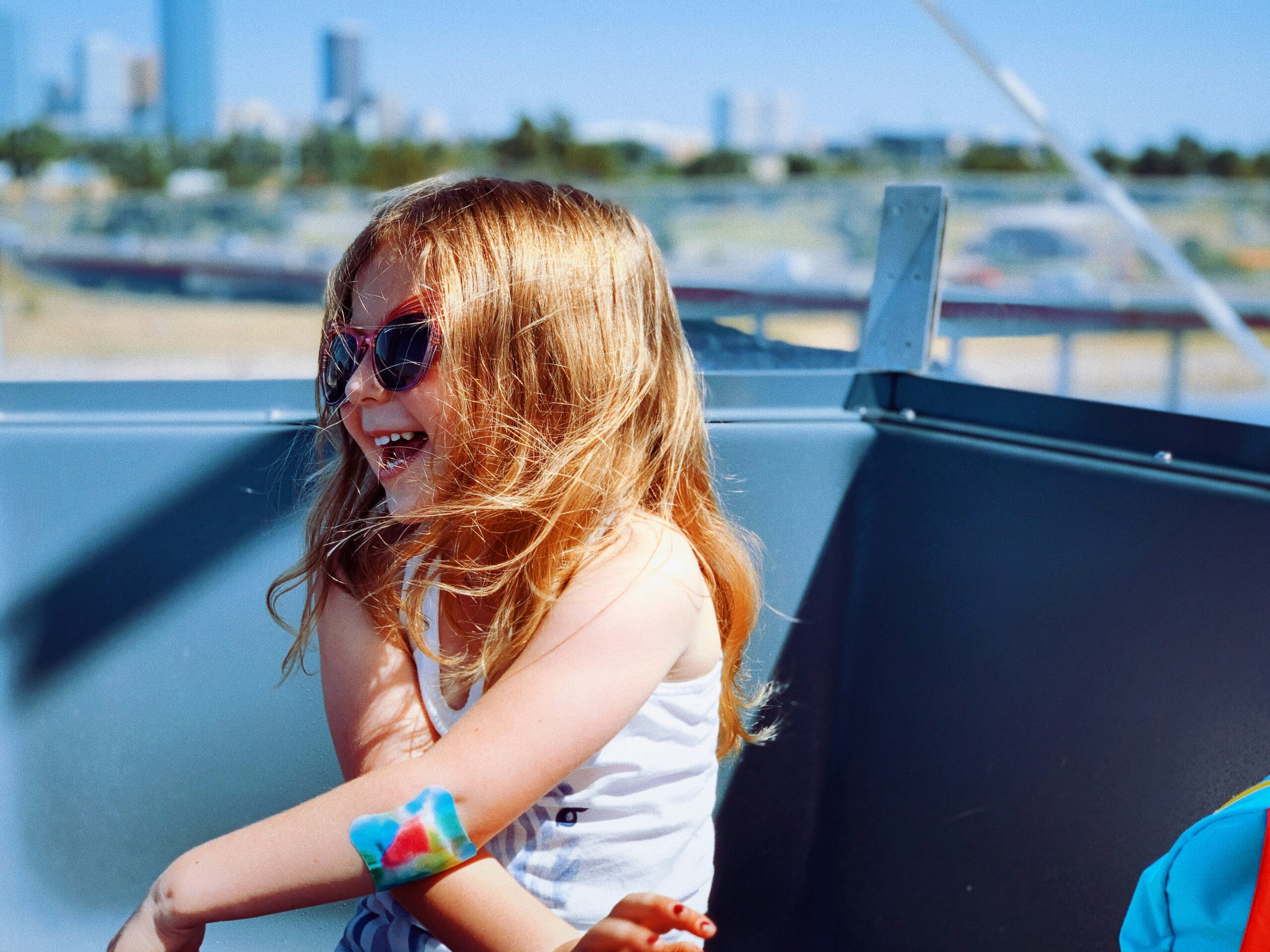
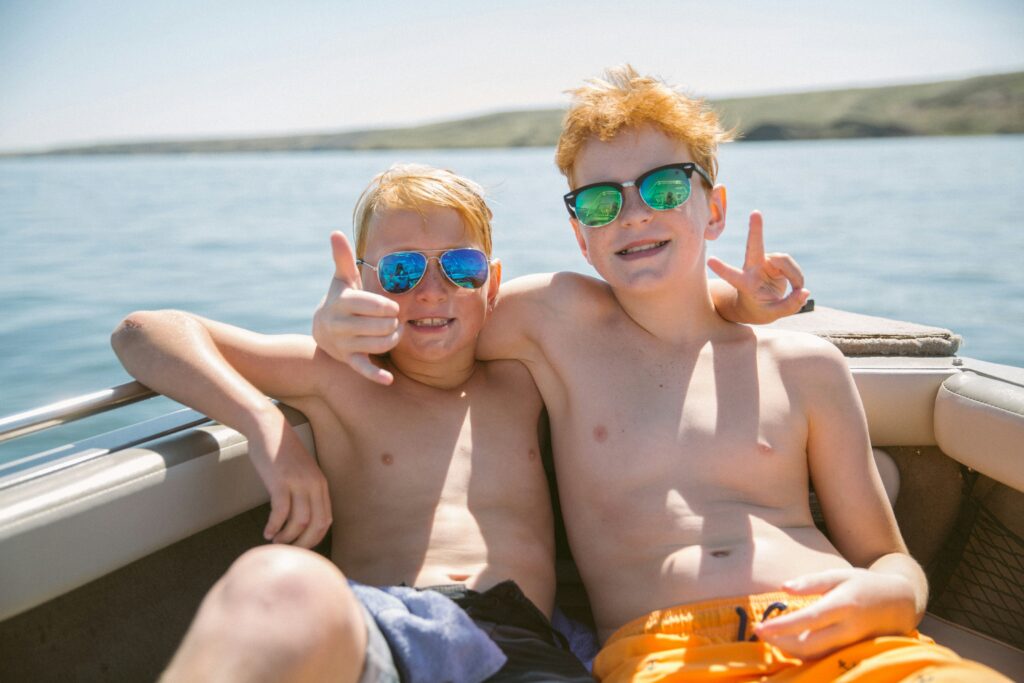
Children between about six and twelve are, in many respects, the ideal offshore age. Old enough to participate in the boat’s activities meaningfully: helping with lines, reading the instruments, assisting with the fishing, learning to steer on a calm passage day. Young enough to find genuine wonder in things that adults have learned to take for granted: the flying fish, the phosphorescence, the sea turtle that surfaces alongside the boat, the specific size of a manta ray seen from three metres away underwater. This age range tends to adapt fastest to the boat’s rhythm and to produce the most specific and lasting memories from the voyage.
What the Boat Provides
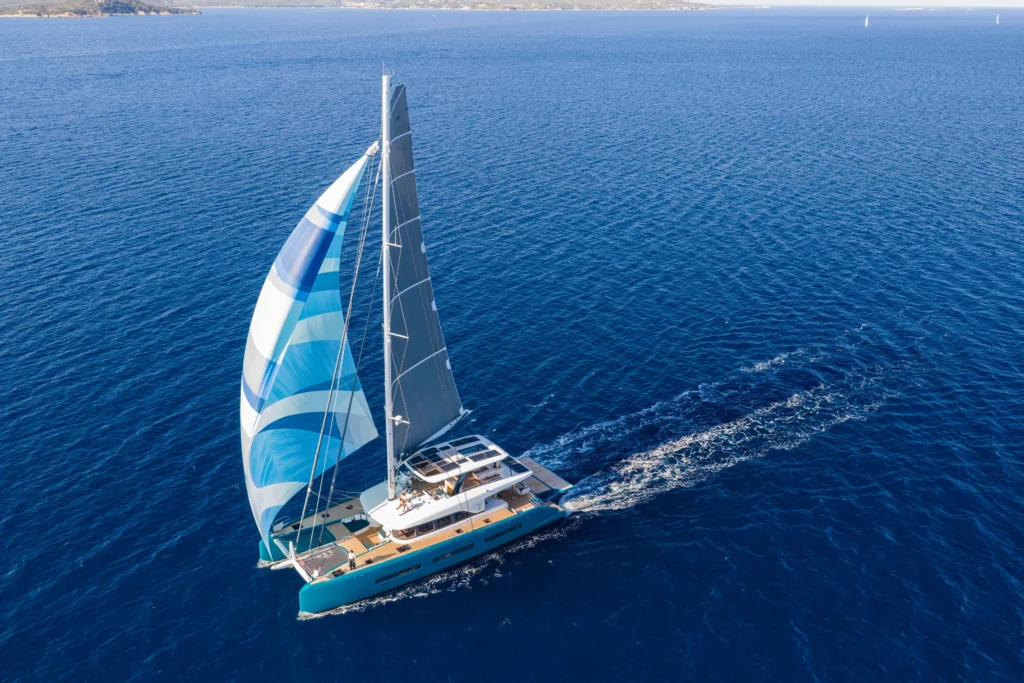
The Eighty2 provides the physical safety infrastructure for children: lifelines along the deck, jacklines for clipping on in rough conditions, a stern swim platform at water level for getting in and out of the water safely, a tender with proper seating for the shore excursions. The crew is experienced with children aboard and adjusts the safety briefing and the watch culture accordingly.
What the boat does not provide is a children’s programme or structured activities. There is no kids’ club, no programmed entertainment, no organised activities for a child who needs external stimulation to be content. What the boat provides instead is the world: the real, three-dimensional, sensory-complete world of a sailing passage and an offshore anchorage, which is a more interesting and more educational environment than any programme could produce. But it requires the child to have the internal resources to receive it. Children who need constant external input to be content are not the right fit for the offshore environment at this age. Children who can look at the sea for an hour and find it interesting are exactly right.
What the Sea Gives Them
The children who spend real time offshore, as opposed to day sailing in sheltered water, come back from it different in specific and observable ways. More comfortable with adults: the boat’s cross-generational community, where adults are simply people rather than a separate category of authority, produces an ease in cross-generational conversation that is unusual in children from age-segregated environments. More comfortable with novelty: the continuous change of anchorage and passage and landscape that offshore sailing produces teaches adaptability at a rate that a stable domestic environment does not.
More comfortable with real competence: the specific satisfaction of a child who has actually helped land a fish, or successfully managed a bow line in a marina berth, or steered a 24-metre boat for twenty minutes on a cam passage day, is a confidence that is different in quality from the confidence that comes from being told they did well on a test. It is embodied, specific, and grounded in something they actually did rather than something they were assessed on. The sea teaches this in a way that almost nothing else does, and children who receive it carry it in ways that are visible long after the passage ends.