Children can join Naora legs through the Private Blue Water program. The qualification to this answer is about age and temperament rather than a blanket restriction, and it is worth being specific because the right answer for a ten-year-old is not the right answer for a two-year-old and the honest guidance serves the parent better than the generic reassurance.
The Age Question
Children below approximately four years old require full-time adult supervision when they are on deck. The boat is moving, the surfaces are uneven, and the specific hazards of a sailing vessel in motion require a level of physical control and responsiveness that a child below four cannot reliably provide for themselves. This does not make a voyage with a young child impossible: it makes it a specific kind of voyage where one adult is committed to the child’s safety continuously while on deck, which limits that adult’s participation in everything else the voyage offers. Parents who have done this describe it as deeply worthwhile in memory and genuinely demanding in the moment. The honest assessment is that both of those descriptions are accurate.
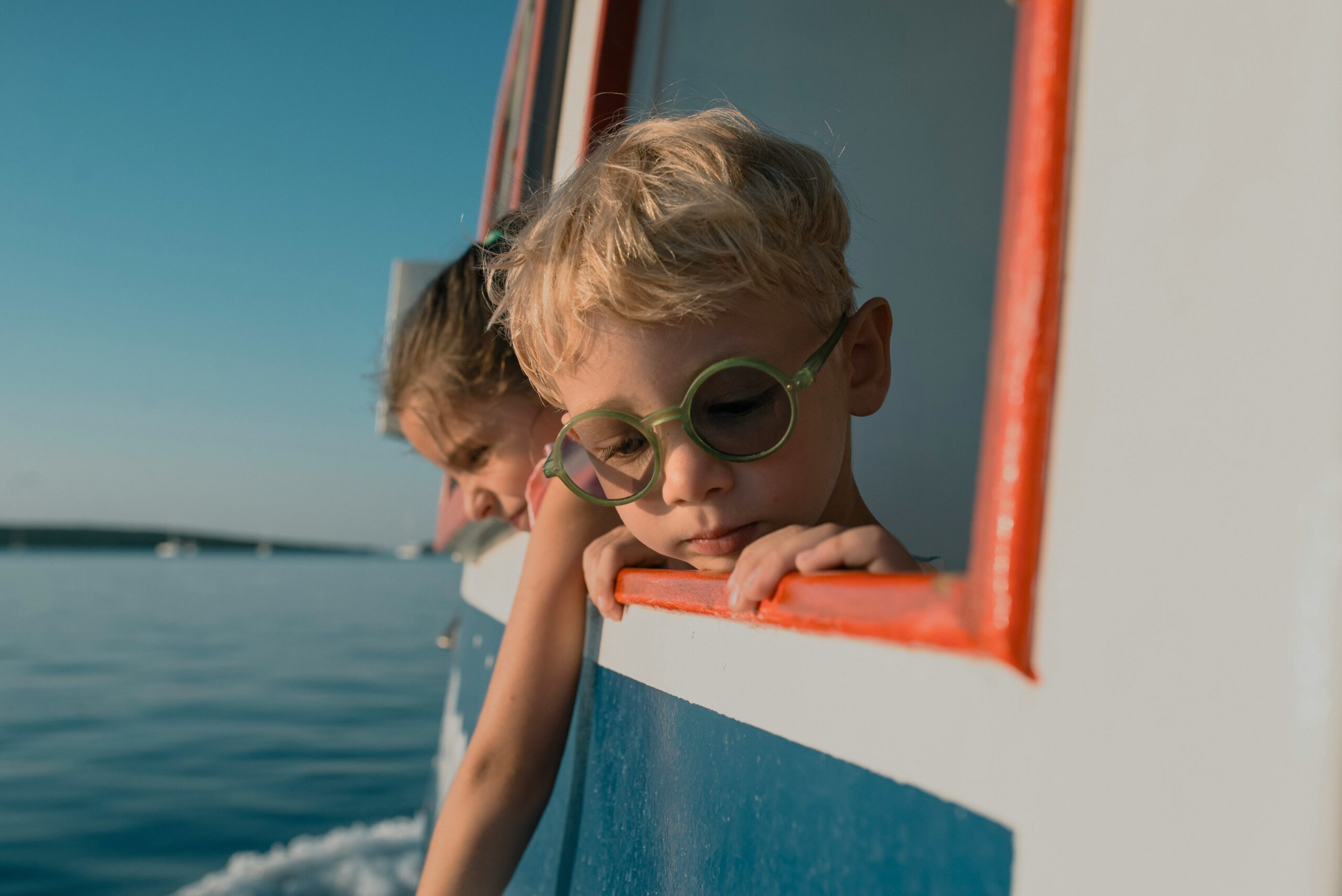
Children between approximately six and twelve are in many respects the ideal offshore age: old enough to manage their own safety on deck with supervision rather than constant physical proximity, young enough to find genuine wonder in things that adults have learned to take for granted.
The flying fish that land on the deck overnight, the phosphorescence, the dolphins at the bow, the specific size of the manta ray encountered from three metres away in clear water: children in this age range receive these things with the full freshness of a first encounter that the adult who has read about them and expected them does not quite match. The specific memories that children carry from offshore experiences at this age are, according to every adult who experienced such an offshore childhood, among the most vivid and most formative of their early life.
The Temperament Question
Temperament matters more than age in determining whether a child will thrive offshore. The child who needs continuous external stimulation to be content, who becomes distressed when a programmed activity ends and an unstructured period begins, who cannot occupy themselves with observation and curiosity and the specific richness of a living environment: this child is not the right fit for the offshore context at any age, because the offshore context provides the world rather than a programme and requires the child to have the internal resources to receive it.
The child who can watch the sea for an hour and find it interesting, who investigates the boat’s systems with genuine curiosity, who asks real questions and is satisfied by real answers: this child will thrive offshore in a way that no land-based programme, however well designed, produces. The offshore environment provides the most comprehensive and least managed educational context available to a child: real responsibility in real tasks, real consequences of real decisions, real animals in real ocean in real conditions that no nature documentary and no aquarium replicates. The child who is ready to receive this is ready for the Naora route at whatever age they can manage their own safety with supervision on a moving deck.
The Practical Considerations
Children aboard Naora are the responsibility of their parent or accompanying adult for the full duration of the stay. The crew manages the vessel and the domestic logistics. They do not manage childcare. The parent who brings a child aboard is the person responsible for that child’s safety at all times and for their integration into the boat’s community in a way that is considerate of the other members aboard.
The practical preparations for a child aboard include: a properly fitted children’s lifejacket, which must be provided by the parent rather than assumed to be available from the boat’s safety equipment; sun protection appropriate for a child’s skin in tropical conditions, which is more demanding than adult sun protection; and a medical kit supplement that covers the specific paediatric considerations of the planned leg. The pre-boarding conversation for legs that include children covers all of these considerations specifically rather than in general terms.