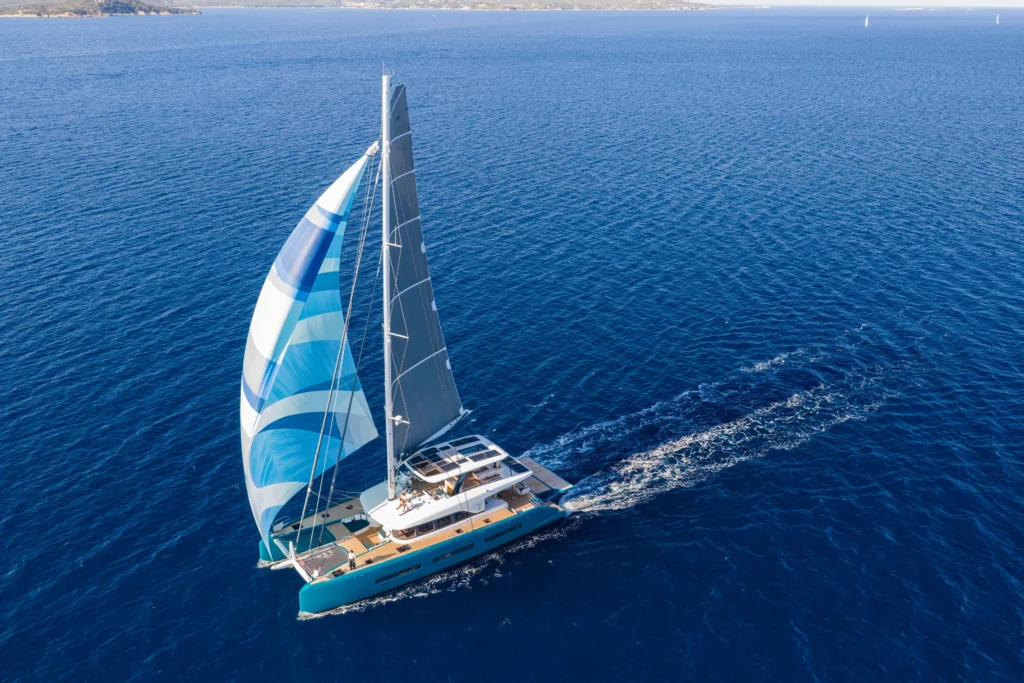
Let me give you the specific numbers because the specific numbers are the most useful thing I can offer on this subject. The Eighty2 has two diesel engines, each consuming approximately eight to ten litres per hour at passage speed under motor. A typical Mediterranean charter week involves between fifteen and twenty-five hours of motoring, the harbour departures and arrivals, the calms when the wind drops below the threshold for comfortable sailing, the night passages where the engine supplements or replaces the sail.
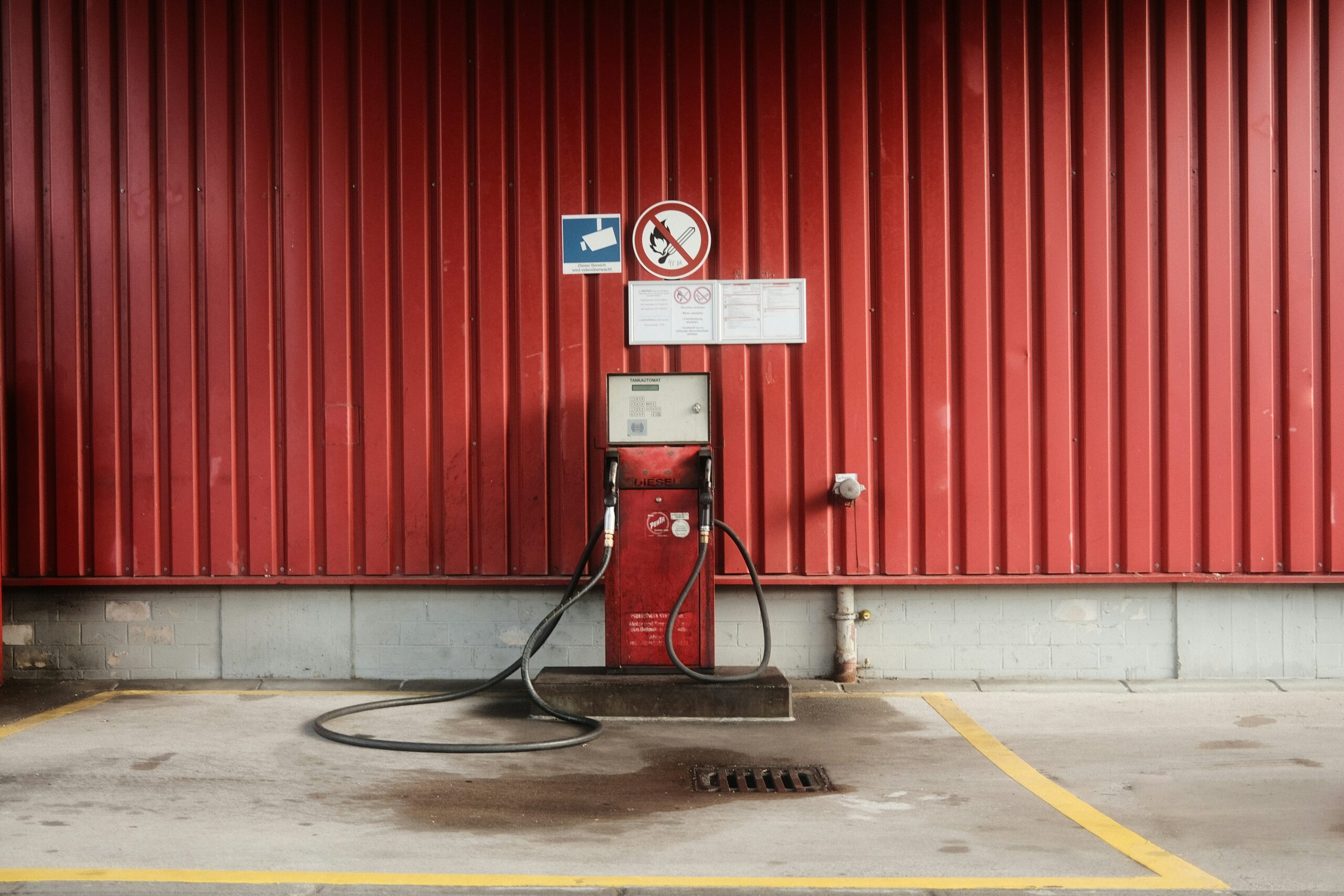
At fifteen hours of motoring for the week, the fuel consumption is approximately 240 to 300 litres of diesel. At current Mediterranean fuel dock prices of €2.00 to €2.50 per litre, the weekly fuel bill is €480 to €750. At twenty-five hours of motoring, the week with more calms, more harbour manoeuvring, more night motoring, the bill reaches €800 to €1,250.
This is the fuel bill for a single charter week on a typical catamaran of the Eighty2’s size class. On an offshore passage, the Atlantic crossing, the Pacific legs, the Indian Ocean transit — the fuel consumption increases significantly: the passages are long, the distances between fuel docks are large, and the periods of calm that require motor-sailing on the offshore passage produce fuel consumption that the Mediterranean weekly charter does not approximate.
The charter client who books the Atlantic crossing on a crewed catamaran and does not fully account for the fuel cost in the APA estimate will find the settlement document at the end of the crossing contains a fuel line item that was not the number the APA estimate suggested.
Why the Eighty2’s Energy Architecture Changes the Calculation
The Eighty2 was configured with the renewable energy architecture as the primary energy source precisely because the fuel cost of the five-year circumnavigation is a significant operational budget item and because the solar and wind and hydro generation that the boat’s system provides reduces that budget item in the way that no other intervention achieves.
The solar array on the bimini, the wind generator on the stern arch, the towed hydro generator deployed on the offshore passages, in the tropical and trade wind conditions that represent the majority of the Naora route, these three sources cover the boat’s baseline energy demand for the navigation instruments, the refrigeration, the watermaker, the lighting, and the general electrical loads without the diesel generator running.
The diesel engines still run, for the harbour manoeuvring, for the passages in calm conditions, for the generator when the solar generation is insufficient. But the diesel consumption of the Eighty2 on the Naora circumnavigation is structurally lower than the equivalent boat without the renewable energy architecture, and the saving compounds over five years and 45,000 nautical miles.
The fuel cost is absorbed into the Naora operating budget. The member who boards the Eighty2 does not see a fuel line item on any settlement document.
The renewable energy architecture is not the environmental statement. It is the operational efficiency that reduces the fuel budget and keeps it inside the participation fee rather than presenting it to the member as the variable that the charter APA exposes at the end of the week.