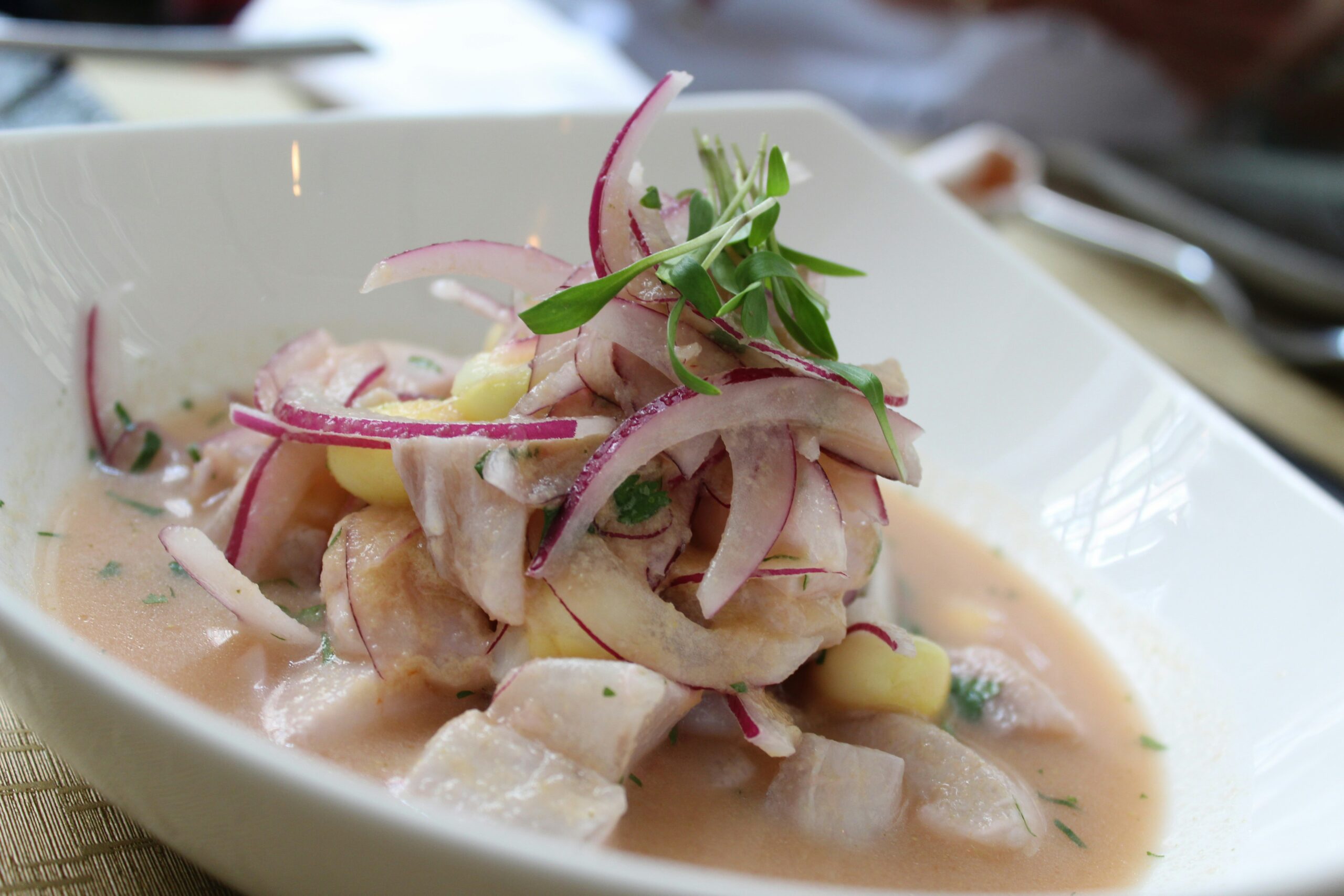
The Polynesian ceviche, poisson cru in the local French, ika mata in the Cook Islands Māori is one of the oldest preparations of the Pacific and one of the most direct expressions of the relationship between the Polynesian kitchen and the ocean it lives beside.
The fish that comes from the reef at seven in the morning is in the lime juice by seven-thirty and on the Long Table by noon. What happens to it in between is not cooking in the technical sense of the application of heat: it is the specific transformation that the acid of the lime produces in the protein structure of the raw fish, denaturing it into the texture and the opacity of the cooked fish without the heat that cooking requires. The lime does what the fire does, in three hours, in a bowl on the galley counter while the boat swings on its anchor in the atoll lagoon.
The Fish and the Dive
We freedive for the fish. Not with a speargun in the conventional spearfishing sense: with the selective technique of the person who goes into the reef looking for the specific species and the specific size that the day’s meal requires and who takes one fish rather than the maximum the dive allows. The Tuamotu lagoon is the most pristine reef system the Naora route visits: the outer atolls that the boat anchors in have no commercial fishing pressure, no tourist dive operations, no shore-based human activity beyond the small community of the atoll’s village on the far rim.
The reef gives what it gives because it has been allowed to give rather than extracted from, and the fish I take from it is the fish it gives rather than the fish I take from it. The distinction matters to the reef and it matters to the meal.
The fish for the ceviche in the Tuamotu is typically the grouper or the parrotfish at the reef edge: species that the Polynesian kitchen has been using for this dish since before the lime arrived in the Pacific from the Portuguese trade routes and the dish was made with the green papaya acid that the lime later replaced. I take the fish of two hundred grams, no more, filleted on the dive platform with the knife that stays with the dive kit and not in the galley where the smell of the fish would follow it into the next meal’s preparation.
The Preparation and the Taste
The fish is cubed to one centimetre – no smaller, the smaller pieces over-cure in the lime and lose the texture that the ceviche is preserving and submerged in the juice of four limes. The Tuamotu limes are the small, intensely aromatic limes that the atoll’s trees produce and that the provisioning morning finds in the village market or at the roadside table if the atoll has a road: more acidic and more fragrant than the lime from the supermarket because the atoll’s thin coral soil and the specific water that the atoll’s rainfall produces concentrates the oils in the skin and the acid in the juice.
After three hours the fish is opaque and the texture has changed and the lime has done what the heat does without the heat. The coconut cream from the tin, one chilli from the dry stores, the coriander from the deck herb pot, the sea salt. Five minutes to assemble. Three hours of patience before that. Served in the coconut shells that the palm above the anchorage provided when the wind knocked them down this morning.
The taste is the taste of the Tuamotu itself: the acid of the lime that the atoll produces, the sweetness of the coconut cream that the palm above the bay provides, the clean protein of the fish that was in the lagoon a few hours ago, the heat of the chilli from the stores, and the specific freshness of the coriander from the pot on the deck that the offshore morning watered with the last rain.
There is no version of this dish in a restaurant that uses fish this fresh in lime this good in coconut this local. The Tuamotu produces all three simultaneously and the galley assembles them. The credit belongs to the atoll.