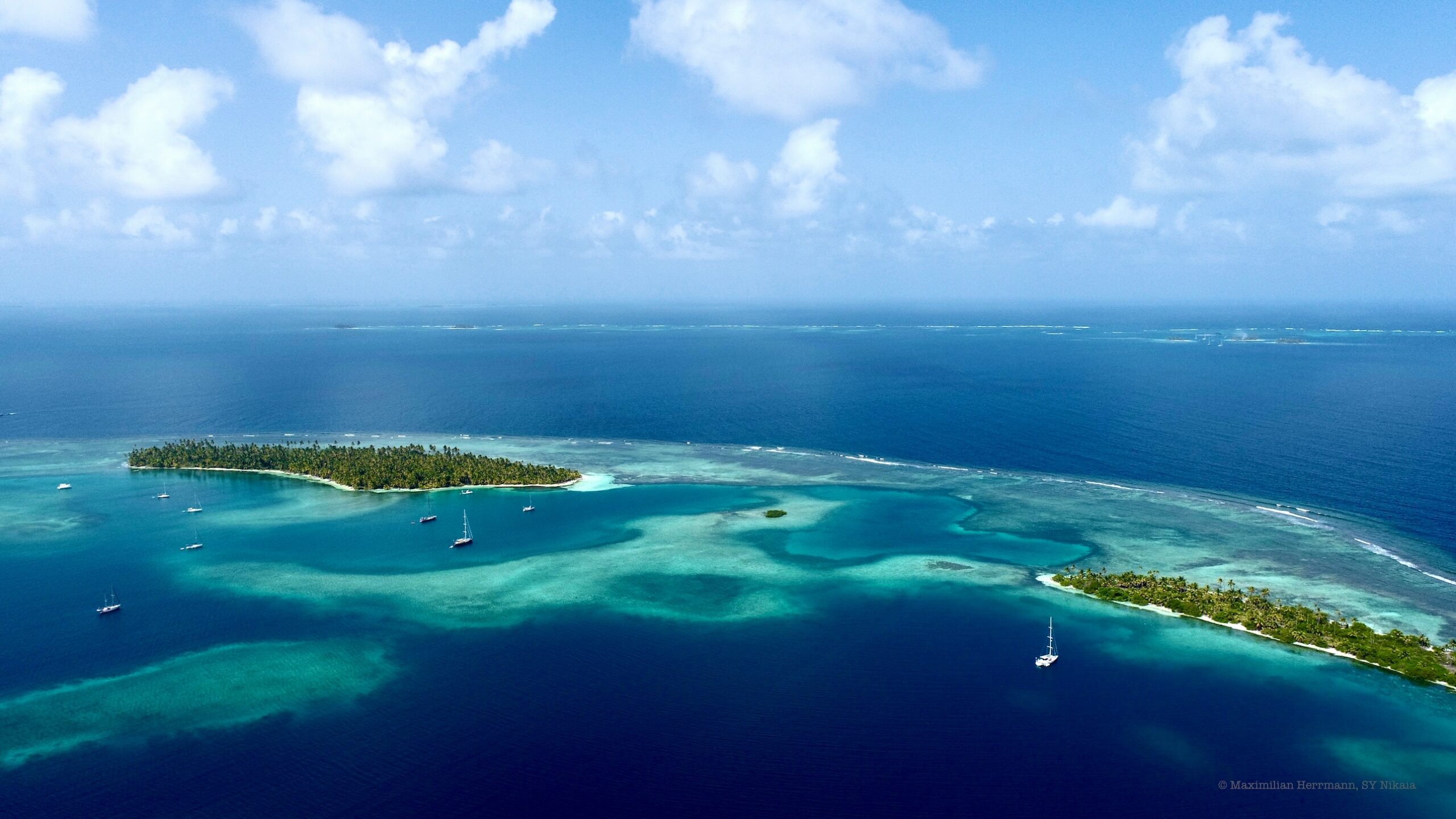
A neighbouring yacht’s name can be unreadable across the water and clear when a photograph is enlarged. That difference is where Caribbean anchorage photography becomes more than a record of colour and light. The photographer may remember the curve of the beach; the file may also preserve a boat name, a face and the place where someone chose to spend an otherwise unrecorded afternoon.
In planning the Caribbean part of the Naora Global Expedition, the five-year private sailing expedition around the world from 2027 to 2031, I want discretion to extend beyond the people aboard Discovery. It would be a narrow courtesy to protect our own photographs carefully while treating everyone outside the yacht as scenery. Neighbours have their own reasons for being there. People ashore have work to finish. None of them has agreed to help tell our story simply by entering the view.
Caribbean Anchorage Photography Without Intrusion
An anchorage is an unusually intimate kind of shared space. Water separates the boats, but their living areas remain visible: a cockpit table, towels on a rail, someone asleep beneath a shade. A person can be outdoors without intending to be on display. The absence of a wall does not settle what it is considerate to photograph.
The practical complication is resolution. As an illustration, a photograph containing 24 megapixels still contains six megapixels after cropping away half its width and half its height. That is a quarter of the original image, yet enough detail for many ordinary screen uses. Focus, light and movement affect what survives, but the lesson remains useful: appearing small in the original composition is not the same as being unrecognisable.
Before taking a photograph, I would rather examine the background than rely on repairing it later. In strong sun, a hand cupped around the phone screen can reveal a face in a cockpit that the glare had concealed. A slight change of position may put open water behind the subject instead. Waiting for a neighbouring boat to swing can remove a private deck from the frame without removing the life of the anchorage.
Caribbean trade winds do not hold every yacht at an identical angle. Gusts, local shelter, current and differences between boats can alter their headings. A composition that was unobtrusive a moment earlier may now look straight through an open doorway. The background needs another look when the yacht moves.
I do not think every distant sail or incidental figure requires a negotiation. A harbour photograph can honestly show that other people exist. The distinction I find useful is between including human presence and making a particular person’s private activity available for inspection. A close view of someone’s breakfast does not become a landscape merely because there is a green hillside behind it.
Keeping Photography Separate From Boat Handling
A tender makes the distinction more immediate. A phone needs a dry grip; a wake arrives underneath that concentration. When the bow rises, the person composing a photograph may instinctively stand or shift sideways to keep the horizon level. That is precisely when attention belongs with balance, the other passengers and the water ahead.
The person operating the tender needs to operate it, not alternate between steering and filming. A passenger taking photographs should remain secure, keep equipment clear of controls and boarding space, and accept that some frames will be missed. A camera strap should not be allowed to trail near moving equipment. None of this needs ceremony. It needs agreement before the camera becomes absorbing.
The route through an anchorage must also remain a route, rather than a series of photographic approaches. Swimmers can be difficult to see against glare. Mooring lines, tenders and boats lying at different angles complicate apparently open water. Passing closer to a stern to read a name or improve a portrait creates both an intrusion and an avoidable handling problem.
On Discovery, the same priority belongs at the larger scale. An anchoring position must serve holding, depth, swinging room and the conditions expected, not the picture someone hopes to make. The photographer can change position aboard. The yacht should not be brought closer to a neighbour for the photograph.
A drone is not a neutral solution to these limits. From above, shade that gives a cockpit some privacy from neighbouring boats may offer none. Noise reaches people who never chose to participate, while local aviation, port and protected-area restrictions need checking separately. Permission to launch from a yacht does not amount to permission to inspect other people’s decks.
Asking Permission On A Working Waterfront
Ashore, the camera enters a different arrangement of space. A landing may be the place where visitors arrive and where someone else unloads fish. Wet scales can make the surface slippery; a hose can cross the walking line; a person carrying a box may need the patch of ground that offers the best photograph. Understanding the work comes before deciding where to stand.
This is also where a general gesture towards a camera can be inadequate. Someone may agree to a photograph for a visitor’s personal album without anticipating publication in a journal or use on a business account. The request should make the intended audience understandable, including whether a name, workplace or location would accompany the image. If that cannot be explained clearly, a recognisable portrait is better left untaken.
Permission belongs to the people who will appear. A stallholder can agree to a photograph of their own work, but that does not automatically include the customer beside them or the person carrying supplies through the background. Buying something is a transaction, not a transfer of control over the seller’s image.
Timing matters as much as wording. Someone handling a knife, counting change or manoeuvring a boat should not have to stop to manage a visitor’s request. A refusal should be easy to give and uneventful afterwards. Repeated asking, or holding the camera ready while waiting for agreement, can make a small request feel less optional than intended.
There is a real counterpoint here. Some people want their work photographed and their business named. Automatically withholding every name can deny the recognition they actually prefer. I would ask how they want the work described and check the spelling rather than impose my own idea of discretion. An agreed portrait can contain more truth than a furtive image made in the name of being candid.
Asking may change the photograph. A hand pauses; someone looks towards the lens. I am willing to lose the apparently unobserved moment rather than obtain it by making another person’s choice irrelevant.
Protecting Children In Anchorage Photographs
With children, the difference between taking and publishing a photograph needs particular care. An adult may be thinking about a family memory while the eventual audience sees something quite different: a recognisable child, a named yacht and a present location. Those details can accumulate across several otherwise ordinary images.
My preference is to keep identifiable children out of public anchorage photographs unless there is a clear reason to include them and appropriate permission has been obtained. That means considering the child’s wishes as well as a parent or guardian’s decision. A child turning away, covering their face or asking for the camera to stop should not have to compete with an adult’s enthusiasm for the picture.
Agreement to one photograph should not quietly become agreement to a sequence, a public account or a caption identifying the family. Nor does a child’s willingness to pose mean they understand how widely an image may travel. The adult responsibility remains, particularly around swimwear, distress, sleep or moments that could later feel humiliating.
Other children deserve the same restraint as those travelling aboard Discovery. A wide beach photograph can contain a child at the waterline whose family has no connection with the photographer. If the child becomes an identifiable subject when the image is cropped, the original distance does not resolve the consent problem. Choosing a different frame is often simpler than trying to find the family afterwards.
There is room for ordinary family photography without turning every afternoon into a discussion about publication. A clear separation helps: photographs kept for the family are not automatically material for public sharing. Even a family chat is a form of distribution, however, and its members may forward an image. The person sending it should understand that limit before treating the group as a private archive.
Sharing Caribbean Anchorage Photography After Departure
Delayed sharing is useful because an image can reveal where someone is while they are still there. But delay is not a substitute for consent. Waiting 24 or 48 hours may mean Discovery has moved; it does not mean the neighbouring yacht has left, or that a person who lives beside the waterfront has become less identifiable.
I would judge a delay by what the image still discloses, rather than by a fixed interval. A photograph of an empty stretch of water and a photograph showing a family’s tender beside a named boat ask for different decisions. Several posts can also reconstruct movement that no individual post makes obvious. A departure image, a shore photograph and a caption about tomorrow can together reveal a continuing itinerary.
Location information is not confined to the location tag. A boat name, a distinctive shoreline, a business sign or a caption can identify a place without coordinates. Removing embedded location data is worthwhile when it is unnecessary, but it does not make a recognisable harbour anonymous.
The level of detail should serve the story. Naming a Caribbean island may explain the food, weather or setting sufficiently without identifying a particular berth. Sometimes a precise place matters, especially when a person has asked for their business to be credited. Sometimes it adds nothing beyond proving where the photographer stood. I would rather make that distinction deliberately than attach the most exact location the device offers.
A delayed photograph should not be presented as a live view. Recording the true date privately and making its past context clear when necessary preserves an honest account without broadcasting the day as it unfolds. There is no need to invent a different location or imply that the yacht has disappeared.
Discretion is not invisibility. Boats use shared waters and comply with the requirements of the places they enter. The purpose of restraint in public posting is much more ordinary: not to distribute other people’s whereabouts simply because our own afternoon was beautiful.
Reviewing What Leaves The Yacht
The final review deserves a larger view than the small preview used to take the picture. I would inspect the original at useful magnification, then inspect the exact version intended for sharing. Boat names, faces, reflected screens and papers on a table can survive a crop that initially seems to have removed the concern. A caption may then reintroduce an identity the image no longer reveals.
Cropping is usually more straightforward than relying on a discreet blur. The blur may cover a face while leaving a distinctive boat, clothing or context intact. If the remaining details still identify the person, the edit has changed the appearance without necessarily changing the disclosure. Sometimes the right decision is to use another photograph.
Moving images require a slower review. A person can enter the edge of the frame briefly, and a quiet conversation can remain audible beneath wind noise. The whole clip needs watching and listening to, not merely its opening image. A 360-degree recording adds a further complication: the area behind the person holding the camera is also part of the record, even if it was never the direction of their attention.
Files deserve their own check. Phones and cameras can store capture time and location in metadata. Export and sharing methods handle those details differently, so I would check the outgoing file rather than assume an application has removed them. Unnecessary metadata can be omitted from the shared version while an accurate original remains in a controlled archive.
That archive needs restraint too. Taking a photograph for possible publication should not mean making every original available to everyone aboard. For Naora’s future record, I want the intended use and any limits on permission to remain attached to the image, so that a later edit does not depend on somebody remembering a brief exchange ashore. A smaller set of clearly understood photographs is more useful than a large folder whose permissions are uncertain.
When Someone Wants A Photograph Removed
The most revealing part of discretion may come after a mistake. Someone notices their boat, recognises their child or discovers that a photograph has reached an audience they did not anticipate. Their discomfort should not have to survive an argument about how attractive the image is or how little anyone else is likely to notice.
If such a request reached us, I would want the response to begin by stopping further use and finding the versions within our control. Removing a public post is one action. Replacing a journal image, correcting a caption and checking scheduled material may also be necessary. Quietly changing one copy while leaving the same photograph elsewhere would not resolve the request.
There are limits that should be stated plainly. Once an image has circulated, its publisher cannot promise to recover every downloaded copy or screenshot. That is a reason to be careful before sharing, not a reason to dismiss a request afterwards. Where removal is possible, it should not depend on the person proving harm.
The cost may be a photograph I liked. I think that is a reasonable cost. A sailing record can remain generous, vivid and truthful without retaining every image its makers were fortunate enough to capture.
Across the water, a cockpit light comes on. It can remain simply a light in someone else’s evening.