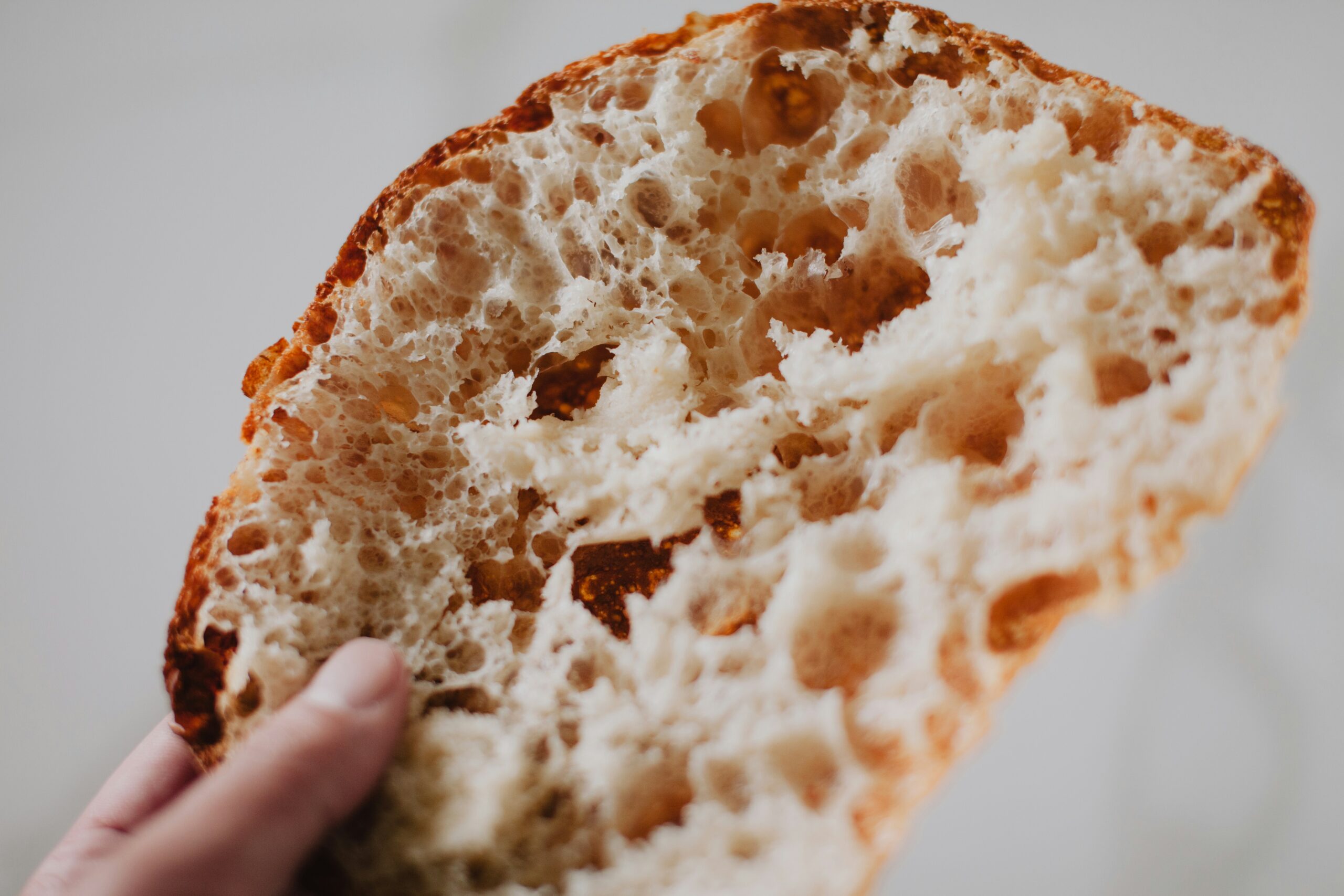
A dent left by a floured fingertip can close almost before the hand is lifted. The loaf looks swollen, perhaps ready, but that quick return often suggests it still needs time. This is where baking bread on a boat becomes less about following instructions and more about reading what is in front of us. The allotted hour may have passed. The dough is giving a different answer.
For the Atlantic passages planned within the Naora Global Expedition, bread belongs among the domestic things worth thinking through before departure. Flour keeps longer than a fresh loaf, but turning one into the other requires more than carrying yeast. It requires a workable interval in the galley, somewhere to secure a rising bowl, and a person whose attention is not needed on deck or whose sleep should not be interrupted.
Discovery, our Lagoon Eighty2, provides the setting, but no yacht makes the Atlantic into a stationary kitchen. A loaf has to fit the passage. We want bread that can accommodate ordinary variation, with enough structure to slice for breakfast and enough simplicity that making it does not become the day’s main undertaking.
Baking Bread On A Boat Begins With Temperature
The familiar instruction to add warm water assumes that warmth is what the dough lacks. Sometimes it is. Sometimes the flour has come from a warm locker, the bowl is warm already, and adding warm water simply starts a fermentation that will run ahead of the person managing it. The useful temperature is the temperature of the mixed dough, not the water before it enters the bowl.
For a straightforward white loaf, a sensible starting target is a dough temperature of about 24 to 26°C after mixing. This is a working range rather than a boundary between success and failure. It gives yeast a reasonably active environment without deliberately driving fermentation hard. A clean probe inserted into the centre tells us more than touching the outside of the bowl, which may be cooler or warmer than its contents.
Water is the easiest adjustment available. Warm flour may call for cool water; cold ingredients may justify gentle warmth. Mixing also contributes heat, particularly with prolonged mechanical kneading. There is little value in calculating water temperature very precisely while ignoring those other inputs. Measure the finished dough, note what went into it, and use that result to improve the next batch.
Temperature affects the pace at which yeast produces gas, while the dough’s gluten network determines how well that gas is retained. Fermentation also changes flavour and dough handling. Increasing warmth does not compress all those changes into a shorter period with an identical result. A fast rise can be useful, but it gives less room for interruption, and prolonged warm fermentation can leave dough weaker and harder to shape. Offshore, that smaller margin matters more than saving a little time.
A Passage Loaf With Four Ingredients
A useful starting formula is 500 g of strong white bread flour, 325 g of potable water, 10 g of salt and 2 g of instant yeast. It makes a manageable loaf without demanding an especially wet dough. The salt supplies flavour and helps regulate fermentation as well as strengthening the dough. The modest yeast quantity leaves room for development rather than making speed the first objective. These are instant-yeast quantities, not quantities to substitute unchanged for fresh yeast.
The flour determines how comfortable that water quantity feels. Different flours absorb differently, including bags bought in different places along a world route. Holding back a little of the measured water while the flour first hydrates can prevent an unnecessary struggle. A genuinely stiff dough may need a small addition; a sticky dough may simply need rest. Adding flour repeatedly until nothing sticks is an easy way to turn a balanced loaf into a dry one.
Small yeast quantities are best weighed before the passage, with the scale on a steady surface. A digital display can look reassuring while motion makes its reading unreliable. Premeasured flour and salt can travel together in labelled, dry containers, with the yeast kept separately sealed, cool and dry. The point is not elaborate preparation. It is removing a fiddly measurement from a moving worktop and protecting the ingredient most likely to lose effectiveness through poor storage.
The initial mixing can stay inside a bowl secured against movement. Combine the dry ingredients, add the water, and work until no dry pockets remain. The first mixture feels rough and adhesive, leaving a paste along the fingers. After a covered rest, the same dough becomes easier to stretch because the flour has absorbed water. That change is useful information: stickiness at the first touch is not a verdict on the recipe.
We would favour a greased loaf tin over a free-standing loaf for this purpose. It supports the dough during its final rise, contains it during baking and produces slices that are easy to use. A dramatic crust is less important than a dependable shape.
Reading The First Rise
A lightly oiled, straight-sided container makes fermentation easier to see. Mark the starting level, leave ample room for expansion and cover it against drying without creating a pressure-tight vessel. Secure the container where it cannot slide or tip. A nonslip mat helps with sliding, but it is not a restraint against a sudden movement. The lid matters too: moving air can dry the surface into a skin that resists expansion and makes the dough misleading to touch.
Early in the rise, folds can develop strength without requiring a long kneading session. With damp fingers, lift one edge of the dough gently and fold it over the centre, then work around the bowl. Stop stretching when it resists rather than pulling until it tears. After resting again, it should feel more cohesive. Folding has a purpose, and once the dough holds itself well, continued handling is not automatically an improvement.
For this loaf, an increase of roughly half its original volume is a useful point to begin assessing whether the first rise is complete. It is not a compulsory endpoint. Look also for a rounded surface, bubbles visible at the sides and a lighter, aerated feel beneath the hand. Cold, tight dough with little internal gas needs more time even if a fold has temporarily made it stand taller. Very slack dough with a flattened surface may already have gone further than intended.
The container mark is valuable because memory is poor at judging gradual change. It does not replace judgement, but it gives judgement something definite to work with. We are looking for dough that has developed gas while retaining enough strength for shaping and another rise. Waiting automatically for every dough to double can use up too much of that strength, especially if the galley has become warmer since mixing.
Shaping And Proofing In A Moving Galley
The work surface needs only a light dusting of flour. Too much can become trapped inside the loaf as dry seams. Ease the dough out, gently flatten the largest gas pockets, then fold and roll it into a shape that fits the tin. The intention is to create an evenly tensioned outer surface, not to squeeze out every bubble or stretch the skin until it splits. Place it seam down, with room for expansion.
This is a small task, but the boat changes how it is done. On land, both hands can remain occupied indefinitely. At sea, one may be needed for balance. Keeping the dough, tin and scraper close together reduces reaching, and a pause in handling does no harm. If the motion makes even this simple work awkward, that is information about the suitability of the baking plan, not an invitation to persist more theatrically.
The final rise is a different judgement from the first. We want the shaped loaf visibly fuller and aerated, with some resilience left. A gentle press with a floured fingertip is useful here. A dent that springs back immediately often indicates that proofing has further to go. One that returns slowly and remains slightly visible suggests the loaf is approaching readiness. A surface that sinks around the touch, particularly on very fragile dough, warns that its structure may be failing.
The finger test is not an instrument with a calibrated result. Flour strength, hydration and temperature all affect the response. Read it alongside the loaf’s expansion and feel, rather than pressing repeatedly until it supplies the answer wanted. Nor is the height above the rim a universal measure: the same dough will sit very differently in a narrow tin and a broad one. The vessel is a support, not a proofing gauge.
When The Dough Runs Ahead Of The Day
There is a legitimate place for the clock. In a kitchen with consistent ingredients and temperature, a familiar recipe can be timed quite closely. Even offshore, recording the mixing time, dough temperature and progress of the rise helps us plan the next loaf. An alarm is useful as a reminder to look. The mistake is treating it as permission to move on without looking.
If fermentation is consistently too fast, the next batch can start cooler or contain less yeast. Change one variable deliberately so that the result teaches something. Once a dough is mixed, however, reducing the yeast is no longer an option. Cooling becomes the available brake. A refrigerator can buy time if there is secure space for the container, but the centre of a warm mass cools gradually. Fermentation continues during that interval, so refrigeration works better before the dough reaches its limit.
A loaf that is not sufficiently proofed cannot reliably be rescued by putting it into a hotter oven. It may split unpredictably and remain dense inside because its structure has not expanded enough before the crust sets. Dough that has gone too far presents the opposite problem: gas has accumulated, but the structure may no longer hold it. Reshaping sometimes recovers a usable loaf if strength remains, though the result and timing become less predictable.
That uncertainty is why bread should never be the only workable meal aboard. A passage needs provisions that do not depend on successful fermentation or an oven session at a particular moment. If the weather or motion changes, the galley plan changes with it. Losing the intended loaf is irritating. Letting the desire to save it interfere with watchkeeping, necessary rest or safe handling of hot equipment would be a much larger failure of judgement.
Baking Bread On A Boat Safely
The decision to bake belongs before the dough reaches its final proof. Someone rested must be free to manage the oven, and the motion must allow safe handling. A heatproof place to set the hot tin needs to be cleared and arranged so the tin cannot slide away. Dry oven mitts should be within reach. Wet fabric transfers heat rapidly, and looking for protection while holding an oven door open is a preventable complication.
For this plain tin loaf, a fully preheated oven at about 220°C is a reasonable starting point. An independent oven thermometer can establish whether the air temperature resembles the dial setting; the setting itself is not proof that preheating is complete. Support and secure the tin appropriately within the oven. There is no need to introduce a pan of boiling water for steam or to handle a heavy, preheated pot merely to reproduce a particular crust technique.
Expect roughly 35 to 45 minutes of baking as an initial guide, with the actual result depending on the oven and tin. The crust should develop colour and the sides should set, but appearance alone can mislead. For this lean loaf, a centre temperature around 96 to 98°C is a useful additional sign that the crumb has baked through. Insert the probe into the middle without touching the tin. That reading is a doneness check for this bread, not a universal target for every kind of loaf.
During the later part of the bake, the smell changes from warm flour to toasted crust. Against the salt air outside, it has an unexpectedly enclosed, domestic character. Opening the oven brings a dry heat across the face, quite different from the dampness on deck. This is also the moment to remain practical: the landing place stays clear, the mitts stay dry, and the bread is assessed without leaving the door open longer than necessary.
Baking uses energy and adds heat to the interior. Those costs belong in the decision, particularly when ventilation and other galley work are already demanding attention. Fresh bread is welcome, but it does not justify running the oven simply because a recipe has reached its final instruction.
Cooling And Storing Bread At Sea
Once the loaf is firm enough to handle, remove it from the tin and let it cool on a secured rack with air beneath it. Leaving it enclosed allows moisture to collect against the sides and soften them. The first urge is usually to cut immediately. Resisting it is part of finishing the loaf: the hot crumb is still delicate, and a knife can compress it into a gummy-looking band even when the baking itself was adequate.
The crust may make small cracking sounds as it cools. Inside, moisture redistributes and the crumb becomes firmer. Wait until the centre has lost most of its heat before expecting clean slices. This is one of the few pauses in bread making that cannot be improved by more handling. The useful work is clearing the galley, securing the knife and giving the loaf somewhere safe to remain.
Store it only after it has cooled, because wrapping it hot traps condensation. In warm, humid conditions, making an amount that will be eaten promptly matters more than chasing a long storage life. Bread that has merely dried can become toast. Bread with mould should be discarded as a whole loaf, not trimmed around the visible patch; soft, porous bread can be affected beyond what the eye sees.
On passage, people do not always reach the table together. Someone may have eaten before taking the watch, while someone else needs sleep more than company. There is no need to wake anyone for the first warm slice. The loaf can wait.