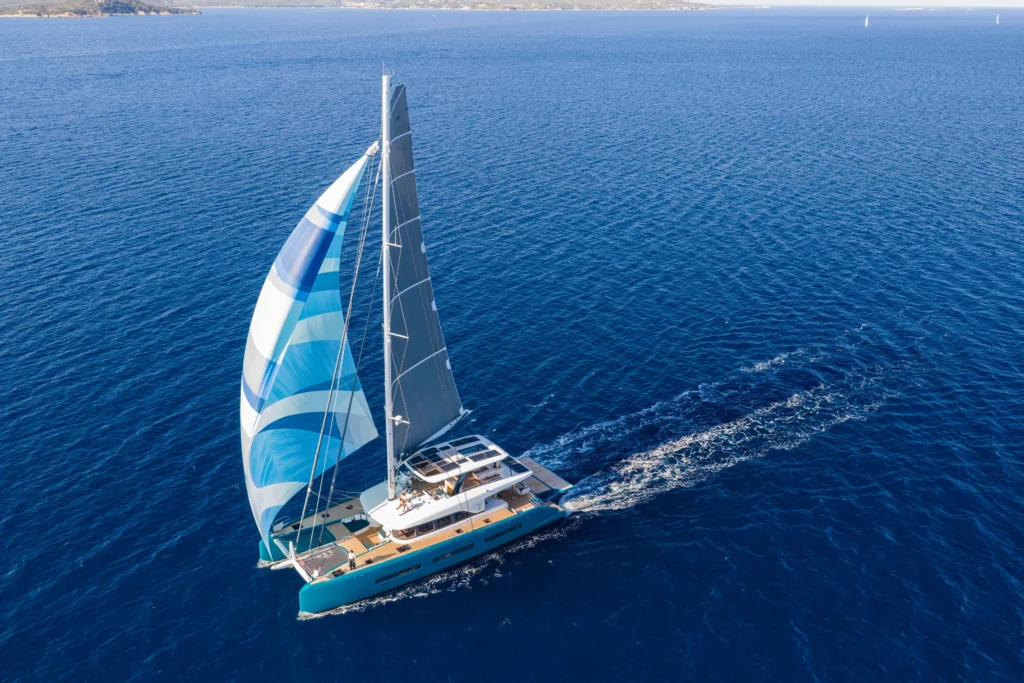
Sailing has always carried a certain environmental appeal compared to motor-driven travel, relying on wind rather than fuel for propulsion across open water. Modern sailing catamarans, however, take this advantage considerably further, incorporating design choices that reduce environmental impact well beyond simply harnessing wind power. We wanted to walk through how the vessel at the center of Naora’s circumnavigation, reflects this broader shift toward genuinely sustainable design within the sailing industry as a whole.
This is not a claim we make lightly, since environmental marketing within luxury travel is often more aspirational than accurate. We believe the actual design choices behind a vessel deserve a closer, more honest look.
We have noticed that many luxury travel brands lean heavily on vague, feel-good environmental language without offering much specific detail behind the claims they make. We have tried to avoid that pattern here, focusing instead on concrete design choices and operational practices that can be explained clearly rather than broad statements that sound reassuring but resist any meaningful scrutiny whatsoever.
Why Catamarans Offer a Genuine Advantage
Catamaran design offers several inherent efficiency advantages over traditional monohull vessels. Their wider, lighter overall hull structure typically requires less power to achieve comparable speeds, reducing fuel consumption when motoring becomes necessary. Their stability under sail also means they can rely on wind power for a greater share of their overall propulsion compared to many monohull designs, which often require more frequent engine use to maintain comfortable handling in varied conditions.
This stability advantage extends well beyond simple comfort into genuine, measurable efficiency gains. A monohull vessel rolling significantly in moderate seas often requires additional engine power simply to maintain a comfortable heading, while a catamaran’s twin-hull stability allows it to maintain course and speed under sail alone in conditions that would push a comparable monohull toward heavier reliance on its engine.
Over the course of thousands of nautical miles, this difference compounds into a meaningful reduction in overall fuel consumption across an entire journey.
Discovery specifically benefits from these design principles at scale, offering the space and comfort expected of a luxury vessel without sacrificing the underlying efficiency advantages that smaller catamarans have long demonstrated. This combination of comfort and efficiency is precisely why we chose this style of vessel for a journey expected to cover more than 45,000 nautical miles across five years.
Specific Sustainability Measures Aboard
Beyond the inherent advantages of catamaran design, several additional and specific measures further reduce the overall environmental footprint of the journey:
- Maximizing sail use over engine power whenever wind and routing conditions allow
- Careful waste management protocols designed for extended time in remote anchorages
- Reef-safe practices around anchoring and diving to minimize damage to marine environments
- Sourcing fresh, local provisions wherever possible to reduce reliance on long supply chains
- Limiting group size to reduce overall resource consumption per leg of the journey
None of these measures alone would qualify as revolutionary, but together they reflect a consistent underlying philosophy: minimizing impact wherever a genuine choice exists, without compromising the safety or comfort of the overall experience for members aboard.
Our crew receive specific, hands-on training on each of these practices before joining a leg, ensuring consistency regardless of which crew members happen to be aboard for a particular stretch of the journey. This training covers everything from proper anchoring technique that avoids damaging sensitive seabed areas to waste sorting protocols designed to function reliably even weeks away from any port equipped with formal recycling facilities of any kind.
Why Remote Destinations Demand Extra Care
Many of the destinations along our route remain ecologically sensitive precisely because they have not been heavily developed or visited. This makes responsible practices considerably more important than they might be in a heavily trafficked harbor already accustomed to absorbing visitor impact. We brief every group on appropriate behavior before arriving at particularly sensitive anchorages, treating environmental responsibility as a core part of the experience rather than an afterthought mentioned only in passing.
This briefing typically covers practical guidance such as appropriate distance from coral when swimming or diving, proper disposal of any waste generated aboard, and respectful behavior around marine wildlife encountered along the way during any given leg.
Members generally respond well to this guidance once they understand the reasoning behind it, particularly once they have witnessed firsthand just how pristine these environments remain compared to more heavily visited destinations elsewhere in the world.
Conventional Motor Yachting Versus Sustainable Sailing
| Factor | Conventional Motor Yachting | Naora Sailing Approach |
|---|---|---|
| Primary propulsion | Engine power | Wind power whenever possible |
| Hull design | Often heavier monohull | Efficient lightweight catamaran |
| Anchorage impact | Variable, often unmanaged | Reef-safe practices observed |
| Provisioning approach | Often centralized and shipped | Local sourcing wherever possible |
| Group size impact | Often large, higher footprint | 10 to 12 guests, lower footprint |
Sustainability Without Sacrificing Comfort
We do not position sustainability as a trade-off members must accept in exchange for a less comfortable experience. Discovery delivers the same level of comfort, service, and design quality our members expect, while incorporating these efficiency and responsibility measures in ways that remain largely invisible during day to day life aboard.
This balance matters a great deal to us because we believe sustainability claims that require visible sacrifice rarely gain lasting traction within luxury travel. A genuinely sustainable model needs to work quietly, in the background, delivering its benefits without asking members to compromise on the experience they are specifically paying to receive.
We are also careful not to overstate what these measures actually accomplish in practice, year after year. Sailing a luxury vessel across 183 plus destinations over five years still carries a meaningful environmental footprint, regardless of how thoughtfully it is managed day to day. Our goal has never been to claim a completely zero impact journey, which would be dishonest, but rather to minimize that impact as much as practically possible while still delivering the experience our members are genuinely joining for.
A Long Journey Worth Taking Carefully
A five year, multi-ocean circumnavigation across 183 plus destinations carries genuine responsibility toward the places it visits. We see thoughtful, design-driven sustainability not simply as a marketing feature but as a basic requirement for any journey of this length and scope to remain justifiable over time. The choices behind the the boat, and the consistent practices we follow aboard her, reflect that responsibility as seriously as we treat any other aspect of the voyage.
We expect these practices to continue evolving as better technology and better understanding become more widely available throughout the remaining years of our journey. A circumnavigation spanning five years provides ample opportunity to refine and improve these measures along the way, and we intend to treat sustainability as an ongoing commitment rather than a fixed set of practices established once at the very beginning and never seriously revisited again as conditions change.
If a more thoughtful approach to luxury travel genuinely matters as much as the destinations themselves, we would welcome a conversation about how sustainability shapes every single leg of our route, from anchorage selection to provisioning.