For most of modern luxury travel’s history, status was something to display. A recognizable hotel brand, a visible designer label, a table at the right restaurant on the right night, all served as signals meant to be seen by others. That logic has started to invert. Among the wealthiest and most visible travelers we speak with, the rarest and most valued commodity has quietly become privacy itself, the ability to disappear completely for a stretch of time without anyone tracking, photographing, or even knowing where they actually are.
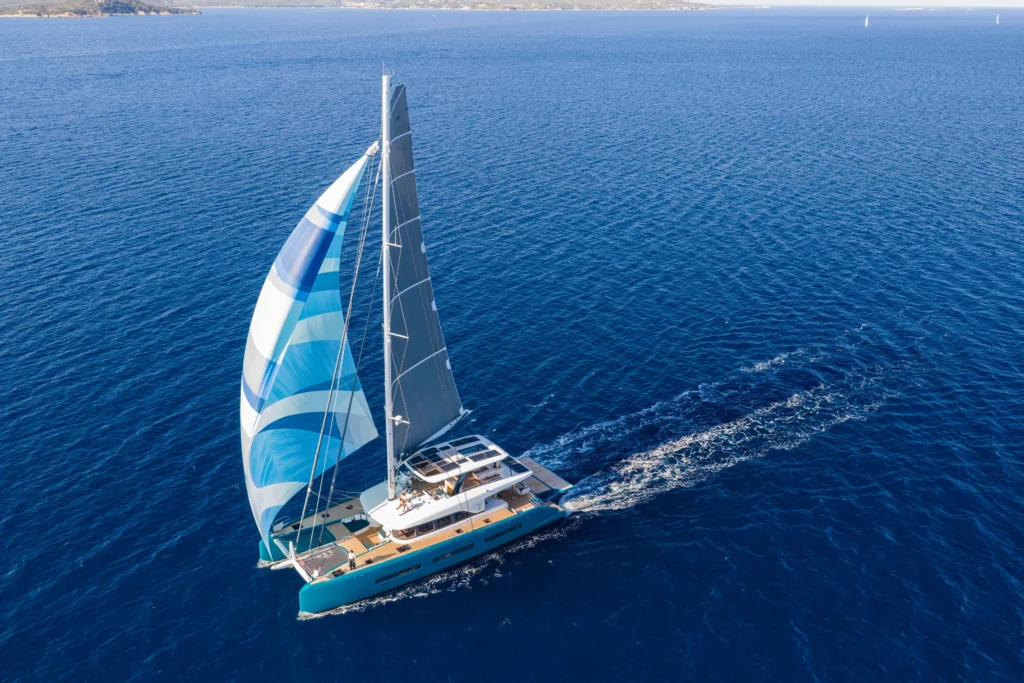
This shift sits at the core of how we built Naora. Our circumnavigation was designed from the outset around small groups, remote anchorages, and an experience that simply does not lend itself to public display, even though it happens in some of the most beautiful settings on earth.
Why Visibility Lost Its Appeal
The reasons behind this shift are not mysterious. Smartphones and social platforms have made it nearly impossible for a recognizable person to appear anywhere in public without the risk of being photographed, tagged, or discussed online within minutes. For founders, executives, and public figures who already live under significant scrutiny in their working lives, the prospect of a holiday that simply adds another layer of visibility has lost much of its appeal.
There is also a generational dimension to this shift. Many of today’s most successful entrepreneurs grew up entirely within the era of social media and have spent their entire adult lives managing some degree of public presence, whether personally or through their companies. For this group, the appeal of true disconnection runs deeper than nostalgia for a quieter era, it is a genuine novelty, something many have simply never experienced as adults at all.
At the same time, conventional luxury settings have become harder to keep private even when no one is actively trying to expose a guest. Five star hotels in major destinations are full of other guests with phones in hand, staff who may discuss a notable guest informally, and architecture rarely designed with true seclusion in mind. A degree of visibility has become almost structurally unavoidable in many traditional luxury settings, regardless of how exclusive the property claims to be.
What Genuine Privacy at Sea Looks Like
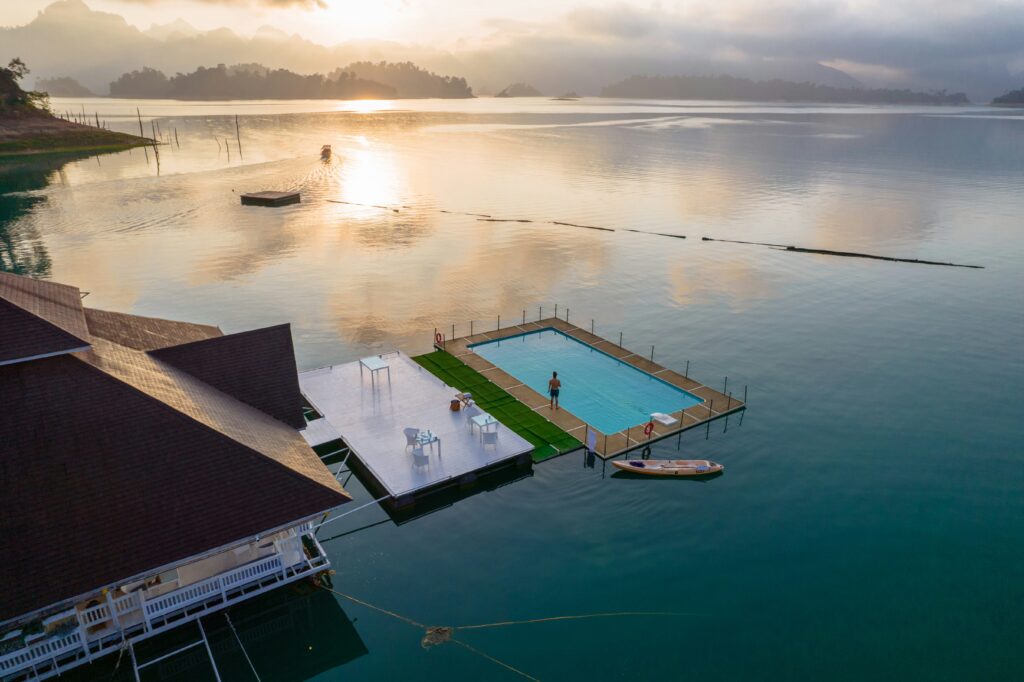
A small sailing vessel anchored away from any populated harbor solves this problem in a way few land-based settings can match. Several structural factors contribute to this, each reinforcing the others rather than working in isolation:
- No other guests beyond the curated group of 10 to 12 aboard a given leg
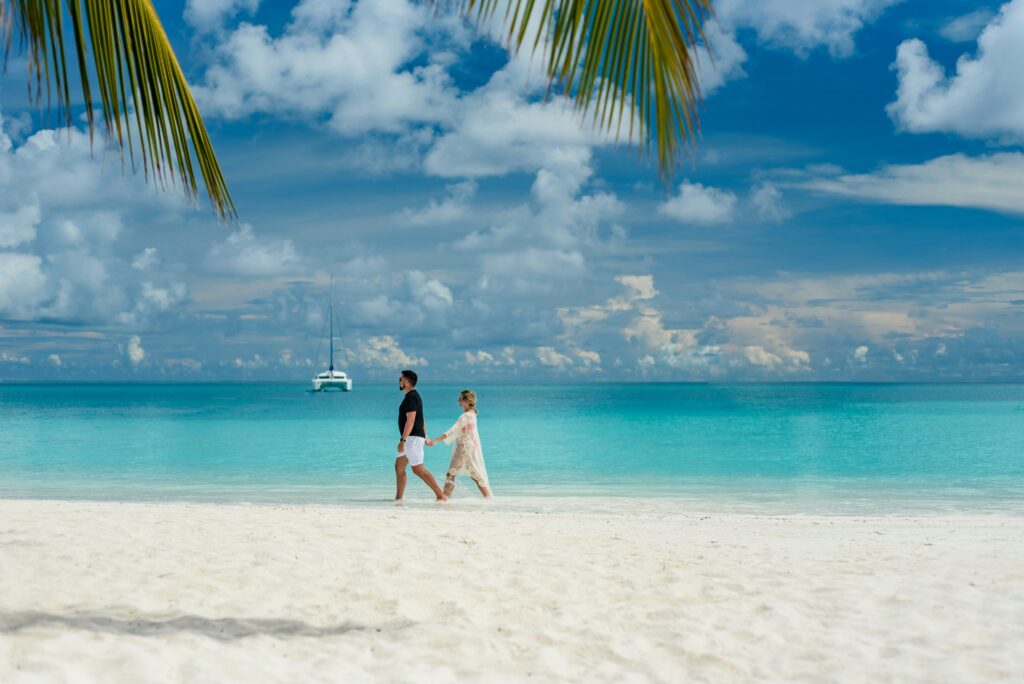
- Remote anchorages with no public access or nearby crowds
- Crew bound by strict discretion regarding members and their activities aboard
- No fixed schedule that would allow outsiders to anticipate a vessel’s location in advance
- Limited connectivity that naturally reduces the temptation, and the risk, of real-time sharing
Taken together, these factors create something genuinely rare: an experience that can be fully enjoyed without ever needing to be managed or controlled for an outside audience. Several of our members have described this as the first time in years they felt entirely free to simply exist without considering how a moment might look from the outside.
Privacy as a Designed Feature, Not an Accident
We do not treat privacy as a fortunate side effect of being at sea, we treat it as a deliberate design requirement built into nearly every operational decision, from how we select anchorages to how we train crew on discretion. This is part of why our group sizes remain capped regardless of demand, since a larger group would inevitably increase the likelihood of details leaking beyond the vessel itself.
Crew confidentiality agreements, careful vetting of new members before they join any leg, and a deliberate avoidance of marketing material that names specific members or shares identifiable images without explicit consent all form part of this same approach. None of this is incidental. We treat the discretion surrounding who joins, where the vessel travels, and what happens aboard as seriously as we treat the safety of the voyage itself.
Visible Luxury Versus Private Luxury
| Factor | Conventional Visible Luxury | Naora Private Sailing Membership |
|---|---|---|
| Setting | Public hotels, restaurants, resorts | Remote anchorages at sea |
| Other guests present | Many, often unknown | 10 to 12, carefully curated |
| Risk of exposure | Significant and constant | Minimal by design |
| Status signal | Visible brand or location | Access others simply cannot obtain |
| Connectivity | Constant | Naturally limited at sea |
Who Values This Most
Unsurprisingly, our most privacy-conscious members tend to come from professions where visibility is already a constant feature of daily life. Founders of well known companies, public figures, and individuals managing significant family wealth all describe a similar craving for genuine anonymity, even temporary, somewhere their decisions, appearance, or company are not subject to outside observation.
Several members have specifically mentioned that the value of a leg aboard increased once they realized just how few people, beyond crew and fellow members, would ever know precisely where they had been or what they had done during their time away. That sense of being genuinely untracked, even briefly, appears to carry weight disproportionate to its apparent simplicity, particularly for people whose every other waking hour involves some degree of being observed, assessed, or recorded by someone.
For this group, our Bluewater Private tier, offering exclusive use, often holds particular appeal, since it removes even the presence of other curated members and replaces them with a group chosen entirely by the member themselves. Genuine privacy, in this sense, becomes a feature that can be dialed up further still for those who want it.
We have noticed that members who choose Bluewater Private specifically for this reason often describe the decision in similar terms: the cost of full exclusivity feels minor compared to the value of removing even the small uncertainty that comes with sharing a vessel with people outside their own immediate circle. For a public figure or a high profile founder, that additional layer of certainty can matter as much as the destination itself.
The Quiet Becomes the Point
As luxury continues shifting away from public display and toward genuine, unwitnessed experience, we expect privacy to remain one of the defining currencies of high-end travel for years to come. Naora was built specifically to deliver that currency, not as an afterthought, but as the foundation underneath everything else we offer aboard.
This is, in some ways, a return to an older idea of what travel was originally meant to provide before mass media made nearly every corner of the world visible from a screen. The earliest sailing explorers ventured toward places no one back home could see or verify, and there was a particular kind of freedom in that genuine unknowability. We are not claiming to recreate true exploration in the historical sense, but the psychological relief of being somewhere that cannot easily be observed, tracked, or commented on appears to tap into something remarkably similar.
If true privacy has become harder to find the more successful life becomes, we would welcome a conversation about how our membership tiers are built to restore it, leg by leg and anchorage by anchorage.