Most people who hear about a five year circumnavigation imagine the romance of it long before they consider the logistics. The truth is that a journey of this scale, spanning more than 183 destinations and 45,000 Nm, depends on a level of planning that rarely makes it into the brochure copy but absolutely determines whether the experience itself feels effortless or chaotic. We have spent considerable time building the systems behind Naora’s route, and it is worth pulling back the curtain on how a modern circumnavigation actually comes together, piece by piece, season by season.
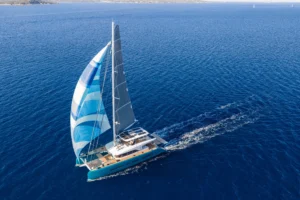
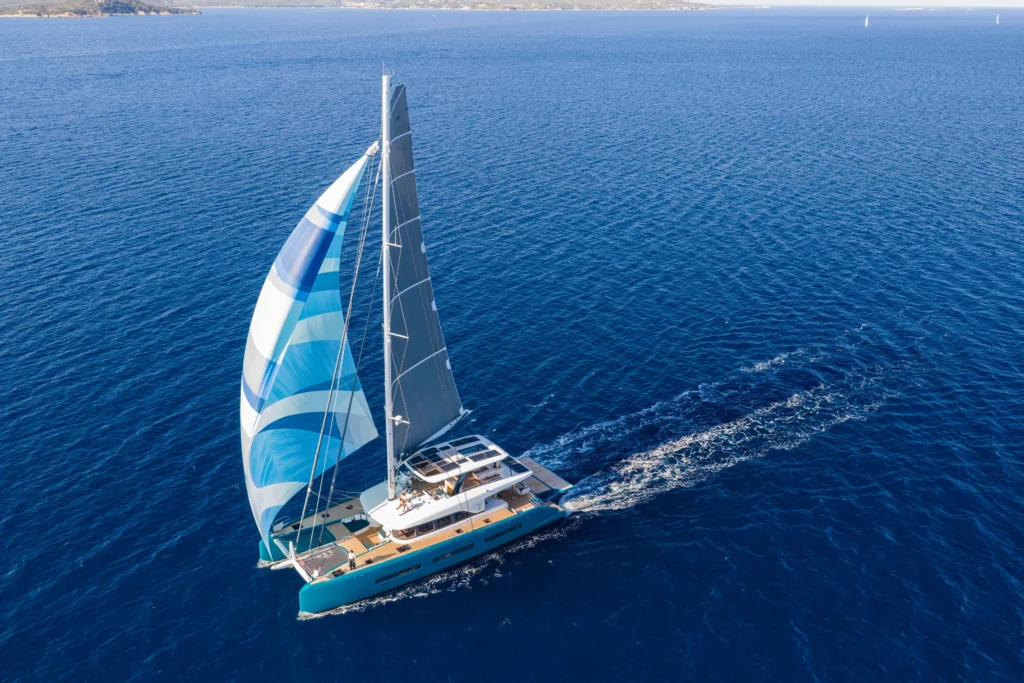
Our journey aboard Discovery, a 2025 Lagoon Eighty2, departed Bodrum in May 2027 and is scheduled to return in January 2032. Between those two dates lies a route that touches an extraordinary range of regions, seasons, and conditions, each requiring its own layer of preparation well before the vessel ever arrives at the anchorage in question.
Mapping A Route Across Five Years
Planning a route this long requires working backward from seasonal weather patterns rather than forward from a simple wish list of destinations. Monsoon cycles in the Indian Ocean, cyclone seasons in parts of the Pacific, and prevailing wind patterns through the Red Sea all dictate windows during which certain stretches of the journey can safely take place. Sven, our founder and captain, plans every weather window himself. Missing one by even a few weeks can mean rerouting an entire season’s worth of legs across multiple regions at once.
Our routing through the Red Sea, for example, follows a north to south direction to take advantage of favorable wind patterns. Security conditions require a separate, ongoing assessment and can change whether a passage is viable at all. Decisions like these shape the entire sequencing of the broader route, since a single regional choice can affect which destinations naturally follow in the months after.
Beyond weather and wind, routing decisions also account for political stability, port availability, and the practical realities of resupplying a vessel of this kind across remote stretches of coastline. A region that looks appealing on a map can prove impractical once factors like fuel availability, medical access, or local maritime regulations are properly accounted for. Each leg of the published route reflects months of this kind of groundwork long before any member books a place aboard.
The Operational Layers Behind Each Leg
Behind every leg our members experience sits a substantial amount of coordination that remains largely invisible to anyone aboard the vessel itself:
- Provisioning logistics for fresh ingredients across regions with very different supply chains
- Supporting crew rotation and certification requirements that vary by flag state and region
- Customs and entry documentation for each country along the route
- Maintenance scheduling for Discovery between legs, often in specific ports equipped for the work
- Weather monitoring and contingency routing for every single crossing
None of these layers are visible to a member enjoying a week aboard, and that invisibility is precisely the point. A circumnavigation of this length only feels effortless to the people experiencing it if an enormous amount of effort has already gone into making it so behind the scenes.
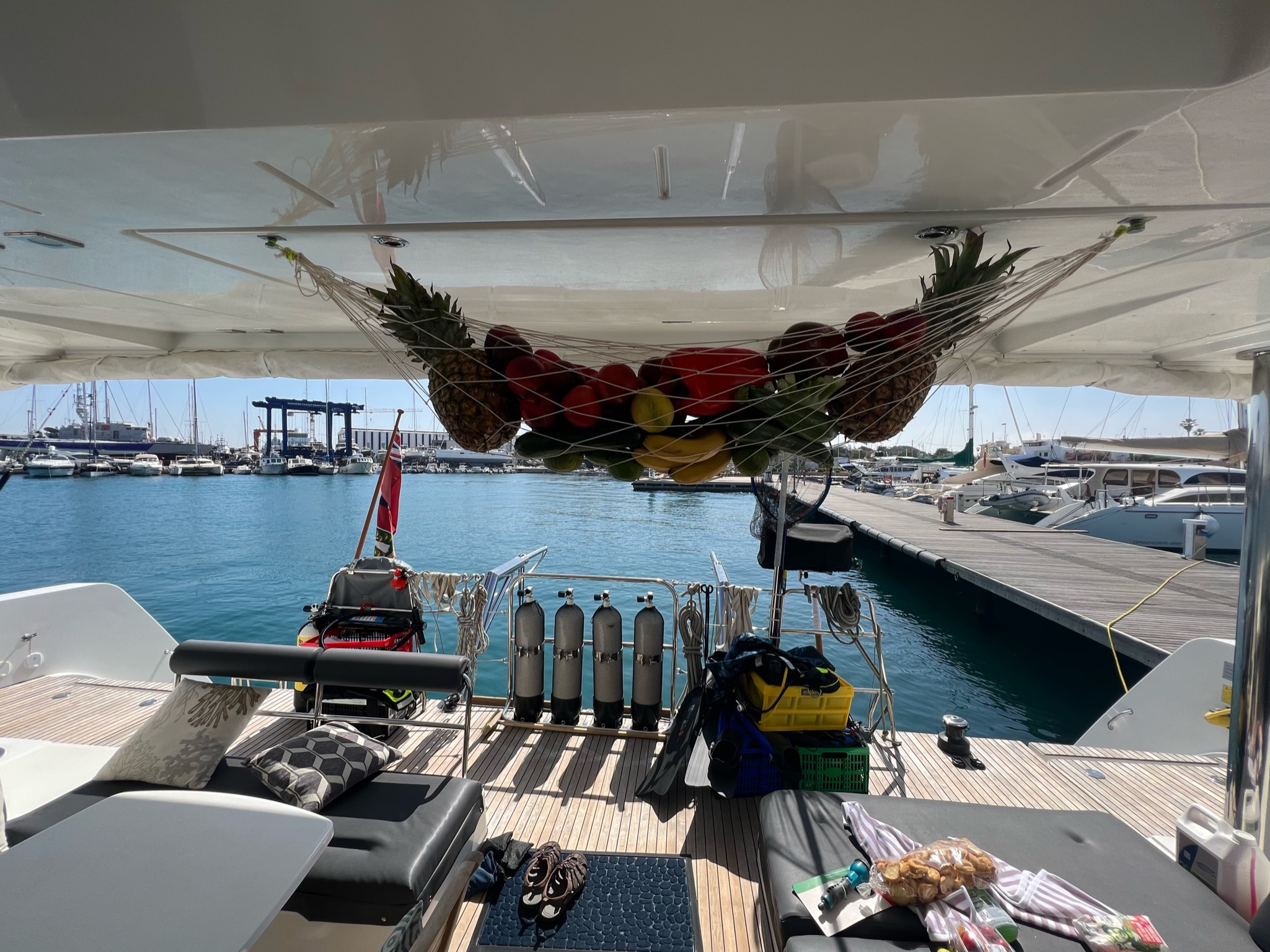
Provisioning alone illustrates the complexity well. Sourcing fresh produce, quality proteins, and specific dietary requirements becomes considerably more complicated once Discovery moves beyond regions with established luxury supply chains. Our shore team works months ahead of each leg to identify reliable suppliers in upcoming regions, sometimes arranging deliveries to remote ports days before the vessel itself arrives, simply so that the onboard chef never has to compromise on quality regardless of how far the journey has strayed from familiar waters.
Crew planning follows a similarly layered process. Different flag states and regions impose different certification and rotation requirements, and Sven works closely with the shore team to ensure every crew member aboard holds the appropriate qualifications for the waters Discovery is about to enter. Supporting crew may rotate, but Sven sails every leg himself. This preparation is not a one-time exercise completed before departure; it is an ongoing process that repeats before every major change in region throughout the full five years of the route.
Why Headquarters Matters
Coordinating a journey of this scale requires a stable home base even as Discovery itself keeps moving. Our headquarters vessel, the Pent’AUS, based in Antwerp, serves as the operational center for Naora’s shore team, handling member communications and logistics coordination while supporting Sven’s route planning. It gives the circumnavigation a fixed point of support even while the journey itself covers tens of thousands of Nm across dozens of countries and jurisdictions.
A Single Charter Trip Versus A Five Year Route
| Planning Factor | Single Charter Booking | Naora Five Year Route |
|---|---|---|
| Route scope | One region, one season | 183+ destinations across 5 years |
| Weather planning | Single seasonal window | Multiple seasons across multiple oceans |
| Crew continuity | Fixed for the trip | Sven captains every leg; supporting crew rotate |
| Customs and documentation | One jurisdiction | Dozens of jurisdictions over time |
| Maintenance planning | Pre and post charter | Continuous, scheduled across the route |
Founders Behind The Logistics
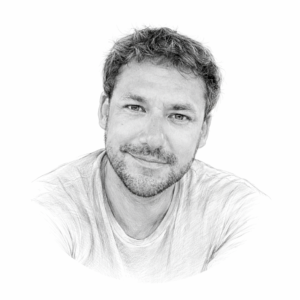
Naora began with two people: Sven, founder and captain, and Antony, co-founder. That partnership remains at the heart of the operation, with the shore team supporting the practical work behind the journey. Sven holds Master Mariner credentials and brings extensive offshore racing and diving experience to his role. His responsibility for every weather window and every leg gives the route planning and onboard safety standards a direct connection to the person who will put them into practice at sea.
For the two of us, a project of this scale cannot be treated purely as a sailing endeavor or purely as a hospitality business. It requires both disciplines working in close coordination, alongside the kind of operational rigor more commonly associated with logistics or shipping companies than with luxury travel brands. Keeping those demands connected has shaped nearly every operational decision behind the route, from how legs are scheduled to how supporting crew are prepared before joining. The planning ashore has to work in the conditions Sven encounters aboard.
This combination of maritime expertise and operational planning is what allows a route this ambitious to remain genuinely safe and enjoyable for members rather than simply impressive on paper. A five year journey across this many destinations cannot succeed on enthusiasm alone; it requires the kind of detailed, often unglamorous planning that rarely gets discussed but consistently determines whether an ambitious idea actually works in practice, year after year, ocean after ocean.
What The Logistics Make Possible
The reward for all of this invisible planning is a journey our members can join with complete confidence, regardless of which leg or which region they choose. A circumnavigation of this scale only becomes a genuine luxury experience once the underlying logistics are solid enough that no member ever needs to think about them. That is the standard we hold ourselves to across every one of the 183 plus destinations along the route, from the first anchorage out of Bodrum to the very last stretch before the journey’s eventual return.
If the scale of the journey raises questions about how any of it actually works in practice, we would welcome a direct conversation about the route, the planning behind it, and where Discovery is headed next.
We are also happy to share more detail on specific legs still ahead on the calendar, including the practical considerations that went into choosing each one, for anyone who finds the operational side of a project like this as interesting as the destinations themselves.