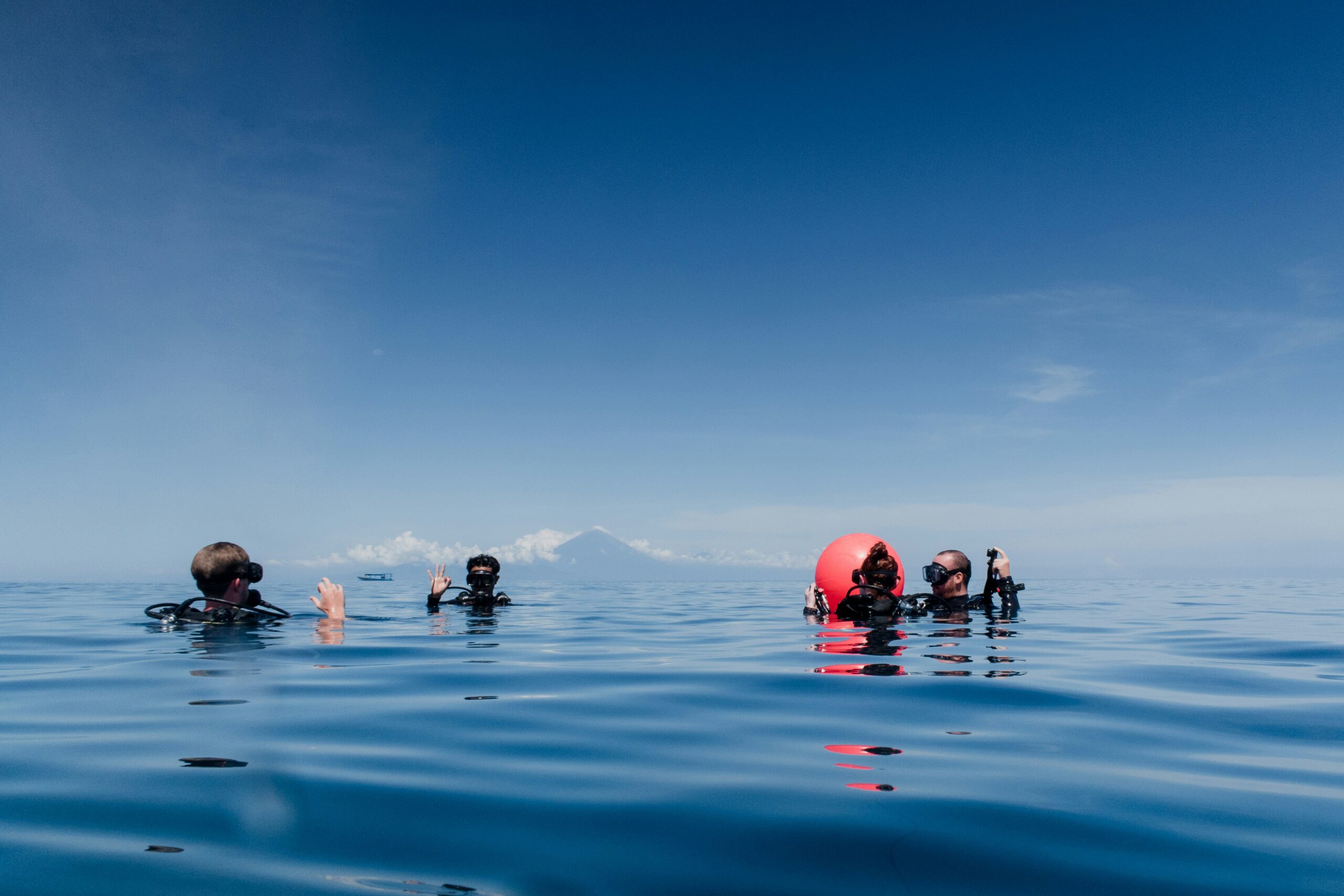
At an atoll entrance, the detail worth watching may be a piece of weed moving through apparently still water. It passes the reef faster than expected, catches in an eddy, then disappears towards the lagoon. The best diving destinations often reveal their conditions through something this small. Blue water and a quiet surface tell us very little about what a diver will meet below.
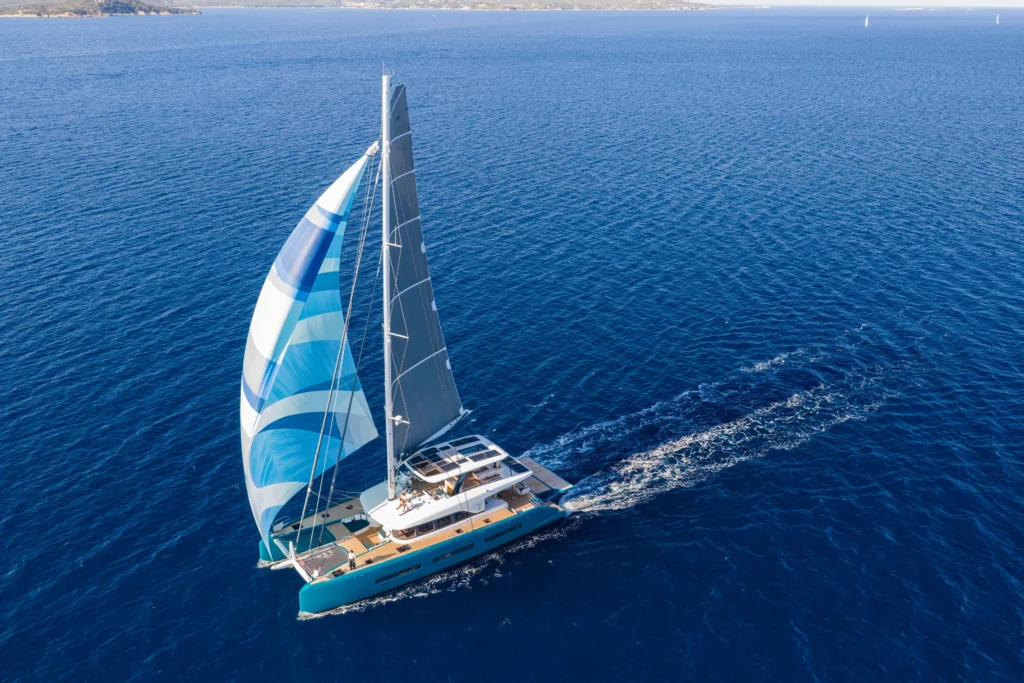
As we prepare the Naora Global Expedition, this distinction matters more than a list of celebrated sites. Discovery, our 2025 Lagoon Eighty2 sailing catamaran, will follow a route of roughly 49,000 Nm over five years, from 2027 to 2031. That distance connects very different underwater worlds, but much of it is passage water. A world route creates opportunities to dive. It does not turn every anchorage into a dive site.
The Naora dive programme is part of membership for the days a member is aboard. Its substance lies in how diving belongs to the voyage: understanding the coast from below as well as above, leaving room for conditions to change, and giving a place more attention than a single descent can provide.
Choosing The Best Diving Destinations For The Day
A useful dive plan begins with the return to the boat. We need to understand where divers may surface, how they will be seen, and what the water will be doing by then. An entry beside a sheltered reef can look entirely reasonable while the likely exit lies beyond a headland exposed to wind. The conditions at the beginning are only part of the decision.
Wind, swell and current deserve separate attention. A local breeze can ease while swell from distant weather continues to break over a reef. A protected anchorage can sit close to a passage carrying substantial flow. Shelter for Discovery does not automatically mean suitable diving nearby, and a promising forecast does not replace looking at the water on arrival.
The people entering it matter equally. Certification establishes training, not recent practice. Someone returning after a long interval may benefit more from a straightforward dive with time to settle their weighting and breathing than from the site they have travelled furthest to see. A camera adds another task. Unfamiliar equipment adds several. These are ordinary considerations, best discussed without embarrassment before anyone is standing in fins.
We also have to distinguish the captain’s responsibilities from specialist diving judgement. Sven, Naora’s founder and captain, plans every weather window and sails every leg himself. That does not make seamanship a substitute for current local dive knowledge. Where a site requires a qualified local professional, permission or particular experience, those requirements shape the plan. If they cannot be satisfied, the site remains outside it.
The Mediterranean Makes You Look More Closely
The Mediterranean legs, including the Bodrum loops and the Greek islands, offer a different kind of attention from a tropical coral reef. Rock, shade, seagrass and the meeting of sand with harder ground give the underwater landscape its structure. The apparent simplicity is useful. With fewer colours competing for the eye, movement becomes easier to notice.
At the edge of a seagrass meadow, the leaves can lean together and then slowly straighten as the surge passes. Light travels over the sand between them. Through a regulator, breathing sounds close and mechanical, while the landscape beyond the mask seems almost silent. A fish that disappeared against the rock becomes visible again when it turns. There is no need to go deeper to make this absorbing.
Posidonia is a flowering marine plant, not seaweed. Its meadows shelter young animals and help stabilise the seabed. They also make anchoring decisions more consequential: a comfortable position above the water may be damaging below it. Where anchoring is permitted, identifying genuinely clear sand means considering the anchor and the chain’s movement, not simply finding a pale patch beneath the bow. Mooring rules and protected areas take precedence.
Thermal comfort needs similar care. Mediterranean sunshine can make the surface feel inviting while a thermocline introduces distinctly cooler water below. Exposure protection should suit the expected depth and duration, rather than the temperature on deck. Cold changes concentration and breathing, and a diver who is becoming chilled has already received a good reason to end the dive. Staying longer rarely improves the memory.
Atlantic And Caribbean Water Ask Different Things
Across the Atlantic chapter, the diving question increasingly includes open-water exposure. A coast may offer shelter from the prevailing wind without offering shelter from ocean swell. Water clarity can change with plankton, mixing and runoff, and the clearest day is not necessarily the day with the most feeding activity. Visibility tells us how far we can see. It does not tell us how much life the water supports.
That distinction remains useful in the Caribbean. A reef should not be judged solely by the photograph it produces. Living coral tissue, areas overgrown by algae, grazing fish and the shelter available to smaller animals all contribute to what we are seeing. Pale coral can warrant concern, but colour alone is not a diagnosis. A visiting diver can notice carefully without pretending that a brief visit establishes the health of an entire reef.
For members moving between ocean chapters, these differences are part of the value. Familiar shapes do not always represent familiar species, and habits learned in one sea need reconsidering in another. We want the briefing to explain the particular place, rather than deliver the same account over a different chart.
The sailing schedule also has a voice. A useful ocean weather window may justify leaving an anchorage sooner than hoped. Extending a stay for another dive can mean accepting less favourable passage conditions afterwards. We would rather explain that trade off plainly than make the next leg carry the cost of a promise made about this one.
The Best Diving Destinations Still Depend On The Current
At the Polynesian atolls, the relationship between lagoon and ocean becomes central. Water moves through the passes because the levels on either side differ. Tide contributes, but waves breaking over the outer reef can also feed water into the lagoon, which then has to escape. The timing of a tide prediction alone cannot establish the direction or strength of flow in a particular pass.
Incoming ocean water can bring better visibility, yet incoming does not mean gentle. Nor does a apparently quiet interval guarantee that conditions will remain quiet through the dive. Recent local observations, swell, wind and the behaviour of the pass itself all matter. A plan needs to account for changes during descent, time underwater and recovery, not merely choose an appealing moment to enter.
A current of one knot carries water at roughly half a metre per second. Over ten minutes, that is about 300 metres. The number matters because a diver can travel a considerable distance while feeling little effort when moving with the flow. Surface support must follow the actual drift, and the recovery plan cannot depend on everyone returning to the entry point. Swimming harder is a poor substitute for choosing suitable conditions.
The Asian archipelagos bring another expression of this relationship. Flow delivers food to filter feeders and can concentrate activity along exposed reef edges. The same movement that attracts us creates the operational difficulty. Fish facing into the water and soft corals bending with it offer clues, but neither replaces a briefing informed by the site. Where holding position would require gripping living reef, the answer is to change position or change the dive.
Depth introduces a separate limit. At 20 metres in seawater, ambient pressure is approximately three times surface pressure, so a diver breathing at the same rate uses cylinder gas roughly three times as quickly as at the surface. Effort and anxiety can increase consumption further. Gas planning therefore belongs to the depth, conditions and buddy team, including a reserve for a shared ascent. It cannot be reduced to how long a cylinder lasted yesterday.
The Indian Ocean And Red Sea Are Living Waters
In the Indian Ocean island groups and along the East African coasts, seasonal winds affect which side of a place is comfortable to approach and which underwater sites are sensible to consider. Monsoon patterns provide a planning framework, not a daily guarantee. Recent weather can leave swell or suspended sediment after the wind has changed, and the sheltered side may offer a more worthwhile dive than the better-known exposed edge.
Local knowledge includes more than underwater navigation. Access arrangements, fishing activity, protected areas and community expectations all belong in the conversation. Arriving aboard a private yacht does not place us outside the life of a coast. We are entering water that other people depend on and understand through repeated use, often in ways a chart cannot express.
The Red Sea deserves the same restraint. Good visibility can make depth and distance deceptively easy to underestimate, while an offshore reef may leave little shelter for recovery. Clear water does not shorten the route to medical support. Remoteness increases the preparation required; it is not evidence that a reef is untouched or that a difficult dive is worth attempting.
Large animals are possible encounters, never appointments. Where rays visit a cleaning station, their repeated approaches depend on being able to use it without obstruction. Keeping clear of that space allows the behaviour to continue. Chasing an animal for a closer view can end the encounter for everyone. A season may improve the likelihood of a sighting, but food, water conditions and the animal’s own movements still decide what happens. The reef must be worth our attention when nothing large arrives.
The Work Before And After A Dive
The useful preparation is specific and occasionally unglamorous. Equipment must fit the person using it. Buddy checks need to establish that both divers understand the actual configuration, including how to release weights and obtain an alternative air supply. A familiar-looking buckle can work differently. A qualification card does not answer these practical questions.
Before a remote dive is agreed, emergency oxygen provision, communications and a realistic route to medical support need to be established. A destination marked on a map is not yet an evacuation plan. Weather, transport and access can all affect the time involved. The dive profile and the decision to enter should reflect those limitations, rather than treating emergency arrangements as paperwork completed afterwards.
Recovery deserves an equally clear briefing. The surface team needs to know the intended dive area, the likely drift, the signals in use and the action to take if divers do not appear as expected. Divers need to understand separation procedures and how the pickup will work. A surface marker buoy helps make a diver visible, but it does not remove the need for attentive support, competent deployment and an agreed boarding procedure.
A routine safety stop, often around 5 metres for three minutes, belongs in the gas and recovery plan. It is not a substitute for remaining within the planned limits, and it does not erase a decompression obligation. Ascents, stops and any changes to the plan must remain within the divers’ training and the guidance appropriate to their actual profiles. The point is to leave enough margin that the end of the dive feels unhurried.
Departure from the yacht needs planning too. For repeated no-decompression dives, 18 hours is a commonly used minimum interval before flying, rather than a guarantee that every profile is adequately covered. Longer intervals may be appropriate, and more conservative guidance should prevail. Someone with possible decompression illness needs urgent medical assessment and must not fly. A final dive should never become a negotiation with an airport transfer.
One Membership Along A Moving Route
Within Naora’s private circle, members choose when they join, where along the worldwide route they step aboard and how long they stay. Discovery continues sailing as people step in and out. Diving follows that continuity, while the character of each stay depends on the region, the season, the people aboard and the conditions we actually find.
Membership does not make a particular site accessible, remove a permit requirement or make every dive suitable for every person. The practical arrangements for a leg need to be understood before arrival, including any local operator requirements and the experience expected. We do not measure the programme’s quality by filling every possible hour underwater. Some places reward a return to the same reef; others are best left for a different day.
This leaves room for people sharing the yacht to have different relationships with the water. One person may want to spend much of the stay diving. Another may prefer a sheltered snorkel, a swim or a morning ashore. A family does not need identical interests to have a shared day. There is pleasure in meeting again with something different to describe.
After a dive, the scale of things changes again. The mouthpiece is out, ordinary voices return, and the warmth of a dry towel becomes more immediate than anything on the route plan. There is time to rinse equipment, eat and let the details settle. Often the conversation returns to something modest: a fish holding its position in moving water, or the moment a patch of apparently empty rock resolved into life.
That is the kind of attention we want the programme to make possible. Sometimes a small fish adjusting its fins above the reef is enough to hold it.