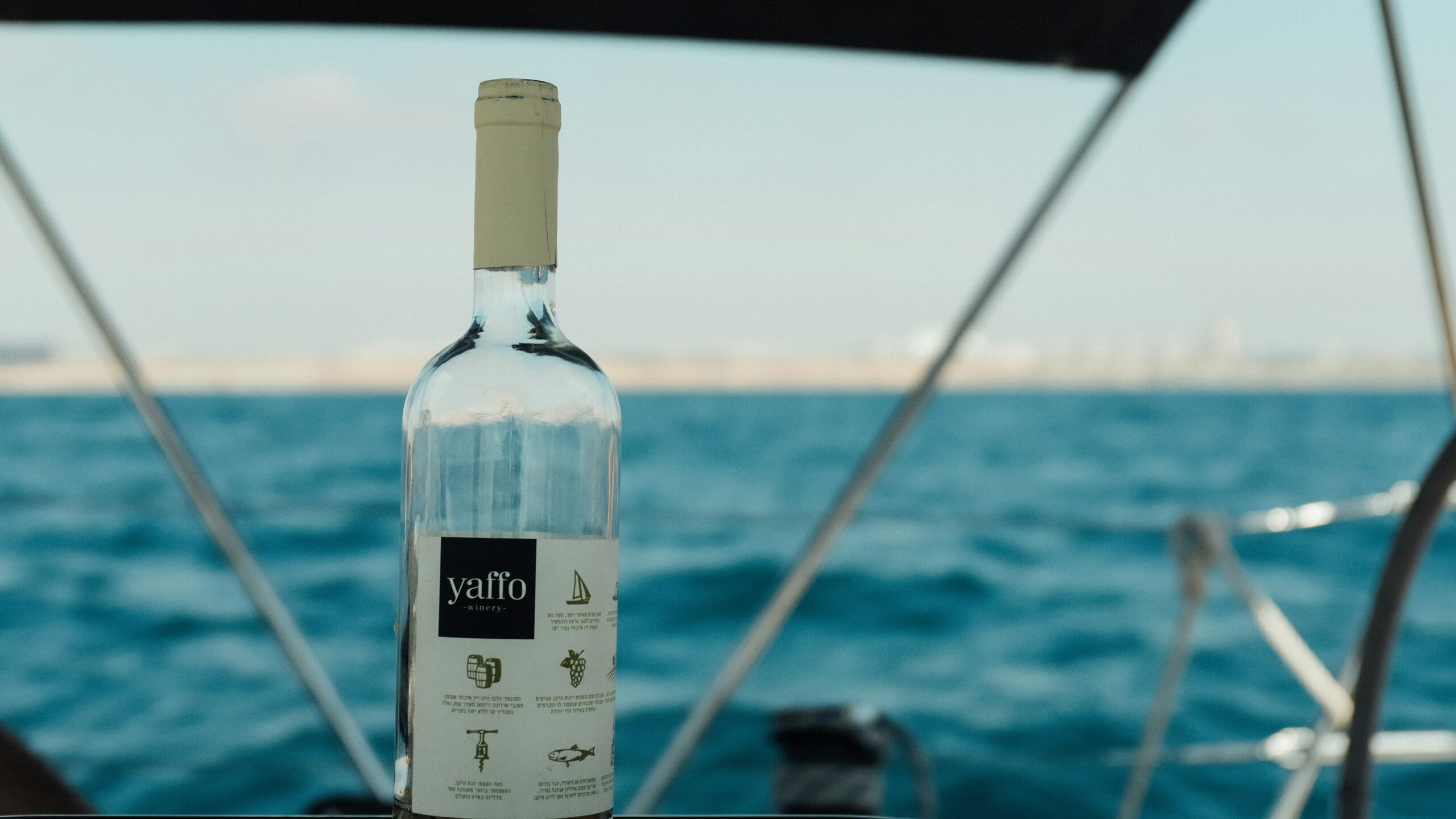
A chilled bottle of Pico wine needs somewhere sensible to stand in a cockpit. Condensation gathers beneath it, the table becomes wet, and a passing elbow or a little movement of the boat can send an unsecured glass sliding. In the Azores, as anywhere afloat, even a memorable evening begins with these small arrangements. A cloth under the bottle. A clear place for the glasses. Water within reach.
None of this appears in a tasting note. Neither does the feeling of having finished a passage, when the destination has stopped being a calculation and become a coast beside you. Yet these things belong to the wine as you experience it. The bottle has its own character, made in a vineyard and a cellar. The evening contributes something that cannot be bottled with it.
It would be easy to turn this into an argument against collecting wine, or to claim that any local white becomes extraordinary when drunk beside the sea. Neither is true. A tired bottle remains tired in a beautiful anchorage. A properly kept wine deserves the care it has received. What interests us is the distance between the bottle we most admire and the glass we most want to remember.
What A Cellar Can And Cannot Keep
A good cellar protects wine from unnecessary change. For long storage, a steady temperature somewhere around 10 to 15°C is a useful general range, although the bottle and intended ageing period matter. Stability is important: a wine held consistently within that range is better served than one repeatedly warmed and cooled in pursuit of a supposedly perfect number. Darkness and sound closures matter too. The purpose is to let the wine develop without heat or poor handling deciding its future.
That is an act of care, not merely possession. There is pleasure in understanding when a wine might become ready, in keeping something through years when opening it would be premature. But a cellar cannot decide when the people around a table are ready for it. The bottle can reach maturity while the occasion for drinking it remains indefinitely postponed.
Aboard, the practical questions are different. Wine needs secure stowage, protection from heat and separation from anything that can strike it when the boat moves. A sunny cockpit is a place to serve a bottle briefly, not somewhere to leave a case. We would rather carry wine with a clear purpose for the meals ahead than move an elaborate collection through changing climates simply because there is room for it. The work is to look after what we carry, then recognise when to open it.
Pico Wine Begins With The Walls
The first useful thing to understand about Pico wine is visible before you taste it. In the island’s traditional vineyards, low walls of dark basalt divide the ground into small enclosures known as currais. They are working structures, built from the island’s stone to shelter vines in an exposed maritime landscape. Their beauty comes from repetition, but their reason for existing is practical.
The walls reduce the force of salt-laden wind around the vines. Stone also absorbs warmth and releases it as the air cools. Between the walls, cultivation makes use of pockets of soil and fissures in volcanic ground that would not resemble a conventional vineyard to someone expecting long, open rows. The confined spaces make much of the work manual. Looking at the pattern from a distance, it is possible to miss how much bending, carrying and maintenance that pattern represents.
This is not an easy landscape made productive by picturesque walls alone. Atlantic moisture brings its own difficulties, including fungal disease pressure, and a sheltering wall cannot remove the consequences of a wet season. The wine is the result of people working within those conditions. We should be careful about describing it as something the island simply gives.
Arinto dos Açores is one of the important local white varieties, and it is distinct from the mainland Portuguese grape usually called Arinto. Verdelho and Terrantez do Pico also belong to the island’s white-wine tradition. These names are worth recognising, but they do not tell the whole story. Fermentation choices, time on the lees and maturation in wood can change a wine’s texture considerably. A young, direct white and a more substantial, patiently matured bottle may come from the same island and ask for different food and service.
Nor does a volcanic vineyard mean that dissolved basalt travels into the glass as a literal taste of stone. A wine described as saline or mineral is being described through an impression. Acidity, aroma, texture and expectation all contribute. The connection to Pico is real enough without making the geology perform a trick it cannot explain.
The Anchorage Comes Before The Bottle
The distinction between wine in an offshore cockpit and wine after an offshore passage matters. An arrival does not finish when the anchor touches the bottom. It finishes when the boat is settled, the necessary formalities are dealt with, and the conditions for remaining there have been properly considered. Dinner follows that work. It does not set its deadline.
A summer weather chart showing the Azores High is not a promise of a quiet night in every anchorage. The high changes position and strength. Swell can arrive from weather far away, and shelter from the present wind may offer little protection if the direction changes. A coastline that looks reassuring from the cockpit still needs to be understood through the forecast, the chart and what the boat is actually doing.
Volcanic scenery tells us very little about the precise patch of seabed beneath an anchor. Holding ground, depth through the tide, room to swing and a safe way out all need separate attention. For scope, the relevant vertical distance runs from the bow roller to the seabed, not simply from the waterline or the depth transducer. Falling water can reduce clearance; rising water changes the relationship between depth and deployed chain. These are quiet calculations, but they are part of what makes a relaxed table possible.
Sven, Naora’s founder and captain, plans every weather window and sails every leg himself. That continuity matters more than arranging the perfect evening on a particular date. If the berth or anchorage needs active attention, the meal changes around it. Anyone responsible for navigation, anchor watch or tender handling stays alcohol-free.
There is also no obligation to open wine immediately after arriving. A passage can leave a person tired, thirsty and without much appetite for tasting anything carefully. Water, food and sleep may be the better welcome. The bottle will still be there the following evening.
Serving Pico Wine In A Cockpit
Temperature is one of the simplest ways to give a wine a fair hearing. For a young, fresh, dry Pico white, we would generally begin around 10 to 12°C. That is a starting judgement, not a rule for every producer. A fuller wine with more texture, perhaps from lees ageing or wood, may show more clearly around 12 to 14°C. The point is to preserve freshness without hiding everything else.
A domestic refrigerator commonly runs near 4°C, which is useful for chilling but often too cold for assessing a white wine straight from the bottle. At that temperature, aromas can seem muted and the wine less expressive than it becomes a little later. The answer is not a rigid instruction to leave every bottle out for a set number of minutes. Air temperature, wind, the bottle’s starting temperature and the amount left inside all change the pace of warming.
Pour a little first. At a sheltered cockpit table, the cold glass beads beneath the fingers while the wine slowly opens in the warmer air. Water sounds against the hulls. A corner of the napkin lifts and settles. Citrus that seemed almost entirely sharp at the first taste may become more fragrant; texture begins to register alongside acidity. That change is worth noticing before deciding that the bottle needs to be colder.
We would keep the bottle shaded and use cool water or a little ice as needed, rather than bury it automatically in ice for the whole meal. A clean, stable drinking vessel matters more than a fragile stem. Detergent residue and salt spray do a wine no favours, so glasses need a proper freshwater rinse and somewhere protected to wait. A tumbler held continuously in the hand will warm its contents faster, another reason for modest pours.
A standard 750 ml bottle gives six pours of 125 ml. That is useful provisioning arithmetic, not a drinking target. Smaller initial pours allow people to taste without committing to a large glass, and make it easier to keep track of what is being served. Water should be as easy to reach as the wine. Nobody should have to explain an empty glass.
Cooking For The Glass
A meal can make the bottle more legible without being designed as a demonstration. With a fresh, dry island white, we would begin with the ingredients available in good condition rather than decide on an elaborate dish and search ashore for substitutes. Local fish, when suitable fish is available, offers a straightforward place to start. Its freshness, handling and cooking matter more than a claim that it was caught that morning.
For a skin-on fillet, drying the surface before it reaches the pan is a small act with a large consequence. Surface moisture has to evaporate before good browning can happen. A properly dried piece of fish, lightly seasoned and placed in a suitably heated pan, needs less interference. Let the skin take colour, then reduce the heat or turn the fish as its thickness requires. Heat should finish cooking the flesh without taking all its moisture with it.
Potatoes dressed while warm, good olive oil and something green can be enough alongside it. Lemon belongs within reach rather than automatically over everything. Taste the wine and food together before adding more acidity. A squeeze that brightens the fish may be welcome; several squeezes added without tasting can make the plate say little except lemon. Strong raw garlic and heavy smoke can similarly occupy more of the evening than intended.
This is where galley work becomes a form of consideration. Plates ready before the fish is finished. A clear route from the cooking space to the table. The bottle opened without leaving the person cooking to manage every other task at once. The food should arrive while it is right, and the conversation should not depend on somebody repeatedly getting up to rescue dinner.
Buying Close To The Vineyard
Buying a Pico bottle near where it was made offers an opportunity that a cellar inventory cannot: the chance to ask what the wine is for. Is it intended to be drunk young? Has it spent time in wood? Does the producer suggest food with it? A useful conversation can be quite plain. The answers are more valuable for that evening than a string of adjectives copied from a label.
If the intention is a dry white for supper, the Portuguese phrase um branco seco makes that clear. Island origin alone does not establish sweetness or style. It is also worth checking the label for where the grapes were grown and where the wine was made, rather than treating every bottle sold in the Azores as interchangeable. The place of purchase is not always the place of production.
The care continues after buying it. A bottle left in direct sun during an afternoon ashore has not been well served by its short distance from the vineyard. Bring it back sensibly, stow it securely and chill it for the meal rather than carrying it around as an accessory. Sourcing locally has meaning when it includes attention to the product and the people behind it, not simply the satisfaction of having bought something nearby.
For Discovery, our Lagoon Eighty2, this belongs to the larger logic of the Naora Global Expedition. A private sailing expedition around the world cannot sensibly expect every coast to reproduce the same table. There should be continuity in care, but room for the ingredients and habits of each place to change what we eat and drink. Pico wine is interesting because it comes from Pico, not because it can be made to resemble a familiar favourite.
What Remains After The Bottle Is Empty
Members choose when they join Naora, where along the worldwide route they step aboard and how long they stay. Some share a short part of the voyage; others have time for a much longer passage. Discovery continues sailing. Within that larger movement, a supper has a useful scale. Everyone can be present for the same meal without having shared every mile that brought the boat there.
The bottle gives the table something specific to attend to. Someone notices the unfamiliar grape name. Someone else is interested in how the vineyard walls were built. Another person simply likes the wine better after it has warmed a little. There is no need to turn those differences into a tasting exercise. A good bottle can sustain curiosity without requiring expertise from everyone who drinks it.
And it may not be the finest wine anyone aboard has tasted. That is a perfectly satisfactory outcome. Technical quality and the importance of an experience are related, but they are not identical. The cellar bottle might have greater complexity, a longer finish and years still ahead of it. The Pico white has this meal, this stretch of coast and the undivided attention we are able to give it.
What changes is the reason for opening it. Nothing exceptional has to be announced. There is food ready, the boat is settled, and the people at the table have time to remain there. The wine has reached its occasion.