At six in the morning, flat water can still be moving fast. A thread of foam travelling past a fixed point on the shore may tell you more than the absence of waves. Coral Triangle diving begins with learning to notice that distinction. In the early light around Raja Ampat, the reef can be little more than a darkening beneath the surface, while the warmth on bare arms offers no warning about the water moving over it.
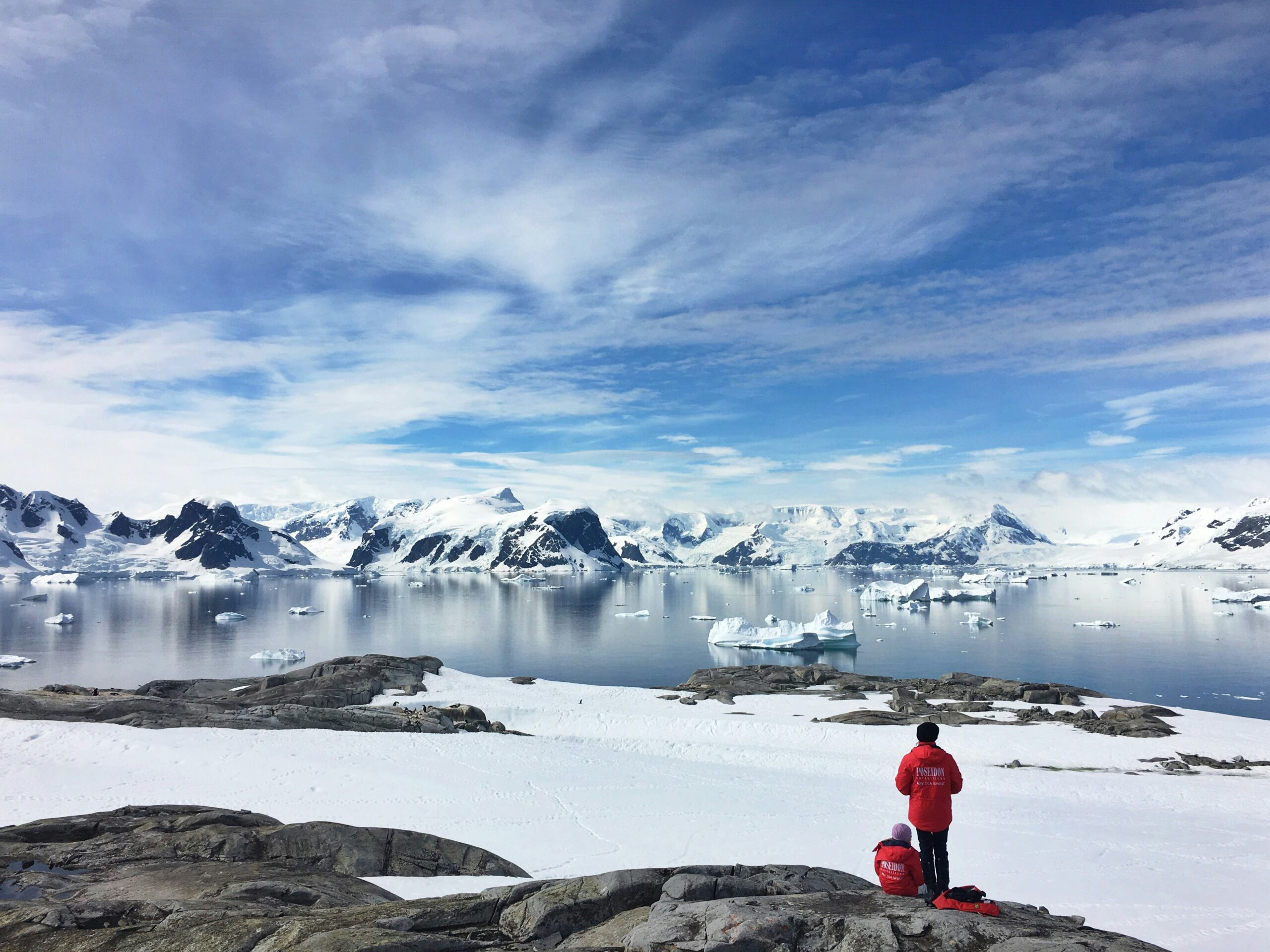
Someone returning from Antarctica may recognise the habit of looking before acting, even if almost everything else feels different. Cold and ice make certain limits immediately apparent. Warmth can make limits less obvious. The important comparison is not between two levels of achievement, or between places that complete some imaginary expedition spectrum. It is between the kinds of attention they ask of us.
What An Antarctic Voyage Teaches
An Antarctic voyage can teach a useful patience with circumstances that refuse to organise themselves around a visitor. A landing depends on conditions at the landing place, not simply on the distance already travelled to reach it. A promising forecast remains something to examine against what is actually happening. The disappointment of changing a plan does not make the original plan safer.
Those lessons travel well into the Coral Triangle. Other forms of experience transfer less readily. Having crossed a rough sea does not establish competence in a tidal channel underwater. Being comfortable with uncertainty on deck does not mean being comfortable when a mask leaks, breathing becomes harder and the rest of a dive group is moving away. Diving experience, recent practice and familiarity with equipment matter in their own right.
We would rather establish those distinctions quietly before entering the water than discover them during a dive. There is no loss of dignity in choosing a gentler site or beginning with a straightforward check dive. The purpose is to give someone enough spare attention to see the reef, rather than spending the whole encounter managing unfamiliar equipment.
Nor does warm water make this a lesser expedition. The work has changed. Some of it is smaller, less visible and easier to underestimate.
Coral Triangle Diving Begins With Moving Water
Six in the morning describes an hour, not a tidal condition. It does not promise slack water, a manageable drift or a manta at a cleaning station. Tomorrow, the same light can fall on a different flow. Even the time of high or low water does not, by itself, tell us when a particular channel will stop running.
Tides interact with channels, submerged ridges and the shape of islands. Water can accelerate through a constriction, separate around a headland and form an eddy behind it. Local slack may lag the published tide times. Broader circulation and wind can complicate the pattern further. A tide prediction is useful preparation, but it is not a substitute for knowledge of the actual site.
That is why recent local observations matter. We need to distinguish the direction expected from the direction observed, and the flow at the surface from the conditions likely along the intended dive. A calm patch behind a reef may sit beside fast water. A surface inspection cannot certify what is happening down a wall. Where uncertainty remains significant, choosing another site is a sound decision, not an incomplete adventure.
October to April is commonly favoured for diving in Raja Ampat, while the southeast monsoon can make exposed crossings less comfortable during other parts of the year. That broad seasonal preference does not remove rain, squalls or local differences in shelter. The useful question is always more specific than whether it is the right season: which coast is exposed to today’s wind, what happens on the return passage, and where can we go if the conditions change?
A morning dive is the result of those answers. The alarm clock comes afterwards.
The Current Changes The Whole Dive
Consider a steady current of two knots as an illustration, not a measurement from a particular reef. In fifteen minutes, the water travels 0.5 Nm. A diver moving with it may feel relatively little effort, yet surface well away from the entry point. The absence of a struggle can conceal how quickly the geography is changing.
This is why a drift dive needs a recovery plan rather than an assumption that everyone will swim back to the yacht. The surface team needs to know the intended route, likely exit area and agreed procedures for delay or separation. A suitable pickup boat, a dedicated lookout and communication arrangements belong to the dive itself. They are not arrangements to improvise when a head appears somewhere unexpected.
Divers also need the training and practice to use their surface signalling equipment, including a delayed surface marker buoy where appropriate. Carrying something unfamiliar is not the same as being able to deploy it while maintaining depth and awareness. In remote water, emergency oxygen and a realistic evacuation plan matter before anyone enters. Their usefulness depends on the time and means needed to reach further care.
Depth adds another demand. At roughly ten metres in seawater, ambient pressure is about twice that at the surface. For the same breathing pattern, a diver uses approximately twice as much cylinder gas. Effort can increase consumption further. Fighting a current therefore spends more than energy. The gas reserve must account for a controlled ascent and an emergency, including the possibility of sharing gas with a buddy.
In Raja Ampat’s usual diving season, surface water is often roughly 27 to 30°C, although cooler layers can be encountered below. Warmth may make entry pleasant, but it does not change these pressure relationships or prevent someone becoming chilled over a long immersion. Exposure protection should follow the actual conditions and the person. Snorkelling deserves its own assessment too: the same current moves a swimmer, and being at the surface does not guarantee an easy return.
A Cleaning Station Is A Working Place
A manta cleaning station is a place where an animal comes to receive attention from smaller fish, which remove parasites and material from its skin and gills. It is an ecological relationship, not an appointment made for divers. The manta may approach repeatedly, remain for a while or leave. Our arrival gives it no obligation to continue.
Current can help explain why a reef supports abundant life, carrying food past animals that feed from the moving water. But feeding and cleaning are different behaviours. A place where mantas gather to feed is not automatically a cleaning station, and stronger flow does not automatically produce a better encounter. Position, season and conditions all matter. Sometimes no manta appears.
If one does, the most useful movement may be no movement towards it at all. Follow the local briefing, remain clear of the cleaning area and leave the approach open. A diver directly above the station, or swimming across the animal’s path for a closer photograph, can interrupt the behaviour everyone came to witness. Touching, pursuing or trying to draw the animal nearer changes an observation into interference.
There is a physical discipline to this kind of waiting. The regulator gives breathing a close, mechanical sound. Suspended particles travel across the mask. Hands stay near the body while buoyancy, rather than a grip on the reef, maintains position. If holding that position demands a struggle, the answer is not to seize living coral. The site or the conditions may be wrong for that diver on that morning.
The encounter becomes richer when we understand what the animal is doing. Proximity alone explains very little.
Looking Closely Without Leaving A Mark
The pygmy seahorse asks for another adjustment of scale. Some species live closely associated with particular sea fans, their colour and body texture making them extraordinarily difficult to distinguish from the branches around them. Finding one is not proof that a reef has yielded a secret. Often it is evidence of a local guide’s patient familiarity with a living place.
Small subjects create surprisingly large temptations. A photographer may want to steady the camera by holding the fan, move a branch or encourage the animal into a clearer position. Each action puts the picture ahead of the habitat. A better view has to come from the diver’s position and control, within the site’s rules, rather than from rearranging what lives there. If that cannot be done without contact, leave the photograph untaken.
Nor does a small party own what it sees. Other people may know the same fan, and the reef belongs within a human geography as well as an ecological one. In parts of Raja Ampat, customary practices known as sasi restrict the taking of particular resources, sometimes through temporary closures. Their application varies between communities. A visitor should not assume that a general park permit settles every question of access or use.
Local permission, protected area rules and customary restrictions need to be understood before anchoring, entering the water or considering any fishing. A reef suitable for observation is not therefore suitable for taking a fish. Respect becomes practical at precisely this point, when a rule changes what we had hoped to do and we follow it anyway.
Planning Coral Triangle Diving From Discovery
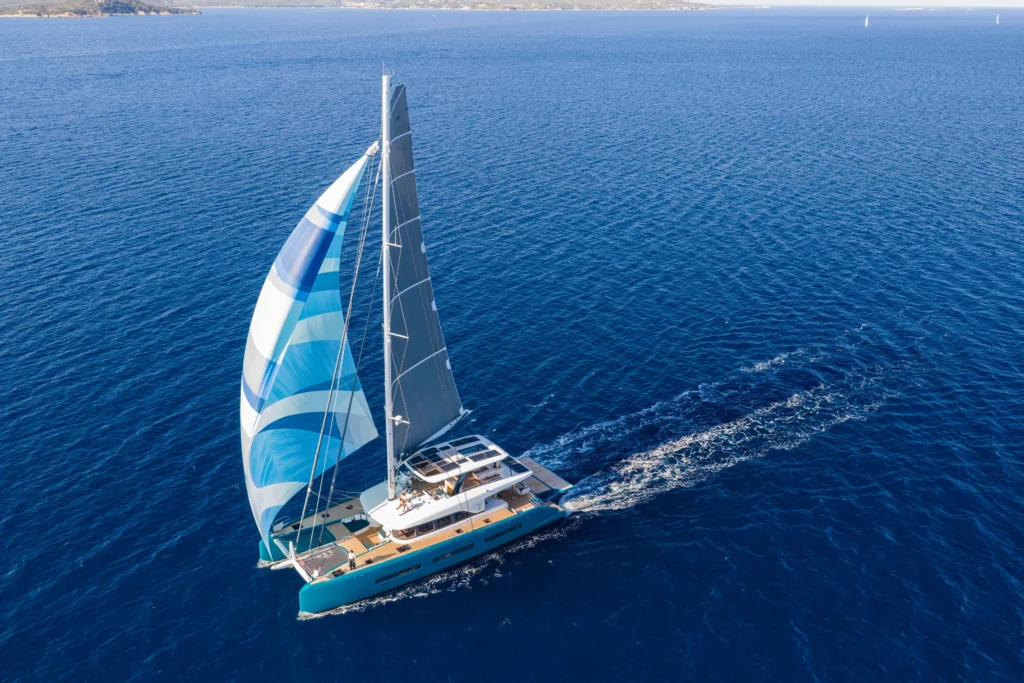
Discovery, our Lagoon Eighty2 sailing catamaran, will sail the Naora Global Expedition around the world from 2027 to 2031. The planned route covers roughly 49,000 Nm. That distance makes the Asian archipelagos part of a continuing life at sea, rather than an isolated arrival with every expectation resting on a single morning underwater.
Sven, Naora’s founder and captain, plans every weather window and sails every leg himself. That continuity matters, but passage planning and dive supervision remain distinct responsibilities. Knowledge of the yacht does not replace detailed knowledge of an unfamiliar reef. The right local diving expertise should inform the decision, including the decision not to dive.
The yacht also needs a sound plan while people are in the water. A sheltered anchorage is not necessarily close to the best dive site. A mooring is useful only if its condition, capacity and permitted use are appropriate for the vessel. Where anchoring is allowed, both the anchor and the sweep of its chain must remain clear of living coral. A patch of sand large enough for the anchor alone may not be large enough for the whole arrangement.
This can mean a longer tender transfer, choosing a less exposed site or postponing the water activity while the yacht moves to better shelter. Each choice has a cost in time and convenience. It is better to recognise that cost in the plan than to conceal it beneath a promise of effortless access.
There is a particular ease that comes from having these matters settled before breakfast. Equipment has a place. The departure depends on an assessment rather than impatience. Someone who prefers to remain aboard need not feel that they are obstructing the day. Good preparation leaves room for different people to enjoy the same morning differently.
The Freedom To Wait
Naora’s members choose when they join, where along the worldwide route they step aboard and how long they stay. One person may have a week; another may remain for much longer. Discovery continues around the world as people step in and out where the voyage fits their lives.
That freedom concerns how someone participates. It cannot mean choosing a current, reserving a wildlife encounter or requiring a particular passage to happen despite unsuitable weather. A shorter stay may offer fewer opportunities to revisit a site. More time gives a plan more room, but no guarantee. Being clear about that distinction is part of looking after people before they arrive.
We would rather a guest remember an unhurried breakfast than a dive undertaken to rescue an itinerary. There can be real pleasure in keeping the equipment dry: the warmth returning to a cup held between both hands, an island becoming more distinct as the light strengthens, a conversation that no one needs to interrupt. Waiting need not be treated as an empty interval between meaningful events.
And when the conditions do allow a dive, the reef does not need to supply its largest animal to justify our attention. Small fish hold into the flow above a coral head. A sea fan bends with the water passing through it. Somewhere within that movement, a seahorse may remain almost impossible to see. The reef is occupied with its own life.