At sea, a cup of coffee needs a secure place before it needs a view. You feel a small change of angle through your feet, settle the cup, and keep a hand free as you move. Morning light crosses the table. The coffee is still too hot to drink. It is an ordinary adjustment, but it says something important about private sailing: even in considerable comfort, you remain in contact with the place you have come to experience.
That contact is worth considering after the Maldivian island, the Tuscan villa and the safari. Not because any of them has stopped being worthwhile. There is no sensible ranking in which an ocean passage defeats a good week on land. But there may come a point when another destination matters less than a different way of moving through one.
The Familiar Journeys Still Have Something To Give
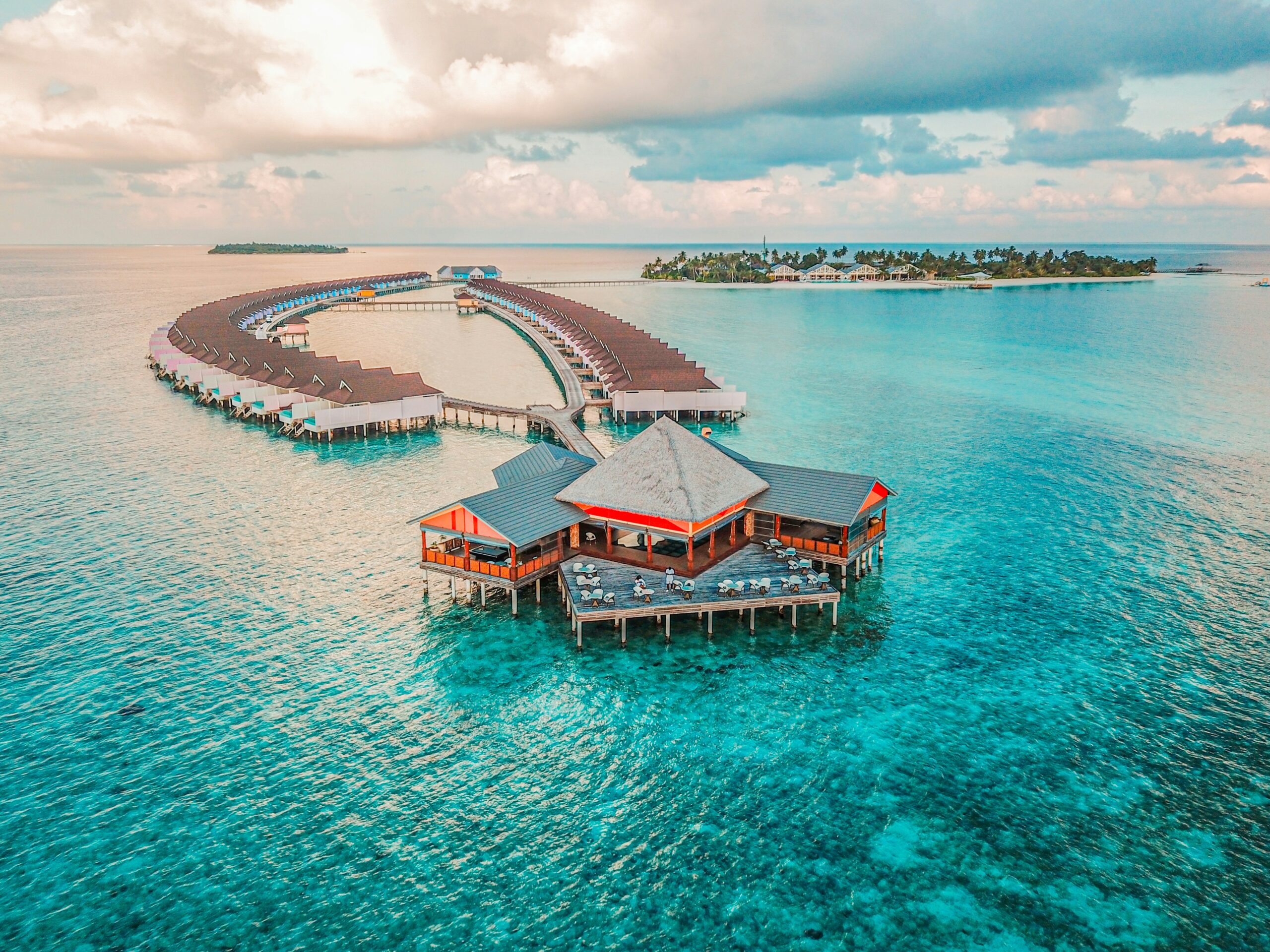
The Maldives offers something very particular when experienced from an island resort: the relief of remaining in one place while much of the practical work of living is handled elsewhere. You can swim, read and return to the same table without needing to understand how tomorrow’s wind might affect your departure. That separation from responsibility can be exactly what a tired person needs.
A Tuscan villa gives a different kind of continuity. The kitchen, the market and the surrounding countryside become the framework of the week. You have a fixed home to return to, and the freedom to make the days larger or smaller around it. A safari, at its most thoughtful, puts your attention in the hands of someone who knows the landscape and recognises when an animal’s behaviour means it is time to wait, retreat or simply watch.
These are substantial experiences, not stages to graduate beyond. Nor does having visited somewhere mean having finished with it. The phrase “done the Maldives” is useful shorthand for a familiar holiday, but a poor description of a country.
What can become familiar is the arrangement: arrive, settle, take excursions, leave. Sailing changes that arrangement. Your home moves, the intervening distance becomes part of the experience, and the decisions that make the day possible are close enough to notice. You do not have to want this every time you travel.
What Private Sailing Changes
For Naora, the important distinction is continuity. The Naora Global Expedition is planned across roughly 49,000 Nm over five years, from 2027 to 2031. Those figures describe the scale of the undertaking, not an obligation placed on anyone joining it. The yacht continues around the world; a guest’s time aboard can occupy a small, meaningful part of that larger movement.
The plan’s 166 legs give that movement a practical structure. A leg is a passage or sailing chapter with its own geography and demands, not an interchangeable unit of holiday. Time among the Mediterranean islands asks something different of a person from an Atlantic crossing. Indian Ocean island groups, Asian archipelagos and East African coasts require different seasonal judgement, preparation and ways of arriving.
This matters because the appealing photograph rarely tells you what kind of day came before it. A relaxed coastal stay may allow repeated swims and unhurried meals ashore. An offshore passage requires the boat to keep moving through darkness, with watchkeeping and rest organised around that fact. Both belong to Naora. They should not be described as the same experience.
Sven, Naora’s founder and captain, plans every weather window and sails every leg himself. That continuity places responsibility with the person making the decisions. The discussion about a departure is therefore not separate from the work of carrying it out. We regard that as fundamental: the route on the page must remain answerable to the conditions on the water.
The Weather Becomes Part Of The Stay
The Maldives makes the distinction between a beautiful setting and a workable passage particularly clear. Its northeast monsoon season, broadly December to April, is generally drier. The southwest monsoon, broadly May to October, tends to bring more rain and less settled weather. These are seasonal tendencies, not promises about a particular week. Transition periods can be variable, and neither sunshine nor a favourable seasonal label settles a departure decision.
From a resort, a windy afternoon might mean moving to a sheltered side of the island. Aboard a yacht, the same wind affects the next stretch of water. Its direction relative to the course matters, as do the length of time it has been blowing and the distance over which it has built the sea. Wind opposing a current can produce shorter, steeper waves. A modest distance on the chart can therefore ask more of the people aboard than a longer passage with favourable conditions.
The Mediterranean has its own version of this lesson. In the Cyclades, the summer northerly meltemi can make a southbound passage and the return north feel like quite different undertakings. Islands that look conveniently close on a map do not necessarily combine into a comfortable circuit in the order someone first imagined.
Distance also needs translating into time. As a simple planning example, 60 Nm at an average speed over the ground of six knots takes ten hours. Those are illustrative figures, not a performance estimate for Discovery. The useful point is that even an apparently modest passage can occupy most of the daylight, before allowing for departure preparations or arrival manoeuvres. An unfamiliar harbour may be better approached in daylight, so the acceptable departure time works backwards from the arrival, not forwards from breakfast.
This is why flexibility needs room in the calendar. A captain can adjust a route more usefully when a postponed departure does not immediately threaten a flight. Building that margin is part of planning the holiday, rather than something to improvise when the forecast changes.
Comfort Has A Working Side
Discovery is a 2025 Lagoon Eighty2 sailing catamaran. Her space makes a considerable difference to shared life aboard, but size does not remove motion, machinery or the need for good habits. A catamaran can offer a relatively level platform while still pitching or moving abruptly in an awkward sea. Anyone sensitive to motion deserves a plain conversation about the proposed passage before choosing it.
The preparations for departure are often unremarkable to watch. Loose objects need securing. Lockers and the appropriate hatches need checking. A meal that works at anchor may need changing for a passage, because a heavy pot, hot liquid and several people moving through the galley create a different set of considerations underway. Sail should be reduced while conditions still allow the work to be done calmly, rather than after carrying more canvas has become uncomfortable.
These decisions are part of hospitality. So is protecting the crew’s rest. A boat that continues through the night needs watchkeepers able to concentrate, and a quiet sleeping space is an operational requirement as well as a personal comfort. Freedom aboard cannot mean that everyone’s needs are met by someone who never gets to sleep.
The same honesty belongs around self-sufficiency. Onboard water production extends independence, but it still requires energy, suitable operating conditions and maintenance. Power systems need attention. Waste remains aboard until it can be handled appropriately. Being able to stay away from shore infrastructure does not mean becoming free of material limits.
For Naora, moving with care includes sourcing locally where practical and staying as close to carbon neutral as possible. That is an aim requiring work, not a measured result we can claim because Discovery carries sails. Propulsion, power generation, provisioning and travel to the yacht all have a footprint. A credible account of life at sea leaves those costs visible.
A Table That Belongs To The Coast
Tuscany is a useful reminder that memorable food does not always begin with an elaborate dish. Panzanella gives yesterday’s bread another purpose: moistened and squeezed, then combined with ripe tomatoes, vinegar, olive oil and other ingredients according to the household and season. The bread takes up flavour without needing to become a paste. Judgement lies in its texture, the ripeness of the tomatoes and the balance of acidity.
That is a valuable way to think about a yacht’s galley. Provisioning should begin with what can be obtained in good condition and what will keep through the intended passage. Delicate leaves and fully ripe fruit need attention early. More durable vegetables, pulses and properly stored dry goods give the cook options when a stay lengthens or the next market is less useful than expected.
A fixed menu can become an obstacle to eating well. Buying a tired ingredient merely to reproduce a dish from somewhere else makes less sense than changing dinner. The same applies to fish. Freshness is not secured by a story about the morning’s catch; it depends on handling. Prompt chilling, clean equipment and keeping the fish out of standing meltwater matter before any discussion of herbs or sauce. Fish caught aboard, where lawful and appropriate, requires the same discipline as fish bought ashore.
There is also a physical difference between dinner underway and dinner in settled water. At a quiet anchorage, a warm plate can stay between people long enough for everyone to help themselves. Salt dries on the skin after a swim. The light softens on the table while the conversation continues past the point at which someone might ordinarily check the time. These are modest pleasures. The work of the galley, and the choice of where to stop, give them room.
An Encounter Cannot Be Ordered
The safari comparison becomes most useful when we leave spectacle out of it. A thoughtful wildlife encounter depends on someone recognising that access is conditional. The animal is not there to complete the day’s programme. An experienced guide’s decision to hold back may matter more than the sighting itself.
The same restraint belongs on the water. Clear water does not necessarily mean suitable swimming conditions. Current, boat traffic, entry and exit arrangements, and the ability to recover a tired swimmer all need consideration. Before getting in, a person should know how they will get out, what signal will bring assistance and who is watching. Confidence in the water is useful; an agreed plan is more useful.
Marine life should not have to accommodate our wish for a closer view. Local approach rules and protected-area restrictions come before the photograph. We can observe without pursuing, and accept that an encounter may end before we feel finished with it. No particular animal can honestly be included in a promise about a voyage.
Nor does arriving by yacht confer a special claim on the shore. Landing permissions, local customs and the ordinary working lives of coastal communities still apply. A quiet anchorage is not an empty place merely because few visitors are visible. Respect begins before we step out of the tender.
Finding Your Place In Private Sailing
The practical question is not how adventurous a voyage sounds. It is what kind of time the people aboard actually want to share. Someone who needs substantial sleep and regular time ashore may be happier with a coastal chapter than an ocean crossing. A family spanning several generations may value a settled lunch and an easy return aboard more than another destination reached. Neither choice needs defending.
Through Naora’s private circle, members choose when they join, where along the worldwide route they step aboard and how long they stay, one week or many. The route continues beyond their own time at sea. That freedom still has practical edges: joining points need suitable access and formalities, and the passage on either side must remain workable. A remote anchorage is not automatically a sensible place to organise an arrival or departure.
Discovery can also be privately hired for a family, friends or a discreet company gathering on a carefully designed part of the Naora route. Having the yacht to one party allows meals, time ashore and the balance between company and solitude to follow those people more closely. It does not alter the weather or make conflicting expectations disappear. Talking beforehand about early mornings, long passages, swimming, work and privacy is more useful than assuming everyone means the same thing by rest.
Anyone who needs to remain connected should be equally clear about what is essential. An occasional message and an immovable video meeting are different requirements. Connectivity cannot be guaranteed throughout a world sailing route, and a serious work commitment should not depend on a connection that may be interrupted. Deliberate disconnection can be restorative. Unexpected disconnection during something important is simply a problem to avoid.
We would rather make these distinctions plainly than suggest that sailing suits every person at every moment. The freedom lies in choosing a passage that fits your life, then allowing enough space for the sea to remain the sea.
Later, with the plates cleared, there may be no reason to leave the table. Someone is still speaking. Another person has been looking out across the water for a while. There is nothing that needs adding to the evening.