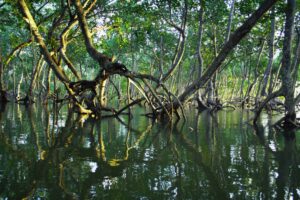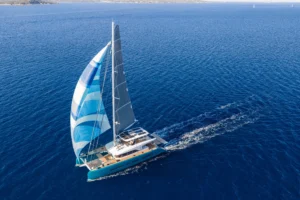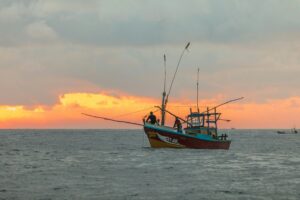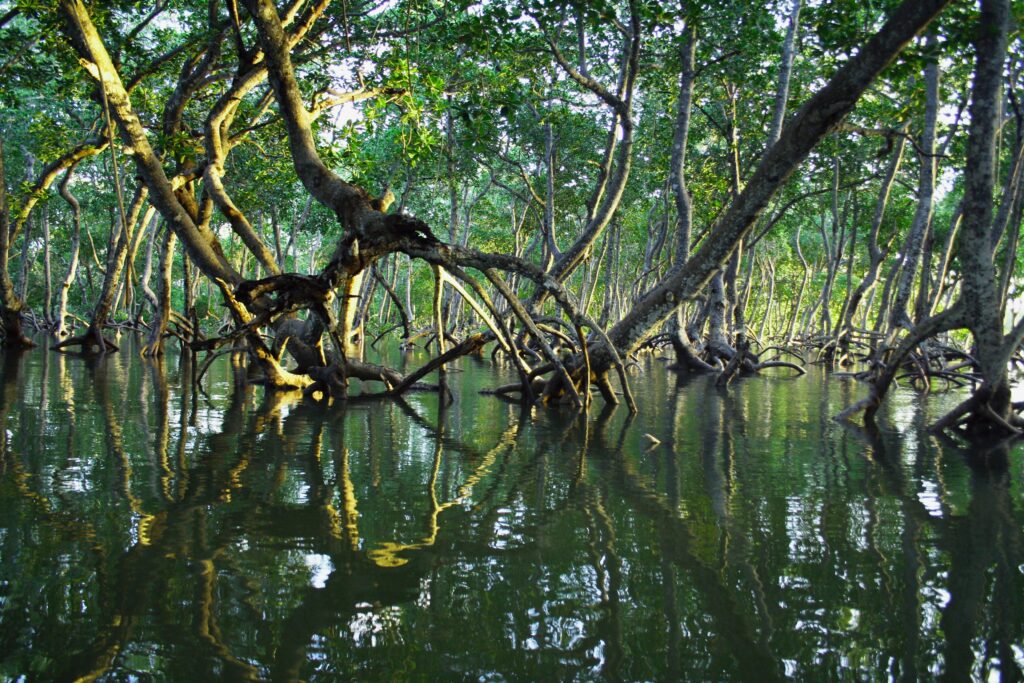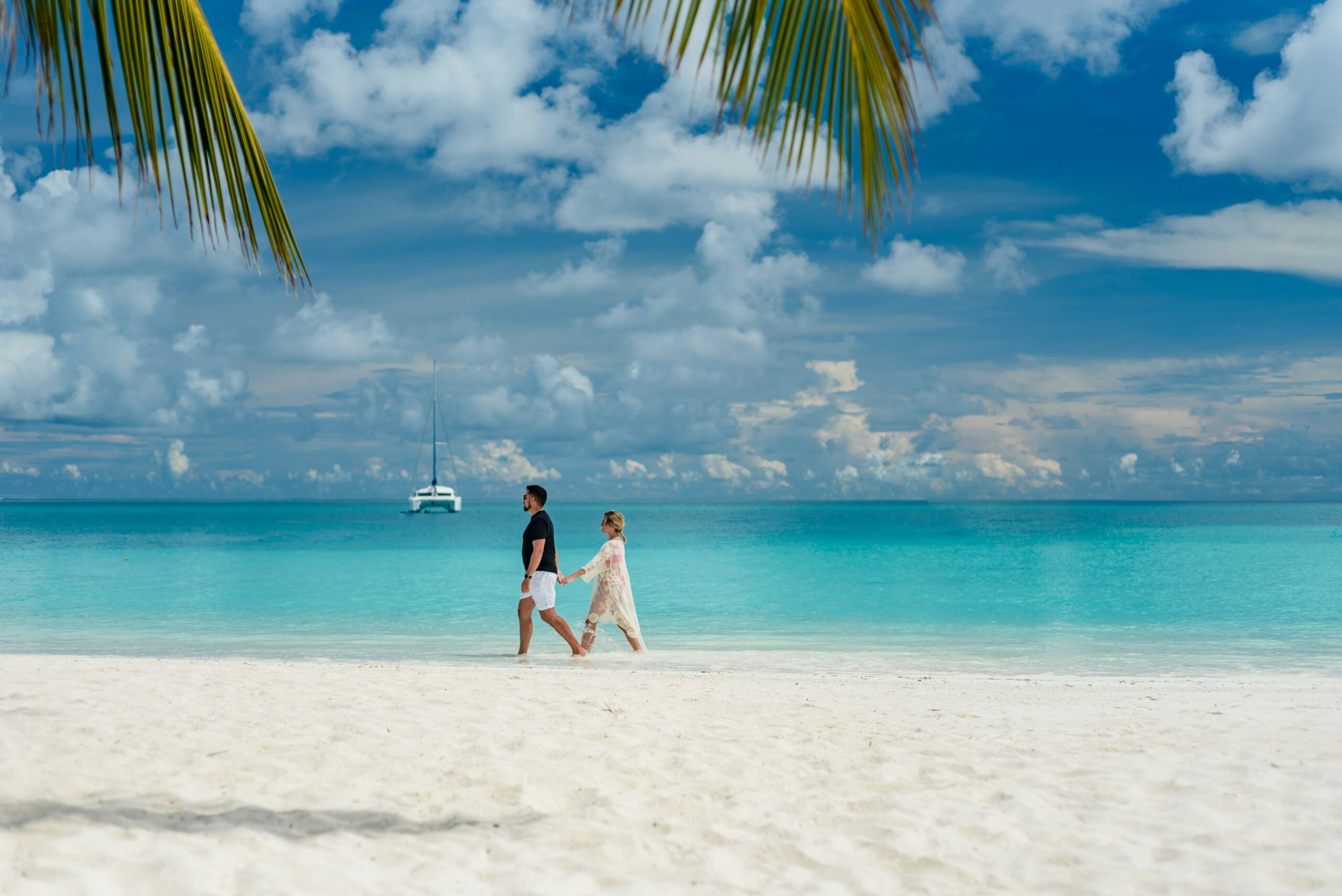
From an overwater terrace, pale sand and dark patches of reef can look like a simple map. Then a cloud crosses the sun, the contrast softens, and the bottom becomes harder to read. A Maldives resort vs yacht comparison begins with this same water, seen from two different kinds of home: a water villa at One&Only Reethi Rah, and a cabin aboard a yacht whose position must be chosen before anyone can settle into it.
The distinction deserves more care than a contest between comfort and adventure. A resort does not make the surrounding ocean less real. An anchorage does not become ecologically healthier because there are no villas in sight. Both places can give someone the quiet they came looking for, but they organise the relationship between a person and the sea differently.
What interests us is the daily consequence of that difference. Where breakfast happens is part of it. So are the decisions made while everyone else is still asleep.
Maldives Resort Vs Yacht In Daily Life
The strongest argument for a water villa at Reethi Rah is continuity. The room stays where it is. A favourite place to sit remains available without anyone first considering whether the wind has shifted. Returning from the water means returning to a fixed base, with the wider arrangements of an island resort behind it. For someone who wants their surroundings to ask very little of them, that can be exactly right.
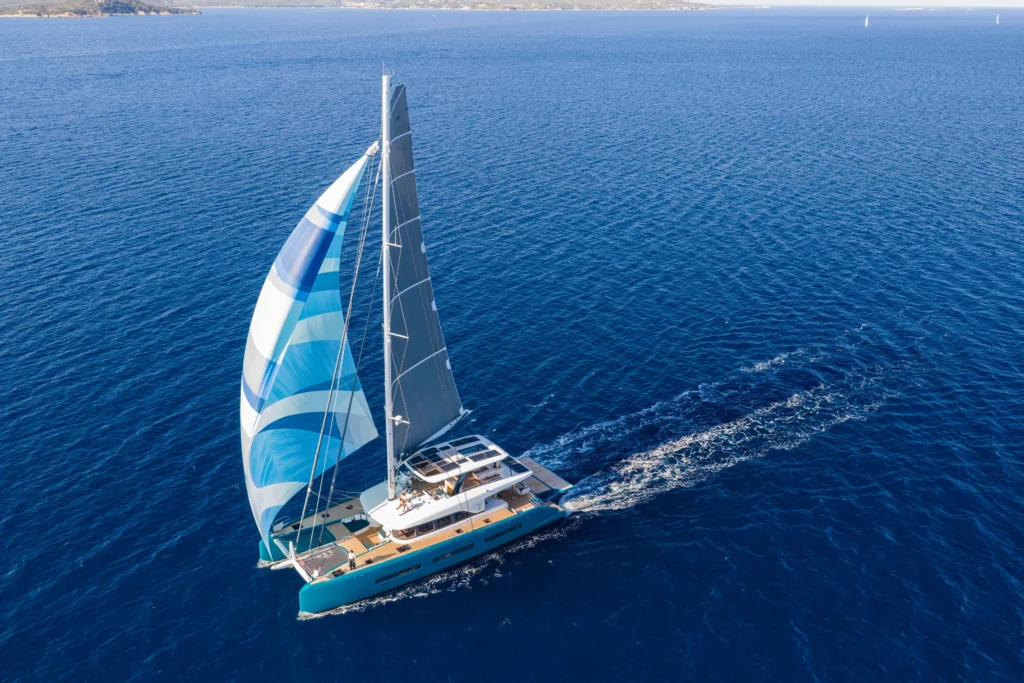
Aboard Discovery, the Lagoon Eighty2 sailing the Naora world route, continuity comes from the yacht rather than its address. The cabin, the galley and the familiar places on deck travel together. The view changes, sometimes by choice and sometimes because the place that was comfortable yesterday will be exposed tonight. Moving can preserve a good day, but movement itself takes time and attention.
There are bodily differences that photographs conceal. A yacht remains afloat even in a sheltered lagoon. Someone sensitive to motion may notice small movements that another person finds soothing. Steps, wet decks and transfers between yacht and tender deserve consideration, particularly when several generations travel together. Space alone does not answer questions about mobility or confidence around water.
We would rather understand those things early than discover them after departure. A person should not have to enjoy every aspect of offshore life to enjoy the Maldives. Equally, someone who wants to wake within a continuing voyage may find that the movement is precisely what gives the days their character.
What Three Hours South Can Mean
Three hours south sounds pleasantly definite. Without a named anchorage, a navigable track and an expected speed over the ground, it is not yet a passage plan. At an illustrative average of 8 knots, three hours covers 24 Nm. That is arithmetic, not a prediction for Discovery, and it says nothing about the time needed to leave an anchorage, negotiate a reef entrance or find a suitable place to stop.
Nor is a straight line between two positions necessarily a usable route. Reef margins, shoals and the location of a navigable entrance may require a longer track. Current changes progress over the ground. An uncomfortable sea can make a slower passage the sensible choice even when the yacht could travel faster. We should never turn an unnamed outer atoll into a promise simply because its imagined distance makes an attractive comparison.
The Maldives also changes with the monsoons. Broadly, the northeast monsoon runs from December to April and tends to bring drier conditions. The southwest monsoon, broadly from May to November, generally brings more rain and unsettled weather. These are planning patterns, not guarantees about an individual week. Squalls remain possible in the drier season, and transition periods can be variable.
For a yacht, the useful consequence is exposure. A reef that shelters an anchorage from one wind direction may offer little protection when the wind comes from elsewhere. Swell can reach through a gap even when the local breeze feels slight. Sven, Naora’s founder and captain, plans every weather window and sails every leg himself. The decision must account for the arrival and the following night, not merely whether departure looks pleasant.
Daylight belongs in that calculation. Reaching coral water with useful light in reserve leaves room to inspect an approach, reject it and use an alternative. Spending that margin to preserve a lunch plan is a poor exchange.
The Work Before The Anchor Goes Down
The colour of tropical water is information, but incomplete information. Pale water may suggest sand and darker patches may indicate coral or seagrass, yet cloud, glare, depth and the angle of the sun all change what the eye can distinguish. A chart does not remove the need for a lookout, and a clear view of the bottom does not remove the need for a chart. Each helps reveal what the other might miss.
Before entering, the practical questions concern usable depth, tide, current, room to manoeuvre and a way out. Charted depth needs to be understood in relation to the tide and the yacht’s required clearance. The sounder’s reference point also matters. A number measured below a transducer is not automatically a number measured below the keel. These are small distinctions until the water becomes shallow.
Inside, an attractive patch of sand still needs examination. It must provide suitable holding and enough room for the yacht to swing without carrying the chain across coral. The whole anchoring footprint matters, not only the place where the anchor lands. When choosing scope, the vertical distance includes the height of the bow above the water as well as the water depth; the sounder alone does not describe that distance. Wind, holding ground, swinging room and the anchoring arrangement then influence the decision.
Setting the anchor is followed by checking that it has held, confirming the yacht’s position and considering what will happen if the wind changes. An anchor alarm supports that work. It does not replace it. An anchorage can be secure against dragging yet uncomfortable because swell enters after dark, or unsuitable because the route out becomes difficult in deteriorating weather.
This is the quiet labour behind a still evening. From the table, the important thing may be the light on the lagoon. From the captain’s perspective, the same view contains a reef edge, a swinging limit and an exit. Good judgement allows both views to coexist without making dinner feel like a navigation exercise.
Water Clarity And Moving Water
Clear water encourages confidence because it lets us see. It does not necessarily let us understand. Visibility can change with plankton, suspended sediment, rain, current and the movement of water between ocean and lagoon. There is no single honest visibility figure for an unnamed Maldivian anchorage, and no reason to treat the clearest water as automatically the safest place to swim.
Atoll channels deserve particular respect. Water moves through them under the influence of tides, wind and differences in water level between the lagoon and the ocean, including those created by waves breaking over the reef. A predicted high or low tide does not, by itself, establish slack water at a particular entrance. Local knowledge and observation matter because the lagoon does not respond everywhere at the same instant.
A current of 1 knot moves water roughly 31 metres in a minute. Beside a yacht, that is enough to turn a short swim into a problem surprisingly quickly. From water level, a small wave can briefly hide the lower part of the hull. Breathing becomes louder inside the mask, the ladder looks farther away, and the swimmer may work harder without making the progress they expected. Surface appearance is a poor substitute for assessing the flow.
Before anyone enters, the plan needs to include how they will return, who is watching and what happens if they cannot swim back. For a dive, experience, current direction, entry and exit, surface cover and recovery arrangements must fit together. A reef entrance is not an appropriate place to improvise because the fish look inviting. Snorkelling in sheltered water may be the better choice, and sometimes the correct decision is to remain dry.
Watching marine life also improves when effort is reduced. Fish facing into a flow, particles travelling past a coral head and animals sheltering behind structure can reveal movement, though none substitutes for a proper assessment. Once safely positioned, a person who stops chasing often sees more. The reef resumes its business when the visitor becomes less insistent.
Reef Health Beyond The Resort Boundary
The appealing story is that the resort has a managed reef while the distant anchorage has nature as it was. We cannot honestly draw that line. Marine heat stress does not stop at a resort boundary. Fishing pressure, physical damage and water quality vary locally. A reef near accommodation may receive careful protection, while a more remote reef may carry damage that is not obvious from the surface.
Coral colour needs interpretation, too. Bleached coral has lost much of the colour associated with its symbiotic algae, but bleaching does not necessarily mean the colony is already dead. Recovery depends on what follows. Conversely, a bright photograph and a passing school of fish cannot establish the health of a whole reef. Understanding a place requires attention over time, including attention to what has disappeared.
Our presence adds obligations rather than removing them. We need to keep anchors and chain clear of living habitat, avoid touching or standing on coral, control fins and buoyancy, and give animals room to choose their distance. There is also a simple local limit worth knowing before arrival: spearfishing is prohibited in the Maldives. An activity that belongs elsewhere on the world route does not automatically belong here.
A sailing yacht also has an environmental footprint. Water production uses energy; refrigeration, maintenance and waste handling remain necessary far from shore. Naora’s intention to move carefully and stay as close to carbon neutral as possible has to be expressed through decisions, not through the assumption that a quiet anchorage makes us harmless. Staying longer can allow a place to become more legible, but only if staying is appropriate.
Food And Courtesy Ashore
A Maldivian morning offers a connection to the place that does not depend on finding a deserted beach. Mas huni brings together tuna, grated coconut, onion, chilli and lime, usually eaten with roshi, the local flatbread. Its pleasure lies in contrast: savoury fish, the softness of coconut, the edge of raw onion and a little heat. It is food shaped by the sea and the ingredients of island life, rather than by the idea of tropical decoration.
In a yacht galley, that apparent simplicity still requires organisation. Prepared fish and grated coconut need appropriate chilled storage, and mixing a modest amount close to serving protects both freshness and texture. Warm flatbread belongs at the end of the sequence, when people are ready to eat. Provisioning locally where practical means paying attention to what can be obtained responsibly and kept well, not merely buying something because it looks good in a market.
The morning scene aboard can be very small: a warm piece of bread folded between the fingers, lime on the plate, water tapping beneath the stern. Conversation need not compete with the day. Yet the breakfast exists because food was stored properly, water was made and the anchorage remained suitable overnight. Ease has a material foundation.
Ashore, the Maldives is a Muslim country with inhabited communities, working harbours and local expectations, not a collection of interchangeable resort islands. Modest clothing is appropriate on inhabited islands, and resort beach conventions should not be carried ashore without thought. Permission matters before landing on or crossing land that appears empty; an absence of buildings is not evidence of an absence of ownership or use. Asking before photographing someone is a small courtesy with a substantial meaning.
Maldives Resort Vs Yacht Over Time
The comparison changes when the Maldives is understood as part of a longer voyage. The Naora Global Expedition is a private sailing expedition around the world, planned across five years from 2027 to 2031. Its Indian Ocean chapter belongs to that continuity. Discovery arrives from elsewhere and will eventually sail on, carrying the habits, maintenance and practical knowledge accumulated along the way.
Guests can join through Naora’s private circle or arrange the private hire of Discovery. They choose when they join, where along the world route they step aboard and how long they stay, with joining arrangements shaped around safe access and the passage plan. One week can be enough to find a different rhythm. A longer stay allows weather to be experienced as something that develops, rather than something that either helps or spoils a holiday. The yacht continues regardless of where an individual visit begins and ends.
That freedom has a boundary worth stating plainly. Choosing time aboard does not purchase a particular sea state or an entitlement to a particular anchorage. Sometimes the more generous decision is to stay in shelter, accept a less dramatic view and leave everyone rested. Sometimes moving before breakfast protects the rest of the day. The captain remains responsible for those decisions.
A water villa at Reethi Rah offers the value of returning to the same place while the ocean changes around it. Aboard Discovery, the home itself can move in response. Neither requires us to diminish the other. What matters is recognising which relationship with the sea will feel right once the photograph has been taken and ordinary hours begin.
At anchor after dark, there may still be the low sound of machinery and water moving between the hulls. Beyond the deck light, the reef is no longer visible. Its position remains part of the evening, held in the chart, the anchor’s placement and the attention of the people keeping watch.