Djibouti is one of the smallest countries in African a city-state at the mouth of the Red Sea whose port position on the Bab-el-Mandeb strait has made it strategically significant beyond the scale of its territory and whose population is the specific mix of the Afar and the Issa Somali indigenous communities and the Ethiopian and the Eritrean and the Yemeni communities that the Red Sea port city has attracted across the centuries of the maritime trade that the Bab-el-Mandeb enables.
The Ethiopian community in Djibouti brought the Ethiopian coffee ceremony (the buna) to the port city and the ceremony is as much a part of the Djibouti domestic life as it is of the Ethiopian highland village where the Coffea arabica plant was first cultivated and where the ceremony of its preparation became the central ritual of the social and the spiritual life.
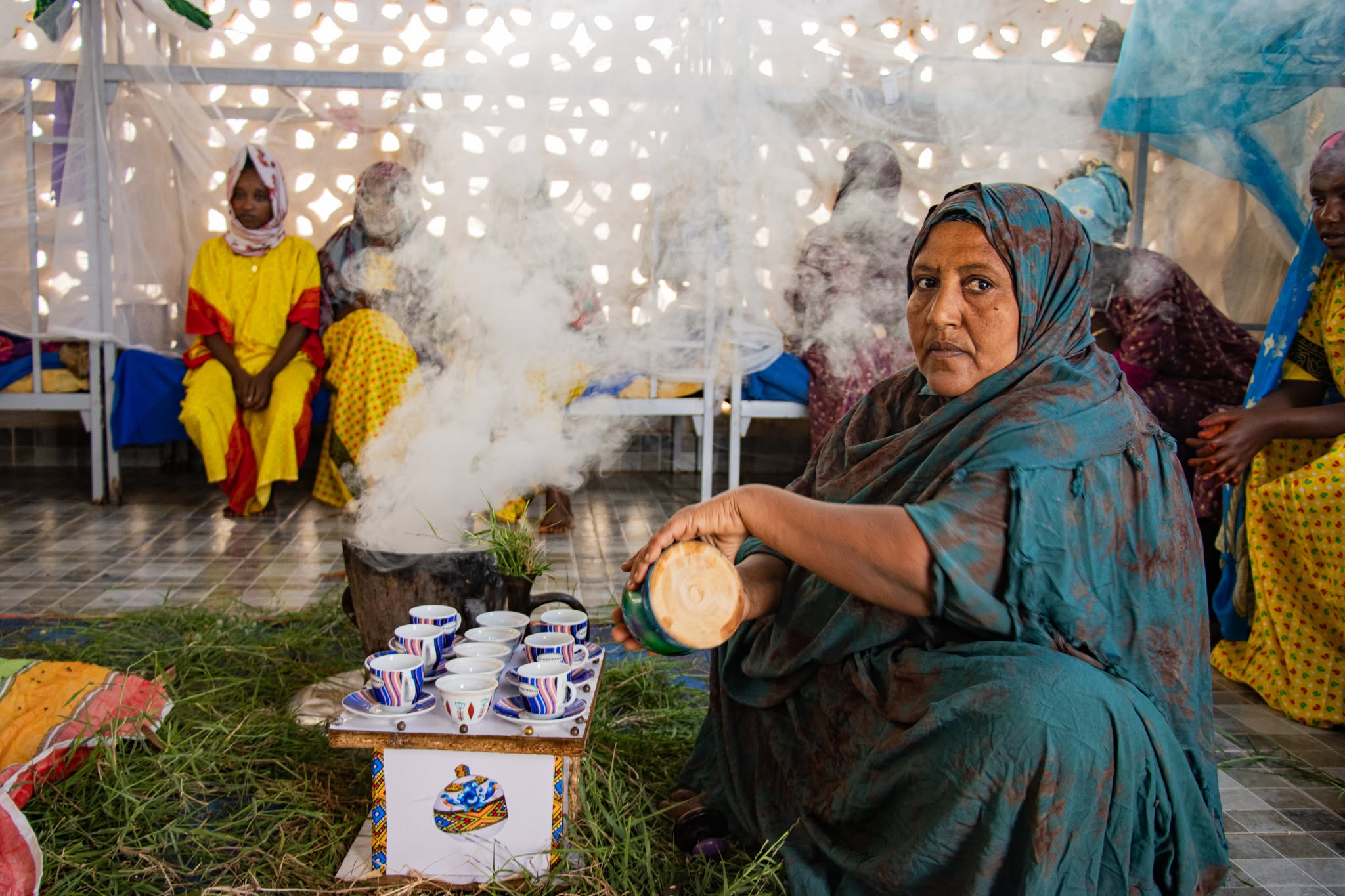
The Ethiopian coffee ceremony begins with the washing and the roasting of the green coffee beans in the pan over the charcoal brazier, the fresh-roasted coffee whose aroma the host circulates around the guests as the first signal that the ceremony has begun. The roasted beans are ground in the mukecha, the wooden mortar, and brewed in the jebena, the earthenware pot, on the charcoal fire.
The coffee is poured from the jebena into the small ceramic cups without handles (the sini) and served with the salt or the sugar or the butter that the regional tradition specifies. The ceremony is performed three times, the three rounds of the coffee that the Ethiopian tradition names abol, tona, and baraka, with the baraka, the third round, understood as the blessing. To leave before the baraka is to decline the blessing and the hospitality that it represents.
The Invitation
The Naora member who spends a day in Djibouti city and who is invited into the household for the coffee ceremony, by the local guide or the market vendor or the port community contact that the Naora team’s pre-departure preparation establishes, is in the specific cultural encounter that the Djibouti port city offers the offshore visitor who arrives with the awareness that the city is not the transit port but the place where the Horn of Africa’s cultural complexity has assembled at the mouth of the Red Sea.
The coffee ceremony takes ninety minutes. The three rounds take the time they take. The baraka is not hurried. The offshore member who has been on the boat for the days of the Red Sea passage and who sits in the Djibouti household for the ninety minutes of the coffee ceremony has ninety minutes of the stillness of the specific human occasion that the offshore life consistently provides the time for. The coffee is drunk. The blessing is received.