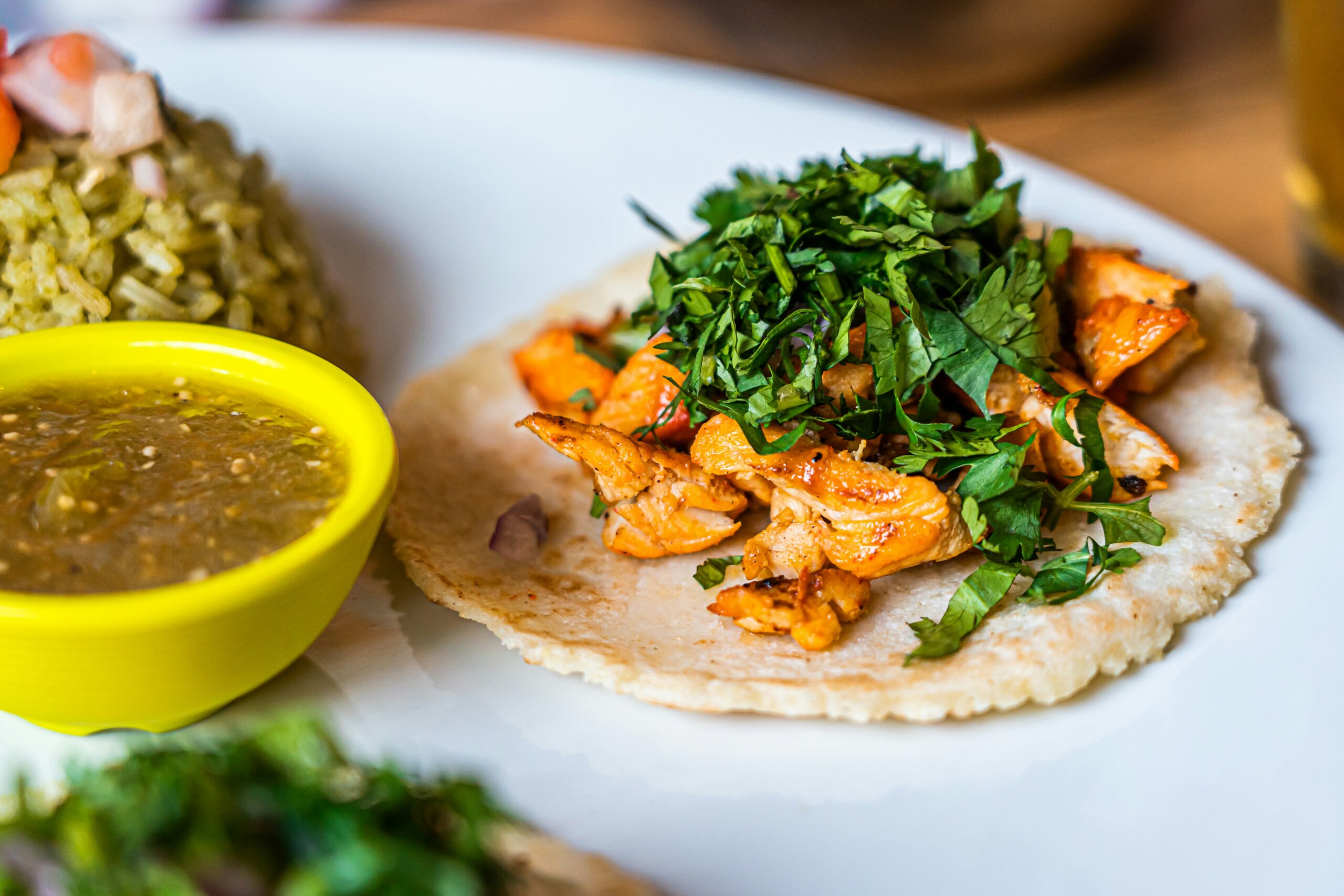
A warm corn tortilla gives slightly under the fingers. Leave it uncovered in the breeze and the edge begins to stiffen, so that by the time the fish arrives, the thing meant to hold lunch together may split at the fold. With mahi-mahi tacos, this small interval matters as much as the seasoning. The fish needs attention, but so does everything waiting for it.
In thinking about this meal in the San Blas Islands, on Panama’s Caribbean coast, we begin with those ordinary dependencies. An anchorage where cooking is comfortable. Fish whose handling we understand. Tortillas already aboard rather than expected from someone who has made no promise to supply them. Enough time to sit down.
The canal lies ahead on Naora’s passage towards the Pacific. These islands deserve more than the role of a pleasant pause before it. Even a simple lunch asks us to understand something about where we have arrived, and to distinguish what belongs to the place from what we have brought ourselves.
San Blas Before The Canal
San Blas is the familiar name on many sailors’ charts and in their conversations. Guna Yala is the name that brings the people and their territory into view. The islands sit off Panama’s Caribbean mainland, among reefs and shallow water that make shelter possible but demand attention on the way in.
The northeast trades are generally more established from roughly December through April. That can mean dependable sailing wind offshore without guaranteeing a quiet anchorage behind every island. Swell can work around the edge of a reef; wind can strengthen across an apparently sheltered opening. Later in the wetter part of the year, squalls and cloud can make both the forecast and the light more changeable.
For Discovery, our Lagoon Eighty2 sailing catamaran, arrival planning therefore includes the quality of daylight. A chart and a depth sounder do not make visual pilotage redundant. Low sun, surface glare and a passing cloud can conceal distinctions between deeper water, pale sand and coral. If the entrance cannot be read with confidence, waiting is part of the passage plan.
Inside, the useful question is not simply whether the anchor has reached the bottom. We need suitable holding ground, room for the boat’s movement and clearance for both hulls and the chain as the wind changes. Sand clear of coral is the aim, where local rules permit anchoring. A comfortable lunch begins with that work, because the person cooking should not also be wondering whether the yacht is moving towards a reef.
A Meal In Guna Yala
Guna self-government has practical meaning for a visiting yacht. Permission to enter the wider territory does not necessarily settle permission to land on a particular island, photograph someone or fish in nearby water. We need to establish the current requirements locally, including any charges and restrictions, rather than treating another boat’s experience as a standing arrangement.
The Guna Revolution of 1925 grew in part from resistance to attempts to suppress customary dress and cultural practices. The autonomy that developed afterwards is part of the reason a visitor encounters a living society here rather than merely the remnants of one. Its customs are not arranged around our arrival.
Molas make that distinction tangible. The textile panels associated with Guna women’s clothing often use reverse appliqué: layers of cloth are cut and stitched to reveal colours beneath, with other stitching techniques adding detail. Look closely and the work becomes less about a striking pattern and more about the decisions of the person who made it. A purchase deserves time for that conversation, if the maker wishes to have it. A photograph needs its own permission.
The same care belongs at the table. These tacos are our galley interpretation, not a traditional Guna dish. The taco comes from a Mexican culinary tradition; buying fish locally does not change that history. Nor should we assume that a canoe approaching the yacht will carry tortillas, vegetables or the particular species our recipe requires. Sourcing locally begins with discovering what is actually offered, not assigning people a part in the lunch we imagined.
Choosing Fish For Mahi-Mahi Tacos
Mahi-mahi suits this cooking because its flesh is firm enough to portion and grill, yet mild enough to leave room for corn, chilli and lime. It is an open-water fish, not a reef fish that we should expect to find by swimming around the anchorage. Its availability depends on fishing beyond the sheltered water, the conditions and what has actually been caught.
Local purchase can shorten the distance between fishing boat and galley. It does not, by itself, tell us how the fish was handled. We want to know when it was caught and how it was cooled. Clear eyes, firm flesh and a clean smell can help assess quality, but they cannot establish a safe temperature history. A beautiful whole fish lying warm in the bottom of a boat is not made safer by the beauty of the setting.
Mahi-mahi is among the fish that can develop hazardous histamine if it is not chilled promptly and kept cold. Once formed, that histamine is not reliably removed by grilling or freezing. This changes the buying decision: the cold chain matters more than the attractive phrase “caught this morning.” If the handling cannot be established with enough confidence, we choose something else.
Once accepted, the fish belongs on ice or under refrigeration at 4°C or below, with meltwater able to drain away and raw juices contained. Only the portion being prepared comes out. In a warm galley, leaving the whole supply on the counter while chopping garnishes spends its useful keeping time for no culinary benefit.
For provisioning, roughly 150 to 200 g of boneless raw fish per adult is a reasonable starting allowance for tacos served with vegetables and other food. It is a planning estimate, not a rule about appetite. The point is to buy for the table we have, accounting for any whole-fish trimming, rather than accepting a large catch without a plan to use it. Neither proximity nor abundance proves a fishery sustainable; species, fishing method and local restrictions still matter.
The Tortilla Is Part Of The Cooking
A taco needs a tortilla that bends. Thickness alone tells us little about whether it will do that, and it is a mistake to gather all the different corn breads of Central America under one name. We provision specifically for the meal instead of assuming that anything made from maize will behave like a taco tortilla.
Traditional corn tortillas are made with nixtamalised maize, grain treated with an alkaline solution before being ground into masa. The lime involved in that process is not citrus juice. The treatment changes the grain’s flavour, nutritional properties and behaviour as dough, producing something quite different from ordinary cornmeal mixed with water.
For bought tortillas, the important work happens just before serving. Dry heat restores warmth and pliability; a clean folded cloth holds that warmth and allows a little steam to soften the stack. Leaving them on the heat until they become crisp makes a different kind of meal. Leaving them uncovered makes an unnecessarily fragile one.
This is a small piece of coordination between galley and table. The tortillas should be warming as the fish approaches readiness, not after it has been cooked and left waiting. Someone can carry the covered stack out while the fish is portioned. It is an easy task to share, and it makes the person helping genuinely useful without turning lunch into an organised activity.
Grilling Mahi-Mahi Tacos Aboard Discovery
The cooking method should suit the yacht’s equipment and the conditions, rather than an imagined picture of charcoal glowing over the stern. A heavy grill pan is a useful option afloat because it offers direct heat within the galley’s normal working arrangement. Any outdoor grill needs to be approved for its position and use aboard. Loose coals and improvisation have no place in making lunch feel more authentic.
For even cooking, portions around 2 to 3 cm thick are easier to manage than a mixture of thin tail pieces and thick loin. The thinner pieces can still be used, but they need their own timing. Patting the surface dry matters: water must evaporate before browning can develop, and a wet piece of fish spends too long steaming against the cooking surface.
A little oil, salt and achiote make a restrained seasoning. Achiote comes from annatto seeds and brings a warm red colour with a mild earthy flavour. Prepared pastes vary, so their existing salt, acidity and other ingredients need to be understood before more is added. Colour should not be confused with heat. Chilli can remain a separate decision at the table.
We would keep most of the lime for serving. Prolonged contact with citrus alters the fish’s surface proteins and can leave the outside soft before heat reaches the centre. Dry fish, a lightly oiled surface and properly heated equipment give more control than a wet marinade. Put the portions down with space between them, then allow a crust to form before trying to lift them. Repeatedly moving reluctant fish usually leaves the best part stuck behind.
The first contact gives a brief, sharp hiss. As moisture leaves the surface, the sound settles and the smell changes from raw seasoning to toasted spice. Those are useful observations, but they do not tell us the centre temperature. A practical food-safety endpoint is 63°C in the thickest part, checked with a clean probe. There is no honest universal cooking time: thickness, starting temperature and heat all change it.
The cooked fish goes onto a clean platter, never back onto the dish that held it raw. Then it needs little handling. Large moist flakes are easier to eat inside a tortilla than either a whole unwieldy fillet or fish broken into dry crumbs.
What Goes On The Table
The garnishes should solve a problem rather than fill every available bowl. Fish and avocado are both soft, so finely shredded cabbage brings useful resistance. Lime adds acidity at the moment of eating. Coriander contributes freshness if it is in good condition; tired herbs do not become worthwhile because the recipe names them.
Avocados ask for forethought during provisioning. Their ripening is less obedient than a meal plan, so it helps to carry fruit at different stages rather than a supply that will all soften together. If none is ready, the meal can proceed without it. Cabbage is often a more dependable passage ingredient than delicate leaves, though it still needs inspection and sensible storage.
Vegetables and herbs need washing with potable water, and the board used for raw fish must be cleaned and sanitised before ready-to-eat food touches it. These actions barely register at the table. That is their purpose. The galley’s order allows everyone else to enjoy an apparently simple meal without needing to know which cloth or knife was used where.
Set the chilli apart and people can decide their own heat. Keep the tortilla stack covered between servings. Bring cooked fish out in manageable batches rather than displaying everything in the sun. A warm tortilla, a few flakes of fish, cabbage and a squeeze of lime give enough contrast without requiring the hand to contain an overfilled parcel.
There is a particular pleasure in the first bite: the softness of the corn, the slightly firmer browned edge of the fish, then the lime reaching the tongue before the chilli does. The breeze that cools a damp forehead also cools lunch. For a moment, eating while something is ready feels more important than finishing the conversation.
Leaving Room Before The Locks
There is no fixed allowance of island days that can honestly be promised independently of weather and the canal arrangements. Sven, Naora’s founder and captain, plans the weather windows and sails every leg himself. The onward plan has to leave room for clearance, preparation and the requirements confirmed for the transit, rather than assuming that a line drawn towards the canal determines when we enter it.
This is one of the useful differences between a continuous world voyage and a collection of separate holidays. Members choose when and where along Naora’s route they join, and how long they stay. Someone may share this Caribbean chapter without continuing into the Pacific. Discovery carries on. The galley must serve the people aboard today while keeping the stores, refrigeration and working space ready for those next demands.
That continuity makes restraint practical. We cannot rely on a supply boat appearing because the menu needs one, or use up the provisions reserved for an uncertain stretch simply because an anchorage encourages us to forget what follows. Enough food held in reserve gives us the freedom to accept what is good locally without needing to buy what is not.
The meal can still feel entirely unhurried. Its ease comes from having settled the consequential questions before anyone sits down: where the boat lies, whether the fish is sound, what the people ashore permit and what must remain ready for departure.
The canal will ask for another kind of attention. Here, the covered tortillas are still warm, and there is lime on the fingers.