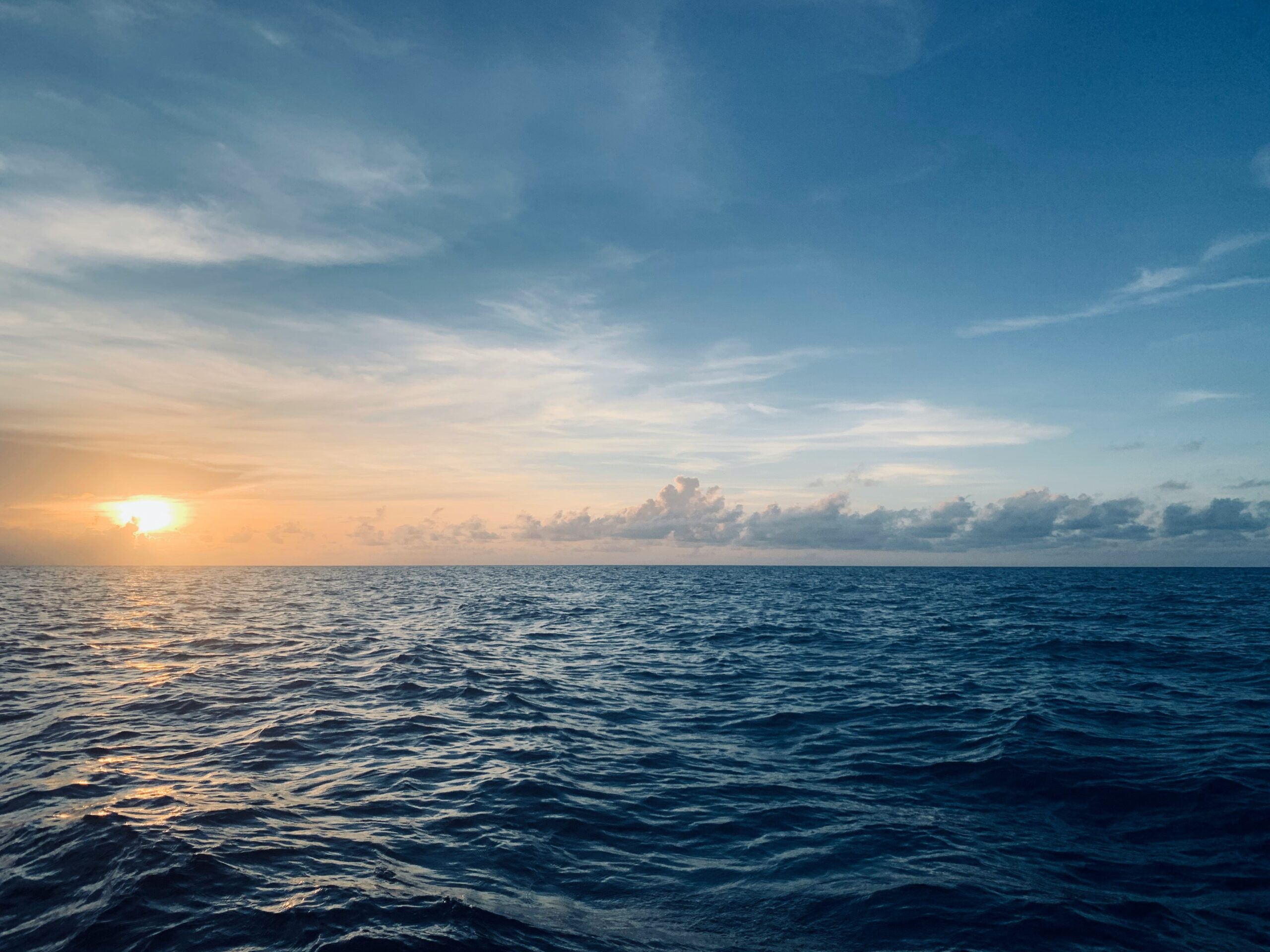
From the sea wall at Galle, a calm sky can sit above a restless sea. The swell reaching the stone may have been made by wind far beyond the visible horizon. That separation between what we can see and what we need to understand is a useful beginning for an Indian Ocean crossing.
It also changes how we look at the coast. From land, the ocean can appear to be the space beyond a place. From a sailing boat, it becomes the connection between places, carrying weather, people and consequences from shores that remain out of sight. Sri Lanka, the Maldives and the Indonesian archipelago belong to that connected world. So do the East African coast and the Arabian Peninsula.
For Naora, Galle is a point at which members can enter this chapter of the voyage. We want the arrival to mean more than reaching the yacht. There is something worth understanding before departure: we are joining an ocean whose communities learned to live with its seasonal movements long before a circumnavigation became a personal ambition.
The Indian Ocean Crossing And Its Three Shores
Asia borders the Indian Ocean to the north, Africa to the west and Australia along its eastern side. These three continental shores give the chapter its particular reach, but they do not make the ocean a single cultural or meteorological place. The conditions off southern Sri Lanka cannot stand in for those along an East African coast. Nor does familiarity with one harbour amount to knowledge of the next.
The more useful idea is proximity. For someone with family, work or memories along these shores, this part of the Naora route may begin nearer to an existing life than a Mediterranean season would. A familiar ingredient, the cadence of a conversation ashore or the arrival of a seasonal wind may carry associations that another person aboard has never encountered.
That difference deserves room. Nobody needs to become the representative of a continent because of their passport, and nobody arrives with inherited competence simply because this is their home ocean. A person can know a coastal city intimately and be entirely new to sleeping offshore. Someone who has crossed other oceans can still have much to learn here.
A world route should be able to change its centre of gravity. The Naora Global Expedition is planned across roughly 49,000 Nm over five years, a scale that makes one permanent geographical centre unhelpful. At Galle, the departure point is Sri Lankan. The weather has to be understood locally. The knowledge that matters may belong to someone whose name never appears in an account of the voyage.
The Older Work Of Crossing
The historical significance of this ocean lies partly in the fact that its winds could bring a vessel back. Across much of the northern Indian Ocean, a seasonal reversal offered the possibility of sailing outward with one monsoon and returning with another. It was never as simple as a dependable wind on an appointed day, but it gave maritime exchange a recurring structure.
Arab, Persian, Indian and Swahili merchants and sailors worked within that structure, alongside the seafaring societies of Southeast Asia. Their routes carried cloth, ceramics, foodstuffs and other goods, but also language, belief, practical knowledge and family connections. Waiting for a favourable season meant spending time somewhere. A trading relationship could require familiarity with a place rather than a hurried transaction at its edge.
We should not make this history gentler than it was. The networks also carried enslaved people and operated through unequal relationships. Later European intervention brought new forms of armed control to maritime systems that already existed. An ocean of exchange was not necessarily an ocean of equal exchange.
Galle makes the layers visible. Its life as a trading harbour predates the European fortifications. Portuguese fort building in the sixteenth century and Dutch expansion in the seventeenth left substantial physical evidence, but the walls are not the beginning of the town’s maritime story.
For us, the practical inheritance is the willingness to wait. Discovery has forecasting, communications and machinery that earlier sailors could not have imagined. Those tools change the choices available. They do not make the season irrelevant, or turn a departure deadline into a reason the sea should accommodate us.
The Monsoon As A Working Calendar
Monsoon is often used as another word for heavy rain. For a passage planner, its more important meaning is a seasonal change in the prevailing circulation. Differences in the heating of land and ocean, together with the movement of pressure systems and tropical rainfall, help reorganise the winds over a very large area.
Around Sri Lanka, the southwest monsoon generally shapes conditions from May to September, while the northeast monsoon generally prevails from December to February. These are broad seasonal descriptions, not confirmed sailing windows. They tell us what pattern to expect and what evidence would be unusual. They cannot tell us that a particular morning will be suitable for departure.
The names are worth reading correctly. A southwest wind comes from the southwest. A current described as running southwest is moving towards the southwest. Confusing those conventions can reverse the meaning of a forecast, especially when trying to understand how wind and water will interact.
Galle’s position on the southwest coast makes the distinction physical. During the southwest monsoon, wind and sea can arrive towards an exposed shore. Under the northeast pattern, the local wind exposure may be more favourable, while swell generated elsewhere can continue to reach the coast. A quieter wind reading does not necessarily mean a comfortable harbour approach.
The transitions between monsoons need attention too. Light average winds can conceal squalls, abrupt changes in direction and periods when sail alone will not maintain useful progress. Elsewhere in the basin, tropical cyclone risk requires its own regional and seasonal assessment.
We therefore begin with the season and work towards the day. Reversing that order, choosing the day first and looking for weather to justify it, is an easy mistake when flights, work and family calendars have already been arranged.
Preparing For An Indian Ocean Crossing At Galle
Sven, Naora’s founder and captain, plans every weather window and sails every leg himself. At Galle, that responsibility includes the departure, the likely passage conditions and the approach at the other end. A comfortable first afternoon is only one part of a sound decision.
Wind forecasts need to be read alongside swell direction, wave period and current. Locally generated waves can sit across an older swell, producing a motion that a single wave-height figure does not explain. Where wind opposes current, the sea can become shorter and steeper. The relevant question is what those combinations will mean for this yacht, on this heading, with these people aboard.
Current also changes the arithmetic. A steady one-knot opposing current would cost 24 Nm of progress over a day if speed through the water remained unchanged. That is an illustration, not a forecast for this route. Real currents vary, but the consequence is easy to recognise: an apparently small difference can move an arrival from daylight into darkness or consume time intended as a margin.
As a passage extends beyond the useful detail of a forecast, certainty has to decrease with it. We can plan alternatives, carry reserves and keep reviewing the situation. We cannot make the far end of an ocean passage precise by adding more decimal places to an estimated arrival time.
Discovery is a 2025 Lagoon Eighty2 sailing catamaran. Her space changes how people live through a passage, but it does not exempt anyone from motion, fatigue or the need to secure an ordinary object before it slides. Stowage, equipment checks and a clear briefing are part of making that space comfortable offshore.
The shore end deserves equal care. We need current entry arrangements, an agreed place for boarding and a workable transfer, rather than an assumption that an attractive waterfront provides a suitable berth. Where anchoring is permitted, depth is only the beginning. Holding ground, tidal change, swinging room and exposure to a wind shift determine whether a position remains sensible after everyone has gone to sleep.
Galle Beyond The Fort Walls
On a hot afternoon, the difference between the seaward wall and a sheltered street can be felt against the skin. In the exposed stretch, wind moves through a shirt and the sea is loud. Around a corner, the air can feel suddenly still; the shade becomes more valuable than the view. It is a small reminder that even walking ashore requires a different pace from looking at a map.
The fort is also a lived neighbourhood, with homes, businesses and places of worship. Its streets do not cease to be someone’s daily surroundings because we find them beautiful. Asking before photographing a person, observing the requirements of a religious building and keeping a gathering out of a doorway are ordinary courtesies. They matter more than a declaration that we travel respectfully.
Food offers another way to notice differences without demanding that a place explain itself all at once. Sri Lankan rice and curry is better understood as a relationship between dishes than as one preparation. Coconut can soften one flavour while chilli sharpens another. Curry leaves warmed in oil contribute something different from a powdered spice mixture. The pleasure lies partly in taking different combinations with each mouthful.
Local provisioning should carry that attention into the galley. Buying nearby supports a relationship with the place, but freshness, safe handling and the quantity we can actually use still govern the purchase. A full basket is not evidence of care if half of it spoils offshore.
Time ashore also has a practical purpose before a passage. Eating properly, finding shade and returning without exhaustion are modest choices that make the first night at sea easier. There is no virtue in arriving at departure already depleted.
Joining The Route Without Rushing The Sea
Naora’s private circle allows members to choose when they join, where along the worldwide route they step aboard and how long they remain. The yacht continues around the world as people come and go. That continuity is important here: the Indian Ocean chapter does not have to become a complete expedition squeezed into the time one person can spare.
Freedom still needs an honest description of the passage. A shorter stay calls for a stretch with suitable places to join and leave. An offshore crossing asks for a commitment to the interval between them. There is no useful version of flexibility that depends on creating an unscheduled ocean exit.
Galle’s role as a joining point should therefore be discussed in terms of the whole arrival. Flight connections, entry requirements, the road transfer, boarding formalities and time to recover all matter. A flight duration alone says little about how rested someone will be when they reach the yacht. Geographical closeness can help, but it does not remove those steps.
We also need to understand the people arriving. Previous time at sea, susceptibility to motion, mobility and the presence of children affect preparation and the explanation each person needs. Nobody should have to conceal uncertainty to feel at ease aboard. Knowing where to hold on, when to ask for help and what the crew will handle is more useful than appearing experienced.
The practical conversation includes work as well. Offshore communication should not be treated as a guarantee that a critical call can happen at an exact hour. Leaving some obligations ashore creates room for the passage to change without turning every weather decision into a conflict with a diary.
The Ocean Between Familiar Coasts
Once clear of land, the historical and geographical scale becomes a set of physical details. At night, a bright screen can take away the dark adaptation needed to see beyond it. A cup needs a secure place. The water along the hull changes its sound as the angle to the waves changes, and a person coming up from below needs a moment to find their balance before joining a conversation.
The crew’s watch handover gives those sensations context. Traffic, the recent behaviour of the wind, the sail configuration and anything that needs watching must pass clearly from one person to the next. A quiet watch is not an empty one. Its value lies in noticing a developing situation while there is still time to respond without hurry.
Guests can learn to recognise some of the same changes without taking on the crew’s responsibility. A cloud line, a different motion, the reason a heading has altered: understanding these things makes the ocean less abstract. It also explains why a plan can change even when the view still looks pleasant.
For a member who knows these shores, the passage may reveal an unfamiliar distance between familiar places. For someone arriving from farther away, it may be the first time the Indian Ocean has felt like a connected human geography rather than separate destinations. Neither experience needs to displace the other.
There is room aboard for those differences to remain unhurried. A conversation can stop without having reached agreement about what the voyage means. Outside, the water continues along the hull.