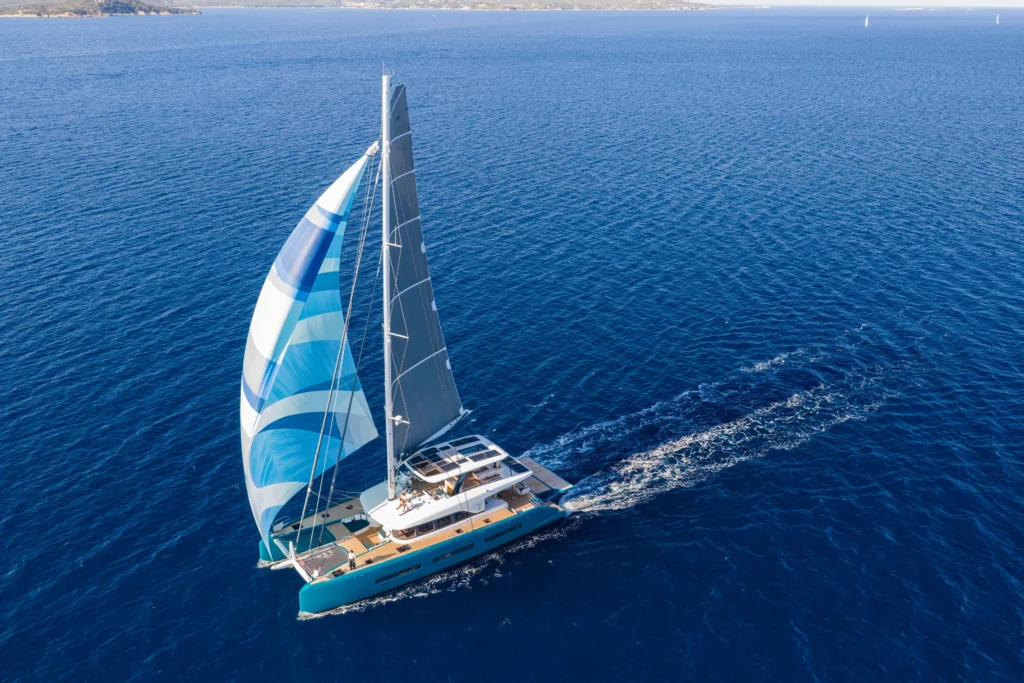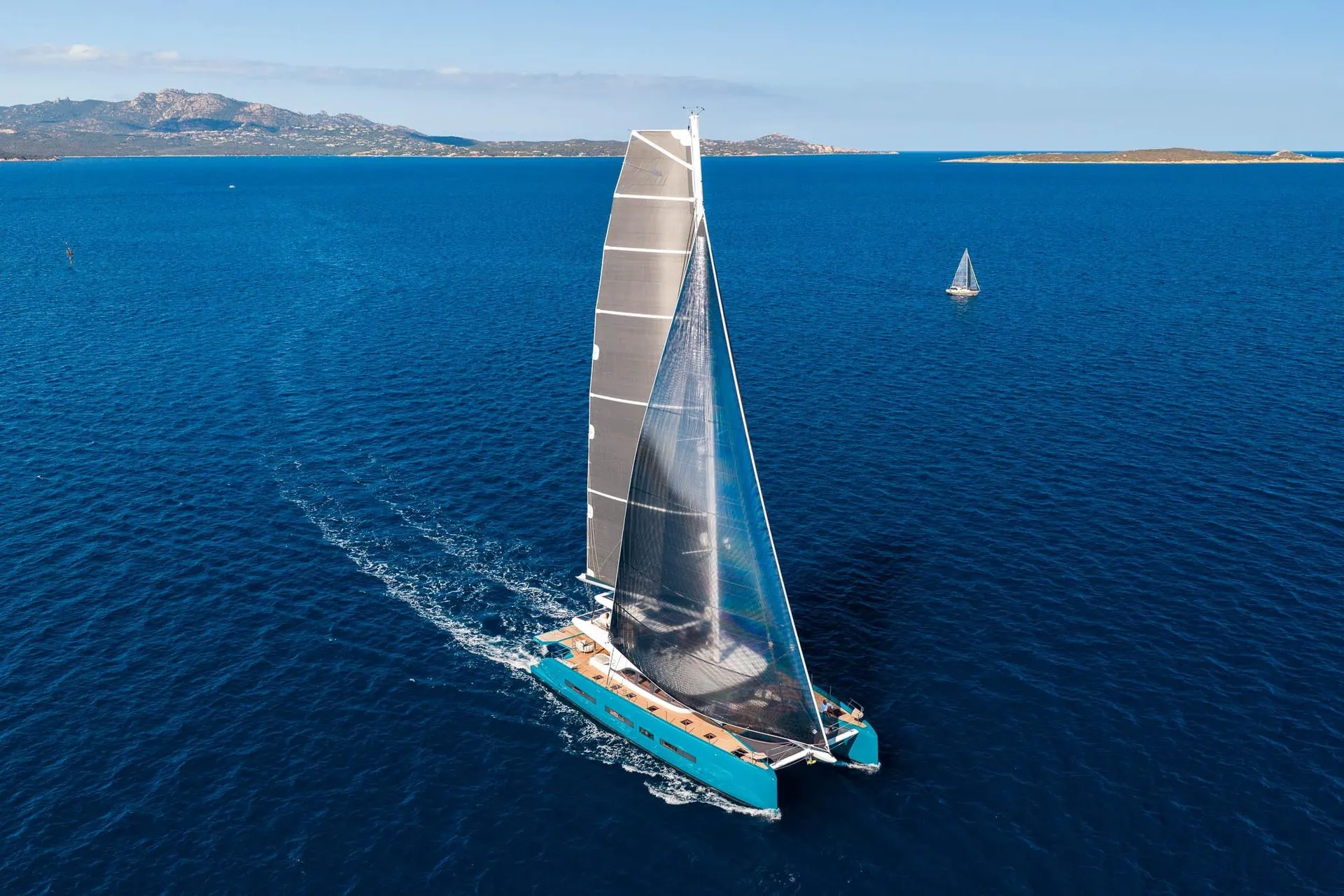
The boat choice for the Naora circumnavigation was not a casual decision. It was the decision at the end of two years of the most specific and consequential design process I have undertaken: the identification of the vessel that would serve as the home and the platform and the safety environment for the Naora programme for five years across four oceans and forty countries, with twelve members rotating through it at intervals and the core crew living aboard continuously. The wrong boat choice in this context is not the inconvenience it is in the recreational sailing life. It is the constraint that the five-year circumnavigation lives within or the failure that the five-year circumnavigation eventually produces.
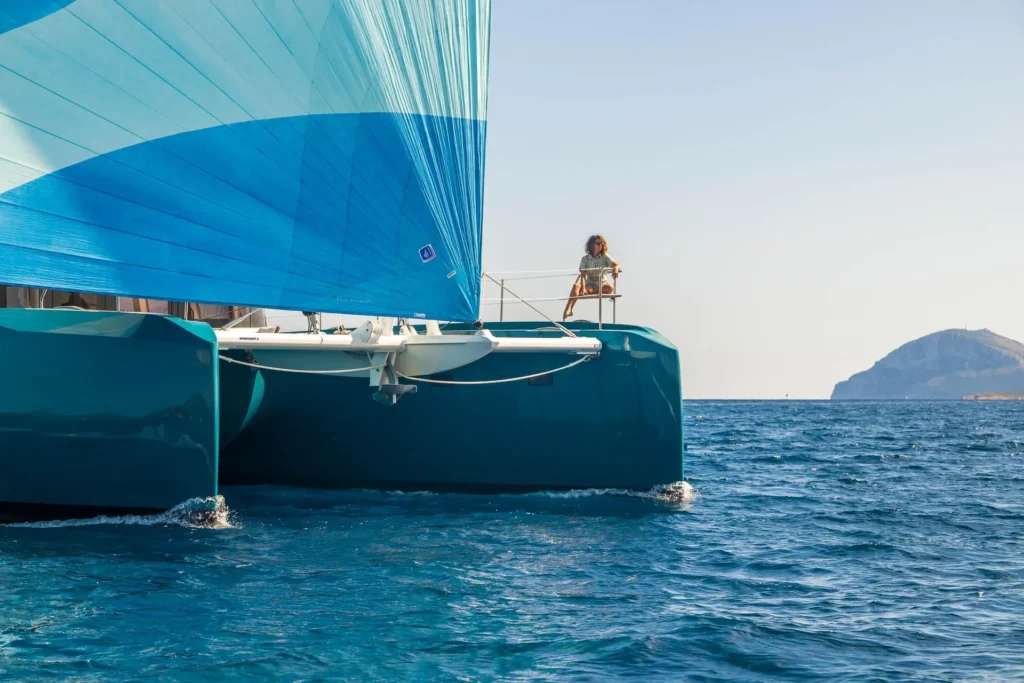
The choice between the catamaran and the monohull for the circumnavigation was the first decision. The catamaran wins this comparison for the Naora programme on multiple grounds: the stability at anchor and in the offshore passage that the two-hull platform provides versus the rolling of the single-hull vessel, the deck space that the catamaran’s wide platform creates for twelve people to live and move and work on without the constant negotiation of the narrow side decks and the rolling cockpit of the monohull, the shallow draught that the catamaran’s hull configuration produces and that gives the boat access to the reef anchorages and the atoll lagoons that the deep-keel monohull cannot enter without the risk of grounding.
The catamaran is the correct platform for the offshore liveaboard programme at the scale and the duration that the Naora circumnavigation represents.
Why Lagoon Specifically
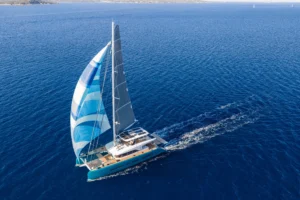
Within the catamaran category, the Lagoon Eighty2 was chosen for the combination of reasons that the serious offshore circumnavigation requires and that the other options in the size range did not provide in the same combination.
The standardisation of the instrument and systems architecture across the Lagoon range is the first practical advantage: the Eighty2’s navigation electronics, the autopilot systems, the electrical architecture, and the propulsion systems are the systems that the Lagoon worldwide service network knows and services.
When the Eighty2 needs a component in Papeete or Bali or Galle or Aqaba, the Lagoon dealer network in those locations has the part or can source it faster and more reliably than the boat that was built to a custom specification that no service network outside the builder’s yard fully understands.
The Eighty2 is also a lightweight vessel by the standards of the size class. Lagoon’s construction philosophy produces hulls that are lighter than comparable designs, and the lighter hull is the faster hull and the more energy-efficient hull, the boat that requires less power to move at the passage speeds the circumnavigation uses and that therefore places a lower demand on the energy system that the Naora programme is designed to supply predominantly from renewable sources.
The energy system is the third reason. Lagoon has been at the leading edge of the marine solar and lithium battery integration for the offshore liveaboard market: the solar array architecture that the Eighty2’s bimini and deck can accommodate, the lithium iron phosphate battery bank that the construction team integrates, the MPPT charge controllers and the inverter-charger systems that the Lagoon’s electrical architecture standardises across the range.
The Naora programme’s ambition to cover the majority of its energy demand from renewable sources on the offshore passages, the solar by day, the wind and hydro generators by night, is an ambition that the Eighty2’s electrical architecture was designed to support rather than an afterthought installed against the resistance of a system that was built for a different purpose.
The worldwide service network, the lightweight hull, the renewable energy architecture, the catamaran platform: these are the four reasons. The Eighty2 is the boat that produces the best answer to the specific question that the Naora circumnavigation asks. The question was asked carefully. The answer was chosen for the reasons above.