The first useful mark on a medical note is often a time. When the pain began. When the diver surfaced. When the person last felt well. In wilderness medicine at sea, that small act keeps an uncertain memory from becoming the foundation of a clinical decision.
It is an easy detail to lose. Someone feels unwell but does not want to interrupt dinner. Someone else assumes the nausea belongs to the motion of the boat. By the time a conversation with a remote physician begins, the sequence can already be blurred. Writing down what happened, without first deciding what it means, is one of the simplest ways to make that conversation useful.
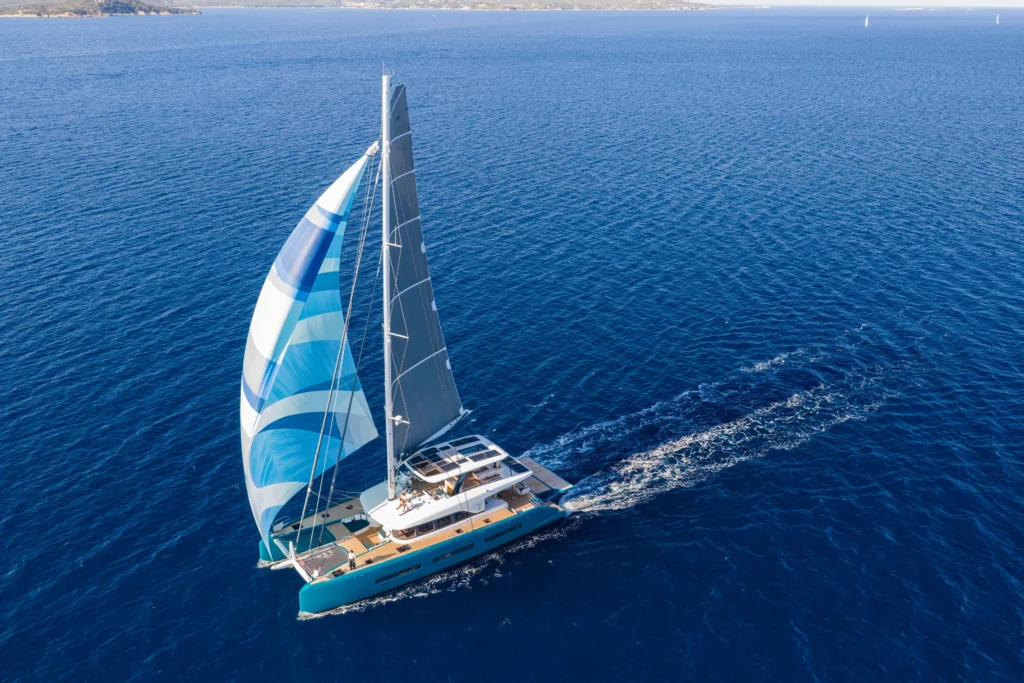
Aboard Discovery, our 2025 Lagoon Eighty2, an offshore medical kit and the captain’s STCW medical certification form part of the preparation. Neither turns the yacht into a hospital. The work is to recognise trouble, provide care within our training, seek clinical advice early and arrange the next stage of care before the available choices narrow.
Wilderness Medicine At Sea Begins Before Departure
The most useful medical conversation often happens before a bag comes aboard. It needs privacy and enough time for an honest answer. Relevant conditions, allergies, regular medicines and previous difficulties at sea belong in that conversation, shared with the people responsible for care rather than around the dinner table.
A condition that is well managed ashore may require a different plan offshore. The question is not simply whether someone feels well enough to travel. It is what happens if a medicine is lost, vomiting prevents it being taken, or the passage lasts longer than expected. A treating clinician can help assess those questions before departure, when there is still room to change the plan without urgency.
Personal medication should remain identifiable, with its dose and instructions available in writing. Supplies need to allow for delays, not merely the intended arrival date. Anything requiring controlled storage needs an agreed arrangement rather than an assumption that a galley refrigerator will be suitable. Heat, moisture and salt are practical enemies of medical supplies as well as electronics.
The yacht’s kit needs the same attention. An inventory means checking quantities, expiry dates, packaging and storage conditions, then matching the contents to the training aboard and the passage ahead. Equipment that nobody can locate or use under pressure is not meaningful capability.
Members choose when and where along the Naora world route they join, and how long they stay. That freedom makes a consistent arrival briefing important. A person aboard for a week should know whom to wake and how to raise concern as clearly as someone preparing for an ocean crossing. Nobody should have to decide whether a symptom is serious enough to deserve the captain’s attention.
Distance Is Only Part Of The Medical Plan
In the outer Tuamotu, the planning question is not simply how far we are from Papeete. It is what help is available locally, what that help can provide, and how a patient could move from the yacht to more capable care. A local clinic may be invaluable without having the facilities needed for a particular emergency.
The Banda Sea asks a similar question about diving medicine. Writing Bali beside a chamber symbol does not establish that a suitable facility can receive a patient, that transport can reach it, or that it is the best destination from the yacht’s actual position. Those details need current confirmation. A chamber’s existence and its operational availability are different facts.
At the Brothers Islands in the Red Sea, the distance to shore is only the beginning of the calculation. Landing a patient safely, arranging onward transport and reaching the right treatment all take time. The nearest land is not necessarily the quickest route to appropriate care.
This is why a medical passage plan needs more than hospital names. It needs working contact details, communications that have been tested, realistic transfer options and alternatives if the preferred route becomes unavailable. Across the five years planned for the Naora Global Expedition, that information cannot be treated as permanent.
“Two days from hospital” should therefore be understood as a planning estimate, never a promise about rescue. Wind, sea state, aircraft access, daylight and the receiving facility can change the answer. Some conditions require urgent evacuation even when the yacht could reach a harbour under its own power. Others may be managed aboard under clinical guidance. That distinction should not be made by looking at the chart alone.
The First Minutes Belong To Simple Actions
A useful rehearsal starts before the medical bag is open. Picture a cabin light switched on in the middle of the night, the fan still running, a damp towel underfoot and someone trying to describe pain while the boat moves beneath them. The first task is to make enough order for care to happen: a safe place, clear access, someone listening and someone raising help.
Immediate threats come before a detailed history. A person who is unresponsive and not breathing normally, including someone only gasping, needs emergency action. Rescue must be activated while CPR begins, with an automated external defibrillator used if available. For adults, standard chest compressions are delivered at 100 to 120 a minute, to a depth of 5 to 6 centimetres, allowing the chest to recoil. Those figures describe effective compressions, not merely visible movement.
Trained rescuers combine 30 compressions with two breaths. Rescue breaths are particularly important after drowning. Someone unable to give breaths should still provide chest compressions rather than do nothing. These are skills to practise hands-on before a passage, not techniques to encounter for the first time in an emergency.
Other first aid is less dramatic but benefits from the same restraint. Severe external bleeding needs firm direct pressure and urgent escalation. A suspected fracture should be supported with unnecessary movement avoided, rather than repeatedly tested or straightened. A deep or contaminated wound needs assessment; closing it simply because closure equipment is present can trap contamination inside.
For a thermal burn, cool running fresh water for 20 minutes helps limit injury. Keep the rest of the person warm, avoid ice and seek urgent advice for serious burns. On a boat, the temptation is to apply whatever looks soothing in the galley. Simple, appropriate first aid is usually more useful than improvisation.
The important distinction is between helping and attempting a procedure beyond one’s competence. The medical kit does not make that decision. Training, the patient’s condition and clinical guidance do.
Wilderness Medicine At Sea Needs A Clear Handover
A remote physician cannot see the cabin, hear the person’s breathing or notice what changed while the call connected. We have to make those observations available without burying them in a long account of the passage. Clear language is more valuable than medical vocabulary used uncertainly.
A useful call establishes the yacht’s position, a reliable callback method and the immediate concern. It then describes the person, the sequence of symptoms, relevant conditions and medicines, and what care has already been given. If breathing is difficult or consciousness is changing, that belongs near the beginning, not at the end of an otherwise orderly report.
The distinction between observation and interpretation matters. “They cannot finish a sentence without stopping for breath” communicates something concrete. “They seem anxious” may describe the same person while concealing the more urgent problem. New chest pain, severe breathlessness, sudden weakness or altered consciousness warrant immediate emergency contact, not a period of watching to see whether the discomfort belongs to the passage.
Measurements help when they are taken correctly and recorded with a time. A pulse taken once may reflect pain, fear or exertion. A sequence, considered alongside the person’s appearance and symptoms, can show change. A reassuring device reading should never cancel a concerning clinical picture.
Write down the advice, read it back and agree what should trigger another call. Record any medicine given, including its dose and time, so that the next person providing care does not have to reconstruct it. Agree what happens if the connection fails. These details sound administrative until a tired crew member has to make a handover in the dark.
A life-threatening emergency also requires a rescue alert without waiting for a diagnosis. VHF channel 16 is the voice distress channel, but contact depends on radio range. Offshore planning needs tested communications beyond that range, not confidence that somebody will happen to hear.
A Diving Emergency Changes The Plan
In the Tuamotu, the Banda Sea and the Red Sea, the medical plan belongs in the decision to dive, not in the conversation after somebody becomes unwell. Depth and duration matter, but so do repeated dives, surface intervals, exertion and the time needed to reach appropriate care.
Unusual symptoms after diving need prompt attention. Decompression illness can involve pain, altered sensation, weakness, balance problems, breathing difficulty or changes in consciousness. Symptoms may appear after the diver has been back aboard for some time, and an apparently uneventful dive does not rule them out. A normal pulse oximeter reading does not exclude the problem either.
Suspected decompression illness calls for urgent diving medical advice and high-concentration oxygen delivered by trained people using suitable equipment. Keep the diver at rest and protect them from cold without overheating. For a critically ill person, activate the emergency response immediately, with Divers Alert Network, DAN, contacted alongside that response where possible. Diving advice supports rescue coordination; it does not replace it.
Oxygen endurance is an important planning calculation. At a continuous flow of 15 litres per minute, an hour consumes 900 litres before any reserve is allowed. The appropriate delivery system and protocol determine actual consumption, but the arithmetic explains why possessing a cylinder is not the same as having enough oxygen for a remote evacuation.
Preserve the dive computer information and record the dive sequence, surfacing time and symptom onset. Improvement after oxygen does not mean the diver has been cleared to resume normal activity. Do not return someone underwater as an improvised treatment, or arrange an ordinary flight without medical coordination. Reduced pressure during transport can matter, and evacuation needs to account for it.
The difficult decision may be made earlier still. If suitable emergency support cannot be established, changing or foregoing a dive can be the responsible choice. An untouched cylinder at the end of the day is not evidence that the planning was unnecessary.
The Boat Still Needs To Be Sailed
Sven is Naora’s founder and captain. He plans every weather window and sails every leg himself. In a medical emergency, his responsibility for the vessel does not disappear because another urgent responsibility has arrived.
Someone has to maintain the watch, understand the traffic, check the developing weather and keep a viable route open. Someone else may need to remain with the patient. Communications and note-taking also consume attention. Rehearsing those roles exposes a weakness that a well-stocked medical bag cannot solve: several essential tasks may otherwise depend on the same person.
The most comfortable heading is not always the fastest course towards assistance. Motion may need to be reduced for care, while fuel, weather and the consequences of delaying arrival remain part of the calculation. A transfer alongside another vessel can introduce its own risks. These are decisions to coordinate with medical and rescue support, rather than reasons either to rush blindly or to postpone asking for help.
During a prolonged wait, care becomes physical work. Engine vibration travels through the bunk. A light needed for observation makes sleep difficult. A cup left within reach may slide away with the next change of motion. Someone has to notice these small things as well as the important measurements, help the person remain comfortable and explain what is happening without pretending to know more than we do.
Family members need clear updates. The patient needs privacy wherever circumstances allow. Rest for those providing care must also be considered, because fatigue degrades both observation and seamanship. Reaching professional help in good order includes keeping the people doing the helping capable of continuing.
What We Rehearse In The Circle
The expedition physician joining the Naora Circle session brings value through this connection between medicine and distance. The useful discussion is about recognising limits, describing a changing situation and making decisions while help is still some time away. It is not an abbreviated attempt to turn everyone aboard into a clinician.
The Circle’s digital setting can make room for questions that are easily left unasked on departure day. How do I explain a medical concern privately? What should I report after a dive? What happens if the person who usually looks after the family becomes the patient? Discussing those questions before boarding makes the eventual briefing less unfamiliar.
Practical skills still need practical training. A screen cannot establish that someone can perform effective CPR, assemble oxygen equipment correctly or locate supplies on a moving yacht. The session can explain the decisions; hands-on preparation must support the actions.
For a guest, the most useful contribution may be modest: mention the symptom early, describe it honestly and let the passage plan change if it needs to. There is no virtue in protecting dinner, a dive or a landfall from an inconvenient piece of information.
For the person in the bunk, all this preparation should become something quieter than the machinery behind it. A clear explanation. A clean pillow. Someone close enough to hear when they speak.