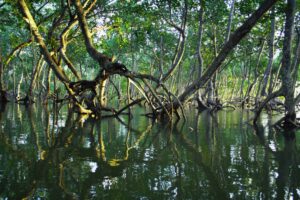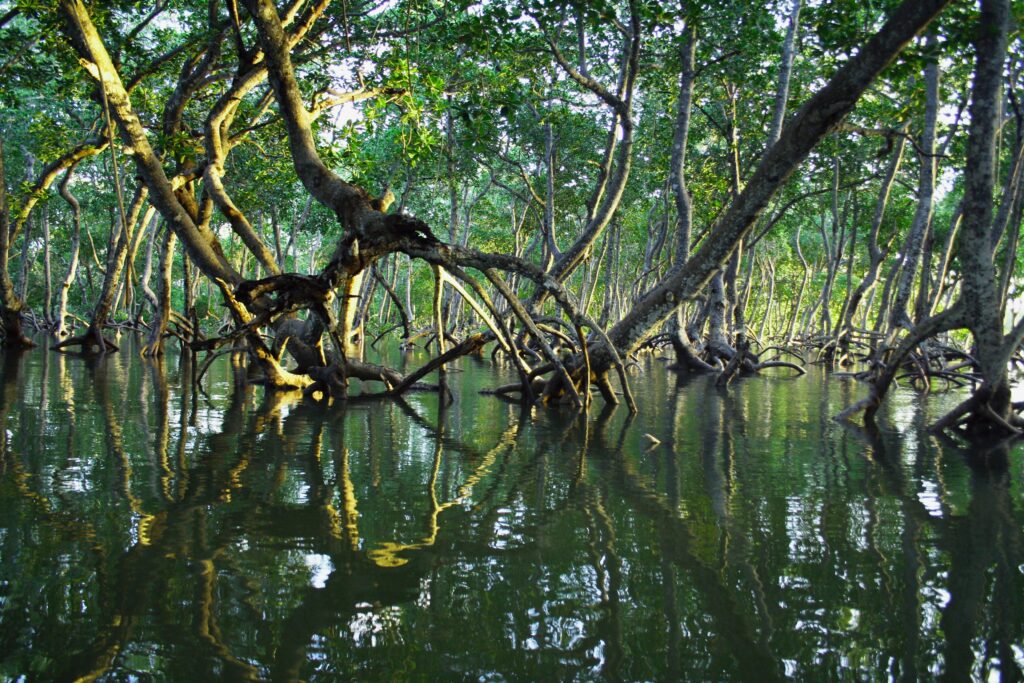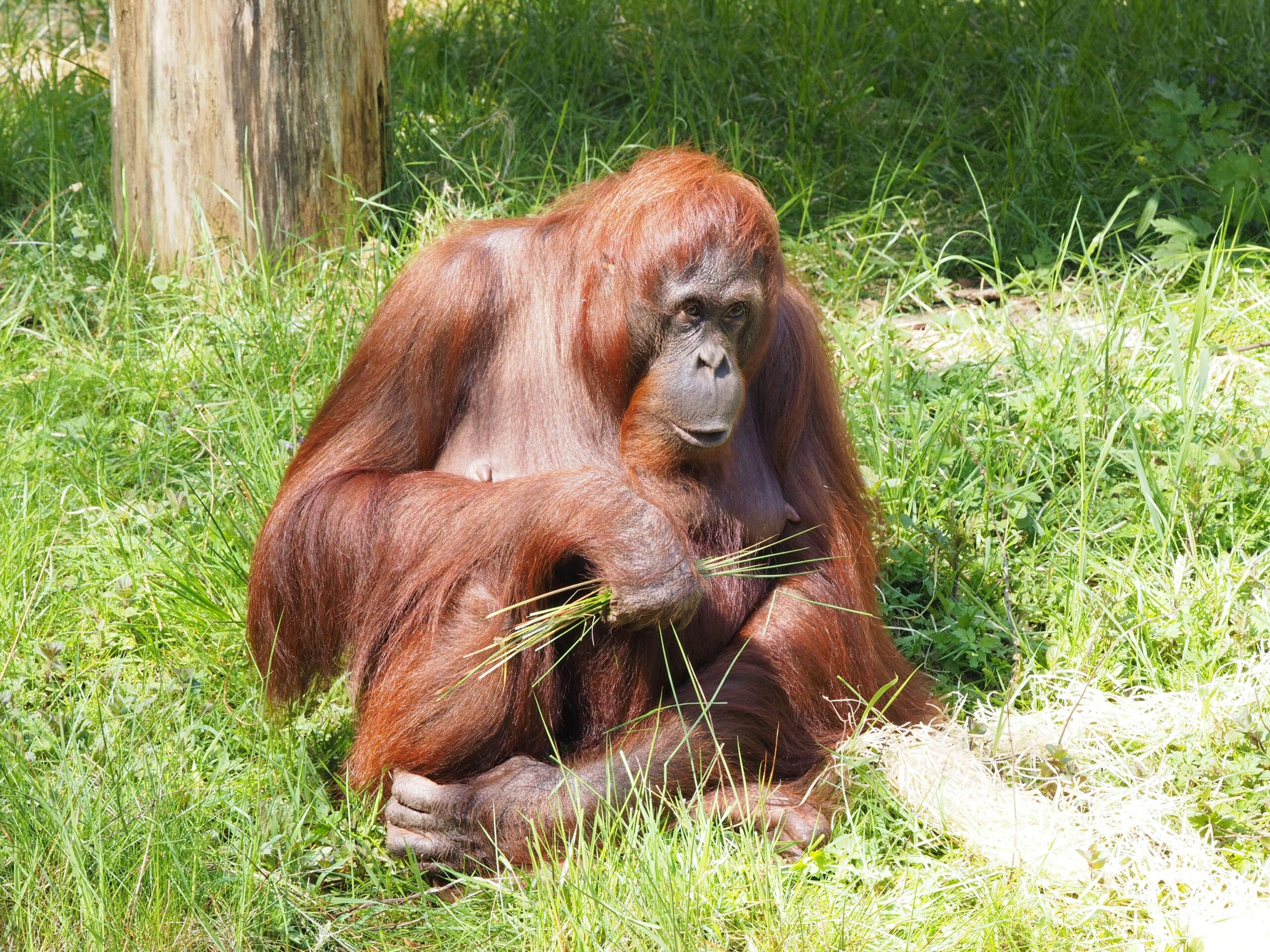
A narrow belt of trees can look like a whole forest from a riverboat. Along the Mahakam, that matters to anyone hoping to see Borneo orangutans. The green edge is what the water allows us to see; how far it extends behind the bank, what grows there and whether it connects to another patch of forest are harder questions. They are also the questions that determine whether an orangutan can live there without help.
We come to this part of East Kalimantan from the sea, with the habits that a long voyage encourages: looking carefully, separating an attractive possibility from a workable plan, leaving room for conditions to change. The river deserves that same attention. So does the animal we hope to encounter beyond its banks.
From Balikpapan To The Mahakam
The Makassar Strait places Borneo to the west and Sulawesi to the east. That is the broad geography of this Indonesian chapter of the Naora Global Expedition. The inland geography needs more precision. Balikpapan lies on its own bay, south of the Mahakam delta. Samarinda stands on the Mahakam. Arriving at Balikpapan does not mean arriving at the river entrance, and a transfer between the two belongs in the day’s planning rather than disappearing into the description.
There is another distinction we would settle before arranging transport. A journey on the Mahakam and a visit to an orangutan rehabilitation programme are not automatically the same excursion. Rehabilitation work in East Kalimantan is not all reached by travelling upstream from Samarinda. The particular facility, its location, its permission to receive visitors and the animals it allows visitors to observe must be confirmed first.
That changes the order of preparation. We begin with the legitimate conservation visit, if one is possible, then establish how to reach it. We do not hire a speedboat and assume that a feeding platform waits somewhere upriver. Some facilities restrict access, some areas remain closed to visitors, and permission can change with animal health or operational needs.
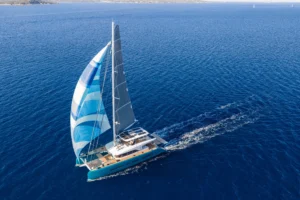
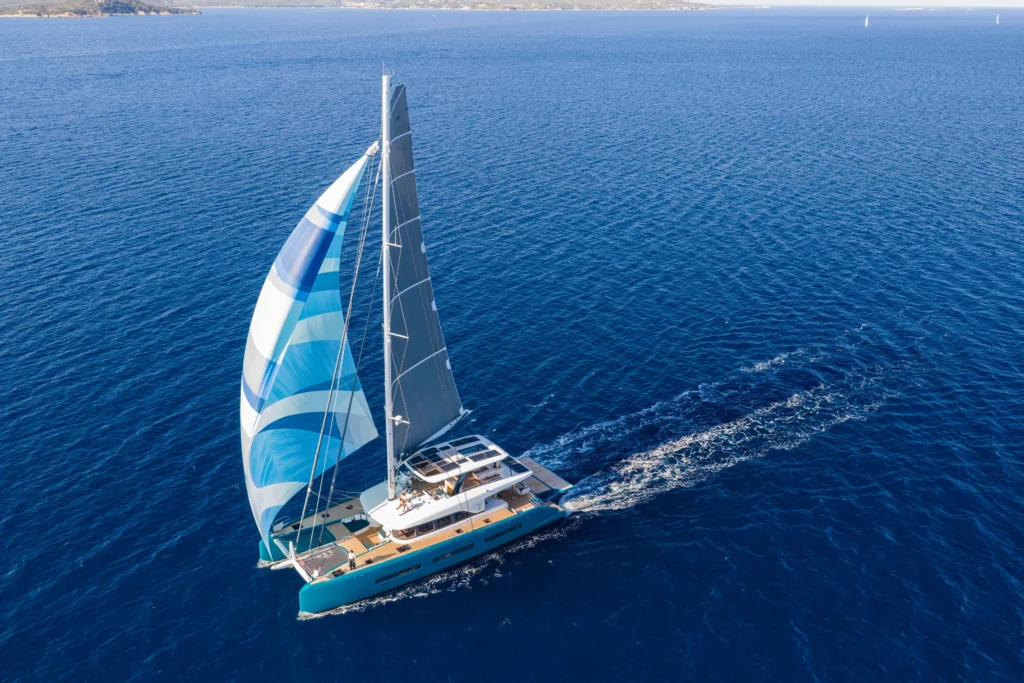
For Naora, this is an inland visit from a world voyage, not a proposal to take Discovery, our Lagoon Eighty2 sailing catamaran, into unfamiliar river channels. The yacht and the riverboat have different jobs. Understanding where one should give way to the other is part of arriving properly.
Reading A Working River
The Mahakam is a working waterway, not a continuous corridor of undisturbed rainforest. Around Samarinda, settlement, industry and commercial traffic belong to the view. Farther along, the character of the banks changes. A responsible account leaves those changes visible. Forest, cleared land, houses and cargo movements are all part of the river’s present life.
From a small boat, commercial traffic becomes physical. A barge occupies the view rather than sitting somewhere on the horizon. Its wake reaches the hull as movement through the seat and floor. Under a boat’s roof, shade can keep the direct sun off while doing little about the heat reflected from the water. Engine noise breaks conversation into short exchanges. These are ordinary river conditions, but several hours of them ask something of the body.
A competent local operator reads more than the surface immediately ahead. Current, bends, traffic movements, floating timber and the effect of recent rain upstream all matter. Loaded barges have limited manoeuvrability; a small passenger boat should not depend on them changing course. Nor should speed be mistaken for competence. The useful question is whether the operator leaves enough room and time to respond.
East Kalimantan can receive rain throughout the year. Seasonal patterns help with planning, but a dry morning at the coast does not describe the water coming down the catchment. We would want current local information about river conditions, a realistic return plan and properly fitted lifejackets worn underway. For children, that means jackets suited to their size, not adult equipment tightened as far as it will go.
Borneo Orangutans And The Forest They Need
The Bornean orangutan is one of three living orangutan species, and it is critically endangered. That distinction matters because the familiar name can make different animals and different conservation circumstances seem interchangeable. Here, the relevant animal belongs to Borneo, and its future depends on what happens to Borneo’s forests, including the lowland habitats that have been heavily altered by logging, agricultural conversion and fire.
Lowland dipterocarp forest takes its name from a family of trees that includes many of the region’s great canopy and emergent species. From below, height is the obvious quality. For an orangutan, continuity and food are equally important. Fruit is not supplied evenly through the year. Trees fruit at different times, sometimes irregularly, and an animal needs access to enough habitat to find alternatives when a favoured food becomes scarce.
A green strip beside a river may therefore offer much less than it appears to offer. It can provide shelter or a route between larger forest areas, yet still be too narrow or isolated to support independent life over time. Orangutans do sometimes travel on the ground, but that does not make the loss of connected tree crowns harmless. Moving between separated patches can bring them into contact with roads, farms and people.
The pace of their reproduction makes habitat loss especially difficult to repair. Pregnancy lasts about eight and a half months, but raising an offspring occupies years. A female may have roughly seven to nine years between births, depending on population and conditions. Losing a breeding female is therefore not a loss that a few favourable seasons can quickly replace.
Young orangutans learn where food grows, how to process it and how to move through the canopy largely through their mothers. They also learn to build sleeping nests from branches and foliage. An old nest can tell a guide that orangutans have used an area. It cannot promise that an animal will be waiting nearby when we arrive.
What Rehabilitation Actually Requires
The word rescued describes how an animal entered care. It does not tell us how close that animal is to living independently. An adult displaced from forest may retain extensive knowledge of wild feeding and movement. An infant separated from its mother may have lost the individual from whom it would have learned almost everything. Those animals need different forms of care, sometimes over very different lengths of time.
Rehabilitation can involve veterinary treatment, quarantine, learning to forage, developing climbing skills and gradually reducing dependence on people. Knowing how to climb is only part of the work. An orangutan must distinguish foods, cope when preferred fruit is unavailable and make decisions in a complex environment without expecting a person to intervene. A young animal can look capable long before it is ready.
This is why a feeding platform needs explanation. Supplementary food may support animals at a particular stage of rehabilitation or management. Its presence does not prove that the animals are wild, ready for release or receiving the same care as animals at another site. Nor does daily contact with visitors form a necessary part of rehabilitation. In many circumstances, reducing familiarity with humans is precisely the point.
Release requires suitable, secure habitat as well as an animal capable of using it. Health assessment and the risk of carrying disease into a wild population also matter. Some rescued orangutans cannot be released and need long term care. That is a serious responsibility, not a lesser story because it lacks the ending a visitor might prefer.
Before going, we would want to understand which part of that work a permitted visit actually reveals. Watching supplementary feeding can be worthwhile when it is honestly explained and properly managed. It should not be presented as an untouched wild encounter, and a wild encounter should never be manufactured by offering food.
Watching Borneo Orangutans At A Proper Distance
Under a closed canopy, looking becomes a physical activity. The light breaks into small bright openings above darker layers of leaves. Binoculars grow heavy when held upwards. Humidity makes a shirt cling even while you are standing still. A guide may be reading a movement that you have not yet separated from the rest of the branches. Hurrying rarely helps; allowing your eyes to settle often does.
If an orangutan is present, distance protects more than our comfort. Humans and great apes can transmit infections to one another. We would plan around at least 10 metres of separation, with greater distance wherever the site’s protocol requires it. That is a meaningful space, not a photographic inconvenience to be negotiated away. A longer lens is a better answer than another step forward.
Illness changes the decision before anyone reaches the forest. A cough, fever or other potentially infectious symptoms are reasons to discuss exclusion from the visit, not something to conceal after travelling a long way. Masks may also form part of the site’s requirements. Wearing one does not remove the need for distance or permit contact.
The practical behaviour is quiet and uncomplicated. Food stays put away. Nobody feeds, touches, calls to or tries to provoke a response from an animal. Camera sounds and flash stay off. If an orangutan approaches, the guide manages the withdrawal; people do not crowd around the opportunity. An animal choosing to come closer does not make close contact safe.
For children, we would explain those limits before setting out. Waiting without a sighting can then be understood as part of visiting a living place, rather than a promise somebody has failed to keep. At a managed feeding site, attendance can vary. An absent animal does not, by itself, tell us whether rehabilitation is succeeding or failing. That judgement needs knowledge extending far beyond our morning.
Giving The Day Enough Room
The temptation is to call everything a full day from the coast and leave the arithmetic unexamined. Even a quoted three to four hour river journey each way would mean six to eight hours in the boat before road transfers, waiting, walking or observation. That is a planning calculation, not a verified travel time to a particular centre. Until the destination and transport are confirmed, no such duration should be treated as an itinerary.
An early departure creates useful room, but it does not guarantee access to a morning feeding session. The facility’s schedule, entry requirements and actual journey govern that decision. If the day only works by assuming empty roads, maximum boat speed and no weather interruption, we would change its shape. A shorter visit, a different arrangement or a decision not to go can be the more thoughtful choice.
Comfort here is mostly preparation. Drinking water needs to remain accessible during the transfer. Rain protection should cover both people and equipment, while footwear must suit wet steps and whatever walking the site permits. Any mobility limitations deserve a specific conversation about landings and paths, rather than the reassuring but unhelpful promise that everything will be manageable.
We would also establish how the operator communicates, what happens if the boat develops a problem and how the return changes if conditions deteriorate. A mobile telephone is useful equipment, but assumed reception is not a contingency plan. On a river with heavy traffic, avoiding an unnecessary return after dark can be worth more than squeezing in another hour ashore.
Sven’s responsibility as Naora’s founder and captain continues while guests are inland. Discovery still needs an appropriate berth or anchorage, the necessary local formalities and a proper watch. We would not presume a suitable marina berth at Balikpapan without confirmation. The shore visit should fit a sound arrangement for the yacht, rather than borrowing time or attention from it.
A Place Beyond The Sighting
The river belongs first to the people who live and work along it. A landing is not automatically public access, and a house beside the water is still someone’s home. Asking before stepping ashore or making a portrait is ordinary courtesy. Paying local guides and operators for their knowledge recognises work that cannot be replaced by a route saved on a telephone.
That knowledge also helps us look beyond a simple story of forest and destruction. Land use is bound up with livelihoods, transport and decisions made at many scales. Visitors can acknowledge the damage without treating the people along the bank as scenery or assigning them responsibility for every pressure on the landscape. Listening takes longer than passing judgement from a boat.
Within Naora’s continuing world voyage, members choose where they join and how long they stay. That freedom allows different interests to find room aboard, but it does not make every inland possibility fit every visit. Along this coast, we would rather leave enough time to understand one place than make an orangutan sighting carry the weight of a hurried day. Discovery will continue around the world. The work in the forest continues after we leave.
If we are fortunate enough to watch an orangutan feeding high in the trees, there may be little drama: a hand testing a branch, a pause to select something among the leaves, the slow transfer of weight into another crown. The distance remains. The animal has somewhere else to go.