Rain on Dominica does not need to reach the anchorage to change the day ashore. Bright water in Prince Rupert Bay and a dark cap of cloud inland can belong to the same morning, and for the Dominica Boiling Lake hike, the second observation matters more than the first. A comfortable breakfast aboard tells us something about the bay. It tells us much less about the streams, steps and steep ground waiting inside the island.
That difference is where the planning begins. The walk crosses rainforest, climbs into cooler air and descends through the Valley of Desolation towards a lake heated from below. It deserves a full day and an honest assessment of the people walking. For a Naora visit, we would rather leave enough room to stop, listen and turn back if necessary than make the mountain fit between breakfast and a promised departure.
Planning The Dominica Boiling Lake Hike
The established walking route is roughly 7 to 8 Nm out and back. On water, that might sound like a short move between anchorages. On this trail, distance is a poor measure of effort because the ground repeatedly changes the pace: steep steps, roots, wet rock, stream crossings and descents that must be climbed again on the return.
A sensible planning allowance is six to eight hours on foot, with longer possible when the ground is wet or the group needs more recovery time. That is an estimate, not a completion target, and it excludes the road journey from Portsmouth, the transfer ashore and any delay at either end. This is not a short morning excursion with an unusually dramatic destination.
Dominica’s generally drier period, roughly February to April, improves the odds of favourable walking conditions without removing the possibility of heavy rain. Moist trade-wind air rises over the island, cools and releases water. The mountains can therefore be wet while parts of the coast remain bright, and yesterday’s rain can matter almost as much as today’s forecast.
An early start buys daylight and room for a slower return. It does not guarantee that rain will politely wait until afternoon. Before committing, we need to know that the trail is open, that recent rainfall has not made crossings unsuitable and that there are no restrictions associated with geothermal activity. Those checks belong close to the day itself.
The guide and the group should also agree on a turnaround time before setting off. Reaching it short of the lake is a decision already made, rather than an argument to have when everyone is tired and the destination feels tantalisingly near.
From Prince Rupert Bay To The Trail
Prince Rupert Bay at Portsmouth is the anchorage in our Dominica plan, not the foot of the hike. The usual trailhead lies inland in the southern part of the island. Starting from Portsmouth means arranging a substantial road transfer, and the return journey belongs in the same conversation as the outward one.
We would arrange a guide with recent knowledge of this particular trail in advance, rather than assume that someone suitable will be waiting at the dock. The useful discussion concerns present conditions, the group’s walking experience, food and water, transport and what happens if the day takes longer than expected. A guide who asks about knees, balance and previous long walks is asking better questions than someone who simply confirms a departure time.
Discovery, the Lagoon Eighty2 sailing catamaran carrying Naora around the world, remains a working yacht while people are ashore. Prince Rupert Bay lies on Dominica’s leeward coast, but shelter from the prevailing easterly wind is not protection from every sea condition. Swell entering the bay can change the comfort of the anchorage and the practicality of a dinghy landing.
Before leaving, there must be a clear arrangement for the watch aboard, contact with the shore party and the landing on return. The anchoring assessment concerns holding, swinging room and the forecast over the whole absence, not merely whether the yacht is lying quietly at that moment.
Sven’s responsibility as captain includes the weather window for the passage that follows. The local guide brings the current knowledge of the inland route. Good planning gives both judgements room, and avoids making a tired group hurry down a mountain because the sailing schedule has been drawn too tightly.
What To Carry On The Dominica Boiling Lake Hike
Preparation begins with footwear already worn on uneven ground. A reliable sole and a secure fit matter more than the appearance of a hiking boot. Descending in wet shoes exposes a poor fit quickly, as toes slide forward and the walker begins adjusting each step to avoid discomfort. Footwear that works on a dry deck has proved very little about its grip on wet roots.
Water is the heaviest useful thing in the pack. A litre weighs approximately a kilogram, which makes the supply a real carrying decision rather than an afterthought. The quantity needs discussing with the guide in relation to the forecast, the expected duration and individual needs. If carrying enough makes the pack uncomfortable, the answer is to reconsider the carrying arrangement or the walk, not quietly take less.
Streams are not an assumed refill service. Water that looks clear may still need treatment, and water influenced by geothermal activity presents concerns that ordinary drinking-water treatment does not necessarily resolve. We would carry the agreed supply rather than build the day around finding something drinkable.
Food should remain safe without refrigeration and be easy to eat before appetite disappears into fatigue. A substantial packed lunch and accessible snacks are more useful than something elaborate that nobody wants to unpack in rain. Regular small stops also allow a hot spot on a heel to be dealt with before it becomes a blister.
A light waterproof layer earns its place even in tropical heat. A wet shirt can feel welcome during an ascent and cold when wind reaches it on a ridge. Dry clothing protected inside the pack, personal medication and a headlamp provide a margin when the day departs from its intended shape. The lamp is backup, not permission to start late.
The Forest And The High Ridge
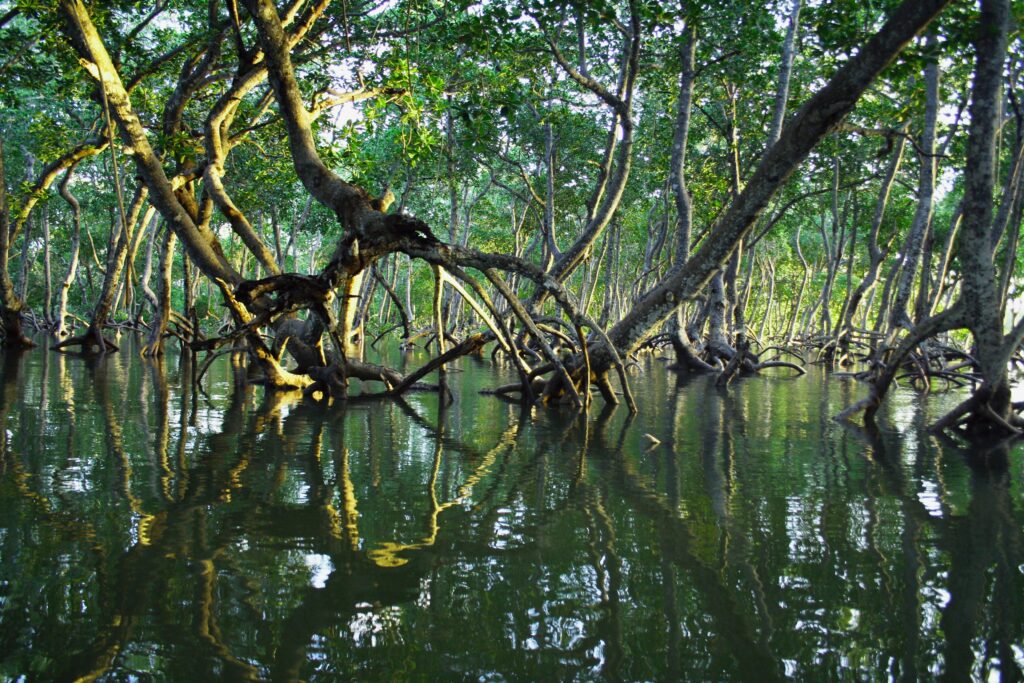
Under the canopy, rain has several sounds. There is the fine movement through leaves above, the heavier drop released from a fern and the sudden patter from a branch disturbed overhead. The shower may have passed while the forest continues shedding water. Sleeves brush wet vegetation, a foot settles into mud, and the next step requires more attention than the view.
This is where a steady pace becomes valuable. Long strides and hurried descents spend energy without necessarily saving much time. Shorter steps, deliberate footing and pauses before breathing becomes ragged leave more capacity for the return. The pace that matters is the one everyone can sustain, not the one the strongest walker can briefly demonstrate.
The route climbs to a high ridge close to 1,000 metres above sea level before descending towards the geothermal valley. That height helps explain the change in air and vegetation, but it is not a measure of the total climbing involved. Repeated losses and gains of height add work that the highest point alone does not reveal.
The descent into the valley is therefore also a preview of a later ascent. It is worth noticing how the legs feel here, while there is still room to reconsider. Knee discomfort that seems manageable downhill can become a different problem after several more hours on uneven ground.
For families, the relevant question is less a child’s age than their experience of sustained walking, slippery footing and following instructions when tired. The same applies to adults. A day ashore should not become a test someone feels obliged to pass because everyone else appears willing. Staying with Discovery is a legitimate choice, not a lesser version of being in Dominica.
Crossing The Valley Of Desolation
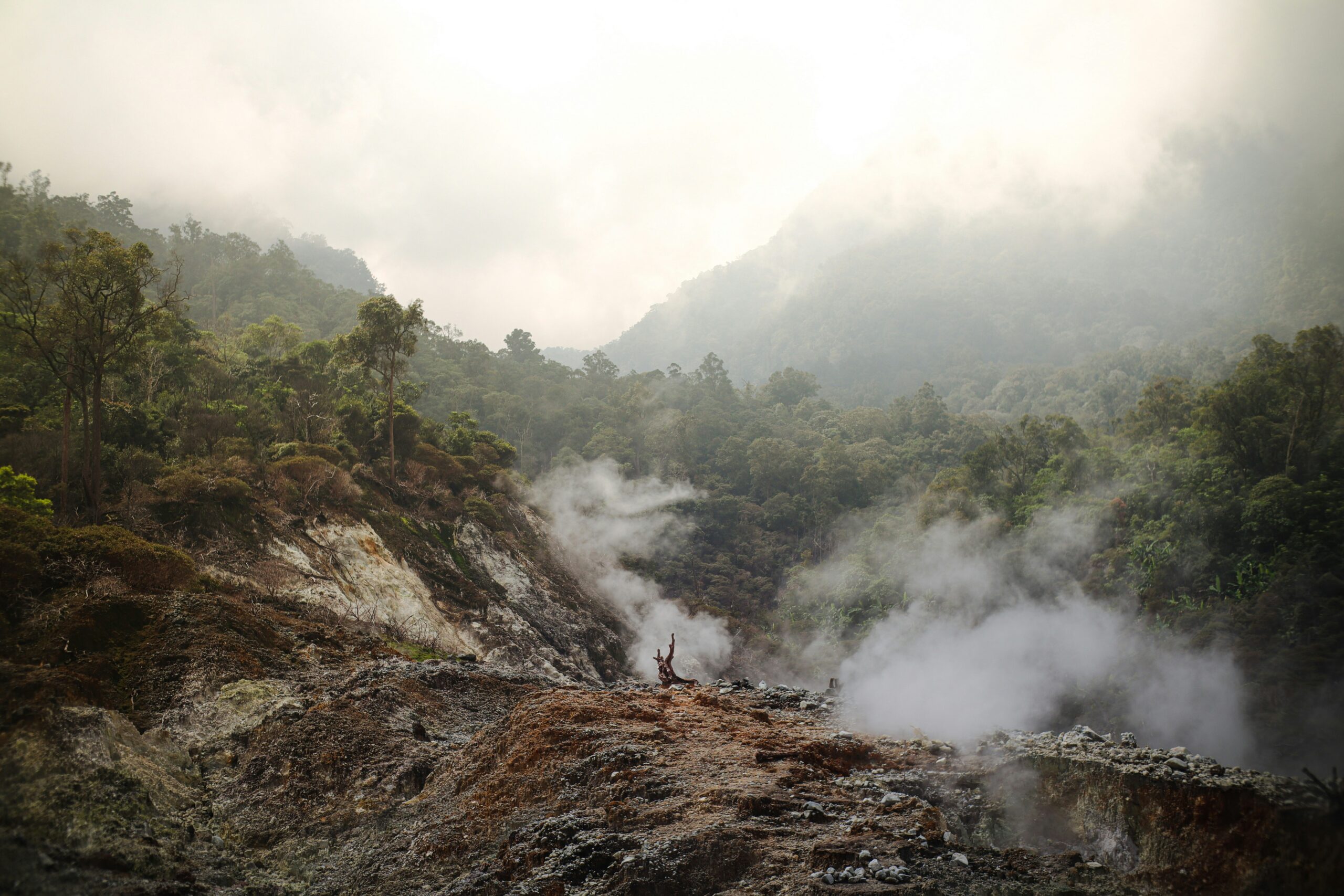
The transition out of the forest is the walk’s clearest lesson in what lies beneath it. Dense growth gives way to pale, altered ground, steam and channels carrying mineral-rich water. The Valley of Desolation is not simply a patch where vegetation failed to establish. Heat, acidic fluids and volcanic gases create conditions very different from those supporting the surrounding forest.
Much of the visible activity is hydrothermal. Water circulates below ground, encounters hot rock and returns carrying heat and dissolved minerals. Some emerges as hot water; some escapes as steam and gas. The pale surfaces and mineral staining are evidence of that circulation and the chemical alteration it causes.
A surface that looks firm may not offer dependable support. Thin crust can conceal hot water or mud, while erosion and changing flow can make an old line through the valley unsuitable. This is why a guide’s value goes beyond knowing which direction leads to the lake. Recent familiarity helps identify where the apparent path and the sensible path have ceased to be the same.
We would stay on the guide’s chosen route, give one another space through awkward sections and stop in suitable places rather than wherever a photograph suggests. Sulphurous odour is part of the setting, but smell is not a reliable measure of gas concentration or safety. Neither familiarity nor confidence makes lingering beside a vent a good idea.
The valley also asks for restraint. A warm stream is not automatically a bathing place, and a coloured deposit is not a souvenir. Keeping to the route protects both the walker and fragile ground. Here, respect for the place and self-preservation often require exactly the same small action: leave the surface undisturbed.
The Lake Beneath The Steam
The Boiling Lake is commonly described as the world’s second-largest boiling lake, but that ranking says nothing about which part is hottest or how it will look on arrival. Its surface is roughly 60 to 75 metres across, large enough for moving steam to hide much of it at once. The view depends partly on the wind, and there is no guarantee of a clear, uninterrupted look.
Steam may lift from one section while thickening over another. For a moment the grey water becomes visible, disturbed from below; then the far side disappears again. After the close work of watching footsteps, the eye has distance to travel. The body notices something else: a damp shirt cooling in the breeze while heat rises from water that must remain well beyond reach.
The lake is generally understood as a flooded fumarole, a depression supplied with water above a system releasing volcanic heat and gases. Rainfall and inflow replenish it, while evaporation and underground drainage remove water. What appears at the surface reflects the changing balance between supply, heat and escape routes below.
It is therefore misleading to imagine a permanently boiling saucepan with an unchanging water level. The lake has undergone dramatic falls in level and subsequently refilled. Changes in visible agitation or temperature do not establish that it is safe. A quieter surface is not an invitation to approach, and this is not swimming water.
The viewing position needs choosing for stable ground and safe distance, under the guide’s direction. Waiting may reveal more of the lake, but waiting is only worthwhile while conditions and the return allowance permit it. The photograph can remain incomplete. There is still a demanding walk between this edge and the road.
The Return To Discovery
The return deserves its own attention. Familiar ground can encourage haste just when legs are less precise. A root avoided easily on the outward walk is still there, now under a foot that has been working for hours. Eating before the final energy dip, adjusting a slipping shoe and keeping the group together are modest decisions with considerable value.
Ashore, the day’s care continues with collecting all litter, checking that nothing has been left with the driver or guide and changing out of wet clothing when practical. Back aboard, mud belongs off the working decks and footwear needs drying properly. Small discomforts are easier to address before salt, damp and fatigue turn them into tomorrow’s problem.
This is one reason a continuous sailing expedition can make room for a place differently. Members choose when and where along the Naora Global Expedition they join, and how long they remain, while Discovery continues around the world. A demanding day inland need not define everybody’s visit, or be followed by another demand. Some people will want the long walk. Others will value the quiet day aboard and the reunion afterwards.
Dominica offers more than a dramatic view to bring back to the boat. The walk makes the island physically understandable: moisture lifted out of the trade winds, forest sustained by rain, heat moving through rock beneath it. Those relationships remain after the effort has subsided. There is room at dinner for the day to remain partly unspoken.