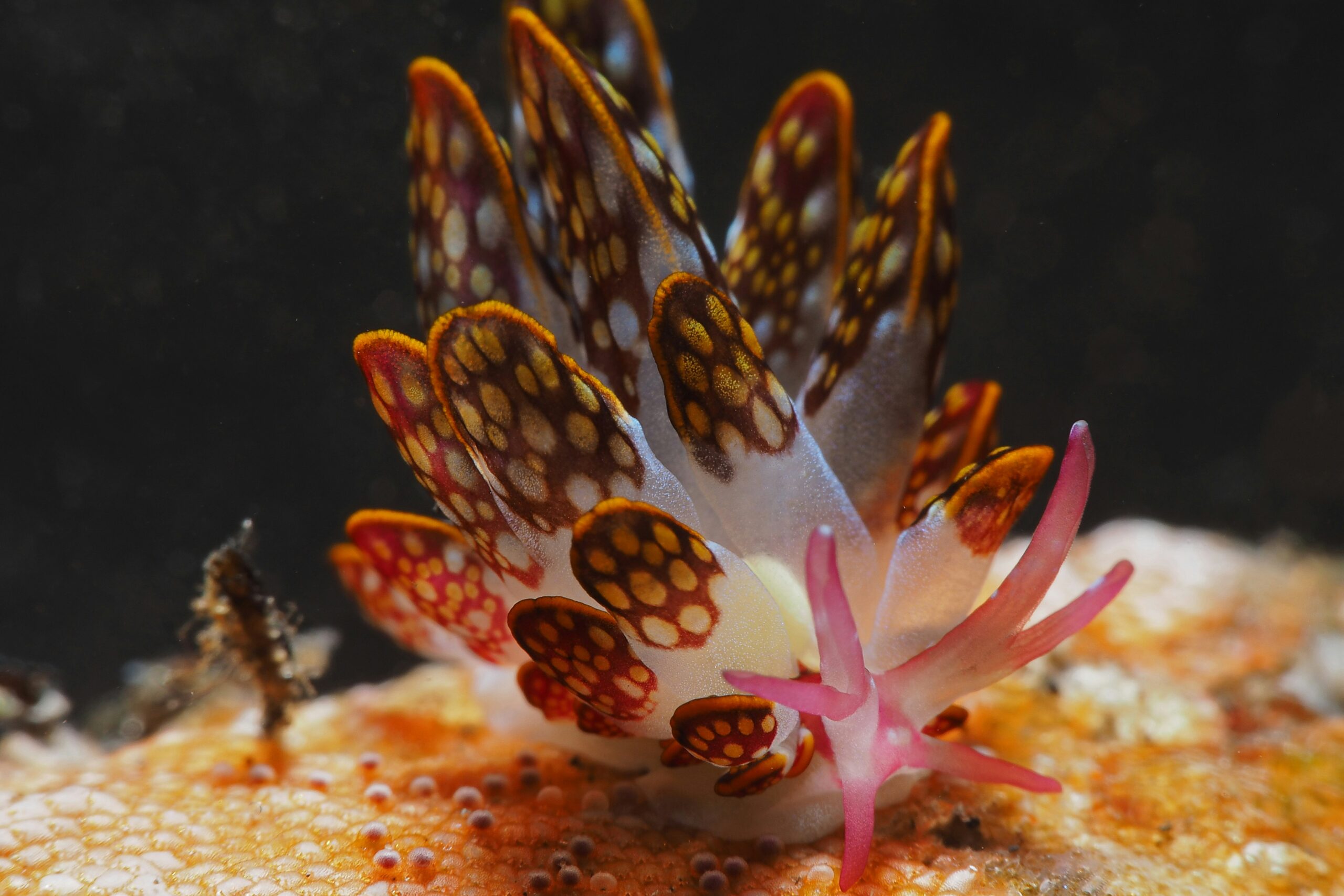
The nudibranch is a shell-less marine mollusc, the name means naked gill in the Latin that the nineteenth-century taxonomists who named the group used, and it is the most colourful animal in the ocean by any reasonable measurement of the claim. The three thousand described species of nudibranch produce the complete colour spectrum in the patterns and the intensities that the tropical and temperate reefs display: the electric blue and orange of the chromodoris species in the Coral Triangle, the crimson of the Spanish dancer that the Banda Sea night dive produces, the yellow and black of the phyllidia species that the Aegean reef finds in the winter months.
No camouflage purpose is served by any of these colours. The colours are aposematism: the biological advertising of toxicity to the predators that would otherwise eat the nudibranch.
The nudibranch is toxic in the specific sense of the animal that acquires its toxicity from the animals it eats and repurposes the toxins for its own defence. The chromodoris nudibranch that feeds on the toxic sponge stores the sponge’s toxins in the mantle glands and uses them to deter the fish that would otherwise include the nudibranch in its diet. The aeolid nudibranchs that feed on the hydroids store the undischarged nematocysts; the stinging cells of the hydroid — in the cerata on their backs and discharge them against the predator that makes the mistake of biting.
The nudibranch in the Coral Triangle has borrowed its entire defensive chemistry from the organisms it consumes and deployed it in the warning colouration that makes the colour system work: the fish that has once bitten a colourful nudibranch and experienced the consequence does not bite the colourful nudibranch again, and the colourful pattern that signalled the toxicity is the pattern that the fish’s memory associates with the consequence.
The Nudibranch and the Macro Photographer
The nudibranch is the macro photographer’s primary subject on the Naora diving programme and the animal that teaches the diver the specific skill of the slow approach and the patient stillness that the underwater photography of small animals requires. The nudibranch does not flee. It moves slowly over the reef surface in the way of the animal that its toxicity has freed from the predator pressure that speed would otherwise be the response to. The diver who approaches the nudibranch correctly, from the side, at the level of the animal rather than from above, without the fin movement that disturbs the silt that clouds the visibility, can achieve the proximity that the macro lens requires without disturbing the animal’s behaviour.
Do not touch. The nudibranch’s defensive toxins are not dangerous to the human in the ambient encounter, but the handling removes the mucus layer that the animal’s skin requires and disrupts the cerata arrangement that the aposematic display depends on. Look at it. Do not touch it. The colour is extraordinary.