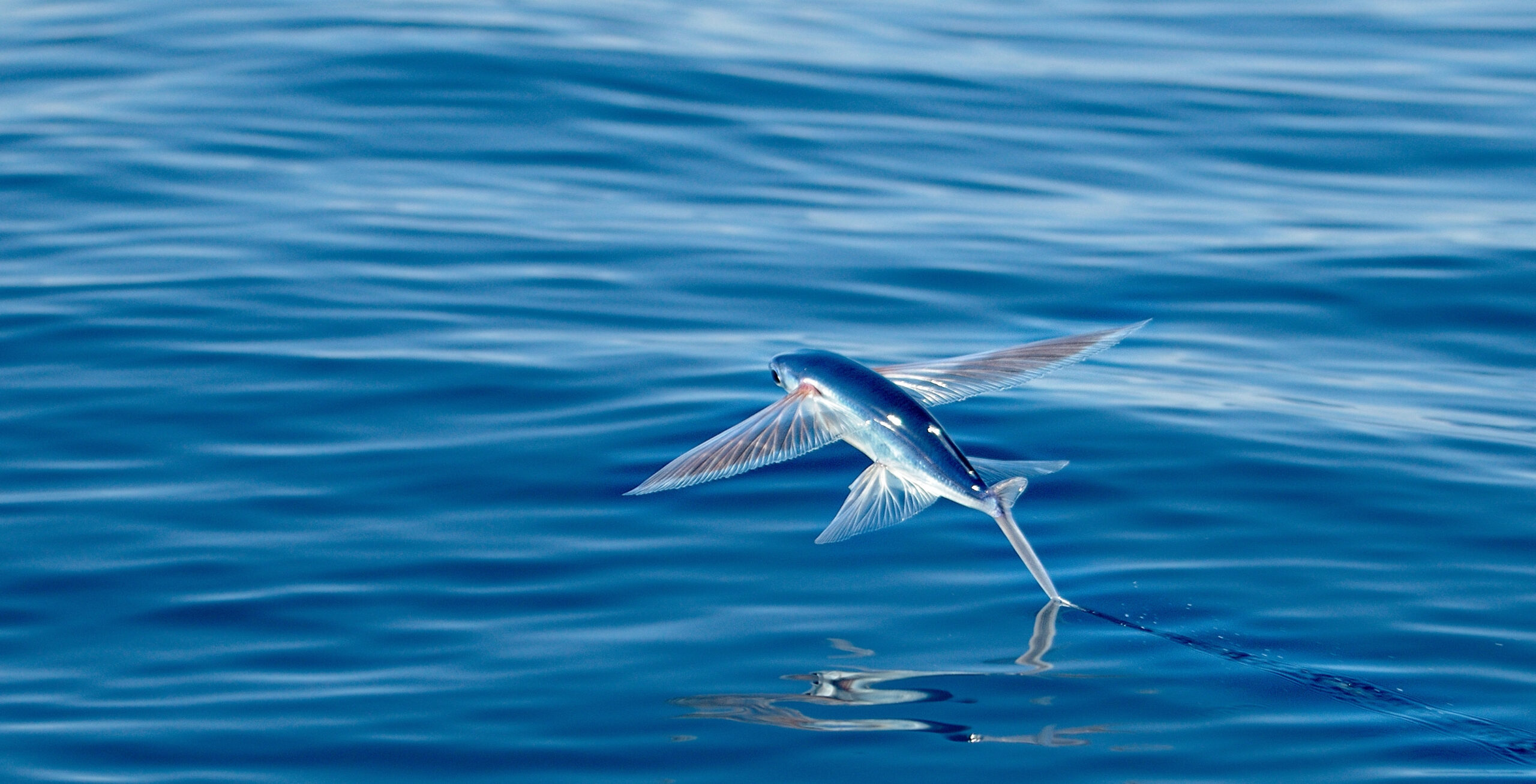
The flying fish does not fly. It glides. The distinction is important because flying requires continuous energy input to maintain altitude, the wing beat of the bird, the thrust of the insect and the flying fish produces neither: it generates the initial speed for the launch by swimming at high speed toward the surface with the tail’s lower lobe extended into the water, builds the surface speed to the forty-five to seventy kilometres per hour that the launch requires, and breaks the surface into the air where the enlarged pectoral fins spread to the wingspan that can be up to a third of the fish’s body length and produce the glide that covers up to two hundred metres across the surface before the fish re-enters the water or dips the tail into the surface to taxi for the energy that the next glide requires.
The purpose is predator avoidance: the pelagic fish that is chasing the flying fish through the water cannot follow it above the surface. The glide into the air removes the flying fish from the predator’s medium entirely for the duration of the glide, and the predator that was closing on the flying fish below the surface faces the specific problem of predicting where the glide will end and reorientating to be at that position when the fish re-enters the water.
The flying fish’s solution to the predation pressure of the open ocean pelagic environment, leave the medium rather than outcompete the predator within it is one of the most elegant evolutionary solutions to the predator problem available in the ocean.
The Night Watch Arrival
The flying fish arrive on the Eighty2’s deck during the night watches on the Atlantic and Pacific passages. Not occasionally: regularly, the specific result of the boat’s navigation lights attracting the plankton that the flying fish are feeding on at the surface and the fish launching their predator-avoidance glides in the direction of the light that the boat produces.
A flying fish that launches at night and glides toward the boat’s light lands on the deck rather than back in the water and cannot return to the water without assistance. The night watch protocol on the Naora boat includes the specific instruction to return the flying fish to the water immediately rather than leaving it on the deck: the animal dies in minutes out of water and the deck arrival is the accidental consequence of the boat’s lights rather than the fish’s intention.
We return it. The returning is easy. The flying fish in the hand weighs almost nothing and the deck is at the waterline at the stern step, and the fish in the water swims away in the direction of the dark before the hand is dry.