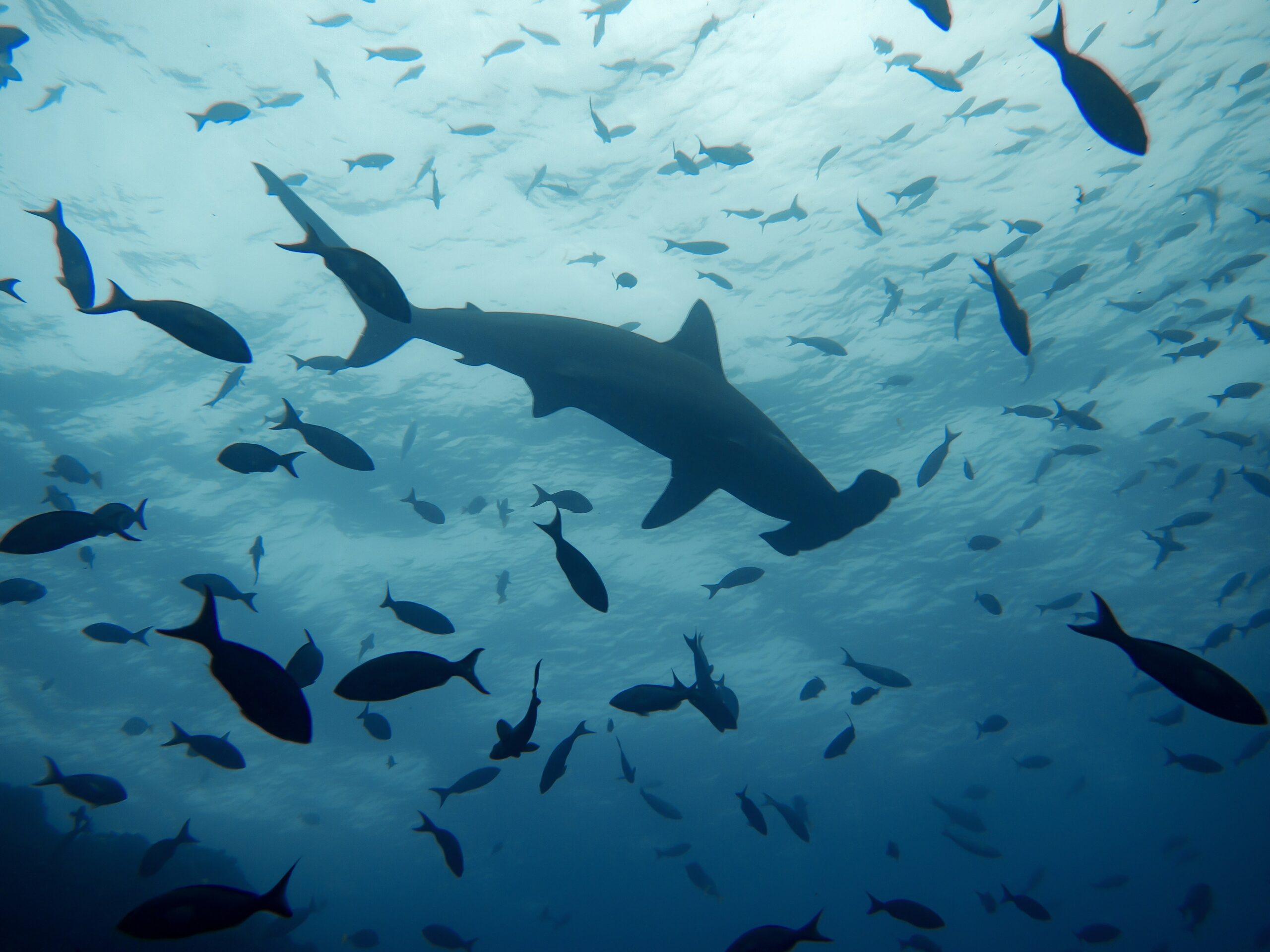
The hammerhead shark’s head, the cephalofoil, in the scientific vocabulary that names the structure for its shovel-like shape, appears, at first consideration, to be an evolutionary mistake: a design that increases the drag of the shark’s movement through the water without the obvious benefit that would justify the cost. Evolution does not make this kind of mistake for long.
The cephalofoil has been maintained across the nine hammerhead species and across the thirty to forty million years of hammerhead evolutionary history because it provides the specific advantages that justify its specific costs, and those advantages are in the sensory system that the hammerhead uses to find its prey.
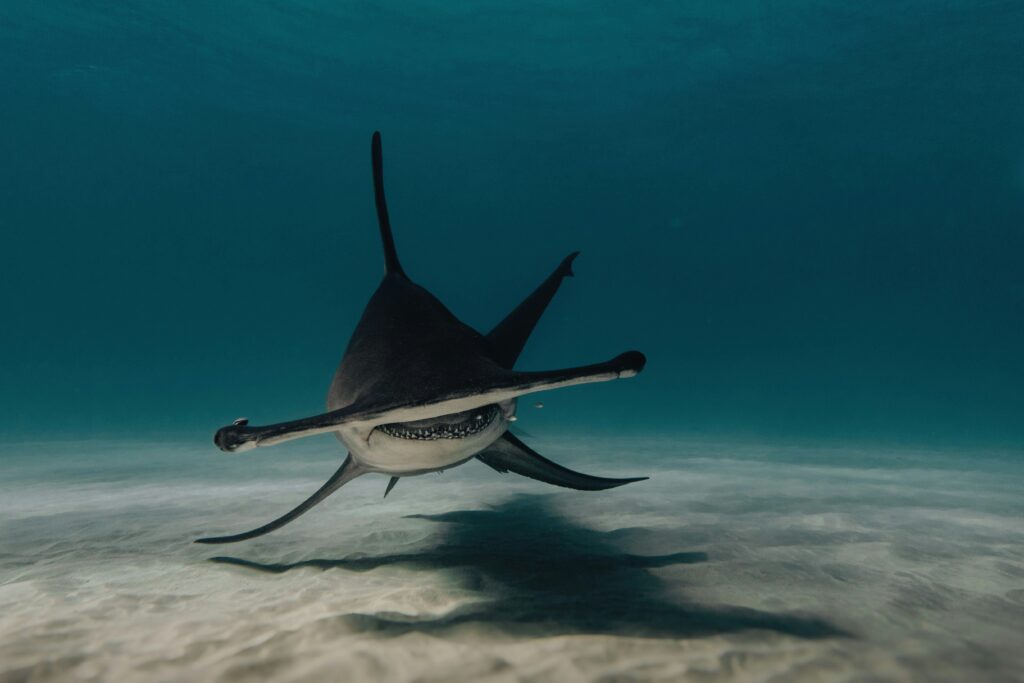
The ampullae of Lorenzini, the electroreceptors that all sharks use to detect the electrical fields that living animals produce in the water are distributed across the entire surface of the cephalofoil in the hammerhead rather than concentrated in the snout as they are in the conventional shark head.
The wide distribution provides the hammerhead with a much larger detection field than the narrower head can produce and the specific ability to detect prey buried in the sand below the swim path: the hammerhead sweeps the sand with the underside of its head the way a metal detector sweeps the ground, detecting the stingray buried below the surface that the visual search from above the sand would not find.
The School and the Threat
The scalloped hammerhead aggregates in schools of hundreds of individuals at specific offshore seamounts and offshore islands during the day: the schooling behaviour that is unusual for a large predator and that the marine biologists have been studying for decades without fully resolving the purpose. The schools aggregate at the Brothers Islands in the Red Sea and at the offshore seamounts of the Galapagos and at the specific offshore sites that the Naora route visits precisely because these sites attract the scalloped hammerhead aggregations that the inshore dive sites do not produce.
The school at depth in the early morning current is one of the most specific experiences the offshore diving life provides and one of the most directly threatened by the global fin trade: the scalloped hammerhead is listed as critically endangered, the most severe IUCN category short of extinction, driven primarily by targeted fishing for the fin trade that the Asian soup market sustains.
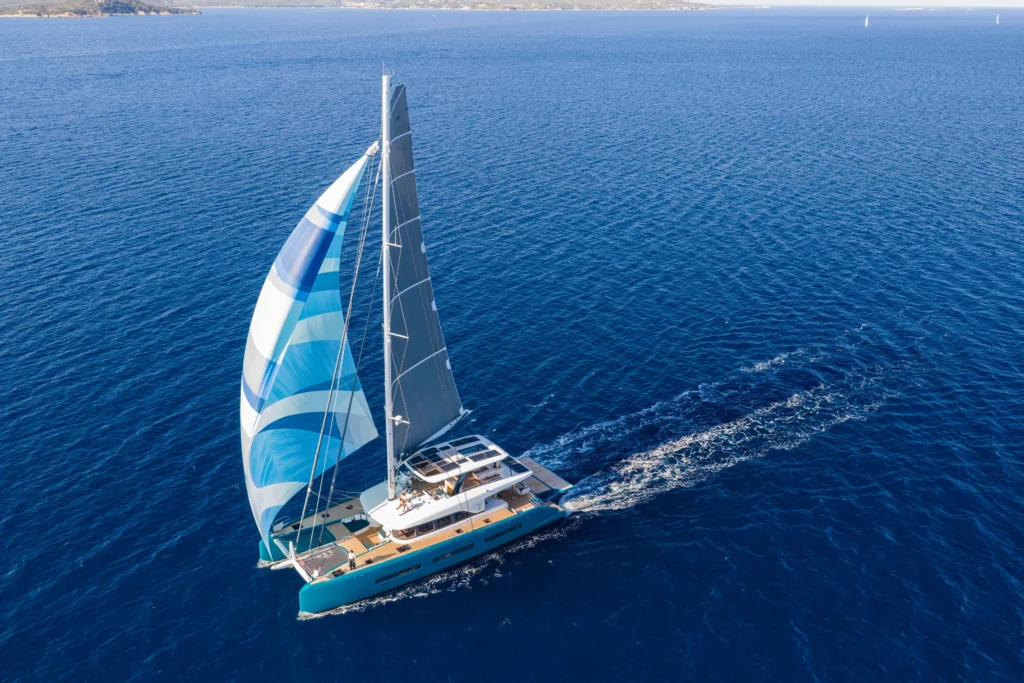
The Naora voyage does not catch sharks. The trolling lines do not use the wire leaders and the large hooks that the incidental shark bycatch produces. The specific decision to fish selectively for pelagic food fish and to use the tackle that does not target or inadvertently catch the species that the offshore ecosystem needs and that the fin trade is systematically removing from it is the specific form of the respect that the hammerhead’s critically endangered status requires from the boat that has the choice to make it.