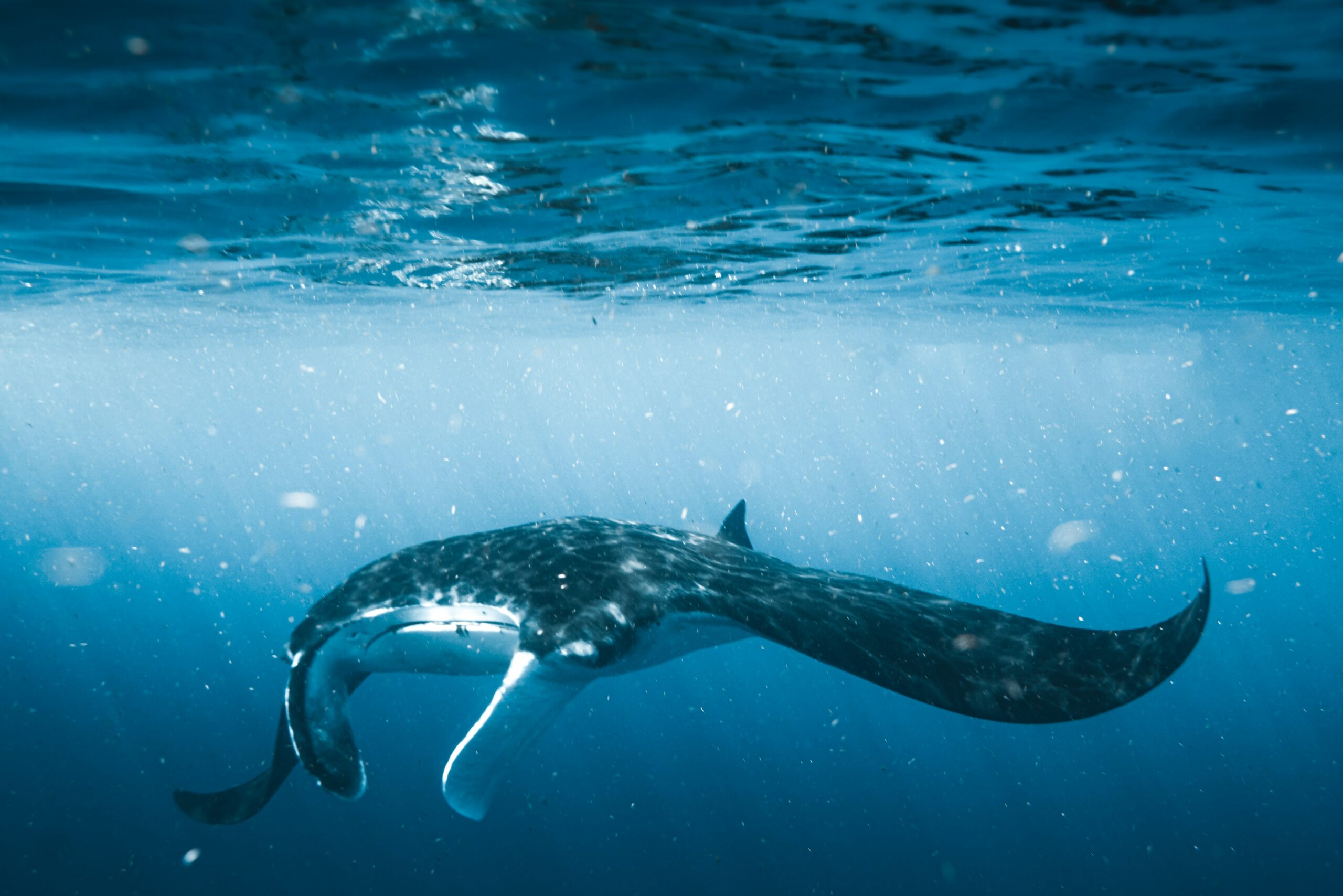
The manta ray is the largest ray in the ocean: the oceanic manta ray reaching a wingspan of up to seven metres and a weight of up to 2,700 kilograms, the reef manta ray smaller but no less extraordinary in the specific quality of the movement that both species produce in the water.
The manta does not swim the way a fish swims, the oscillation of the tail that generates thrust from the back of the body, but flies, in the specific sense that the wing-like pectoral fins generate lift and propulsion simultaneously in the way that the bird’s wing generates them in the air.
The manta ray in the water column is the animal that evolution arrived at when it optimised the large-bodied pelagic feeder for efficient movement through the open ocean over twenty million years of continuous refinement.
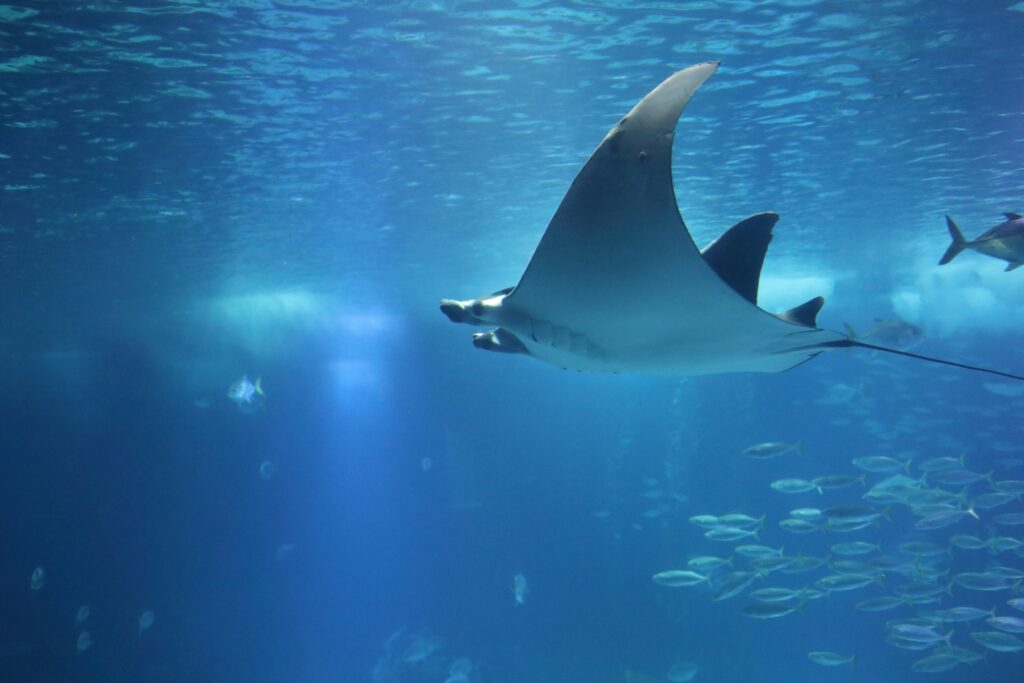
The manta feeds on plankton and small fish by filtering the water through the gill plates that line the passage between the wide-open mouth and the gills: the cephalic fins, the two horn-like projections above the mouth that give the manta its common name of devil ray, unfurl during feeding to funnel the plankton-rich water into the mouth’s opening.
A large oceanic manta can filter up to 30,000 litres of water per hour during a feeding aggregation. The ocean’s productivity, the upwelling currents and the temperature gradients that concentrate the plankton at the surface, is what the manta is following when it appears at the Naora anchorage, and the anchorage that the manta visits is the anchorage in the productive water that the offshore boat’s route specifically seeks.
The Cleaning Station and Why We Stay Still
The cleaning station is the reef structure where the manta ray returns to be cleaned by the small wrasse and the cleaner shrimp that remove the parasites from the manta’s skin and gills. The manta arrives at the cleaning station with the specific behaviour of the animal that has come for a service: it hovers, nearly motionless, in the current above the coral head where the cleaners are, with the gill openings exposed and the cephalic fins furled. It can wait at the cleaning station for extended periods, returning the same station repeatedly in the way that the individual ray’s home range includes the specific stations it uses on a regular circuit.
When we encounter a manta at a cleaning station, we stop. We do not approach. We do not chase. We do not attempt to touch. The manta at the cleaning station is in the specific behaviour that the disturbance interrupts: the manta that is disturbed at the cleaning station does not simply resume the behaviour after the disturbance passes. It leaves.
The cleaning that the station was providing does not happen. The parasite load that the cleaning removes continues to build. The manta that is repeatedly disturbed at its cleaning stations, by divers who chase, by snorkellers who attempt contact, by boats that anchor over the station, accumulates the parasite load that the undisturbed station would have managed, and the health consequence accumulates with it. We stay still. The manta does the rest.