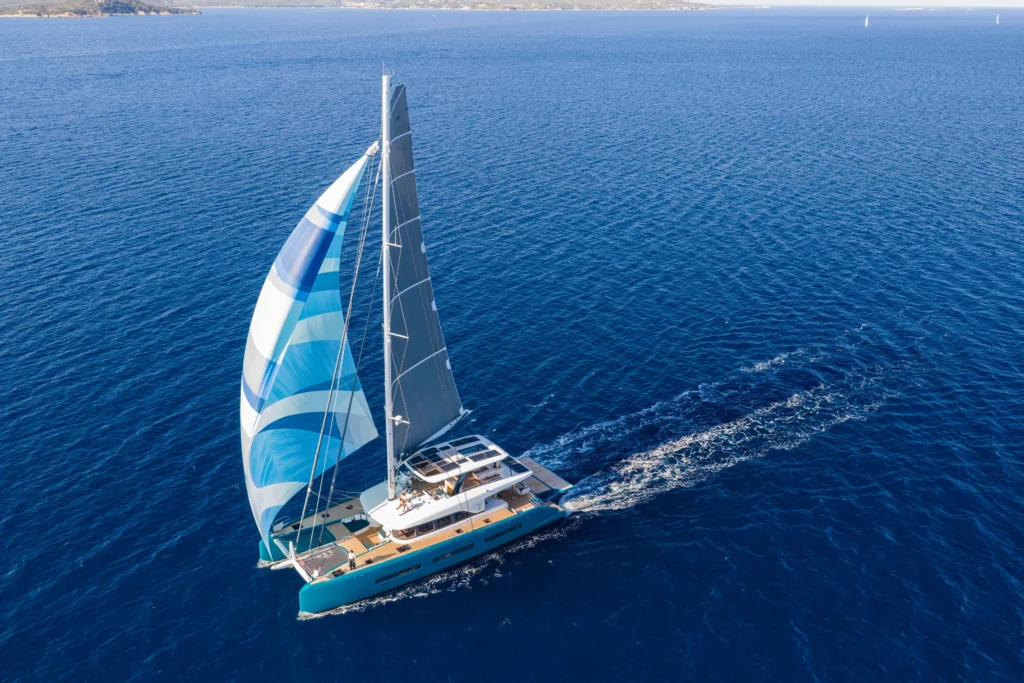
I am going to be direct about this because the subject deserves directness and not the careful phrasing that liability concerns and politeness sometimes impose on the honest statement: if you are planning to dive, freedive, or snorkel from the Naora boat and you do not have a DAN membership with the appropriate dive accident insurance, I will ask you to get one before you enter the water.
This is not a formal requirement in the legal sense of the waiver. It is the honest position of the captain of a vessel that operates in the most remote diving environments on the planet and that has, in those environments, no shore-based dive accident infrastructure to rely on when the situation requires more than the boat’s own emergency capability.
Let me explain what I mean by that and why the DAN membership specifically — rather than general travel insurance or the dive accident coverage that some credit cards claim to provide — is the cover that the offshore diving life requires.
What Can Go Wrong Underwater
Diving is a safe sport when conducted correctly by properly trained divers within their certification limits in conditions that their training prepared them for. I want to say this first because the honest advocacy for dive accident insurance does not require the exaggeration of the risk to make its case: the risk is real and specific without exaggeration, and the honest description of the real and specific risk is the case.
Decompression illness, DCI, is the primary dive-specific injury that the dive accident insurance exists for: the condition produced by the nitrogen that the body absorbs under pressure during the dive and that, if the ascent is too fast or the dive profile exceeds the no-decompression limits, forms bubbles in the tissues and the blood that range in consequence from the joint pain and the skin rash of the mild Type I presentation to the neurological symptoms and the paralysis risk of the Type II presentation that requires immediate hyperbaric treatment.
DCI does not always arrive from obvious mistakes: it arrives from dives that felt normal, from profiles that the dive computer approved, from divers who followed the plan and ascended at the correct rate and still presented with symptoms in the hour after the dive. The physiology of the individual diver, the cumulative nitrogen loading of the previous dives, the hydration status, the exertion during the dive: all of these interact with the dive profile in ways that the no-decompression limit’s margin cannot fully protect against for every diver in every condition.
Barotrauma, the pressure injury to the ears, the sinuses, the lungs, is the other common category: the ear that did not equalise correctly during the descent, the sinus squeeze that the cold or the allergy produced without warning, the pulmonary barotrauma of the ascent that the panicking diver’s breath-hold created.
These are the ordinary injuries of the diving life that the training explains and that experience reduces but does not eliminate entirely across a lifetime of diving in varied conditions.
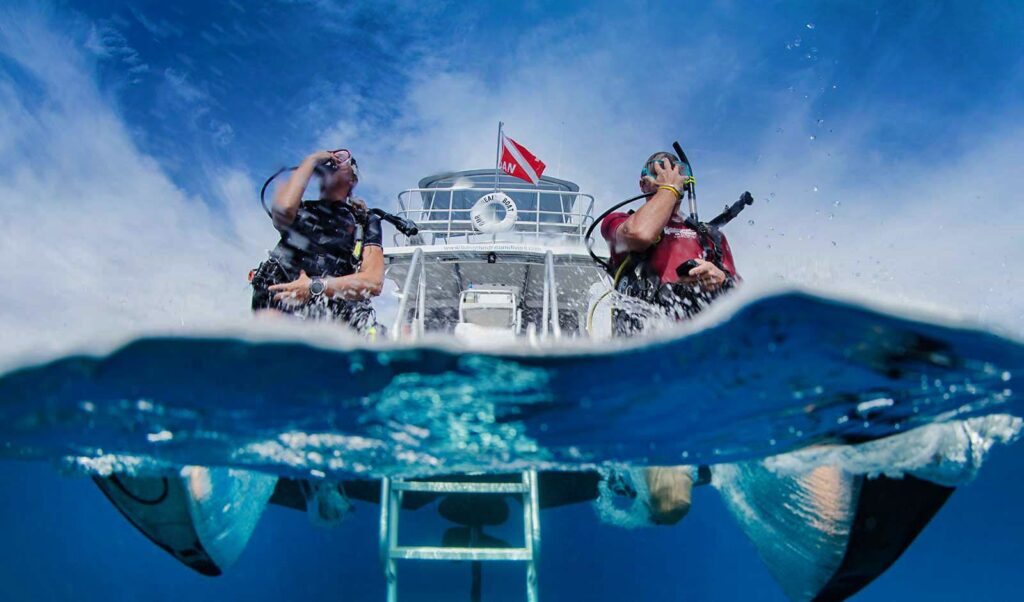
Where We Are When It Happens
This is the specific reason that the DAN membership is more important on the Naora voyage than it is on a diving holiday at a Red Sea resort with a hyperbaric chamber at the dive centre: we are not at the Red Sea resort. We are at the Brothers Islands, seventy kilometres offshore. We are in the outer Tuamotu, four hundred kilometres from the nearest hyperbaric facility. We are in the Banda Sea, in the Indonesian archipelago, where the nearest hyperbaric chamber is the one in Bali that the evacuation flight reaches in two hours when the flight is available and the weather allows it.
The hyperbaric treatment that the DCI requires must be initiated as soon as possible after the symptoms present: the distance between the Naora anchorage and the nearest chamber is the distance that the DAN evacuation coordinates, and the DAN membership is what pays for the coordination and the evacuation.
The hyperbaric treatment that serious DCI requires costs between four thousand and fifteen thousand euros per session depending on the country, the facility, and the number of sessions the presentation requires. The evacuation from the outer Tuamotu or the Banda Sea to a facility capable of providing that treatment, by coast guard helicopter, by chartered aircraft, by whatever the logistics of the specific remote location require, costs whatever the evacuation costs, which in remote offshore locations is a number that begins at five thousand euros and has no upper limit that is obvious in advance.
Without DAN insurance, these costs fall to the diver or their family at the worst possible moment: the moment when the diver is symptomatic and the family is in panic and the logistics of the evacuation from the remote anchorage are being managed by the Naora crew with the VHF and the satellite phone and the knowledge of where the nearest chamber is. With DAN insurance, the call is to the DAN Emergency Hotline and the coordination and the costs are DAN’s responsibility.
What DAN Actually Is
DAN — Divers Alert Network — was founded in the United States in 1980 and DAN Europe was established shortly after. It is the organisation that the diving world built specifically for the problem of the dive accident in the remote location: the network of dive medicine specialists, the emergency hotline that handles more than 5,500 emergency calls per year, the insurance subsidiary that covers the medical treatment and the evacuation and the hospitalisation that dive accidents require, and the research organisation that has been producing the scientific understanding of decompression physiology that the dive tables and the dive computers are built on.
The DAN Emergency Hotline is staffed by dive medicine specialists around the clock. When a diver presents with symptoms in the Banda Sea at three in the morning, the call to the DAN hotline connects to the person who has been handling dive emergencies for the duration of their professional career and who knows the hyperbaric facilities in the Indonesian archipelago and the evacuation logistics from the Banda Sea and the specific treatment protocol for the presentation that the boat captain is describing over the satellite phone.
This is not the general travel insurance hotline where the operator reads from a script and escalates to the duty physician who has never heard of Banda Neira and who will ask for the postcode. This is the hotline built for exactly the situation the Naora diver is in.
What the DAN Europe Plans Cover
DAN Europe offers Sport Plans at three levels: Bronze, Silver, and Gold. For the Naora member who is diving in remote offshore locations on a circumnavigation that covers the Red Sea, the Coral Triangle, and the Pacific, the Silver or Gold plan is the appropriate level: these plans have no depth restrictions, cover technical diving and rebreather diving alongside recreational SCUBA and freediving, and provide the worldwide emergency medical transportation coverage that the remote location requires without the exclusions and the coverage caps that the Bronze plan imposes.
The key coverages that the DAN Europe Silver and Gold plans provide are: emergency medical transportation including helicopter and chartered aircraft from remote locations to the nearest appropriate treatment facility; hyperbaric treatment and hospitalisation costs; emergency medical treatment costs for dive accidents worldwide; and the DAN Emergency Hotline access that connects the diver and the rescue coordinator to the dive medicine network at any hour from any location.
The annual cost of the DAN Europe Silver Sport plan starts at approximately forty euros per year for the member under forty, rising with age. The hyperbaric session in Bali costs more than a decade of DAN membership in a single treatment. The arithmetic is uncomplicated.
Why General Travel Insurance Is Not Sufficient
The question I receive most often about DAN is the question of why general travel insurance is insufficient. The answer is in the specificity: general travel insurance is designed for the travel accident in the general sense, and the dive accident is not the general accident. General travel insurance does not guarantee access to dive medicine specialists on the emergency hotline.
It does not guarantee the coverage of hyperbaric treatment in a country where the treatment is not the standard care that the general health system provides. It does not guarantee the evacuation logistics from the remote offshore location where the dive accident occurred in the conditions that the remote offshore location imposes on the logistics.
Some general travel insurance policies exclude diving explicitly. Some exclude diving below a specified depth. Some exclude diving in countries where the diver’s home country has issued a travel advisory. Some cover the treatment costs but not the evacuation that reaches the treatment. The policy document that the diver has not read in full before they enter the Banda Sea is the policy document that produces the surprise at the worst possible moment.
The DAN policy was written for the specific situation the offshore diver is in and has been refined by forty years of handling the specific situations that offshore divers get into. Read the DAN policy. It will not surprise you in the Banda Sea.
For Freedivers and Snorkellers Too
The DAN membership covers freediving in addition to SCUBA diving. This matters for the Naora voyage because a significant part of the water programme is freediving: Céline leads the freediving programme from the dive platform and the members who participate in it are participating in a breath-hold activity that has its own specific injury profile. Shallow water blackout, the loss of consciousness that the hyperventilation-induced reduction of CO2 produces at the critical moment of the ascent, is the specific freediving risk that the freediving safety briefing covers and that the buddy system and the supervision of the trained freediving instructor are the primary defences against.
Lung squeeze, the pulmonary barotrauma of the deep freediver, is the risk that the depth limits of the recreational programme are set below. These are not hypothetical risks: they are the risks that the freediving safety community has been documenting and developing protocols for since the sport became a formal discipline. The DAN membership covers the freediver in the conditions that these risks produce.
The snorkeller who spends three hours in the Coral Triangle water and who develops the ear infection that the warm tropical water and the prolonged immersion produce is the snorkeller whose DAN membership covers the ENT specialist in Bali rather than the self-managed antibiotic from the boat’s first aid kit that may or may not be the appropriate treatment for the specific pathogen the Banda Sea produced.
This is not DCI. It is the routine medical consequence of spending time in the water in tropical environments that the Naora voyage is specifically designed for, and the DAN membership covers the medical attention that the routine consequence of offshore water activity requires in the places the voyage visits.
How to Get It Before You Board
The process of joining and selecting the appropriate plan takes approximately fifteen minutes online. Select your country of residence, select the Sport Silver or Sport Gold plan for the worldwide offshore diving coverage the Naora programme requires, and ensure that the plan is active before the boarding date of your leg. If you are not based in Europe, DAN has regional organisations in the Americas, Africa, Asia-Pacific, and Japan that provide equivalent coverage through the same network: dan.org for the Americas organisation.
Bring your DAN membership card or the digital membership confirmation to the boarding. Céline will ask to see it as part of the diving programme registration before the first dive briefing. Not to gatekeep the diving: to know, before anyone enters the Banda Sea, that if the situation requires the DAN Emergency Hotline call, the call is the right call for every person on the dive manifest.
The DAN membership costs less than forty euros per year. The hyperbaric chamber that it pays for costs more per session than a year of Naora membership. The evacuation from the Brothers Islands that it coordinates has no ceiling on what it costs without the coverage. The arithmetic is simple. The preparation takes fifteen minutes. Do it before you board.