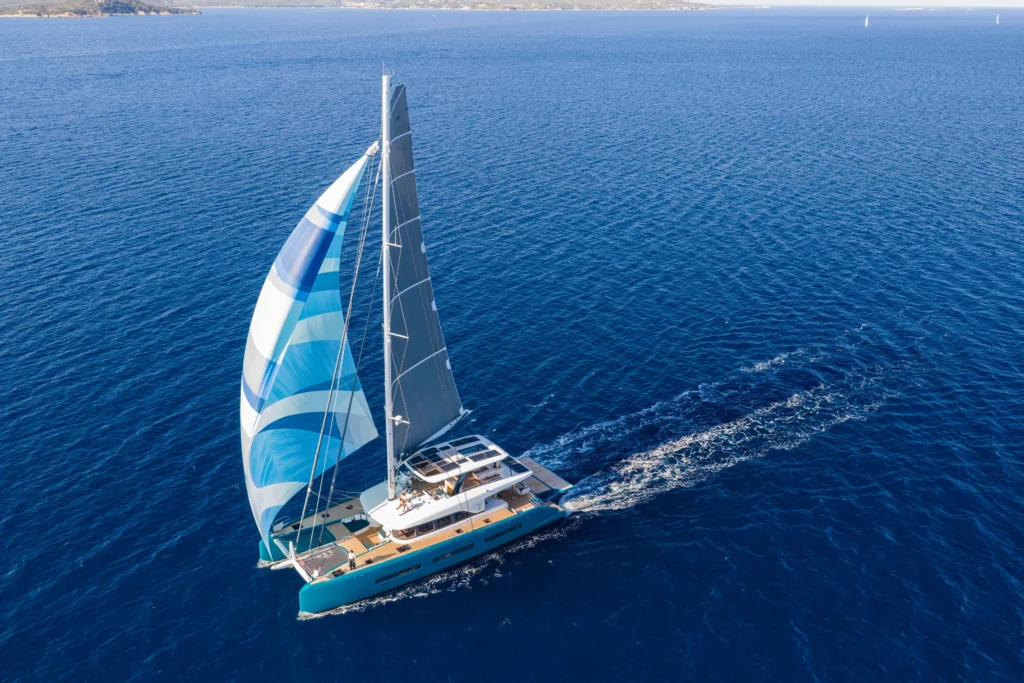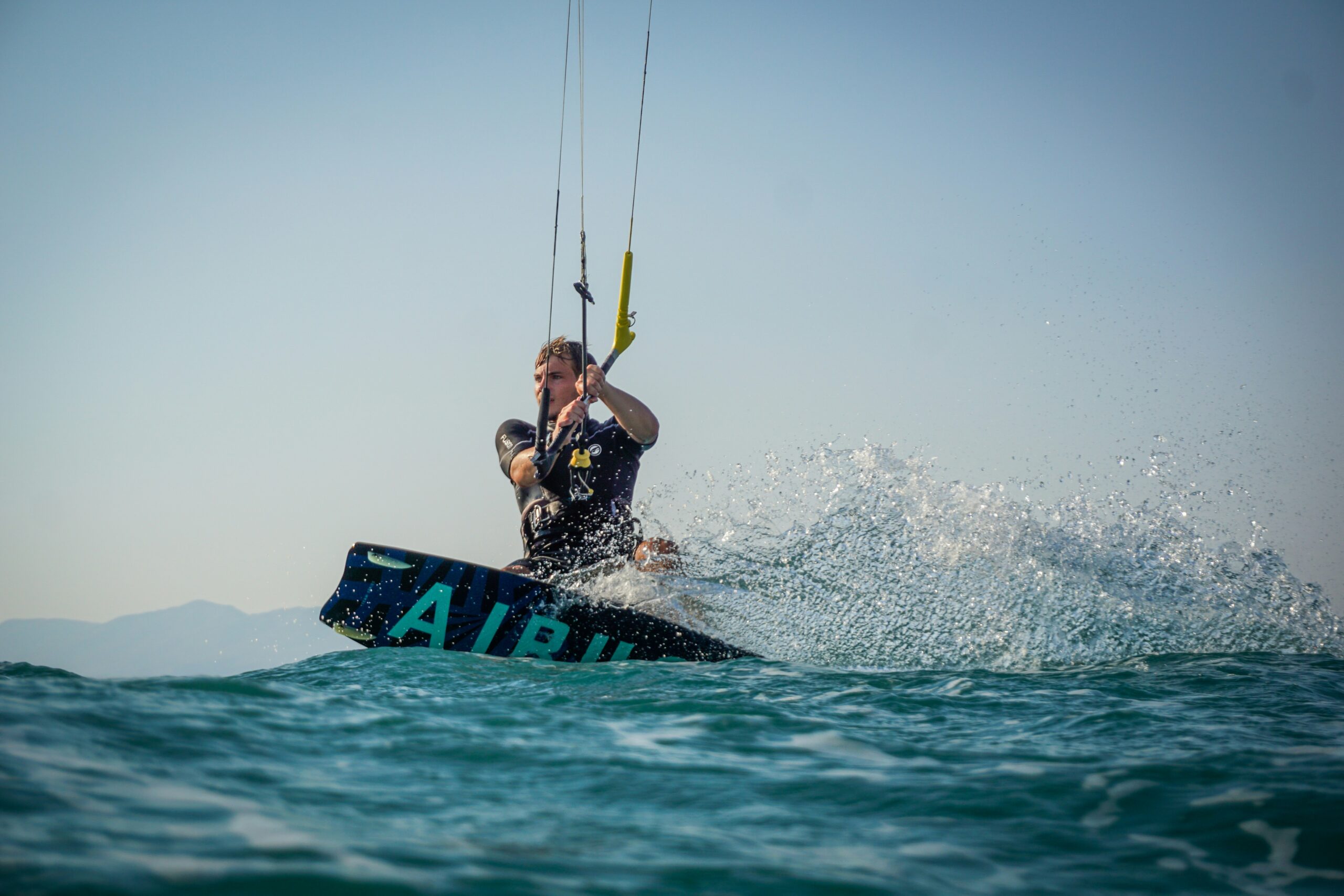
The Caribbean trade wind is the finest kitesurfing wind available on the Naora route and among the finest available anywhere in the world: consistent in direction, consistent in strength, the fifteen to twenty-five knots that the northeast trade wind produces in the Caribbean dry season from December through April as one of the most reliable wind resources the planet’s atmosphere offers to anyone who wants to put a kite in it.
The problem for the kite surfer aboard the Naora voyage in the Caribbean is the same problem that the kite surfer aboard any offshore sailing vessel has: there is no beach to rig from, the anchorage is an anchorage rather than a kite beach, and the standard method of launching a kite requires either a beach or an assistant standing on solid ground who can hold the kite overhead while the surfer walks into the water and connects the bar.
The Naora dinghy is the beach. The technique is the dinghy launch: the kite rigged on the deck of the Eighty2 in the lee of the mainsail, the lines laid out aft, the kite carried to the dinghy, the dinghy taken upwind of the Eighty2 with the kite held at the dinghy’s bow while the kitesurfer enters the water from the Eighty2’s dive platform and swims or drifts downwind to the bar connection point.
The dinghy operator holds the kite overhead, the kitesurfer gives the signal, the kite goes up. The Caribbean trade wind does what the Caribbean trade wind does. The kitesurfer is in it.
The Wind and the Safety
The kitesurfing happens in the designated zone downwind of the anchorage: the open water that the anchor position’s downwind side provides, away from the boat and away from the reef. The VHF is with the dinghy operator at all times during the kitesurfing session.
The dinghy stays within visual contact of the kitesurfer and within reach of the kitesurfer in the event of the fall that requires a pick-up rather than a self-rescue. The Eighty2’s cockpit has eyes on the session: the crew member on deck who is not part of the kite session is the person who tracks the kite’s position relative to the reef and the boat and who calls the VHF if the position requires a call.
The Caribbean trade wind session typically runs from nine in the morning, when the trade wind has established its daily strength after the calm of the early morning, to one in the afternoon, when the appetite and the Long Table lunch reclaim the afterdeck. Four hours of the finest consistent wind available, from the boat, in the waters that the Caribbean dry season produces. The members who kitesurf bring their own kites and boards. The Naora dinghy and the technique and the Caribbean trade wind are what the boat provides.