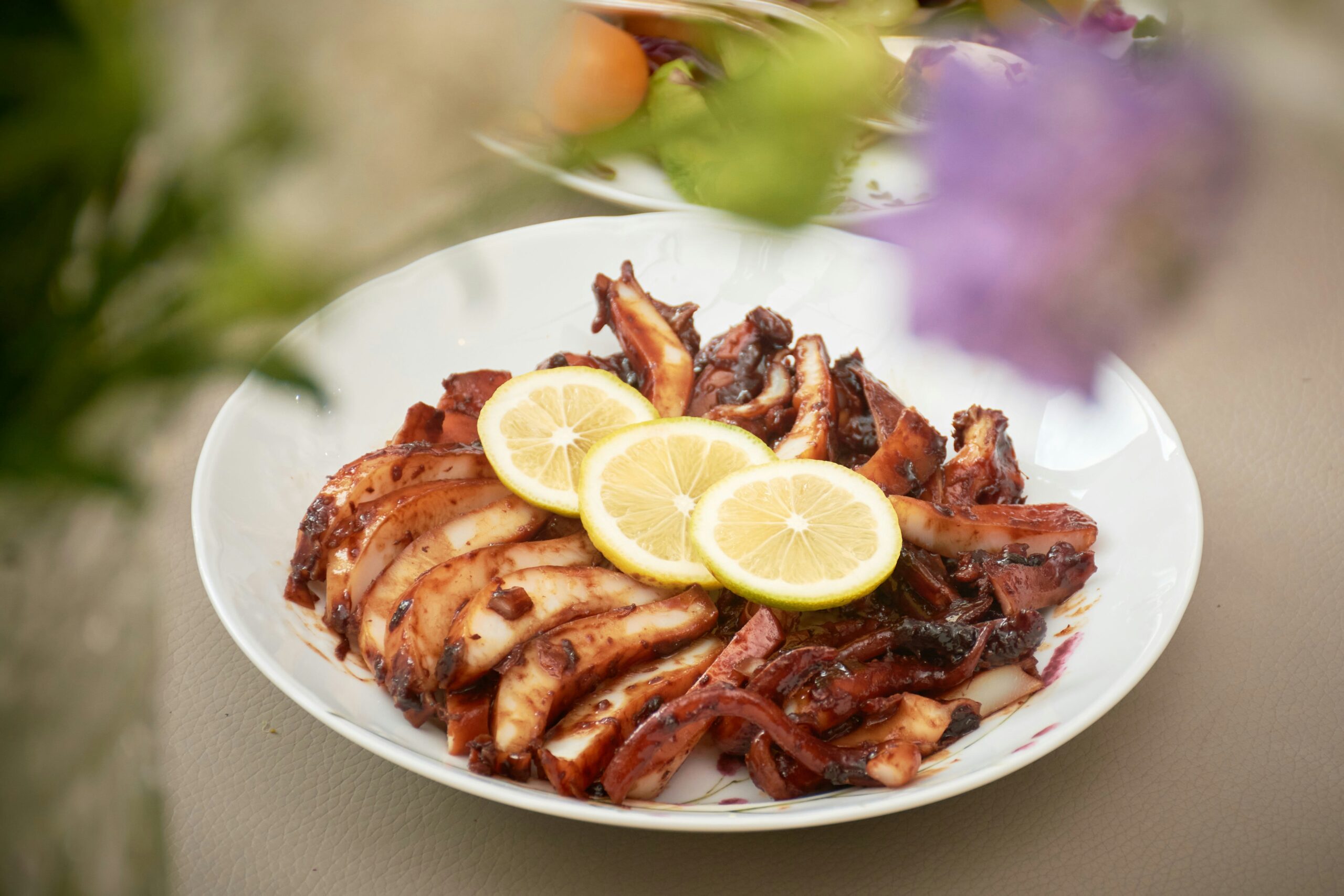
The octopus is the most demanding ingredient the Naora galley works with in the Mediterranean chapter, and it is demanding in the specific way of the ingredient that is very good when it is treated correctly and very bad when it is not.
The treatment that the octopus requires is the treatment that the Greek fishing tradition has understood for centuries and that the restaurant kitchen has learned from the fishing tradition: the tenderising before the cooking, without which the octopus is rubber, and the high heat for the minimum time after the tenderising, without which the tenderised octopus loses the caramelisation that makes it something other than soft protein.
The Tenderising
The octopus arrives from the fisherman’s boat or the morning market as a fresh whole animal. The first step is the step that the restaurant kitchen does in the freezer overnight and that the offshore galley does with the method the Greek fishermen have been using on the dock since before freezers: the beating. The octopus is beaten against the dock or the cutting board thirty times with the flat of the hand, which breaks down the muscle fibres in the way that the freezing and thawing breaks them down through the ice crystal expansion, without the twenty-four hours the freezer requires.
Then the boiling: the octopus goes into the pot with no water added, only the liquid the octopus itself releases with the lid on, thirty minutes on medium heat, until the flesh is yielding under the pressure of the knife tip. The boiling liquid, which is the concentrated ocean that the octopus carried inside it, goes into the next day’s pasta sauce. Nothing from a fresh octopus goes to waste.
The Grill and the Taste
The grill pan on maximum heat. The tenderised octopus, dried with the cloth and brushed with the olive oil from the last port, goes onto the grill skin side down. Four minutes without touching. The caramelisation happens in those four minutes and it happens correctly only if the pan is hot enough and the octopus is dry enough and the four minutes are not interrupted by the impulse to check whether it is working. It is working. After four minutes the octopus is turned.
Four more minutes. The outside is the char that the Greek fishing dock has been producing with the same technique since before the technique had a name: the specific blackening of the surface that is not burning but is the Maillard reaction at high heat on protein that has been correctly prepared for it. The lemon from the Aegean market, the dried oregano from the hillside above the anchorage where it grows wild. Nothing else needed.
The taste is the taste of the char and the tenderness simultaneously: the exterior with the specific bitterness that the grill produces on the caramelised surface of the correctly tenderised octopus, the interior with the yielding softness that the thirty minutes of its own steam has produced, the lemon and the oregano cutting through both with the brightness and the herbal note that the Greek kitchen puts on this dish because the Greek kitchen has had two thousand years to understand that lemon and oregano are the right finishes for the specific flavour combination that the grilled octopus produces.
The tentacles are served whole at the Long Table and they produce the specific pleasure of the dish that requires the hands: the tearing and the sharing and the licking of the fingers that the fork does not allow.