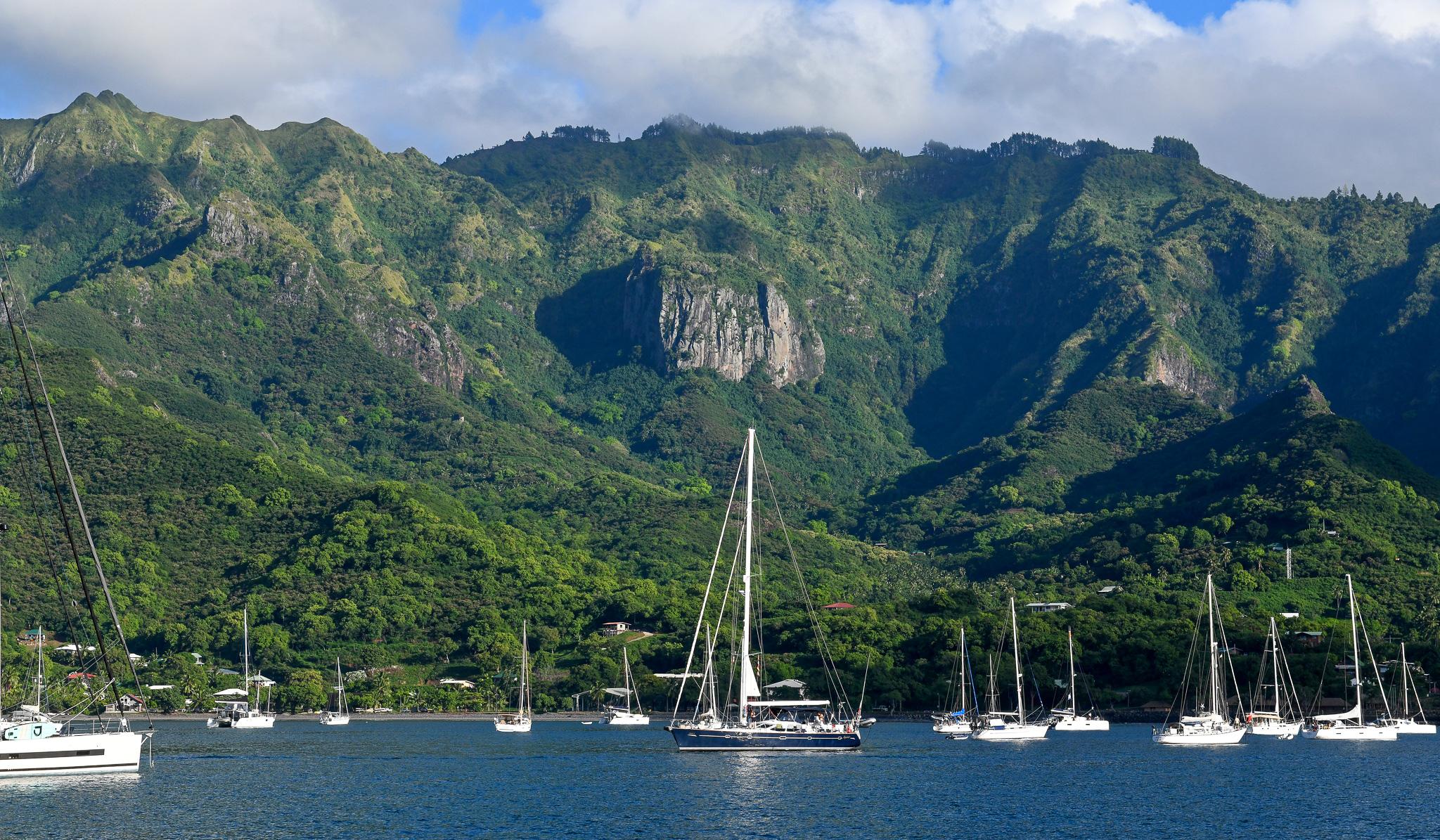
The Marquesas Islands receive the sun later than the Pacific’s flat-horizon atolls because the volcanic peaks that form the islands’ interior are high enough to hold the shadow of the dawn across the bays on the eastern sides of the islands for up to an hour after the sun has risen above the ocean horizon.
The hour between the sun’s rise above the ocean and the sun’s clearance of the ridgeline above the bay is the specific hour that the Marquesas produces in a form available nowhere else on the Naora route: the sky fully light, the bay still in the blue-grey shadow of the volcanic ridge, the water the colour of the shadow rather than the colour of the direct light, and the specific acoustic quality of the birds of the Marquesas in the hour before the direct sun reaches the bay and changes the birds’ behaviour from the pre-light activity to the thermal-seeking activity that the warm sun produces.
The member who is on deck at five-thirty in the morning in a Marquesas anchorage is in this specific hour. Not by accident and not by compulsion: by the specific quality of the offshore morning that wakes the person who has been sleeping in three-hour blocks at the rate that the trade wind passage produces and that has adjusted the circadian rhythm toward the earlier waking that the offshore life consistently produces in the people who have been in it long enough.
The alarm was not set. The body arrived at five-thirty because the body had been trained by the offshore rhythm to arrive at five-thirty, and the arrival was rewarded by the specific version of the Marquesas morning that five-thirty provides and that no alarm-free morning on land had previously made available.
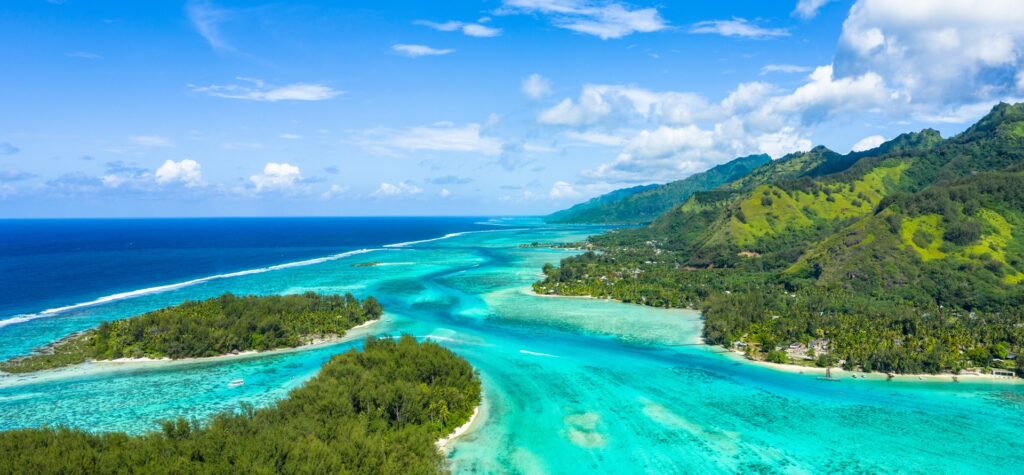
What the Hour Contains
The hour before the sun clears the Marquesas ridge contains the bird sound that the tourist who arrives on the morning ferry misses because the morning ferry arrives after the bird sound has changed. The Marquesas avifauna includes several endemic species that the high volcanic islands have produced through the same isolation that produced the Galapagos endemics: the Marquesas kingfisher and the specific dove and fruit pigeon species that the volcanic forest above the bay contains.
The pre-light hour is the hour of their most specific activity, the foraging and the territorial calling that the dawn triggers and that the direct sun’s arrival shifts to the resting that the tropical heat produces in the island’s birds as in everything else that lives in it.
The hour also contains the fishing canoes of the Marquesas village that the bay belongs to: the outrigger pirogues that have been leaving the beach before the dawn since the Polynesians settled the Marquesas approximately two thousand years ago and that continue to leave the beach before the dawn because the fish are in the positions that the dawn current and the low light produce for the specific duration of the pre-light hour and that the direct sun’s warming of the water disperses.
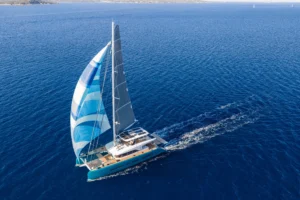
The fishermen in the pirogues pass the Eighty2 at anchor and they do not look at the boat with the surprise of someone encountering the unexpected: the boat that is at anchor in their bay before the dawn has been there since the previous evening and it is part of the bay’s morning in the way that everything that is in the bay when the dawn begins is part of the bay’s morning.
The member on the afterdeck at five-thirty is not a tourist. They are part of the Marquesas morning. This is the gift that the offshore life provides and that the resort cannot replicate: the presence in the place rather than the visit to it.