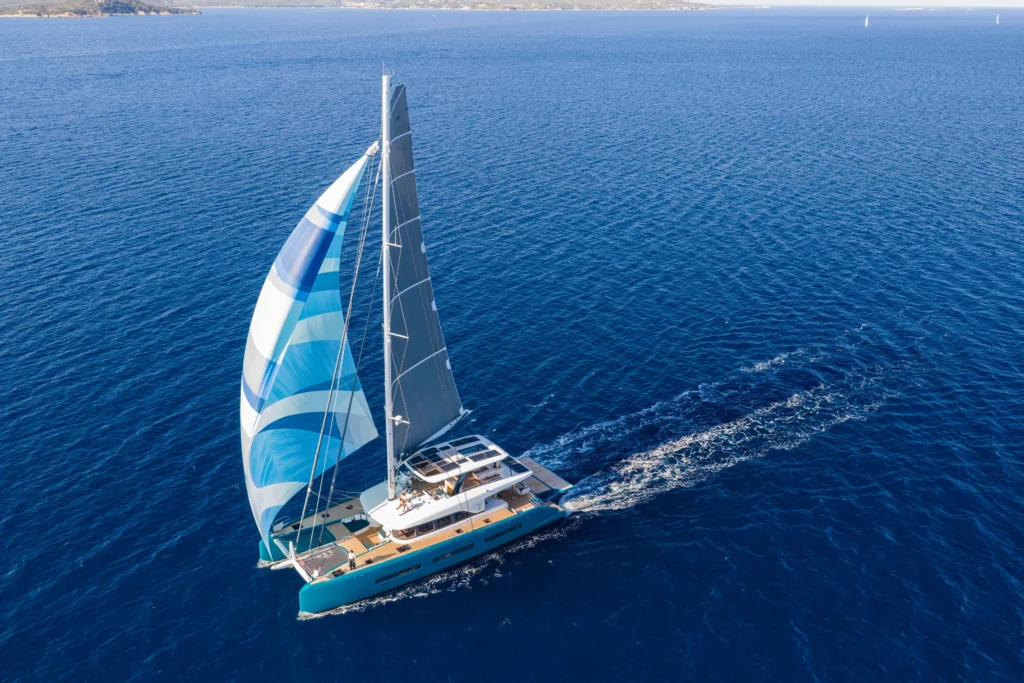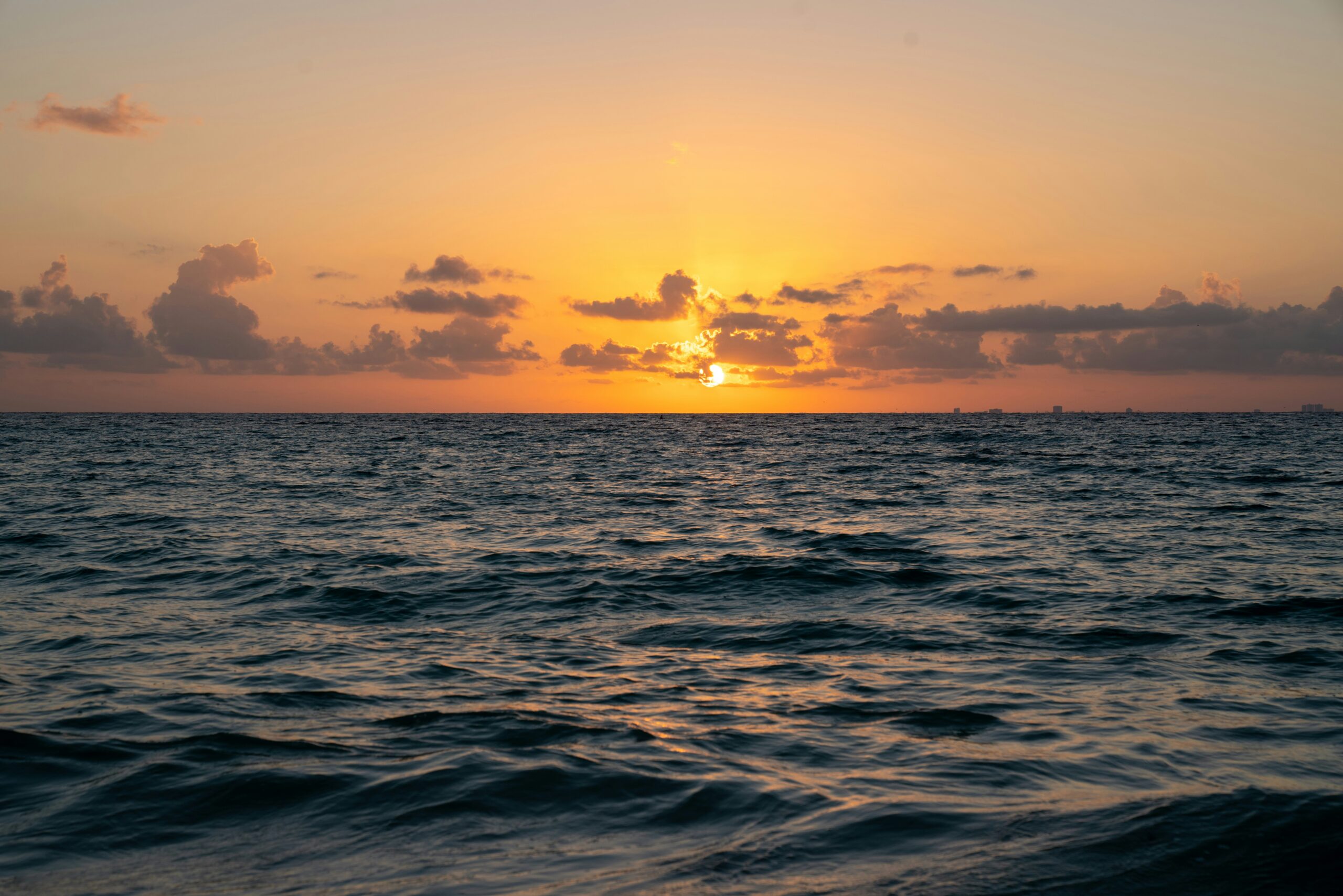
There is an hour at the end of the sailing day that belongs to the place rather than to the boat or to the people on it. It begins when the anchor is set and the swimming is done and the sun has reached the angle where the light on the water is horizontal rather than overhead, and it ends when the dark is complete and the first stars are visible and the day has officially become the evening. In this hour, nothing is required.
The next decision, which will be about dinner or about tomorrow’s plan or about the chart, has not yet arrived. The previous decisions, which produced the anchorage and the dive and the swim, are complete. The hour is the interval between them, and the interval is, consistently, the finest hour of the sailing day.
The sundowner is the word the sailing world uses for the drink that marks this hour, but the drink is not the point of it. The point is the specific social quality of the interval: the group of people who have been in a shared world for the day settling into the specific ease of the end of a day that was genuinely full, with nothing left to manage and nowhere left to be, the drink in the hand and the light on the water and the conversation that arrives without an agenda because the day’s agenda is complete.
What the Light Does
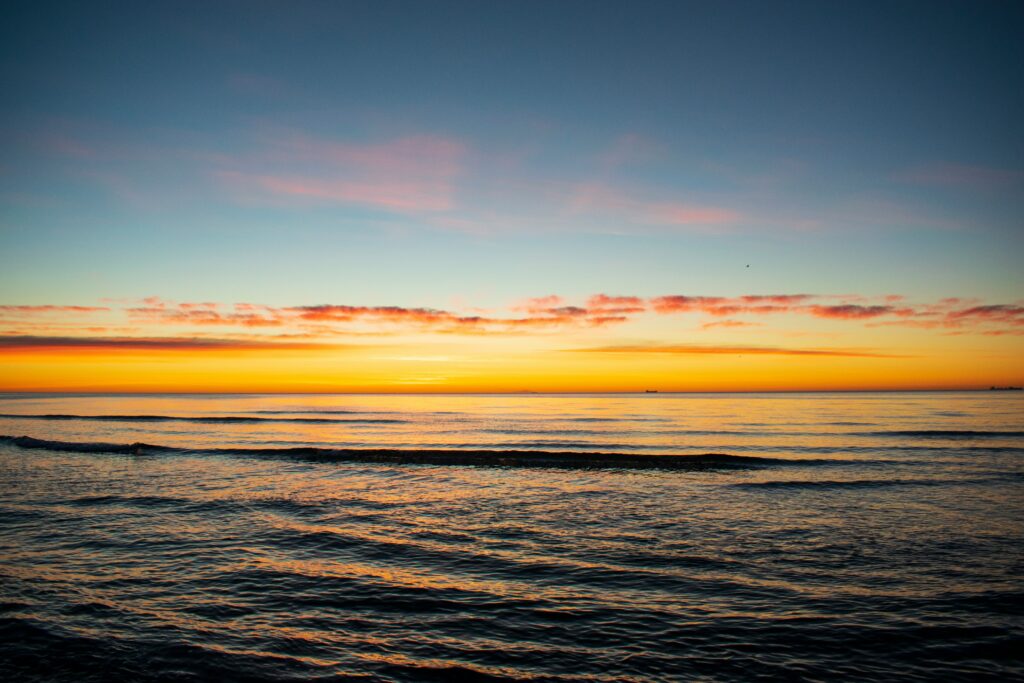
The light at the sundowner hour is not the same light at every anchorage, and the difference is part of what makes the hour specific to the place rather than generic to sailing. In the Mediterranean in September, the light is warm and amber and comes from the southwest at an angle that turns the limestone cliffs above the anchorage into something that is clearly not the same material it appeared to be at noon.
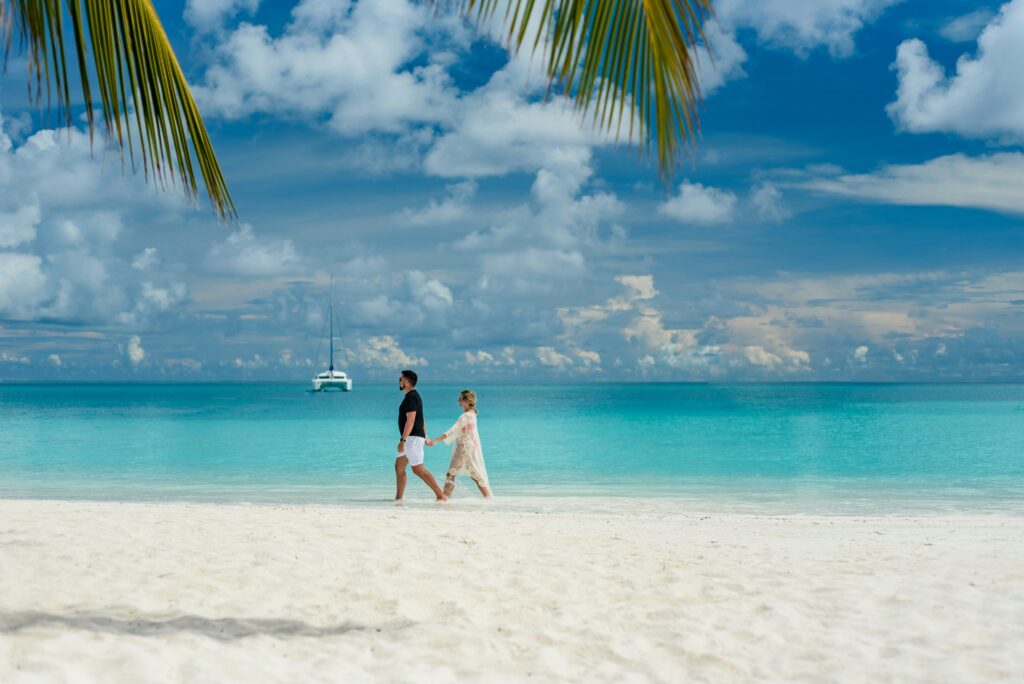
In the Pacific trade wind belt, the sun sets faster and with less of the drawn-out amber phase of the temperate latitude sunset: the sky goes from blue to pink to dark in twenty minutes and the transition is violent enough to feel like a performance rather than a conclusion. In the Maldives, the flat atoll horizon produces a sunset that is visible in a complete semicircle of sky rather than in the specific direction of the sun’s position, and the colour fills the whole sky simultaneously rather than tracking the sun’s movement from west to east overhead.
The specific quality of each anchorage’s sundowner light is part of the reason the Anchor Moment exists as a Naora ritual: the instruction to be present at the moment of arrival before the activities begin is the instruction that ensures the sundowner light is received rather than encountered in passing. The anchorage that was properly arrived at is the anchorage whose sundowner light is experienced rather than merely present, and the difference between experiencing and merely being present is the whole content of what the sailing life, at its best, is trying to produce.
What Gets Said
The conversation at the sundowner hour is the conversation that the day’s agenda prevented. Not the Long Table conversation, which has its own specific depth and its own specific occasion. The lighter version: the observation about the dive that was made at the time but not shared, the question about tomorrow’s plan that is asked while the questioner is looking at the water rather than at the person they are asking, the connection between something that was seen today and something that was said last week that arrives at the sundowner hour because the afternoon’s busyness has finally cleared and there is space for it to be spoken.
The Naora community is built around the Long Table, but the Long Table is the formalised version of what the sundowner hour produces informally. The hour before dinner at anchor is the hour when the community becomes most naturally itself: the day’s experiences shared in the ease of completion, the people who have been in the same world becoming slightly more known to each other in the specific way that the end of a full day produces.
The sundowner is not a ritual. It is the condition that the sailing life produces reliably at the end of any good day, and the good days on the Naora route are the days that make the sundowner what the word implies: the specific gift of a day that has been completely lived, arriving at its close.