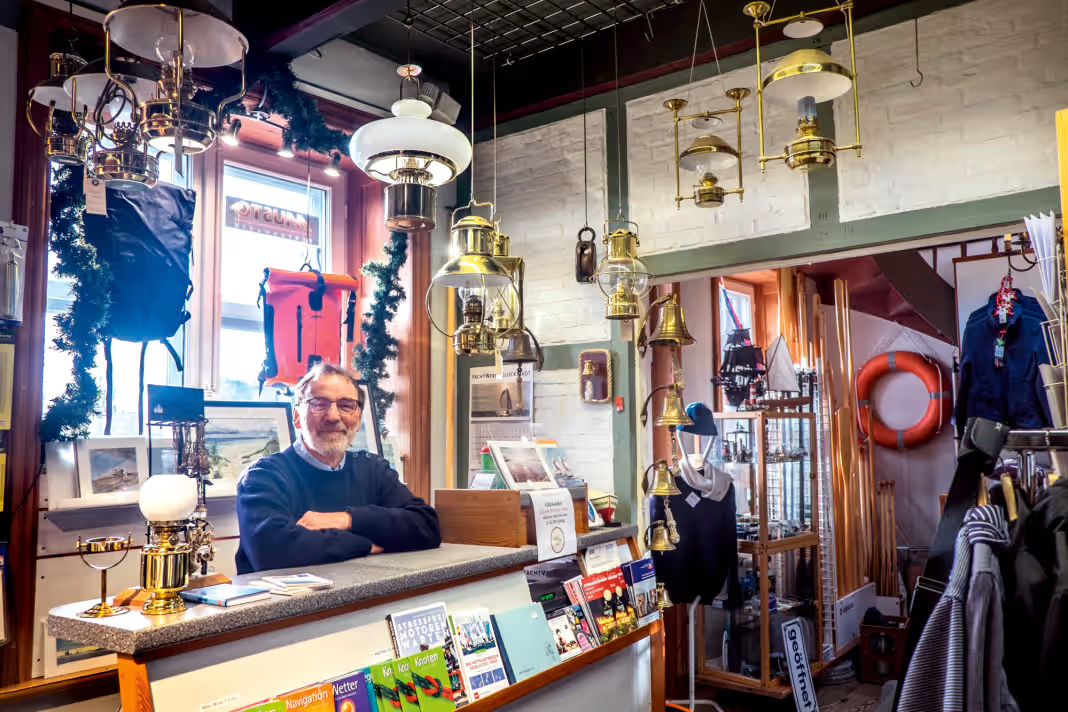
The chandlery is the bookshop of the sailing world: a place organised around a specific body of knowledge and need that is accessible only to people who have that need and that produces, in two hours of unhurried browsing by someone who has that need, both the specific items they came for and the specific items they did not know they were going to need until the chandlery showed them they would. The two hours in a good chandlery are never the two hours you planned. They are always the two hours that revealed something about the voyage ahead that the planning process had not yet surfaced.
I have spent two hours in chandleries from Antwerp to Auckland, and the quality of the two hours has been consistently correlated with two things: the quality of the stock, which is a function of the owner’s experience of the specific regional sailing conditions, and the owner’s willingness to have the conversation that the stock prompts. The chandlery owner who knows their stock because they have used it, who can tell you why the second anchor on the third shelf is better than the first for the holding conditions of the Indonesian archipelago because they anchored there themselves four years ago, is the owner whose chandlery is worth two hours of any offshore sailor’s time regardless of whether they need anything when they arrive.
What the Chandlery Contains
The serious chandlery contains the accumulated practical knowledge of everyone who has sailed in the region it serves, expressed as the specific selection of products that the regional sailing conditions make relevant and the adjacent products that the regional sailors have found necessary through experience rather than through advance planning.
The Mediterranean chandlery has specific products for the Meltemi and the Tramontane and the specific electrical corrosion that the warm saltwater produces in ways the North Sea chandlery does not require. The Pacific chandlery has specific products for the trade wind chafe patterns and the tropical sun’s effect on rope and rubber that the Atlantic chandlery has no reason to stock.
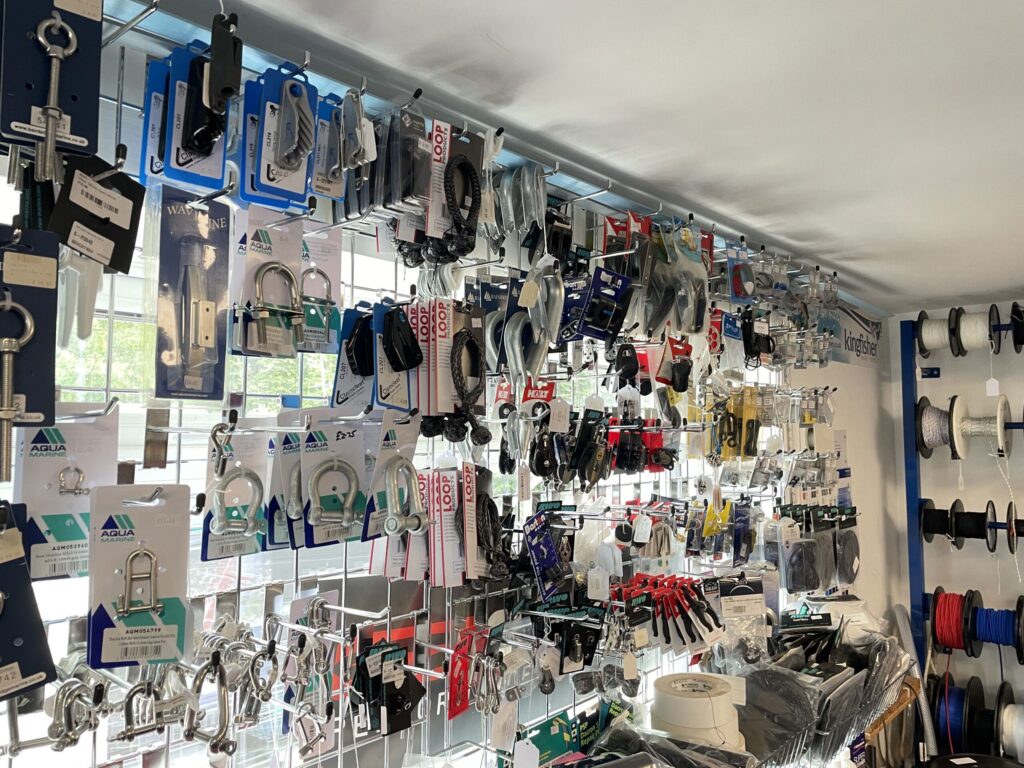
The thing the chandlery always contains that I never have enough of is the specific small item that the boat has run out of or is about to run out of and that is not dramatic enough to have been noticed in the passage preparations but that the chandlery shelves, arranged by the logic of what offshore sailors actually need, present at exactly the right moment.
The correct size of hose clamp. The specific contact cleaner that the navigation instruments require. The seizing wire in the diameter that the rigging inspection identified as needing replacement. These are the items that the chandlery’s two hours consistently produce and that the pre-departure checklist, however thorough, consistently misses.
The Conversation
The conversation at the chandlery counter is the most undervalued information source in offshore passage planning. The owner of the chandlery in a regional sailing hub has spoken to hundreds of boats passing through in the same direction as the Naora voyage: boats that went ahead a month ago and whose crews stopped in on the way back to report what the conditions were actually like, what the anchorage that looked good on the satellite imagery was actually like, what the customs procedure at the next major port was actually like this year rather than last year.
This information is not in any app. It is in the chandlery owner’s head, and it is available to anyone who asks the right question in the right tone, which is the tone of someone who is genuinely asking rather than testing.
I always allocate two hours for the chandlery in any significant provisioning port on the Naora route. The boat usually needs something that the chandlery has. The conversation always produces something that the boat needed without knowing it.
And the specific pleasure of two hours in a well-organised chandlery, the specific satisfaction of the place where everything has a specific function and everything is exactly where it should be, is one of the quiet pleasures of the sailing life that people who have not experienced it cannot imagine and people who have experienced it do not forget.