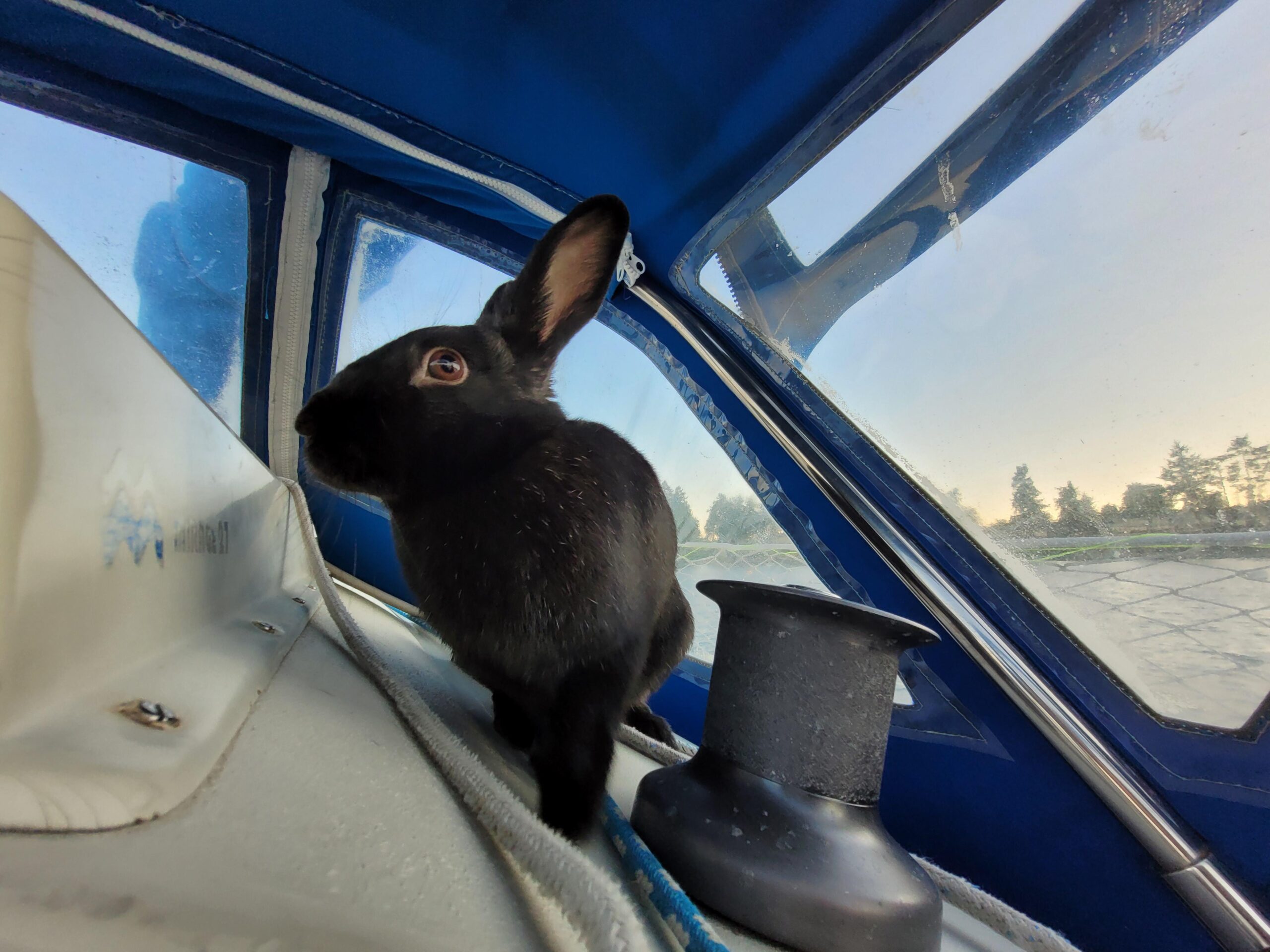
The list of forbidden words on sailing vessels across different maritime cultures is longer and stranger than most people who have not spent time in the offshore sailing community expect. The rabbit is forbidden in the British fishing communities of the North Sea and the English Channel: saying the word on board, or bringing a rabbit aboard, or in the most extreme versions even encountering a rabbit on the way to the boat, was considered sufficient cause to abandon the day’s fishing and return home.
The specific logic was concrete: fishing communities that kept rabbits on land near the cliffs had observed that the burrowing of the rabbits into the cliff bases contributed to cliff collapse, and cliff collapse occasionally sent vessels below the collapsed material to the bottom. The rabbit was the animal that killed boats. The word was the animal’s proxy.
The fox was forbidden in the Scottish fishing communities of the east coast: the specific association was with the fox’s reputation for cunning and its habit of approaching fishermen’s stored gear without triggering the traps set to catch it, which made the fox the symbol of the bad luck that arrived by stealth rather than by accident.
The pig was forbidden in many of the same communities: the pig that could not swim, the pig whose squealing at the boat launch was interpreted as the sound of misfortune, the pig whose Latin name, porcus, was too close to the Latin for dangerous weather, periculum, in the specific linguistic association of the pre-literate maritime community.
The Workarounds
Every forbidden word in the maritime tradition had a workaround: the acceptable substitute that could be used when the thing the word described needed to be discussed without triggering the prohibition. The rabbit was called a long-eared fellow, a long-ears, a bunnock, or simply the thing that cannot be named, depending on the specific community.
The pig was called a grunter, a curly tail, a Greeks in some communities, for reasons that the etymology cannot fully resolve. The cat was called a long tail in some traditions where the cat’s association with witches made it a vessel of bad luck rather than the ship’s cat that the same tradition employed as a rodent controller.
The workarounds reveal the fundamental nature of the prohibition: it was the word that was dangerous, not the concept. The thing could be discussed, the animal could be referenced, the situation could be described: it simply could not be called by its proper name, because the proper name was the invocation of the specific misfortune that the animal represented.
The maritime tradition’s relationship with language was the relationship of a community that had learned, through long and costly experience, that some words carried specific dangers and that the dangers were manageable with the right linguistic substitution.
What the Prohibitions Share
What the forbidden words share is a traceable origin in a specific concrete experience of misfortune that the community had connected to the word or the thing it named. None of them are arbitrary. All of them are the linguistic residue of a causal relationship that the community had identified, correctly or incorrectly, between a specific thing and a specific outcome.
The rabbit burrows into cliffs and cliffs collapse onto boats. The pig squeals at the wrong moment and the squeal becomes the omen. The fox represents the misfortune that arrives without warning. The causal chain is not always scientifically valid, but it is always specific, and the specificity is the evidence that the prohibitions are the product of accumulated community experience rather than of arbitrary fear.
The offshore sailing life produces this kind of specific knowledge about the things that precede bad outcomes. Not the superstition of the person who has never been offshore and who has assembled a collection of maritime beliefs from reading about them: the specific, particular knowledge of the person who has been in enough situations to have noticed what the situations that went wrong had in common, and who has adjusted their behaviour accordingly. The forbidden words are the behavioral adjustment made permanent in language. They are the accumulated intelligence of people who could not afford to be wrong.