Every visitor to Bali arrives at the airport. The airport is in the south of the island, in the built infrastructure of international tourism that has been expanding since the 1970s and that presents Bali as a composite of its most accessible features: the rice terraces, the temples, the craft markets, the yoga retreats, the beach clubs. These features are real and many of them are genuinely beautiful and the visitor who arrives at the airport and spends a week in Ubud or Seminyak or Nusa Dua has seen a real version of Bali that is worth having seen. The question is whether it is the version that reveals what Bali is rather than what Bali has become for the visitor economy.
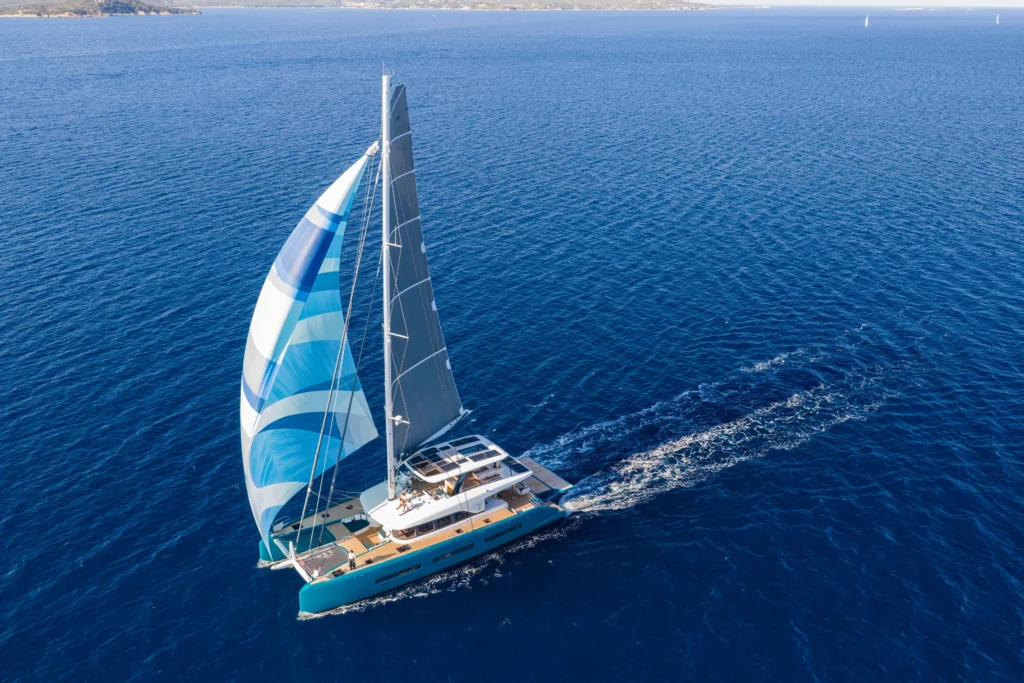
The visitor who arrives by sea sees a different version first. The Bali coastline from the water is the island before the infrastructure: the volcanic profile rising from the sea to Gunung Agung at three thousand metres, the coastal cliffs and the black sand beaches that the island’s geological youth has not yet softened, the sea temples sitting on the rock promontories that the Balinese have placed their temples on since the Hindu tradition arrived from Java in the fourteenth century.
The most famous of these, Pura Tanah Lot, stands on a rock in the sea that the tide separates from the land twice daily, and it is visible from the water in a way that the land approach, through the tourist car parks and the trinket markets, does not prepare you for.
The Offerings
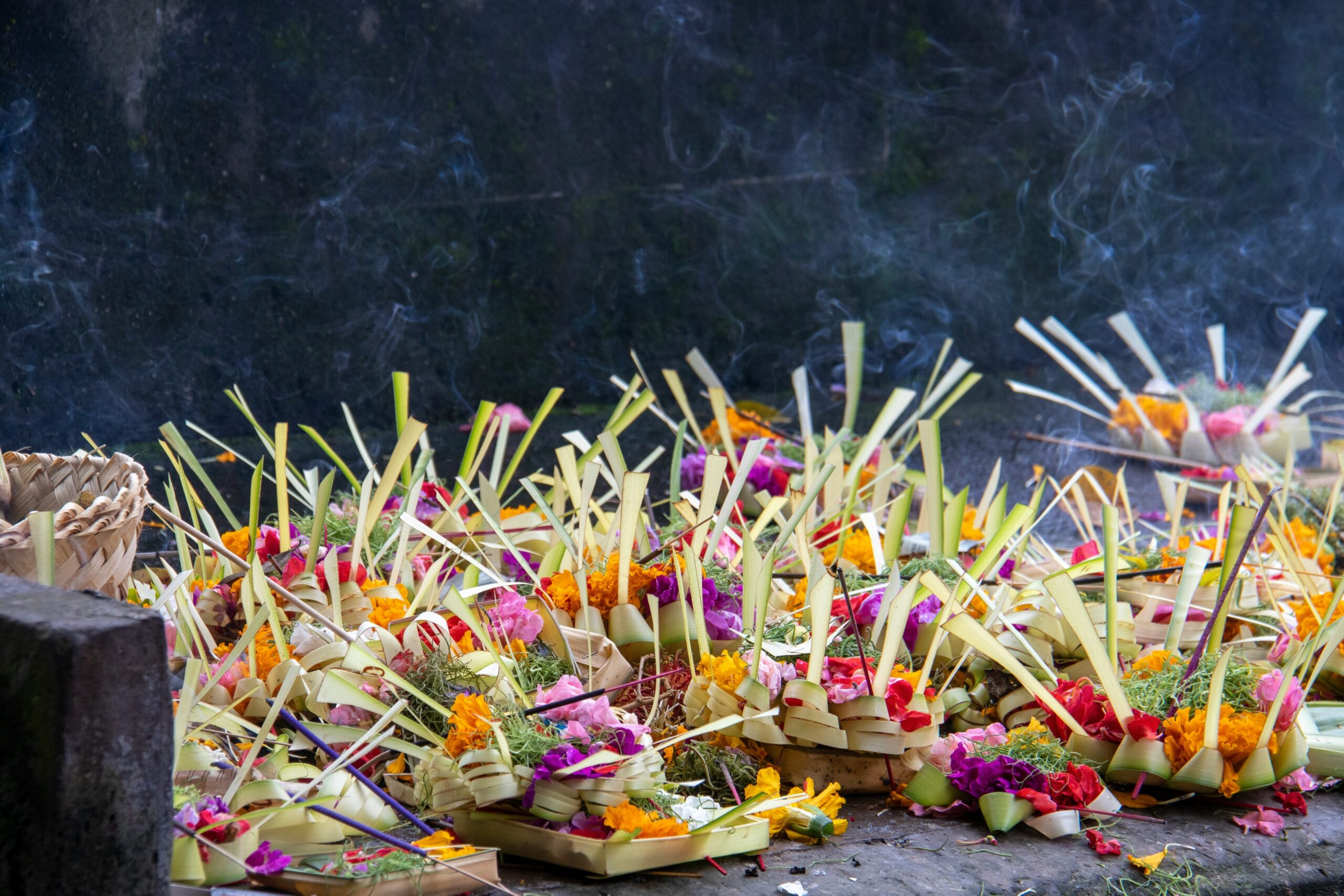
The Balinese Hindu tradition places offerings at every threshold: the temple entrance, the house gate, the workshop door, the market stall, the keel of the fishing boat before it goes to sea. The offering is a small palm-leaf basket containing flowers, rice, incense, and sometimes food, placed on the ground with a specific intention that the incense smoke carries upward.
The Balinese day begins with the making and placing of these offerings, and the streets of any Balinese town in the early morning are the streets where the offering has just been placed and the incense is still smoking and the foot traffic has not yet disturbed the specific arrangement of the petals in the basket.
The offering at the dock where the Naora dinghy ties up is the offering that tells you the dock belongs to a Balinese fishing community rather than to a tourist marina. It is small and it is perishable and it will be replaced tomorrow morning and the morning after.
The continuity of the replacement is the continuity of the practice: not the dramatic expression of a living religion but the daily maintenance of the relationship between the human and the sacred that the Balinese Hindu tradition requires and that the Balinese community has been performing every morning since the religion arrived here seven centuries ago.
The Temple Above the Anchorage
The temple above the anchorage is accessible by the path that begins behind the dock where the dinghy tied up. Forty minutes of walking through the terraced agriculture and the village and the specific smell of the frangipani and the incense that the Balinese landscape produces in the late morning when the offerings have been placed and the sun is warm enough to release the fragrance.
The temple at the top of the path is not on the tourist circuit: it is the village temple, which in Bali means the temple that the community maintains for the community rather than for the visitor, and whose ceremonies happen on the Balinese calendar rather than the tourist season’s calendar.
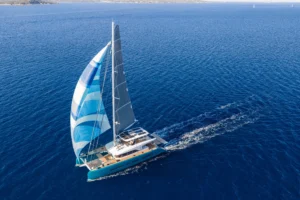
From the temple above the anchorage, the Eighty2 is visible below in the bay. This is the view that explains the anchorage: the bay is the bay because the temple above it chose this location for the specific relationship between the sacred high ground and the sea below it, and the anchorage is good because the same geographic feature that the temple was placed on provides the protection from the swell that the anchorage requires. The Balinese did not build their temples to create good anchorages.
But the knowledge of the coast that their temple placement reflects is the knowledge of a people who have been in relationship with this coastline for seven centuries, and the anchorages that the Naora route uses in Bali are consistently near the temples for exactly this reason.