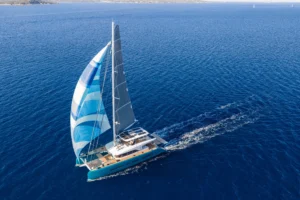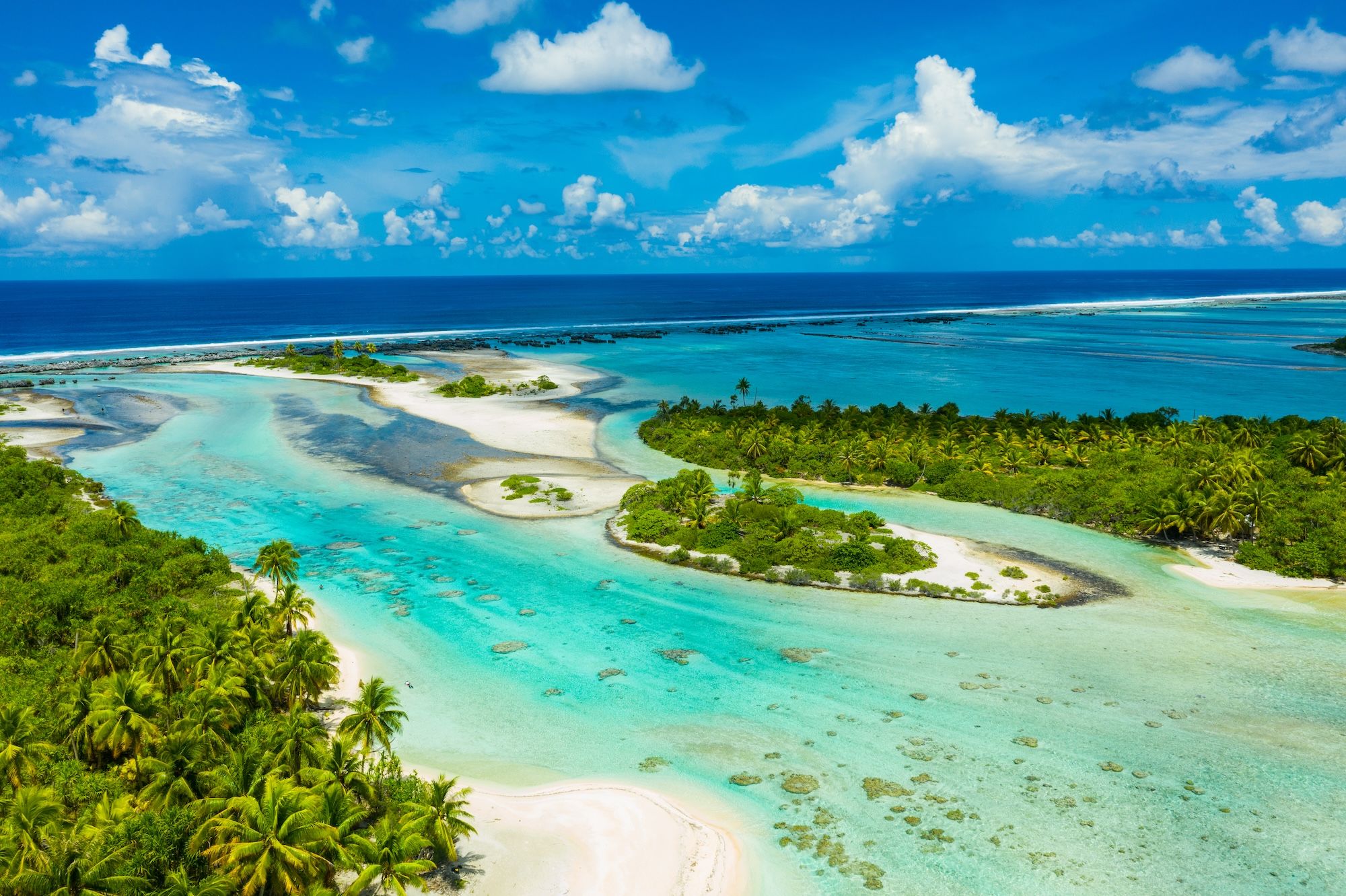
The outer Tuamotu atolls receive perhaps a few hundred visiting boats per year. Not a few hundred thousand, as the accessible reef destinations of the Indo-Pacific receive: a few hundred boats, most of which pass through rather than stop, and of those that stop, most anchor in the main village lagoon rather than the remote passes and outer anchorages where the reef is at its most undisturbed.
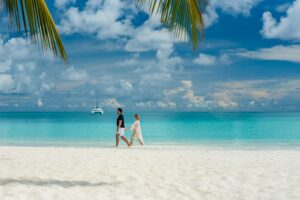
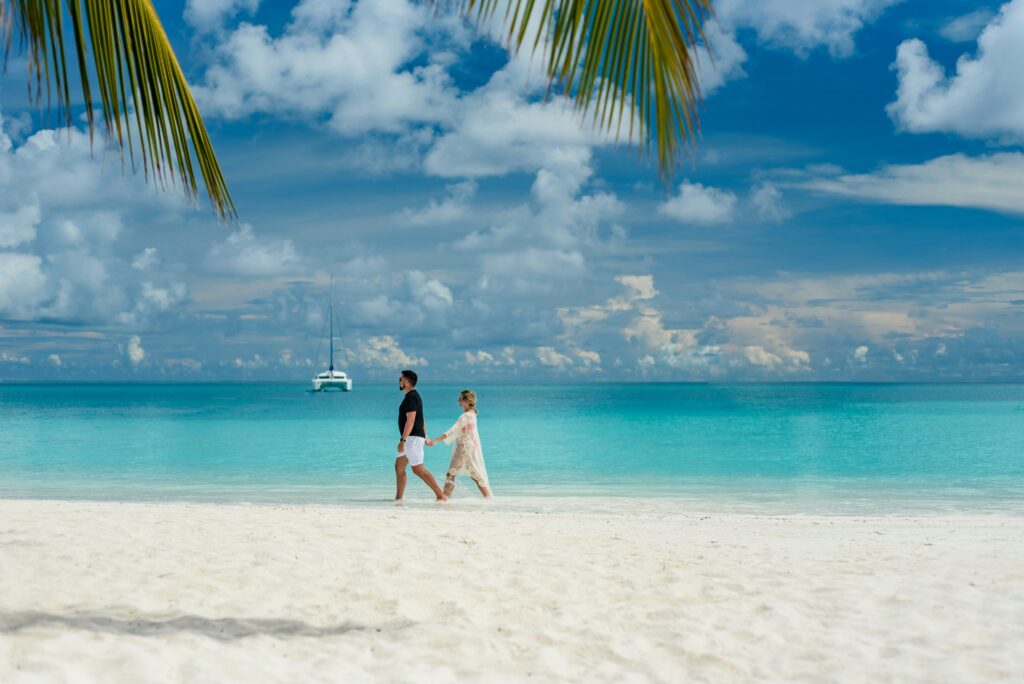
The result is a beach and a reef system that has had something approaching the absence of sustained human impact that the coral reef system requires to produce its full complexity, and that produces in the person who beaches the dinghy on its sand and walks its shore an encounter with what a reef looks like when the reef has not been edited by tourism.
I have been walking beaches for as long as I have been freediving, which is most of my life. The outer Tuamotu beach is in a different category from most beaches I have walked: the boundary between the beach and the reef is not the boundary between the terrestrial and the marine but the boundary between two different expressions of the same carbonate system.
The sand is coral rubble, the product of the slow erosion of the same reef structure that begins in the shallows immediately off the beach edge, and the transition between the two is not a beach ending and a reef beginning but a continuous material that the waves and the biology are producing and destroying simultaneously at the rate that the atoll’s equilibrium requires.
What the Tide Line Shows
The tide line on an outer Tuamotu beach is a specific education in what the Pacific Ocean contains and moves. The stranded coral fragments that range from thumbnail-sized to skull-sized, each one the skeleton of a colonial organism that built the atoll’s structure across millennia. The shells of molluscs that no shell shop sells because their habitat is the open ocean rather than the shallows where shell collecting is conventional.
The occasional glass float from a Japanese fishing net that has been in the Pacific long enough to travel from the Sea of Japan to the central Pacific, a journey measured in years rather than months in the specific circulation of the North Pacific Gyre that the ocean currents article describes in detail.
The specific knowledge of what the tide line contains is the knowledge of the beachcomber rather than the diver: the surface observation that reveals the ocean’s biological output in the form of what it returns to the shore. A morning walking the tide line of an outer Tuamotu atoll beach teaches more about the Pacific pelagic ecosystem than an afternoon in the best natural history museum available, because the museum has the objects without the context and the tide line has both simultaneously: the object where the ocean put it, in the place the ocean made, in the morning light of a beach that almost nobody else has walked this season.
The Reef at Knee Depth
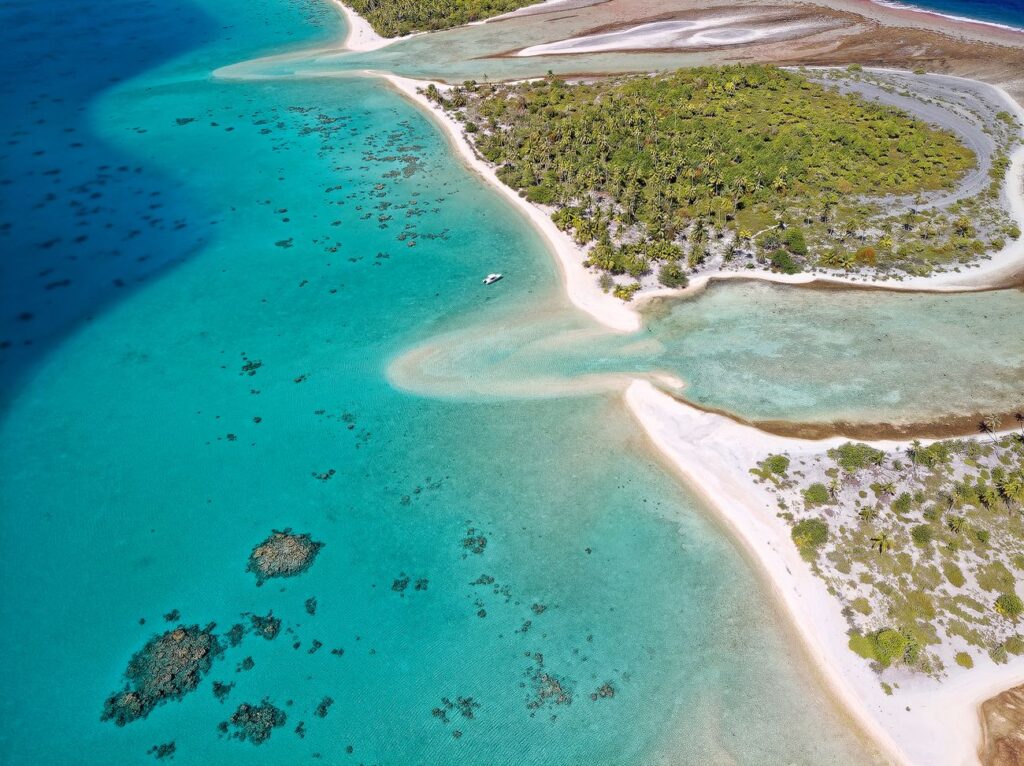
The outer Tuamotu reef begins at knee depth off the beach and extends outward to the atoll’s rim and then drops to the open ocean. The knee-depth section, the section that the beachcomber enters by walking rather than by swimming, is the section that contains the specific combination of coral diversity and fish density that the shallow tropical reef produces when the water is clear enough to see the bottom in five metres and the tourism pressure is low enough that the fish have not learned to associate human presence with food.
Standing knee-deep in the outer Tuamotu, looking down through water that is the colour and the clarity of the best quality glass, at a reef that contains more species per square metre than any equivalent area of terrestrial habitat on earth: this is the experience that the Naora voyage makes available to the member who has not dived before and who is standing in the Pacific Ocean for the first time and who has not yet understood what the word reef means when it is said about this rather than about the picture in the travel magazine.
The picture does not contain the sound of the reef, which is audible at knee depth in the specific crackling and clicking of the snapping shrimp that populate every healthy coral structure. It does not contain the temperature of the water or the specific yielding resistance of the sand between the coral heads under the feet. The outer Tuamotu beach provides all of these simultaneously. Come and stand in it.