The Egyptian Red Sea is one of the most popular diving destinations in the world, and most of what is dived there is dived by the enormous Egyptian liveaboard industry from the ports of Hurghada and Marsa Alam: hundreds of dive boats cycling through the same accessible sites on the same weekly rotations that the logistics of large-scale diving tourism require. The result is that the accessible Red Sea sites are heavily dived and the remote ones are not, and the difference in diving quality between them is the difference that the Naora compressor and the offshore sailing capability make available.
Brothers Islands, Daedalus Reef, and Elphinstone Reef are the three offshore sites that appear on every list of the world’s finest dive sites and that are accessible only to liveaboard vessels making the offshore passage from the coast. They are not close to each other and they are not close to the coast: Brothers Islands is approximately seventy kilometres offshore from the Egyptian coast, Daedalus is further, and Elphinstone is closer to shore but in a position that makes it a different category of site from the coastal reefs. The Naora route passes through the Red Sea on the southward leg from Cyprus and visits these sites in sequence as the primary diving of the Egyptian chapter.
The Brothers Islands
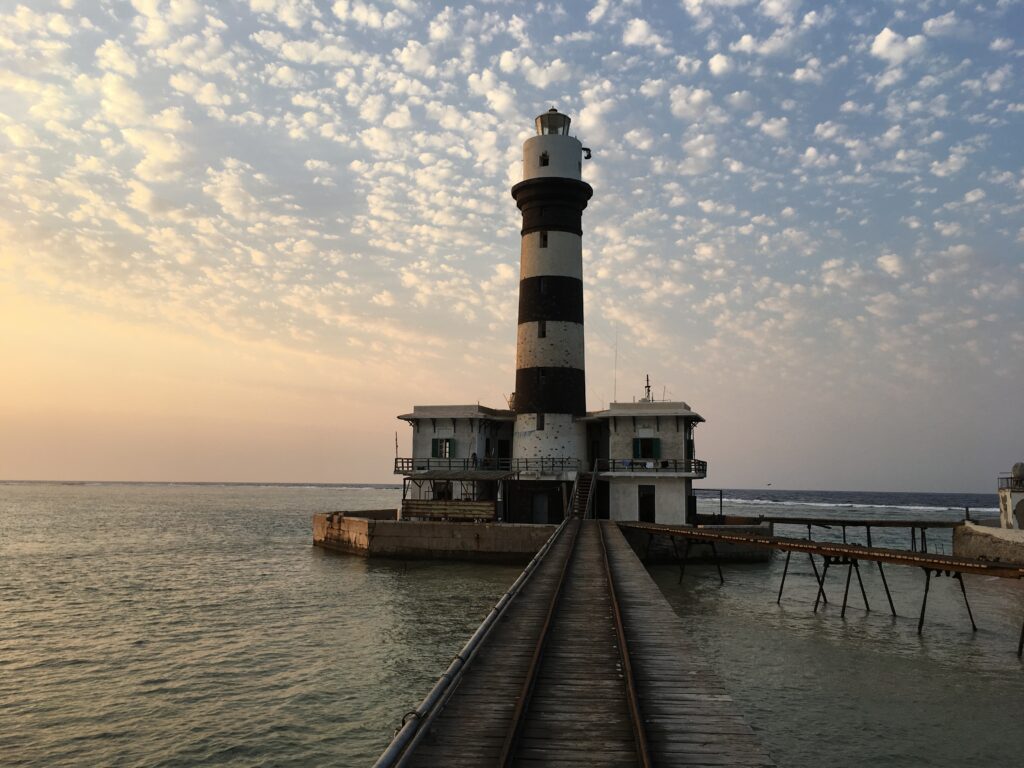
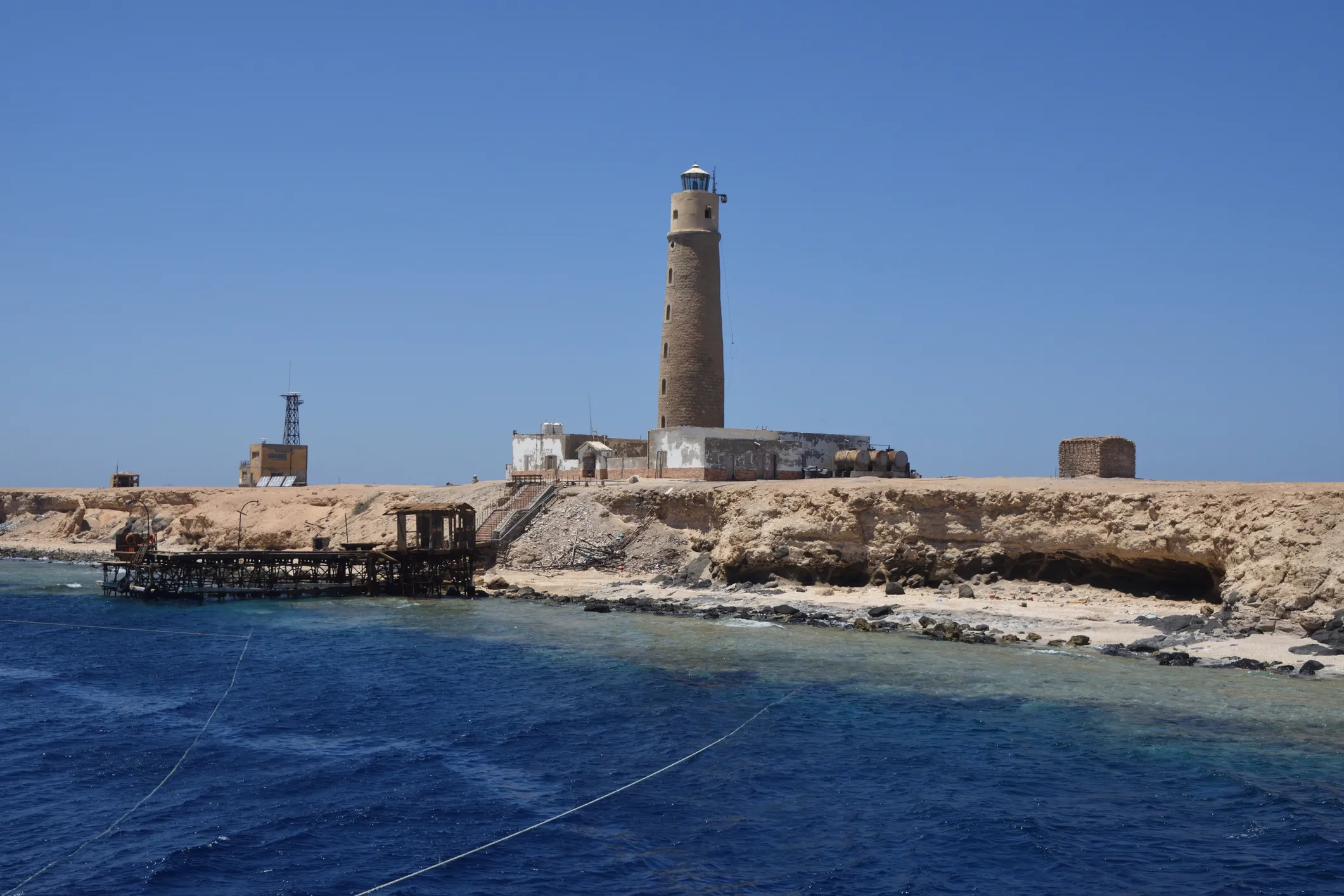
The Brothers are two small islands in the open Red Sea, each surrounded by a reef that drops vertically from the surface to three hundred metres. The Big Brother has a nineteenth-century Egyptian lighthouse on it, maintained until recently by a keeper who lived alone on the island between supply visits: one of the more isolated postings in the lighthouse-keeping profession.
The reef structures of both islands are among the healthiest in the Red Sea, partly because the offshore position reduces the thermal stress that coastal reefs experience and partly because the location limits visitor numbers to the liveaboards willing to make the offshore passage.
The diving at Brothers is defined by the pelagics. The oceanic whitetip shark is the signature species: a large, broad-finned, white-tipped open-ocean shark that is uncommon in coastal diving but present in significant numbers at the Brothers throughout the year. The oceanic whitetip is classified as vulnerable globally due to overfishing for the shark fin trade, and the Brothers population represents one of the most accessible remaining concentrations of the species.
The hammerhead sharks appear in the summer months in aggregations at the current-rich northern tip of Big Brother: schools of up to thirty or forty animals circling in the blue at fifteen to thirty metres in a display that has no equivalent in any diving destination I have visited in twenty-five years of offshore diving.
Elphinstone
Elphinstone is a narrow, elongated reef approximately fourteen kilometres from the coast, running north-south for approximately three hundred metres with vertical walls on both sides dropping to depths that the diver’s bottom time does not allow exploring. The northern plateau of Elphinstone is one of the most reliably productive dive sites in the Red Sea: the current that flows across the plateau concentrates fish in a density that the reef-sheltered coastal sites do not produce, and the plateau is the feeding ground for the oceanic whitetip sharks and the thresher sharks that are Elphinstone’s signature species.
The thresher shark is one of the most distinctive large sharks in the ocean: a mid-sized shark with a caudal fin that extends to approximately the same length as the rest of the body, used to stun schooling fish by whipping through the school at high speed. Seeing a thresher shark at close range on the Elphinstone plateau is seeing a specific and extraordinary piece of evolutionary engineering: the long tail in motion is unlike the motion of any other large fish, and the animal’s comfort in the presence of divers who remain still at the edge of the plateau allows an observation time that most pelagic shark encounters do not.