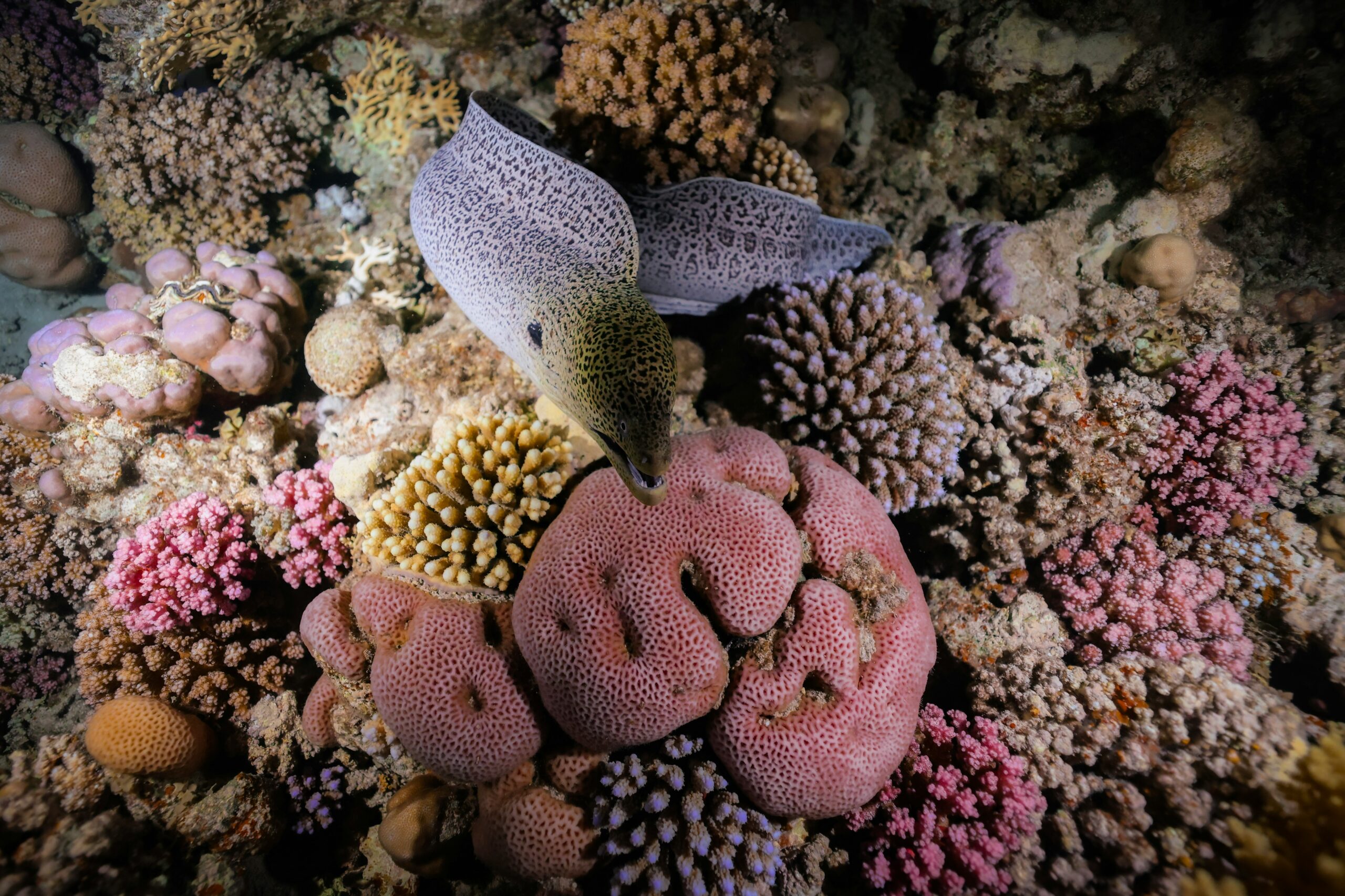
The reef at night is a different ecosystem from the reef during the day. Not a transformed version of the daytime reef but a genuinely different ecological community: the daytime species have retreated into the coral structure where they are essentially invisible, and their place has been taken by the nocturnal species that spend the daylight hours in the same refuges and emerge after dark to feed in the shallows and the mid-reef where the daytime fish were active. A dive on the same site at noon and at midnight is a dive on what appears to be two entirely different reefs, and the combined experience of both is a more complete understanding of the ecosystem than either alone provides.
Night diving requires specific preparation and specific skills that daytime diving does not. The torch is not simply a light source: it is the primary navigation instrument in an environment where the visual horizon has contracted to the beam of the light and the spatial orientation that the daytime diver takes for granted from the ambient light does not exist. The dive buddy relationship, always important, becomes critical at night: the visual contact that is automatic in daylight requires specific maintenance in darkness through light signals and proximity that the daytime dive does not demand.
What Comes Out
The nocturnal cast of a healthy reef is as specific and as remarkable as the daytime one. The cuttlefish emerge at night to hunt: the most intelligent cephalopod in the reef, capable of changing colour and texture in real time to match any background, and at night using this capability to stalk small fish in the shallows with a precision and a patience that is extraordinary to watch at torch-beam distance. The cuttlefish hunt is one of the specific night dive experiences that experienced divers seek on the Naora route: the animal is common on Mediterranean and Pacific reefs, comfortable with the presence of a stationary diver with a torch, and capable of putting on a display of camouflage and colour change that no aquarium tank replicates.
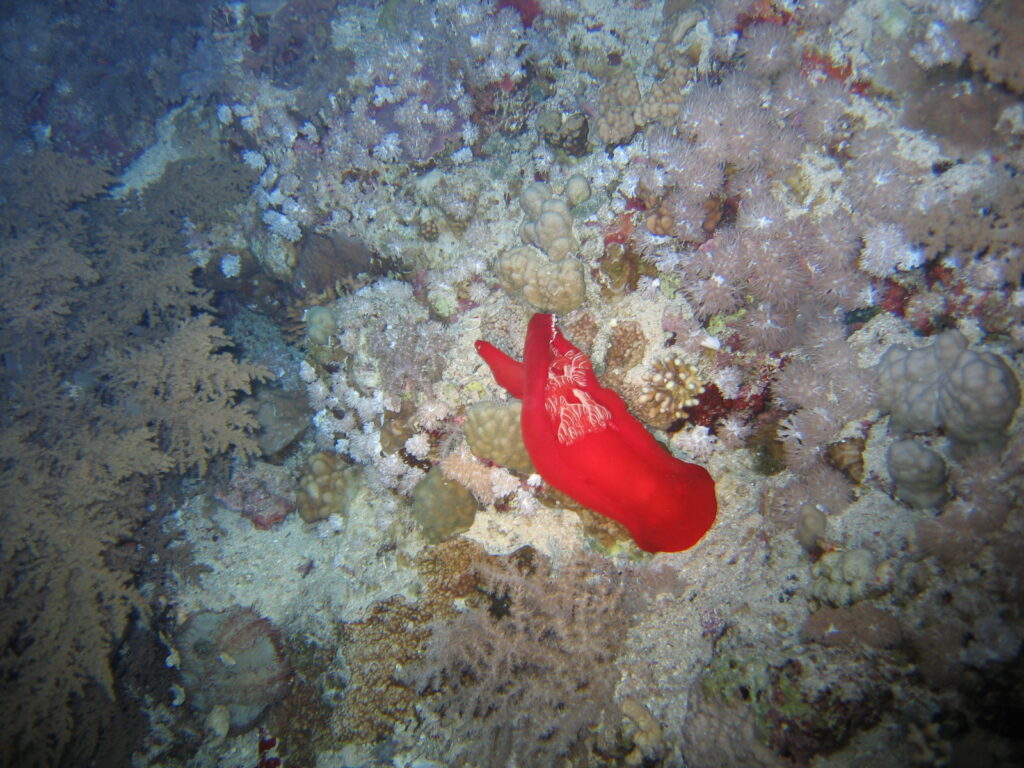
The Spanish dancer is the largest nudibranch in the ocean, reaching thirty centimetres in length, and is almost exclusively nocturnal: the daytime diver who has spent a week on a Tuamotu reef without finding one may encounter three or four on a single night dive in the same location. The animal moves through the water column in the undulating swimming motion that gives it its name: a red and white creature the size of a shoe, moving with a grace that the word dancer does not exaggerate. It is one of the specific encounters that divers who know the night reef seek specifically and that daytime diving never provides.
The Bioluminescence
The night dive’s most extraordinary moment is when the torches go off. This is a standard element of the night dive briefing on Naora: at a specific point in the dive, usually in the mid-water away from the reef structure, all torches are extinguished simultaneously and the divers remain still in the dark for sixty seconds. In waters with high concentrations of bioluminescent dinoflagellates, which the tropical and subtropical waters of the Naora route produce in specific seasons, the result is the specific cold blue-green light of the organisms disturbed by the divers’ presence: visible as moving patterns in the darkness around each diver’s body, concentrated in the bubbles rising from the regulators, present in every small movement of the water.
The sixty seconds of darkness and bioluminescence on a night dive in the Tuamotu or the Maldives or the outer Indonesian waters is described by divers who have experienced it as among the most disorienting and most beautiful minutes of their diving life: suspended in a medium that is producing its own light in response to your presence, unable to see the reef or the surface or any fixed reference point, completely aware of the depth and the darkness while also completely immersed in the specific cold fire that the ocean makes from its own biology. The torches come back on after sixty seconds. The reef returns. The dive continues. But the sixty seconds stays.