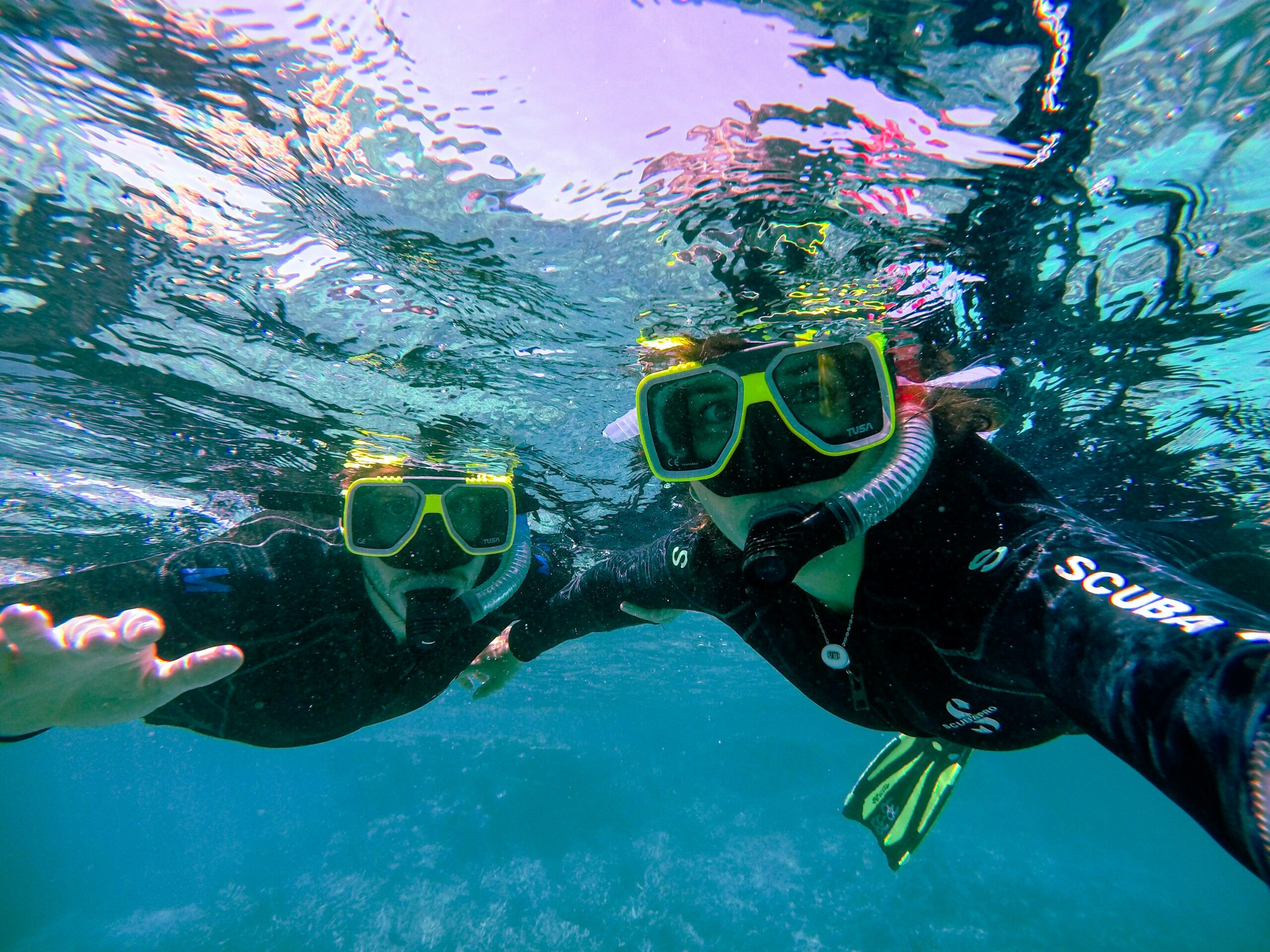
The reef is not one place. It is a vertical stack of different worlds, each accessible at a different depth, each revealing a different layer of the ecosystem that the single word reef contains without adequately describing. The snorkeller at two metres and the diver at twenty metres are in the same body of water above the same coral structure, and they are having categorically different experiences of it.
Understanding this is understanding why the Naora boat carries both snorkelling gear and scuba equipment, and why a member who does not dive is not missing the reef. They are missing the deeper layers of the reef, which are extraordinary. They are not missing the reef, which is also extraordinary at the surface and in the shallows, and which at some of the sites on the Naora route is as rich and as complex in its upper two metres as anything available at twenty.
The Surface World
The shallow reef, the first two to five metres below the surface, is where the light is most intense and where the photosynthetically driven part of the coral ecosystem is most productive. The hard corals that build the structure of the reef grow fastest and most elaborately in the shallows where the light intensity supports the zooxanthellae, the symbiotic algae that live in the coral tissue and provide the energy that coral growth requires. The shallow reef in the Tuamotu atolls, in the Coral Triangle of Indonesia, and in the outer Seychelles is a dense, three-dimensional structure of branching and plating and massive corals in the full colour spectrum that the reef produces before depth removes the longer wavelengths.
The fish in the shallows are the reef fish: the species that spend their lives in close association with the coral structure, using it as shelter and feeding ground and spawning site. Butterflyfish, angelfish, parrotfish, damselfish, surgeonfish, wrasse: the shallow reef fish are the most colourful animals in the ocean, selected over millions of years for the specific visual complexity that the reef environment makes possible and that open water does not. A snorkeller floating above a healthy shallow reef in the Tuamotu at ten in the morning, with the sun directly overhead and the water clear and the current absent, is looking at a density of colour and biological complexity that no terrestrial environment matches.
The Deeper World
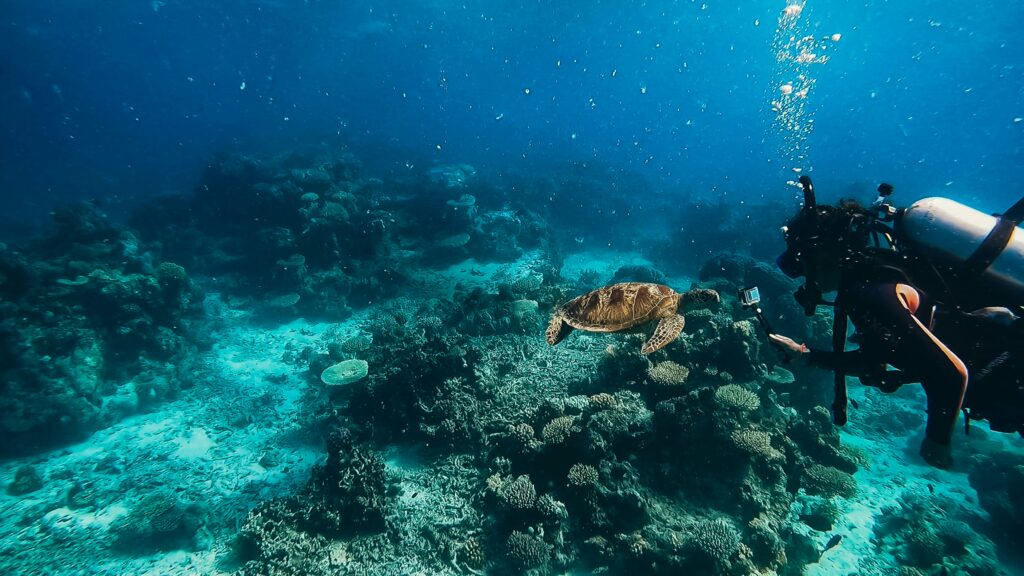
At twenty metres, the reef is different. The light has filtered through twenty metres of water and the longer wavelengths, the reds and oranges, have been absorbed: the colour palette at depth is blue and green and violet, and the corals that were orange and red in the shallows appear brown or grey at depth because the pigments that produce their colours are not receiving the wavelengths that activate them. The visual experience is less colourful but not less remarkable: the light has a quality at depth that the surface does not produce, a quality of blue that photographers spend their careers trying to capture and that the eye receives differently from anything available on land.
The animals at twenty metres are different from the surface animals. The larger reef predators, the grouper and the jack and the barracuda, patrol the mid-water and the reef edge at depth rather than in the shallows. The grey reef sharks that are the most common large animal on the outer walls of the Tuamotu atolls work the current edges at fifteen to thirty metres. The Napoleon wrasse, one of the largest reef fish in the world, is almost exclusively a mid-water and deep reef animal. The whale shark, when it is present in the Maldivian or Seychellois waters, is a surface to mid-water animal accessible to snorkellers as well as divers, which is one of the most extraordinary encounters available on the Naora route regardless of the depth at which you meet it.
The Naora Approach
The Naora boat carries snorkelling equipment for every member and scuba equipment for those who are certified. The morning dive or snorkel is typically organised so that both groups enter the water at the same site simultaneously: the divers descend to the deeper sections while the snorkellers work the shallows and the surface above. The briefing covers both groups: what the site offers at each depth, what to look for, where the current is and how to manage it, and how the two groups will stay in contact with each other and with the tender.
This approach means that a member who has never dived in their life and a member with two hundred dives are both having a complete encounter with the same reef, each from their own depth, each with the equipment and the briefing appropriate to their level. The reef is available to everyone on the boat. The layers of it are accessible according to what each person brings to it. What the Naora structure ensures is that the snorkeller is not getting the lesser experience. They are getting the shallow experience, which at many of the sites on the route is the finest experience the reef offers at any depth.