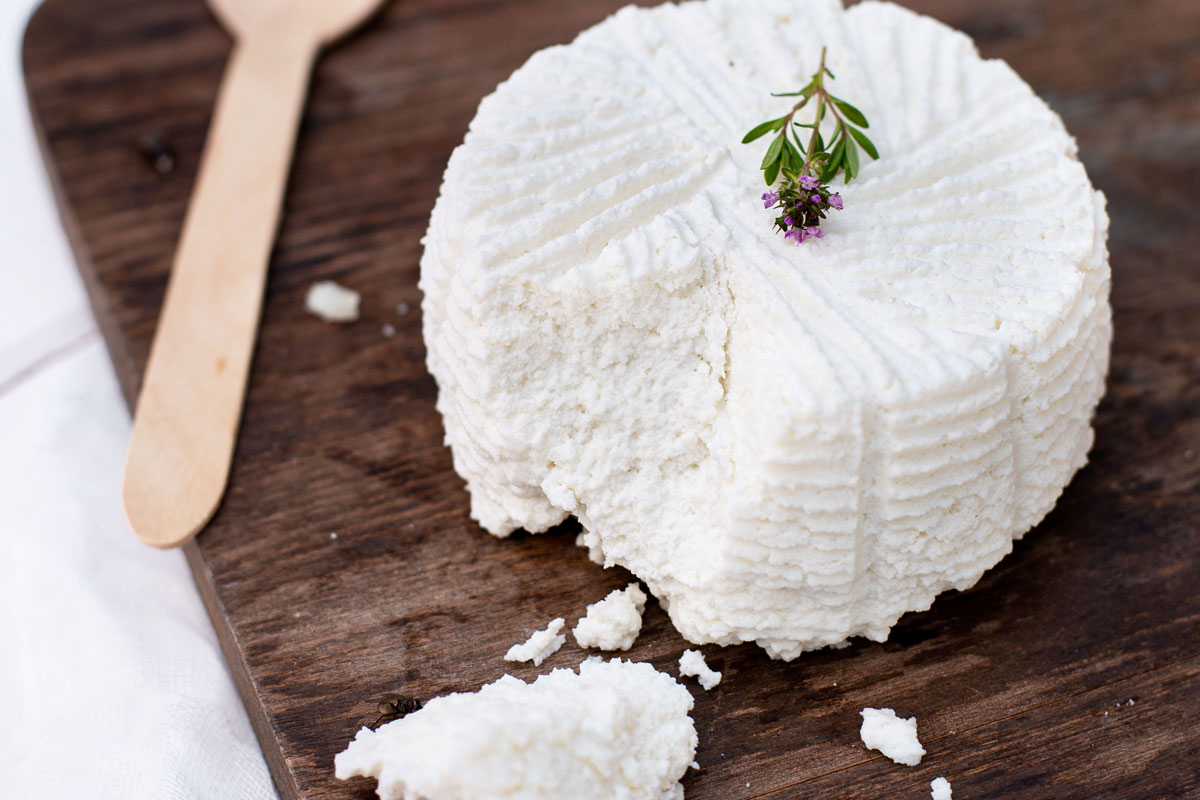
The word ricotta means recooked in Italian, and the name describes the method: it is the cheese made from the whey left over from the production of another cheese. The whey, which still contains the proteins that the first coagulation did not capture, is heated again until those remaining proteins precipitate: the result is a soft, white, mild-flavoured mass that is not exactly cheese in the curd-cutting sense, since it is made from whey rather than from the full milk, but that functions as cheese in every culinary application and that in its best Sicilian form produces a quality that has influenced the dairy traditions of most of the Western world.
The Sicilian ricotta that matters is made from sheep’s milk whey, which is a different product from the cow’s milk ricotta that most people who have bought ricotta outside of Sicily have encountered. The sheep’s milk version is richer and more complex in flavour, with a faint savouriness that underlies the milkiness, and a texture that is simultaneously smoother and more substantial than the cow’s milk version. It deteriorates within twenty-four to forty-eight hours of production and does not survive transport in the form that makes it worth eating, which is why the version available outside of Sicily is consistently inferior and why the version you eat in Sicily itself is consistently extraordinary.
The Layers of Sicily
To understand why Sicilian food is so complex and so specific, it is necessary to understand what Sicily is historically: an island at the centre of the Mediterranean that was controlled by, in approximate sequence, the Phoenicians, the Greeks, the Carthaginians, the Romans, the Vandals, the Ostrogoths, the Byzantines, the Arab Emirate of Sicily, the Normans, the Hohenstaufen Germans, the Angevins, the Aragonese, and the Spanish before the unification of Italy in the nineteenth century. Each of these periods left something in the food culture of the island, and the result is a cuisine that contains more distinct culinary traditions than any other regional cuisine in the Mediterranean.
The Arab period in particular transformed Sicilian food in ways that are still completely visible: the introduction of sugar cane, citrus, saffron, almonds, pine nuts, raisins, and the specific pairing of sweet and savoury that produces the agrodolce (sweet and sour) tradition that runs through Sicilian cooking in caponata and in the stuffed sardine preparations and in the pastry tradition that the Arab bakers introduced and that the Sicilian convents developed into the cassata and the cannolo and the marzipan shapes that are the most internationally recognised products of the island’s sweets tradition.
What the Ricotta Does
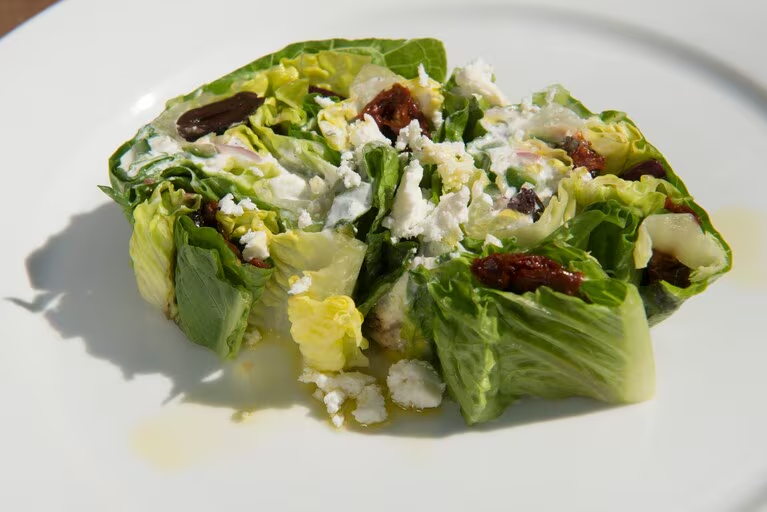
The fresh Sicilian ricotta purchased at the market in Palermo or Syracuse in the morning is still warm in its basket, the whey still draining through the wicker, and it requires nothing more than a piece of the bread from the adjacent baker and a drizzle of the Sicilian honey from the stall across the aisle to constitute one of the finest breakfasts available anywhere in the Mediterranean world. This is the ricotta at its simplest and it is enough.
It is also the filling of the pasta when the pasta is made aboard: mixed with fresh herbs and lemon zest and black pepper and used to fill the ravioli or the pasta squares that the chef presses when the anchorage allows the time and the ricotta from the morning market is fresh enough to justify the effort. It is the base of the Sicilian-influenced desserts that appear when the route is in Sicily: the ricotta cream with the candied citron and the pistachio from Bronte, which is the specific green pistachio from the volcanic soil of the Etna foothills and which produces a flavour that the pistachio from anywhere else does not produce.
The Naora route spends a week or more in Sicilian waters during the late summer passage westward through the Tyrrhenian Sea. The markets in the port towns of the north coast, Cefalù and Milazzo, and the markets of Palermo if the route allows the stopover, provide the sheep’s milk ricotta, the Bronte pistachios, the blood oranges that persist into late summer from the inland groves, and the salted capers from Pantelleria that are among the finest capers produced anywhere.
This is the chapter of the Mediterranean where the ingredients are the most historically layered and where the cooking requires the most specific knowledge of what each element is and why it is there, and it is the chapter where the chef spends the most time at the market in the morning.