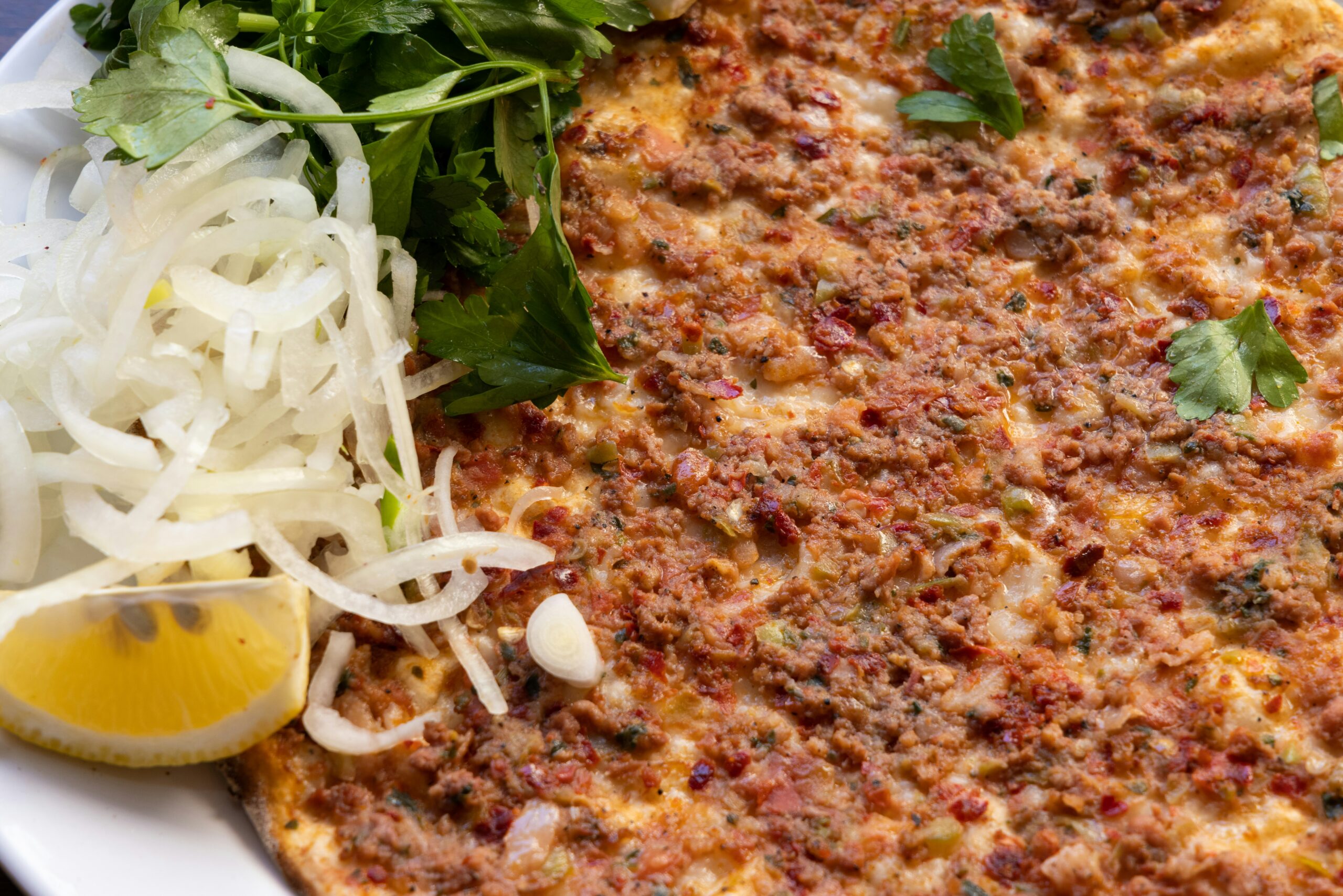
Bread baked on a hot stone is the oldest prepared food in the human record. The Natufian people of the Levant, who occupied the territory of modern Syria, Lebanon, and Palestine approximately fourteen thousand years ago, were baking a form of flatbread before the development of agriculture: grinding wild grain, mixing it with water, and baking the resulting paste on heated stones. The manakish, the flatbread of modern Syrian and Lebanese street food culture, is the direct descendant of this practice, separated from it by fourteen thousand years and essentially unchanged in its fundamental method.
What has changed is the topping. The Natufian flatbread was plain. The modern manakish is defined by what is spread on it before it bakes, and the most traditional and most beloved version is za’atar: a mixture of dried thyme, sumac, sesame seeds, and olive oil combined into a paste that is spread on the raw dough surface and baked with it until the dough puffs at the edges and the za’atar paste has set into a fragrant, slightly crispy layer that tastes of the eastern Mediterranean in the way that nothing else quite does.
Za’atar
Za’atar is simultaneously a plant and a spice mixture, and the confusion between the two reflects the specificity of the Levantine culinary tradition. The plant is a wild thyme native to the eastern Mediterranean, Origanum syriacum, gathered from the hillsides above the coastal cities and dried for use through the year. The spice mixture called za’atar combines the dried leaves of this plant with sumac, sesame seeds, and salt, in proportions that vary by family and by region and that are guarded with the specific pride that a family recipe deserves when it has been in use for several generations.
The combination of the thyme’s herbal fragrance, the sumac’s tartness, and the sesame’s richness produces a flavour profile that is immediately recognisable and that travels well: za’atar on flatbread, za’atar mixed with olive oil and used as a dip, za’atar scattered over hummus, za’atar on labneh. The spice mixture is one of those culinary discoveries that once you have it you find applications for continuously, because it improves most of the things it touches and does not conflict with any of them.
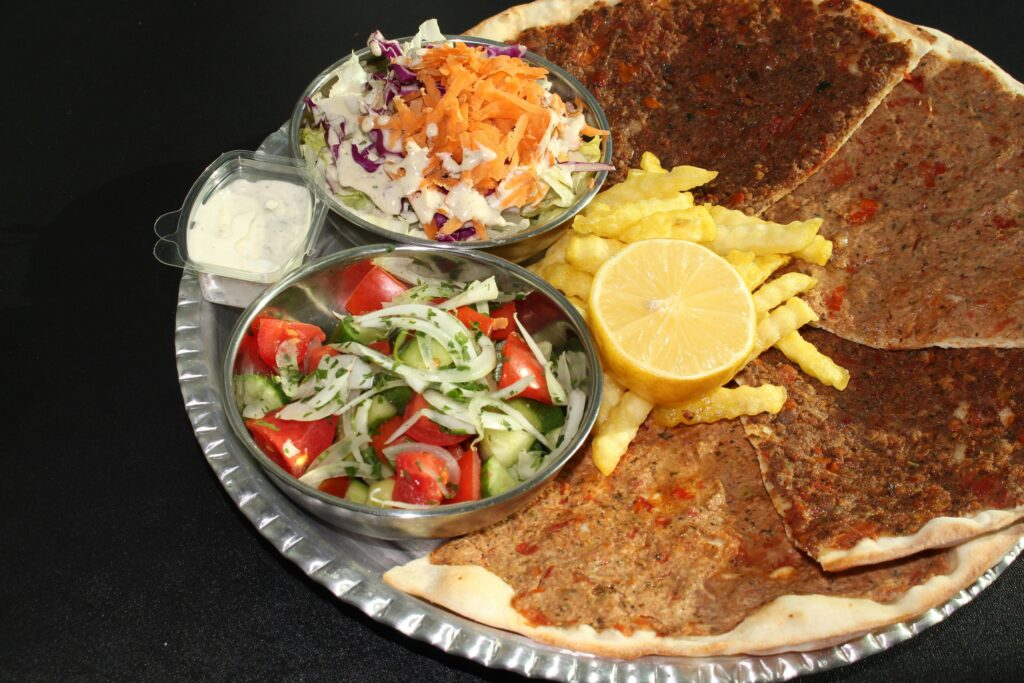
Sfeeha
The sfeeha is the meat version of the manakish: a small open flatbread topped with a mixture of minced lamb, onion, tomato, pine nuts, allspice, and cinnamon, baked until the meat is just cooked and the edges of the dough are crisp. The combination of spices, allspice and cinnamon with savoury meat, is the signature flavour of the Levantine meat preparation tradition: the same spice pairing appears in Lebanese kibbeh, in Syrian köfte, in the Palestinian maqluba. It is a combination that the Arabic culinary tradition developed from the medieval spice trade routes that passed through the Levant, and that has been in continuous use since at least the twelfth century.
The sfeeha is eaten hot from the oven, folded in half and eaten as a street food, or spread flat and eaten with yoghurt and fresh herbs. On Naora, both the manakish and the sfeeha appear when the route is passing through ports with a significant Levantine food supply: the Lebanese and Syrian bakeries that exist in Beirut and in Limassol and in the ports of southern Turkey provide the za’atar and the flatbread dough that make the aboard version possible. The chef makes the sfeeha from scratch when the schedule allows: the lamb from the market, the pine nuts from the spice store, the dough mixed in the morning and left to prove while the anchor is being set.